
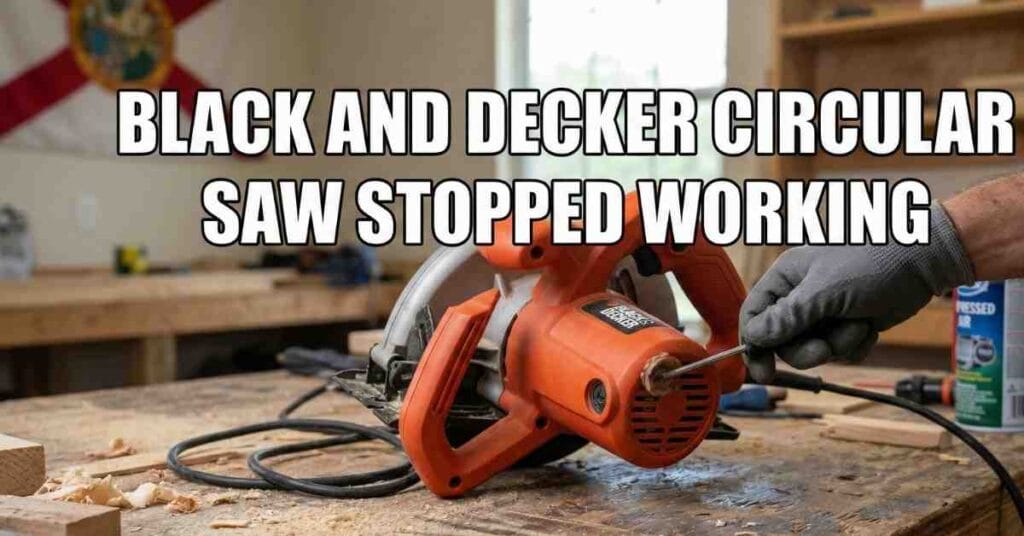
It was a hot Tuesday morning in my Florida shop. The humidity was already high enough to make my shirt stick to my back. I was in the middle of a cut for a small cedar chest when my saw just quit. There were no sparks and no smoke. It just went totally silent. It is a bad feeling when your tool dies in the middle of a job.
I have spent years fixing tools in this workshop. My dog was napping in the corner near the fan while I stared at the dead saw. I knew I had to find out why it stopped. Most of the time, these issues are easy to fix if you know where to look. I want to share my steps so you can get back to your project fast.
Checking the Most Obvious Power Issues First
The first thing I did was check the power source. It sounds simple, but I have seen many pros forget to check the plug. I walked over to the outlet and made sure the cord was pushed in all the way. Sometimes the shaking of the saw can wiggle a loose plug right out of the wall.
I also checked my circuit breaker in the back of the garage. High-power tools can trip a breaker if the motor works too hard. Everything looked fine at the panel. To be very sure, I plugged a small work light into the same outlet. The light turned on fast, so I knew the wall power was not the problem.
Inspecting the Cord and the Outlet
Next, I ran my hand along the whole length of the power cord. I was looking for any nicks, cuts, or flat spots. Working in a busy shop means cords get stepped on or caught under heavy wood. A broken wire inside the rubber skin will stop the saw from getting any juice.
If you have a cordless Black and Decker model, the battery is the first place to look. I always tell my brother to check the battery tips for green gunk or dust. Even a tiny bit of dirt can stop the flow of power. I like to click the battery in and out a few times to make sure it sits tight.
Solving the Mystery of the Silent Motor
When a saw stays silent after you pull the trigger, the switch is often the cause. In my Florida workshop, the air is always full of fine dust. This dust gets inside every tiny crack of the tool. Over time, it packs into the trigger and stops the metal parts from touching.
I picked up the saw and shook it a little. I pressed the safety lock and pulled the trigger many times. It felt a bit soft, like pushing your finger into a sponge. A healthy switch should have a crisp, sharp click that you can feel. If it feels soft, you likely have a build-up of grit inside the handle.
How Sawdust Ruins Your Trigger Switch
I grabbed my can of air to blow out the handle. I aimed the tip into the gaps around the trigger and the safety button. A huge cloud of cedar dust blew out, which made me sneeze. This is a very common issue with these saws because their seals are not always tight.
After cleaning it out, the click felt much better. If the saw still does not start, the switch might be burnt out inside. This happens after years of hard use. You can usually smell burnt plastic near the handle if the switch has failed. Replacing a switch is a cheap way to save a saw from the trash.
Dealing With Worn Out Carbon Brushes
After I checked the switch, I looked at the motor brushes. These are small blocks of carbon that pass power to the motor. They are made to wear down slowly over time. Once they get too short, they can no longer reach the motor, and the tool will stop.
I looked at the side of the Black and Decker motor case. Most models have two small plastic caps that you can see from the outside. I used a flat screwdriver to gently turn them. You have to be careful because there is a tiny spring behind the cap that might pop out and get lost.
When to Replace the Brushes
I pulled the first brush out to look at it. It was less than an eighth of an inch long. That was the main problem. If the carbon block is that short, the spring cannot push it hard enough. This causes the saw to stop or run very poorly.
| Brush Condition | Symptom | Action Needed |
| Long and Shiny | Normal Operation | No action needed |
| Short (under 1/4 inch) | Saw will not start | Replace now |
| Chipped or Burnt | Power comes and goes | Replace now |
| Weak Spring | Saw loses power | Replace the brush |
I always keep a spare set of brushes in my top drawer. They only cost a few dollars, but they are a very common reason for motor failure. I slipped the new brushes in and tightened the caps back down. It is a simple job that makes the tool feel brand new again.
Physical Blocks and Blade Jams
Sometimes the motor wants to turn, but something is holding it back. I have seen cases where a small piece of wood gets stuck near the blade. This creates a jam that the motor cannot move. If you hear a low humming sound when you pull the trigger, this is likely the issue.
I unplugged the saw before putting my fingers near the blade. Safety is always the most important thing in my shop. I checked the lower guard to see if it was snapping back correctly. A bent guard can rub against the blade and create enough drag to stop the motor.
Checking the Lower Guard and Blade Bolt
I found a small piece of pine stuck right near the center. I used a pair of pliers to pull it out. While I was there, I checked the blade bolt to make sure it was tight. A loose blade will spin on the shaft and will not cut, making it seem like the saw is broken.
I also took a look at the teeth of the blade. A very dull blade makes the motor work twice as hard. In the Florida heat, an overworked motor can trip a safety fuse. This fuse shuts down the tool to keep it from catching fire. If your saw is hot, let it sit for thirty minutes.
Read More: Milwaukee Circular Saw Not Working
Managing Heat in a Tropical Workshop
Working in Florida means my tools have to deal with high heat. I noticed my Black and Decker saw gets warm much faster than my pro tools. This is because budget saws often have smaller fans inside. If you are making long cuts through thick wood, the saw will struggle.
I have learned to take breaks between heavy cuts. I give the motor a chance to cool down while I measure the next piece of wood. I also make sure the air vents on the side of the saw are clear. If those vents are clogged with dust, the motor will bake from the inside.
Quick Troubleshooting Summary Table
To make things easy, I put together this quick guide. This covers the most common failures I see with these saws in my shop. Most of the time, the fix is very simple and takes just a few minutes of your time.
| Problem | Likely Cause | Quick Fix |
| Total Silence | No Power | Check plug and breaker |
| Soft Trigger | Dust Clog | Use compressed air |
| Humming Sound | Jammed Blade | Clear wood from guard |
| Random Stopping | Worn Brushes | Install new brushes |
| Hot to Touch | Overheating | Let tool cool down |
Fixing my saw took me about twenty minutes once I found the right parts. It was much better than driving to the store to buy a new one. My cedar chest project was back on track, and the saw sounded strong again. Most of the time, these tools just need a little bit of cleaning to keep running.
If your saw is still dead after trying these steps, the motor may be burnt. At that point, the cost to fix it is usually more than the saw is worth. But for most of us, a quick blast of air or a new cord will do the trick. Keep your tools clean and they will last a long time.