
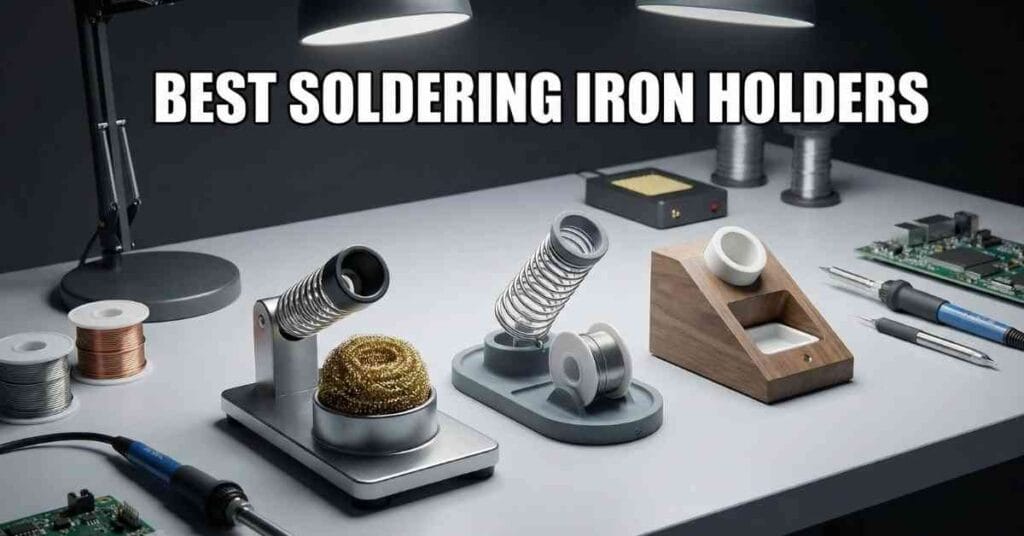
I remember the exact moment I decided to upgrade my gear. It wasn’t a triumphant moment of finishing a project. It was the smell of burning carpet.
I had bumped my desk, and my cheap, stamped-metal stand tipped over. The hot iron rolled right off and seared a nice black line into the rug of my rental apartment.
That panic was a wake-up call. I realized that a good holder isn’t just an accessory. It is the most critical safety tool on your bench.
Since then, I have tested dozens of setups in my home garage and professional labs. If you are looking for the best soldering iron holders, I’m here to share what actually works.
Table of Contents
Why Weight is Everything
When I first started soldering, I didn’t think about physics. I just bought the cheapest kit I could find online.
The problem with cheap stands is gravity. They are too light. When you have a stiff power cord attached to your iron, the cord pulls the stand around.
I found myself fighting the cord constantly. It felt like wrestling a snake just to put the tool down.
If you want a frustration-free experience, you need mass. You want a base that stays put when you shove the iron into it.
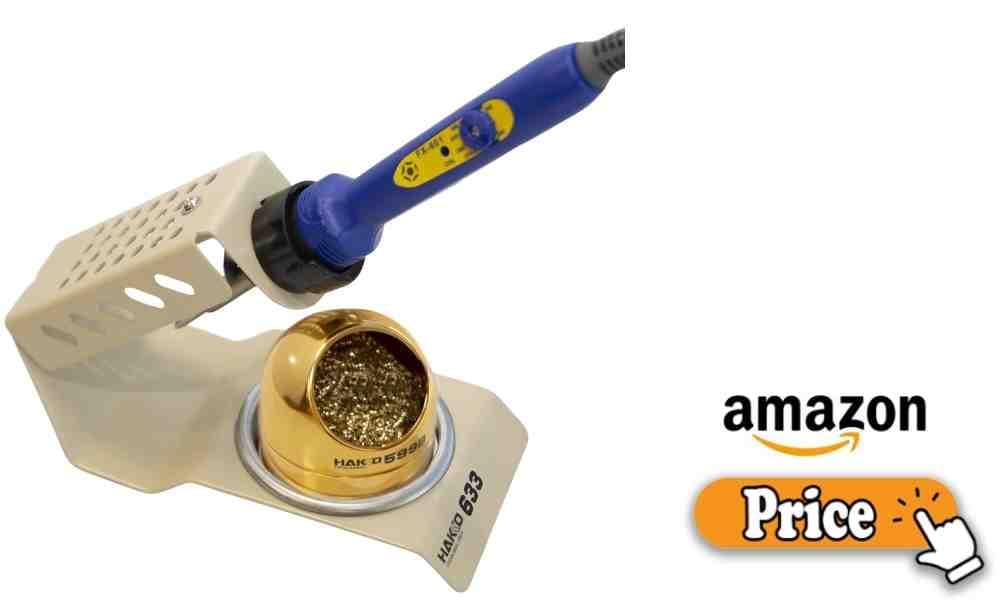
The Gold Standard: Hakko 633-01
After the carpet disaster, I asked a pro technician what he used. He pointed to a black and gold cage on his bench: the Hakko 633-01.
I bought one immediately, and honestly, I haven’t looked back.
My Experience with the Hakko:
- It’s Heavy: It weighs nearly a pound. When I drop my iron in, the stand doesn’t budge.
- The Cage: It fully encloses the tip. I no longer worry about my arm brushing against 700°F metal.
- The Angle: It holds the iron at a perfect angle for grabbing and going.
For my friends here in the US, this is the standard you will see in almost every professional repair shop. It fits most stick-style irons, including Wellers and generic brands.
The “Smart Iron” Problem (Pinecil & TS100)
A few years ago, I picked up a Pinecil. These “smart” USB soldering irons are amazing, but they created a new problem for me.
They are short and thin. When I tried to put my Pinecil in the big Hakko stand, it fell right through the bottom.
If you own a TS100, TS101, or Pinecil, you need a specialized holder.
The Miniware M-Stand: I eventually found the “M-Stand” by Miniware. It looks tiny, like a little metal arch. But don’t let the size fool you.
It is made of solid zinc alloy. It feels surprisingly dense in your hand.
It holds the neck of the smart iron perfectly. It’s great for quick jobs, though I do miss the full cage protection of the bigger stands.
The DIY Approach If you have a 3D printer, you can print a custom stand. I printed a “Gridfinity” holder for my workbench.
Just a warning from my own failures: Do not rest the hot metal directly on plastic. I use a 608 skate bearing as the insert to hold the heat.
A Solid Budget Pick: Yihua X-4
Not everyone wants to spend $30 on a holder. I get that. If you are setting up a basic kit for occasional repairs, you don’t need industrial gear.
I’ve used the Yihua X-4 for travel kits. It mimics the design of older professional stands.
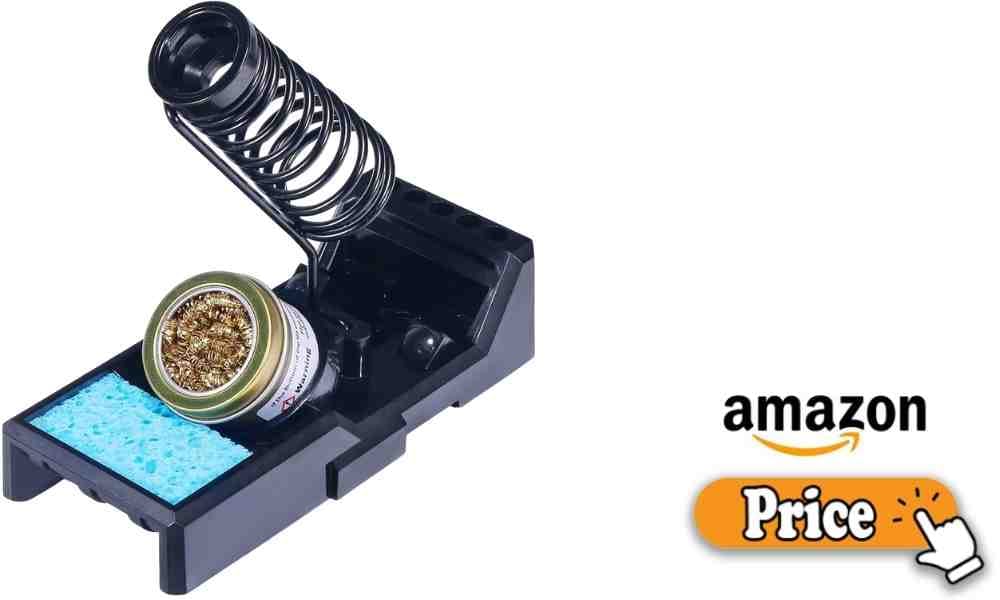
It has a decent metal base and a mounting spot for your solder spool. Having the solder roll right on the stand keeps my workspace much tidier.
It isn’t as heavy as the Hakko, but it is miles better than those flimsy sheets of metal that come in starter kits.
The Great Debate: Sponge vs. Brass Wool
This is where I have to get a little technical. For years, I used a wet sponge to clean my tip.
I loved the sizzling sound. It felt like I was really cleaning it. But I was actually hurting my tools.
Why I Switched to Brass Wool
- Thermal Shock: A wet sponge drops your tip temperature instantly. This rapid cooling can cause tiny cracks in the plating.
- Oxidation: Water promotes rust.
When I switched to the brass wool (that gold wire ball inside the Hakko stand), my tips started lasting twice as long.
It scrapes the gunk off without cooling the iron down. Plus, I don’t have to run to the sink to wet a sponge every time I want to work.
Final Thoughts
If you solder more than once a year, do yourself a favor. Throw away the flimsy metal stand that came with your iron.For most people, the Hakko 633-01 is the best investment you can make. It keeps you safe, keeps your tips clean, and just feels good to use.
FAQs- Best Soldering Iron Holders
What is the best soldering iron holder for safety?
A heavy metal stand is the safest choice you can make. It won’t tip over and burn your desk. The Hakko 633-01 is a great pick. It holds the iron tight and stays put on the mat.
Why use brass wool in my soldering iron holder?
Brass wool cleans tips without cooling them down. It removes rust better than a wet sponge. This helps your soldering tip last much longer and stay hot for your work.
Can I use a cheap soldering iron holder?
Cheap stands are often too light and risky to use. They can fall over easily and burn things. A solid, heavy base is worth the cost to stop burns and keep your home safe.
Do all soldering irons fit in the same holder?
No, they do not all fit every stand. Smart irons like the Pinecil are too thin for big cages. You need a stand made for your specific tool to ensure a safe and snug fit.
How do I stop my soldering iron tip from rusting?
Store the iron with a bit of solder on the tip. Use a holder with brass wool to clean it. This blocks air and stops rust from forming on the hot metal surface.