
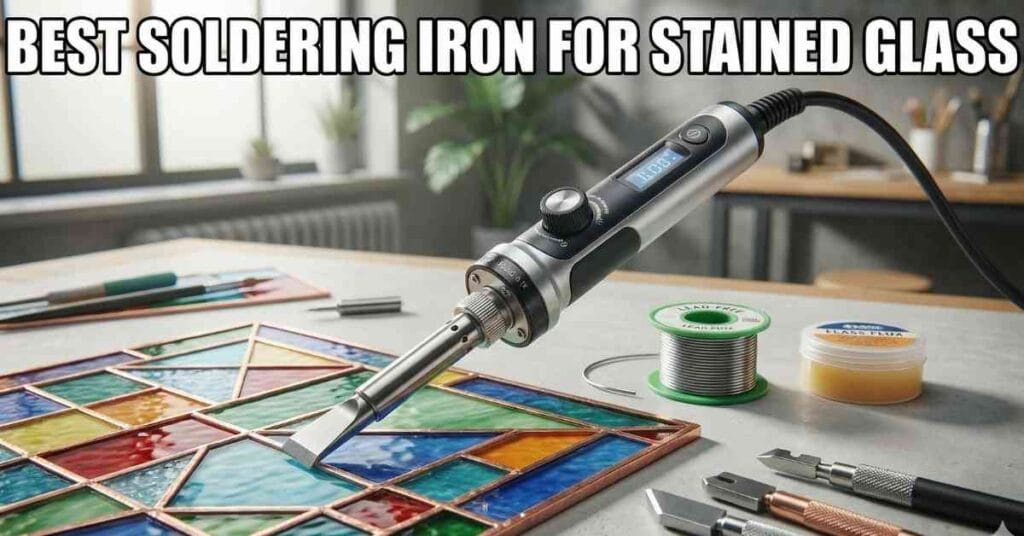
I used to think I was just bad at soldering. I remember sitting in my garage on a rainy Saturday, staring at a suncatcher I had just ruined.
The solder lines looked like lumpy oatmeal. My wrist hurt. I was ready to quit.
Then a mentor told me something that changed everything: “It’s not your hands, it’s your iron.”
Finding the best soldering iron for stained glass isn’t just about buying a tool. It is about saving your sanity.
After years of trial and error (and a few burned fingers), I want to share what actually works. Here is my honest take on the top irons for 2026 and 2027.
Table of Contents
Why Your Hardware Store Iron Won’t Work
Before we get to the models, let’s talk about why this is tricky.
Stained glass requires a lot of heat, but it has to be stable. Cheap irons are either “on” or “off.”
If the iron gets too cold, your solder drags and lumps up. If it gets too hot, you might crack your precious glass.
You need a tool that reacts fast. When the tip touches the cold glass, it needs to heat up again instantly.
The Gold Standard: Hakko FX-601
If you ask any modern glass artist what they use, 9 out of 10 will say the Hakko FX-601.
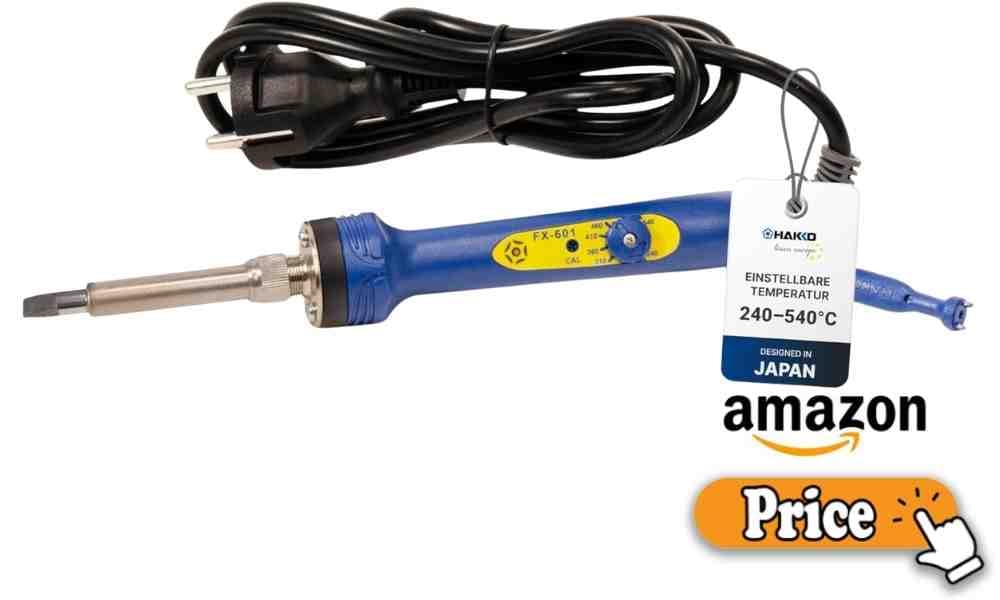
I switched to this iron a few years ago, and I haven’t looked back. It uses a ceramic heater, which sounds fancy, but it just means it is fast and light.
Why I Love It:
- It saves my wrist: This thing is incredibly lightweight. I can work for three or four hours without my hand cramping up.
- The dial is magic: There is a temperature dial right on the handle. I turn it down for decorative dots and crank it up for long seams.
- Instant heat: It recovers heat in seconds. You don’t have to pause and wait for the iron to “catch up.”
The One Downside: The tip it comes with is a bit small. I highly recommend buying a larger “chisel” tip (look for the T19-D24 model) when you order it. It makes smoothing out lines much easier.
Since we run on 110V power here in the States, this ceramic heater is very efficient. Just make sure you buy from a verified US seller so you get the warranty.
The Old Reliable: Weller W100P
Before the Hakko took over, the Weller W100P was the undisputed king.
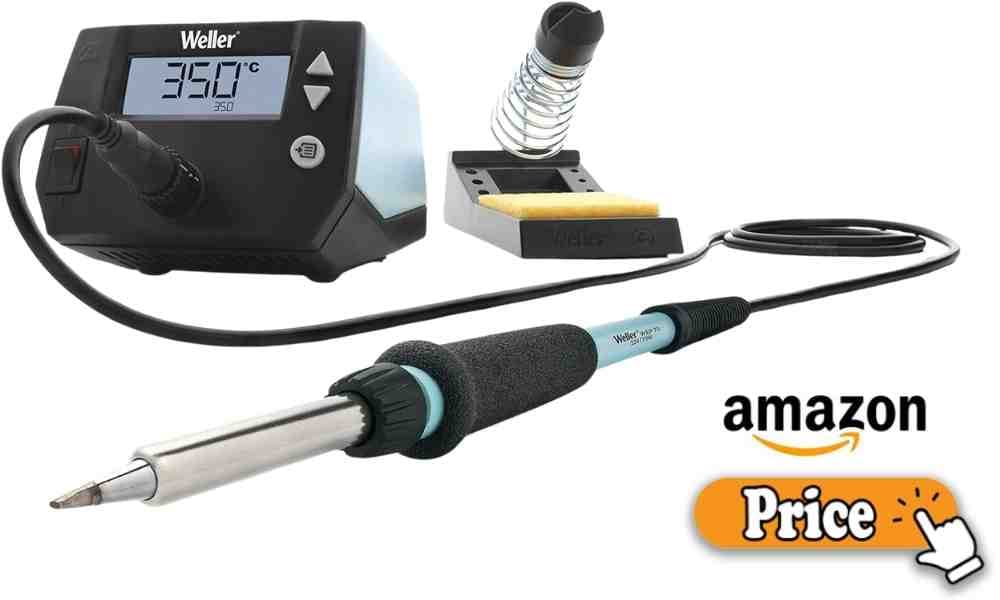
I still have one in my shop as a backup. It is built like a tank. I know artists who have used the same Weller for twenty years.
Why It Works:
- It’s foolproof: There are no dials. It uses a cool science trick where the tip controls the heat. A #7 tip stays at 700°F. You can’t mess it up.
- Heavy duty: It holds heat very well. If you are doing large lead came panels (the heavy structural stuff), this iron is a beast.
It is heavy. It uses an older wire-wound technology. If you have weak wrists or arthritis, this might feel like lifting a dumbbell after an hour.
The Budget Pick: Weller WLC100
If you are just trying this hobby out, you might not want to drop $80 or $100 yet. I get that.
The Weller WLC100 is a decent station usually found for around $40 or $50.
My Honest Take: It gets the job done for small projects. It has a dial to adjust power, which is nice.
However, it struggles with long seams. I found myself soldering for three inches, then having to wait for it to get hot again.
If you are serious about the craft, you will likely outgrow this within a year. But for a weekend hobbyist, it is a safe start.
A Critical Tip for Success
No matter which iron you buy, the tip shape matters more than the brand.
Avoid conical tips. These look like sharp pencils. They are made for tiny electronics, not glass.
Get a chisel tip. This looks like a flathead screwdriver. A 3/8″ or 1/4″ chisel tip allows you to create that beautiful, rounded bead on copper foil.
My Final Verdict
So, which one should you choose?
If you want the modern, comfortable experience, go with the Hakko FX-601. It offers the best control and won’t tire you out. It is the favorite for a reason.
If you want a heavy-duty tank that requires zero setup, the Weller W100P is a legend for a reason.
Soldering should be relaxing, not a fight. Getting the right tool turns a frustrating struggle into a satisfying art form.
FAQs – Best Soldering Iron for Stained Glass
What is the best wattage for a stained glass soldering iron?
You need strong power for smooth lines. A 60-watt ceramic iron is the best pick. For wire irons, choose 100 watts to keep the heat high as you work on the glass.
Why do I need a rheostat for soldering stained glass?
A rheostat helps you manage the heat. It stops the iron from getting too hot. This keeps the glass safe from cracks and makes your solder lines smooth and very neat.
Can I use a wood burning tool for stained glass?
No, wood tools are not good for this. They do not have the power you need. The tip gets cold fast. This leaves the solder lumpy and it is hard to fix the lines later.
What is the best tip size for stained glass?
The best pick is a flat chisel tip. Try a 3/8 inch or 1/4 inch size. This shape spreads heat well. It helps you make a smooth, round bead on the foil as you work.
Is the Hakko FX-601 good for beginners?
Yes, it is great for a new user. It is light and fits well in your hand. The dial sets the heat fast, so it is easy to learn how to solder well right away.