
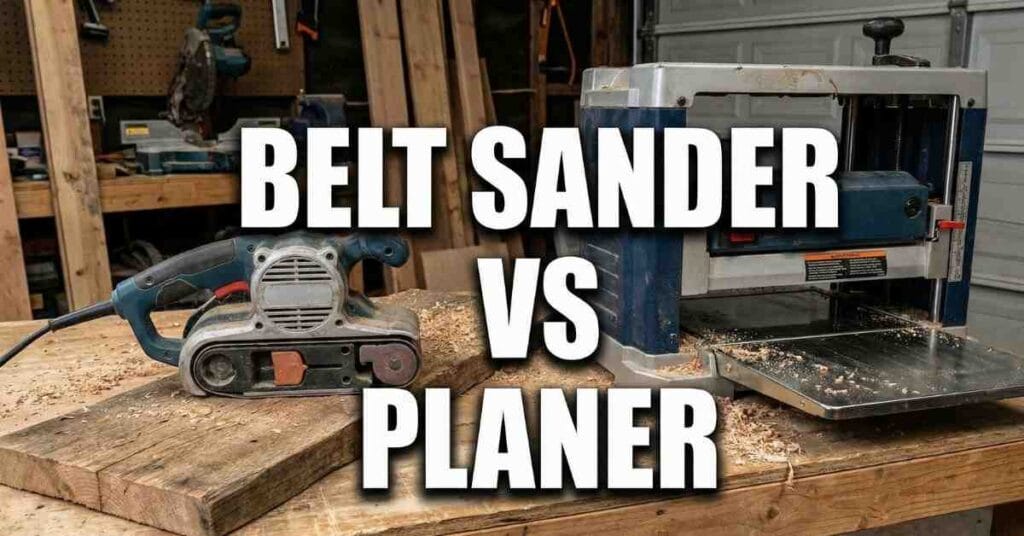
I still remember the first time I tried to build a simple farmhouse table. It was a sunny Saturday in my garage, and I had a pile of rough pine boards that I bought cheap. They were twisted, cupped, and ugly, so I stood there staring at them with coffee in my hand. I had two tools on my bench: a dusty belt sander and a shiny new planer.
I honestly did not know which one to grab because I thought they both did the same thing. I assumed they both make wood smooth. Boy, was I wrong about that, and I learned a hard lesson that day.
I spent three hours with that belt sander, and my arms felt like jelly by the end. My ears rang, and the board was still crooked. Choosing between a belt sander and a planer is not just about what you like. It is about how physics works on wood.
If you are stuck like I was, let me help you out. I want to share what I have learned from my own wins and failures in the shop. This is not a sales pitch. This is just me, talking to you, shop to shop.
The Big Difference: Grinding vs Cutting
Let’s keep this simple so you can pick the right tool fast. Think of a belt sander like a cheese grater that rubs the surface with grit. It takes off small bits of material and follows the shape of the wood. If your board has a hill in the middle, the sander rides over it. It makes the hill smooth, but the hill stays there.
Now, think of a planer like a lawnmower for your lumber. It does not care about the hills because it has sharp blades that slice right through them. It cuts the wood to make it flat and even. A belt sander prepares the surface, while a planer changes the shape.
When I Use My Belt Sander
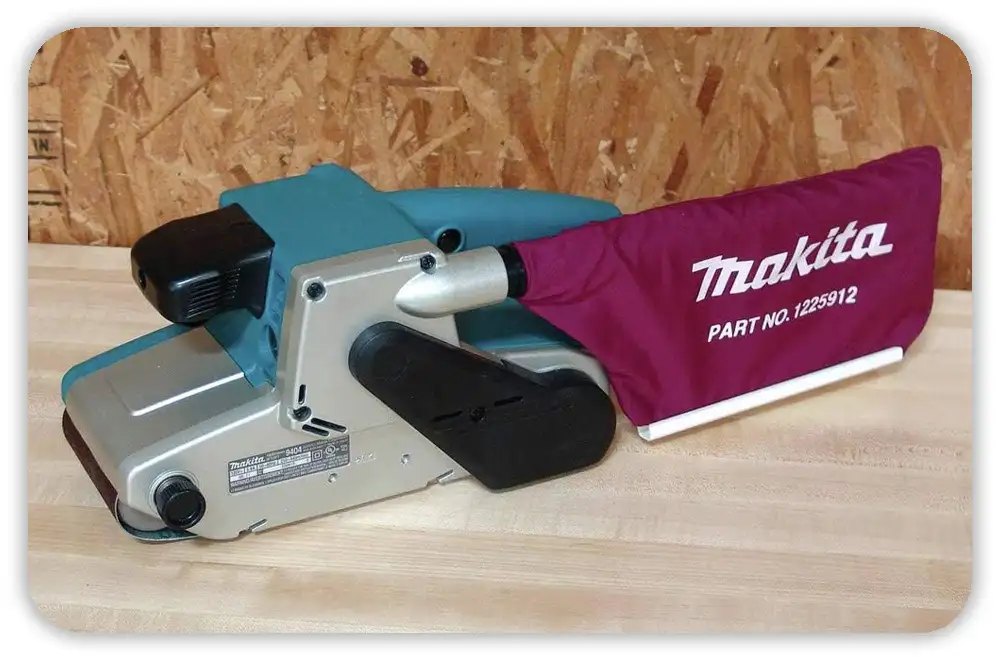
I have a love-hate relationship with my belt sander because it is loud and messy. It throws dust into places I did not know existed. But sometimes, it is the only tool for the job.
Stripping Old Paint
Last summer, I refinished my back deck that had layers of peeling red paint. I tried a palm sander first, but it just clogged up. Then I grabbed the belt sander with a coarse 60-grit belt. It ate through that paint like a hungry dog and stripped it to bare wood in seconds.

Scribing to a Wall
Here is a trick I use often when fitting a cabinet against a wall. Walls are never straight, so my cabinet usually has a gap. I draw a line that matches the wall’s curve and use the sander to grind the wood down. It is slow work, but it gives me a perfect fit every time.
The “Oops” Fixer
Sometimes, I glue two boards together and they do not line up perfectly. One is a tiny bit higher than the other. A planer will not work here because the panel is too wide. The belt sander levels that joint out fast and hides my mistakes.
When I Use My Planer
My thickness planer is the VIP of my shop, even though it was expensive. It paid for itself in one year because it lets me buy cheap, rough wood. I can turn that trash wood into expensive lumber.
Making Boards the Same Thickness
This is the main job I use it for. If I am building a chair, I need all four legs to be exactly the same size. If one is thick and one is thin, the chair will wobble. I feed them all through the planer, and they come out identical. You cannot do this with a sander.
Flattening Twisted Wood
Remember that twisted table I mentioned earlier? The planer fixed it. I built a simple sled to hold my twisted wood and ran it through. The blades cut the top flat, and then I flipped it over. Suddenly, my warped wood was perfectly square.
Cleaning Up Rough Edges
I also use a small handheld electric planer for fixing doors. If a door sticks in the summer because of humidity, I take it off the hinges. I run the hand planer down the edge once. It shaves off a paper-thin curl of wood, and the door closes perfectly.
Comparing the Data: What You Need to Know
I like numbers because they help me make sense of things. I made this chart based on how these tools actually perform in my shop. It shows the real difference in speed and finish.
Tool Performance Breakdown
| Feature | Belt Sander | Thickness Planer |
| Material Removed | Dust (Slow) | Chips (Fast) |
| Precision | Low (Eyeball it) | High (Exact measurements) |
| Finish Quality | Scratchy (Needs work) | Smooth (Glass-like) |
| Noise Level | Loud hum | Ear-splitting scream |
| Maintenance | Cheap belts | Expensive blades |
The Sensory Experience: What It Feels Like
I think it helps to know what you are getting into physically. These are powerful machines that demand respect. Holding a belt sander feels like walking a big dog on a leash. It wants to run away from you, so you have to hold it back firmly.
The vibration shakes your hands, and after an hour, my fingers feel tingly. It also creates a big cloud of dust. Even with a bag, you will taste sawdust, so wear a mask. The belt gets hot, and if you stay in one spot, you will burn the wood.
Using a planer is less physical but much scarier. You do not hold the tool; you feed the wood into it. It is the loudest tool I own, so you absolutely need ear muffs. When the blades hit a knot, it makes a pop sound that will make you jump.
Best Belt Sander
Choosing a belt sander is about finding a balance. You want it heavy enough to do the work for you. But you do not want it so heavy that your arms fall off.
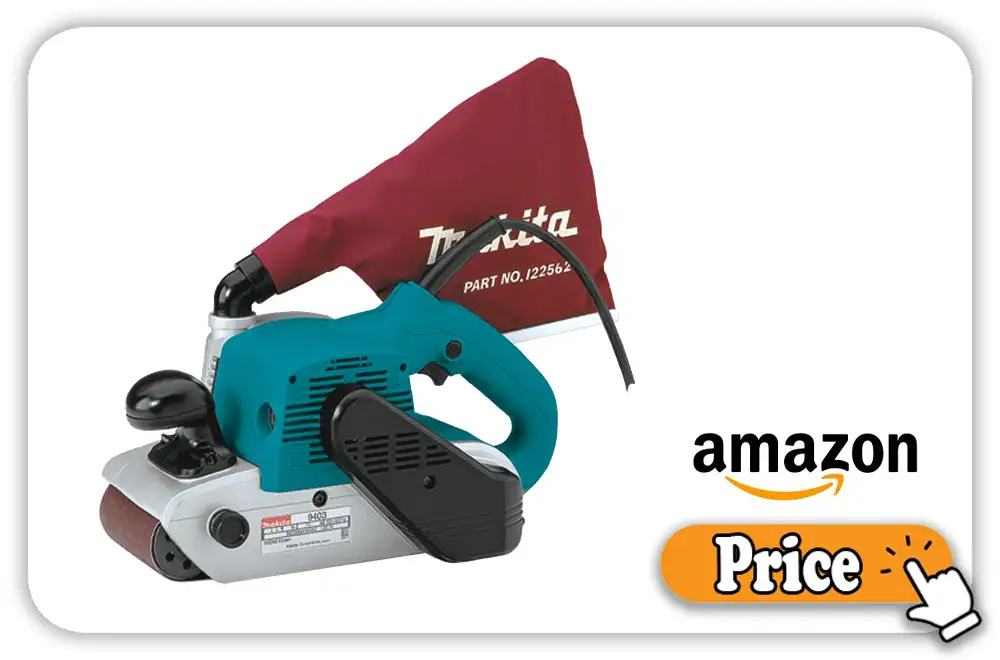
My Top Pick: Makita 9403 (4-Inch x 24-Inch)
This is the “quiet giant” of my shop. Most belt sanders scream like a jet engine, but the Makita 9403 is surprisingly quiet at only 84 decibels. It is heavy, which is actually a good thing. The weight presses the belt down so you do not have to lean on it. It eats wood fast but leaves a smooth finish.
Best for Control: DeWalt DWP352VS (3-Inch x 21-Inch)
If the Makita is too big, this DeWalt is my second choice. It has “variable speed,” which is a fancy way of saying you can slow it down. This is huge if you are sanding something delicate, like a veneer top. If you run a sander too fast on thin wood, you will ruin it.
Best Budget Pick: Ryobi 18V One+ Cordless
I grab this for quick jobs where I need to move around. It is not as powerful as the corded ones, but it is great if I am up on a ladder. I do not want a cord tripping me. It is great for small repairs, but have extra batteries ready because it drinks power quickly.
Best Planer
Buying a planer is a big investment. You generally get what you pay for here. Cheap planers wobble and leave marks. Good planers are rock solid and last for years.
The Gold Standard: DeWalt DW735X
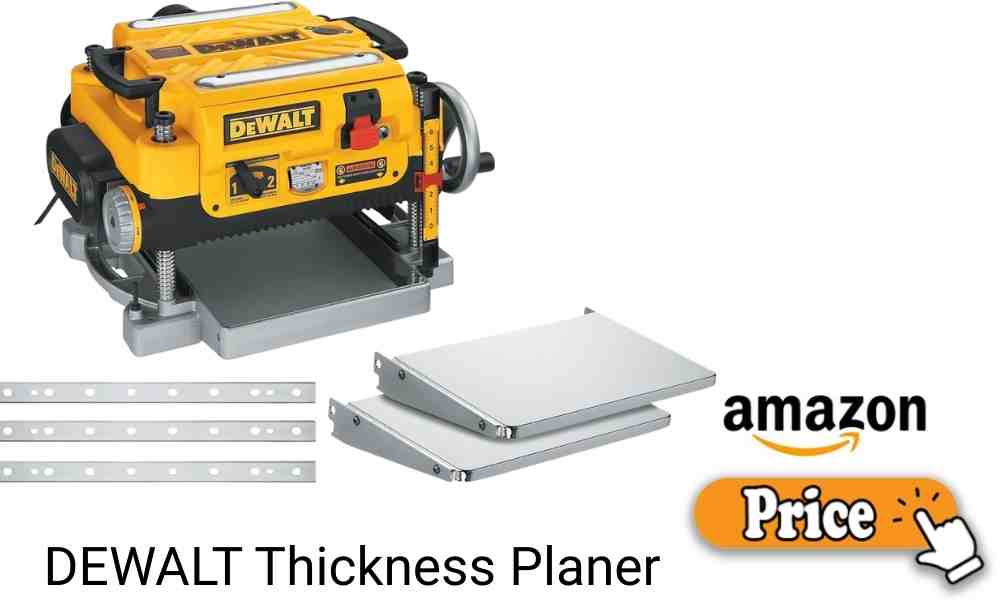
If you have the budget, just buy this one. It is the one I use now. It has a built-in fan that shoots wood chips out, so it practically cleans itself. It uses three knives instead of two, which means smoother cuts. The only downside is that it is very loud and heavy.
The “Neighbor Friendly” Pick: Makita 2012NB
Before I had a detached shop, I used this Makita. It is famous for being the quietest planer on the market. It uses a special head locking system that stops the board from wobbling. If you work in a garage attached to your house, your family will thank you for buying this one.
My Advice on Buying
So, which one should you buy first? This is what I tell my friends. Start with a belt sander if you do a lot of home repairs. It is great for decks, fences, or painted furniture. It is versatile and fits a small budget.
Start with a planer if you want to build tables or cabinets. If you want to save money on lumber, a planer is essential. It lets you use rough wood that costs half as much. Just make sure you have a space for sawdust.
Maintenance: Keeping Them Alive
Tools are like cars because if you do not take care of them, they die. For the belt sander, the enemy is clogged belts. Pine sap gums up the paper. I buy a rubber cleaning stick that looks like a giant eraser. It pulls the gunk out and saves me money on belts.
For the planer, the enemy is metal. One staple or nail will ruin your blades. I scan recycled wood with a metal detector. I also wax the metal bed with paste wax once a month. This helps the wood glide through like butter.
Final Thoughts
It took me a while to understand these tools. I used to think the belt sander was just a “bad” planer, but it is a different animal. The belt sander is the rough problem solver that fixes mistakes. The planer is the precision artist that creates the foundation.
Today, I cannot imagine my shop without both of them. But if I had to start over, I would look at my project list. If I am fixing up a house, I am buying the sander. If I am building the furniture to go inside it, I am buying the planer. Take your time, wear your safety gear, and enjoy the sawdust.
FAQs – Belt Sander vs Planer
Can a belt sander flatten a warped board effectively?
It is very hard to flatten wood with just a sander. The belt rides over curves instead of cutting them flat. A thickness planer is much better for making boards straight and true.
Should I use a planer to strip old paint off a deck?
Never use a planer on painted wood because it ruins the sharp blades. Paint often hides nails that can destroy the cutter head. A belt sander with coarse grit is the safest choice.
Why does my DeWalt planer dig into the board ends?
This issue is called snipe, and it happens when the wood lifts up. Try lifting the board slightly as you feed it into the tool. You can also run scrap wood through first to catch it.
Can an electric hand planer replace a benchtop planer?
No, a hand planer is mainly for rough sizing or fixing sticky doors. It cannot make a board the exact same thickness all the way through. You need a benchtop unit for furniture parts.
How do I stop my belt sander from clogging up?
Pine sap and old varnish will gum up your sanding belts quickly. Use a rubber cleaning stick to pull the dust out of the grit. This simple trick makes your belts last three times longer.