
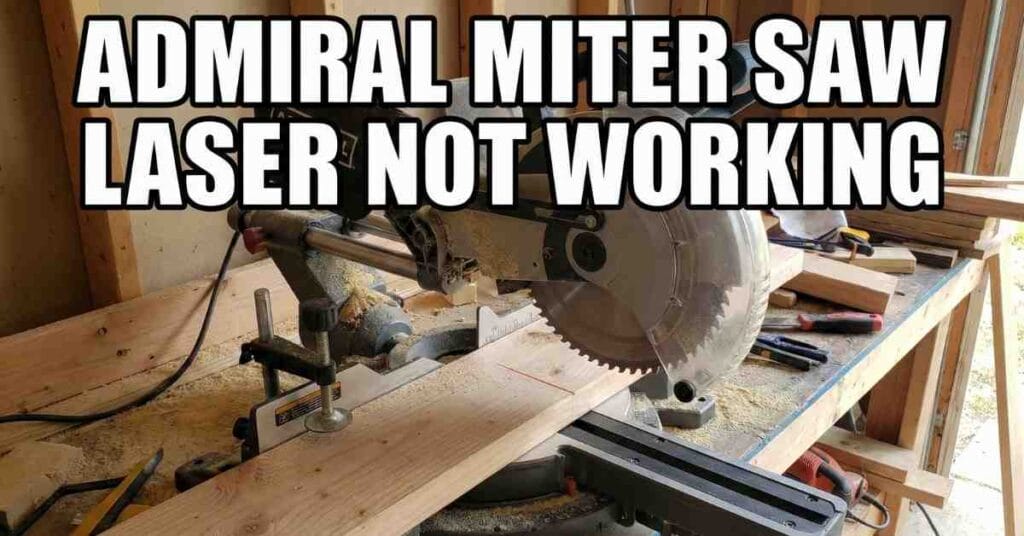
It was a cold Tuesday in my shop. I held a hot cup of tea in my hand. The room smelled like pine wood and old oil. I had to make a very precise angle cut. I put my thick oak board on the saw base.
I reached up and hit the main power switch. I looked for the bright red line on the wood. But my Admiral miter saw laser was not working. The wood just stayed dark in the shadow. I felt very mad at the tool.
I hate to guess where the fast blade will drop. That small red light saves me a lot of time. I knew I had to stop and fix the tool right then. I run ToolsEngineers, so I fix bad tools a lot. I will show you how I solved this exact flaw.
I do a lot of wood work in my free time. I build tables and fix old chairs for my home. A miter saw is the most used tool I own. I need it to run great every single day. When it breaks, my whole day comes to a halt.

Why the Red Light Stops on This Saw
The Admiral saw is a great tool for the price. I use mine a lot in my own shop. It cuts straight and has very good power. But the laser guide has a bad design flaw. The factory puts the light in a bad spot.
They place the light right in back of the blade. This is a bad place for keeping things clean. The blade spins fast and throws fine wood dust up. This dust gets stuck in the black guard hood. Over time, the dust packs in very tight.
This thick dirt covers the small clear glass lens. The red light can not shine through the dirt layer. The line gets very dim at first sight. Then, one day, it just goes dark for good. The heavy shake of the tool also breaks things loose.
Tools You Need for the Fix
Grab a few basic things before you start the job. I keep these tools right on my main shop bench. You need a normal cross head screw driver first. Get a small box of clean cotton swabs too. Find a bottle of pure rubbing alcohol in your house.
You also need a fresh can of spray air. A clean shop cloth is good to have near you. Please pull the saw plug out of the wall now. Do not work on a tool with the plug in. You must stay safe in your shop at all times.
Step 1: Clean the Small Glass Lens
This is the most common fix I see on saws. Most times, the light is not dead at all. It is just blind from all the saw dust. I always check this first since it is fast. Find the small black hood near the metal blade guard.
Take your can of spray air right now. Put the thin red straw up to the hood gap. Blow a few long blasts of air into the gap. You will see a lot of white dust fly out. Next, grab one clean cotton swab from your box.
Put a few drops of clear alcohol on the swab tip. Do not make it drip wet, just keep it damp. Reach the swab up under the dark plastic hood. Feel around soft until you touch the glass dot. This is the main lens for the red light.
Rub the swab in a small round path. Be very gentle as you wipe the small glass clean. When I did this, my swab turned pitch black. Thick dirt was stuck hard to the glass lens part. Use the dry end to wipe it one last time.
Plug the saw back in the wall and test it. If the red line shines bright, you are all done. You can go back to making your wood cuts. It feels great to fix a tool so fast. This simple trick saves a lot of time and stress.
You should check this lens before every big job. Wood sap makes the dust stick fast to the glass. Pine wood is the worst kind for making sticky dust. Hard oak wood makes a fine dry dust instead. Both types will block the light if you wait too long.
Step 2: Check the Main Power Switch
The lens fix does not work every single time. Sometimes we must dig a bit deeper into the tool. This saw does not use small round cell batteries. The light wires go right to the main power switch. This means a bad switch will kill the light completely.
The main switch lives inside the large hand grip. This grip area gets full of fine dust too. Pull the wall plug out once more to be safe. Take your screw driver and take out the grip screws. Pull the top half of the grip right off.
Look at the black switch block in the grip. You will see small wires plugged right into it. Blow all the loose dust out with your air can. Dust gets in the small switch parts and stops power. Spraying fast air in the gaps can fix this fast.
The switch in this tool is a simple toggle part. It rocks back and forth to make a power link. When dust gets in the gap, the link is broke. The light will not get any power from the wall plug. A clean switch feels very crisp when you click it down.
Quick Fix Data List
Here is a fast look at common tool flaws. This chart shows how to fix each bad part. Use this info to solve your main light problem. I see these exact flaws all the time in my work. It helps to know what parts to look for first.
| Problem You See | Why It Happens | How I Fix It Fast |
| Line is very dim | Dirt blocks the glass | Wipe glass with wet swab |
| Line blinks fast | Wire plug is loose | Push the loose plugs tight |
| Switch feels bad | Dust stuck in switch | Blow dust out with spray air |
| No light at all | Part is burned out | Wire in a fresh new light |
Step 3: Look at the Inside Wires
Look at the small wires while the grip is open. Trace the thin wires that come from the switch block. They run down the long metal arm of the big saw. They go all the way down to the light part. Look for tight spots where a wire is bent hard.
The heavy shake of the saw rubs the wire case. A bare wire will touch metal and short out fast. Check the small white plastic plugs on the wires too. Push them very tight with your bare hands. I found a loose wire plug on my own saw.
The shake of the cut had pulled the plug loose. Pushing it tight fixed my blink issue right away. Close the hand grip back up when you are done. Put all the metal screws back in their deep holes. Make sure the grip feels tight and strong to hold.
Tool shake is a big deal on cheap wood saws. The big motor spins very fast and shakes the frame. Wires rub on the sharp metal edges inside the case. A bare wire is a huge fire risk in your shop. Wrap a bare spot with black tape right away.
Step 4: Wire a New Light Part
Parts go bad and burn out from time to time. If steps one through three fail, the part is dead. It is hard to find the exact brand part in stores. But you can still fix the saw on your own. You just buy a cheap red light part on the web.
Take the small metal plate off the saw hood. This flat plate holds the bad light in place. Cut the two old wires with a sharp snip tool. Strip the wire ends back to show bare copper metal. Twist the new light wires to the old bare wires.
Use small twist caps to keep the new wires safe. Put the new light part back in the metal mount clip. This takes a bit more time to do it right. But it saves a good tool from the trash can. You will feel very proud when it turns on.
How to Aim the Red Line Straight
A straight guide line is key for a good tool. Taking old parts off can mess up the straight aim. A bad aim is much worse than no light at all. You want the light parallel to the round saw blade. Here is how I set my line perfectly straight.
Take a scrap piece of flat hard wood. Put it flat on the metal saw base. Unplug the saw from the wall right now. Pull the blade down until one tooth hits the wood. Make a dark pencil mark where the tooth hits the wood.
Plug the tool in and turn on the red light. Look at the clip that holds the light part. You will see two tiny set screws in the metal clip. Use a small hex key tool to turn them left. Turn them just a tiny bit to loosen the grip.
Do not take the small screws all the way out. Twist the light part with your bare fingers now. Make the red line sit flush left on your mark. Turn the hex key right to lock the small screws down. Make a real wood cut to check your fine work.
Some folks like the line right on the cut mark. I like the red line just to the left side. This shows me exactly where the blade will fall down. Find the setup that works best for your own eyes. Just make sure the line stays straight front to back.
My Routine to Keep the Light Bright
I hate to fix the exact same tool twice. I want to keep the red light bright and crisp. I changed my bad habits to keep the tool clean. Now I clean my saw at the end of every week. I use my air hose to blow the whole tool down.
I blow a lot of air right at the black hood. Getting fresh dust out stops a hard crust from forming. I also wipe the glass lens once a month. I use a fresh cotton swab and clear liquid alcohol. I do this even if the glass looks clean to me.
It takes just one short minute to do this chore. My red line stays very bright all the time now. Fixing this flaw taught me a lot about this tool. I rely less on blind luck and more on deep skill. You can fix your saw and get back to work too.