
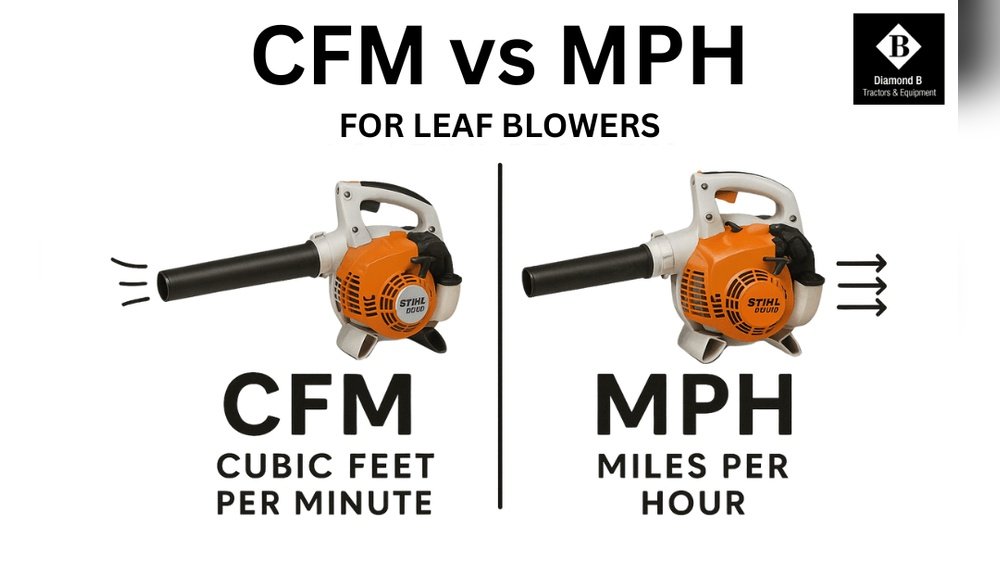
A leaf blower can be a real lifesaver for keeping your yard clean. But when you start shopping for one, you’ll quickly see two key terms everywhere: CFM and MPH. These numbers are usually printed in big, bold letters on the box and in every online listing. But what do they really mean? And which is more important for your yard? If you’ve ever wondered about the difference between CFM and MPH for leaf blowers, or felt confused when trying to compare models, you’re not alone. Many people—even those who have used leaf blowers before—don’t fully understand how these numbers affect performance.
This article will clear up the confusion. You’ll learn what CFM and MPH actually measure, how they work together, and which is more important for different jobs. We’ll also break down some common mistakes, show you how to compare real models using both numbers, and share tips for choosing the right leaf blower for your needs.
By the end, you’ll be able to pick the best blower with total confidence.
What Do Cfm And Mph Mean?
Before you can choose the right leaf blower, you need to understand what these terms actually measure.
Cfm: Cubic Feet Per Minute
CFM stands for Cubic Feet per Minute. It measures the volume of air that the blower moves in one minute. Imagine holding a big box open at the end of the blower’s tube. The CFM rating tells you how much air the blower can push into that box every minute.
A higher CFM means the blower can move more leaves and debris at once. It’s like using a wide broom compared to a narrow one—you can clear a larger area with each sweep.
- Typical CFM for leaf blowers: Around 200 to 700 CFM for most residential models. Some commercial models go even higher.
Mph: Miles Per Hour
MPH stands for Miles Per Hour. It measures the speed of the air as it leaves the blower’s nozzle. This is like the wind speed coming from the blower.
A higher MPH means the air blows out faster, which helps to lift and move heavier or stuck debris, like wet leaves or small rocks.
- Typical MPH for leaf blowers: Usually ranges from 90 to 250 MPH.
How Cfm And Mph Work Together
Many people think one number is more important than the other. In reality, both CFM and MPH matter. Think of it this way: CFM is about how much air you’re moving, and MPH is about how fast you’re moving it. You need a good balance to get the best results.
A blower with high CFM and low MPH will move a lot of air, but it might not have enough force to move heavy debris. A blower with high MPH but low CFM creates a fast jet of air, but it only covers a small area.
Why Do Both Numbers Matter?
Understanding why both CFM and MPH are important will help you avoid common mistakes when shopping for a blower.
Moving Light Vs. Heavy Debris
- High CFM: Best for moving large piles of dry leaves or grass clippings. You can clear a big area quickly.
- High MPH: Better for stubborn debris, like wet leaves stuck to the ground, acorns, or small twigs.
Real-world Example
Imagine two blowers:
- Blower A: 600 CFM, 100 MPH
- Blower B: 350 CFM, 200 MPH
Blower A moves a lot of air, so it’s great for quickly clearing big piles. But it may not have the force to remove heavy or wet debris. Blower B has less air volume but higher speed, so it’s better for tough jobs but covers less ground at once.
The Perfect Balance
The best leaf blowers combine both high CFM and high MPH. This lets you move lots of debris, even if it’s heavy or stuck. Many top-rated blowers try to maximize both numbers, but there’s usually a trade-off—higher CFM often means lower MPH, and vice versa.
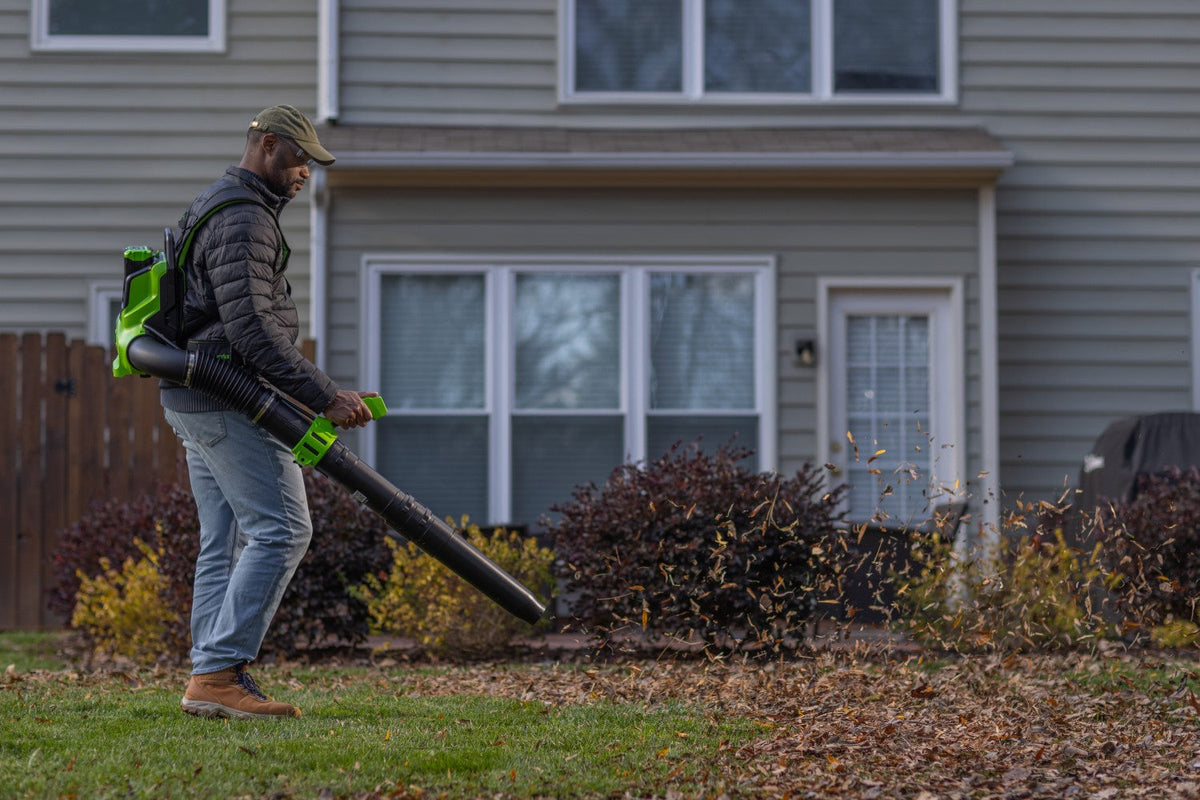
The Science Behind Cfm And Mph
It’s easy to see CFM and MPH as just numbers, but there’s some simple science behind them.
- CFM is affected by the size and design of the blower’s fan and the width of the nozzle.
- MPH is affected by the speed of the fan and how narrow the nozzle is.
If you make the nozzle smaller, you increase the MPH (faster air) but decrease the CFM (less air volume). Making the nozzle wider increases CFM but lowers MPH.
This is why blowers with very high MPH often have a narrow nozzle—they shoot out fast air but don’t move as much at once.
How To Compare Leaf Blowers Using Cfm And Mph
When you look at two different leaf blowers, you’ll almost always see both CFM and MPH listed. But how do you use these numbers to compare models?
Don’t Fall For Big Numbers Alone
Manufacturers love to advertise big numbers. But a very high CFM or MPH on its own doesn’t always mean better performance. Pay attention to both together.
The “blowing Force” Formula
Some experts use a formula to estimate the blowing force of a leaf blower:
Blowing Force = (cfm × Mph) / 1000
This isn’t perfect, but it gives you a simple way to compare two blowers. The higher the result, the more powerful the blower should feel in real use.
Example Comparison
Let’s compare three real leaf blowers using this formula:
| Model | CFM | MPH | Blowing Force |
|---|---|---|---|
| Ryobi 40V Jet Fan | 550 | 125 | 68.8 |
| Echo PB-580T | 510 | 215 | 109.65 |
| WORX WG520 | 600 | 110 | 66.0 |
The Echo PB-580T has the highest blowing force, even though its CFM isn’t the highest. Its high MPH makes a big difference.
Watch Out For Marketing Tricks
Some brands use “peak” numbers that aren’t realistic for normal use. Look for “average” or “working” CFM and MPH values in reviews, not just what’s printed on the box.
Cfm Vs Mph: Which Is More Important For You?
Your ideal blower depends on your yard and what you need to clear.
When Cfm Matters Most
- You have large piles of dry leaves.
- You want to clear big areas quickly.
- You mainly clean patios, driveways, or lawns.
When Mph Is More Important
- You often deal with wet leaves, pine needles, or heavy debris.
- Your leaves get stuck in grass or mulch.
- You need to blow debris out of cracks or corners.
When You Need Both
- You want one blower to handle every job—big piles, heavy debris, and tight spaces.
- You have a mix of dry leaves and wet, stubborn messes.
Real User Example
A homeowner with a big, open lawn might choose a blower with 600 CFM and 110 MPH. But someone with lots of flower beds, rocks, or wet leaves will get better results with a blower around 400 CFM but 180+ MPH.
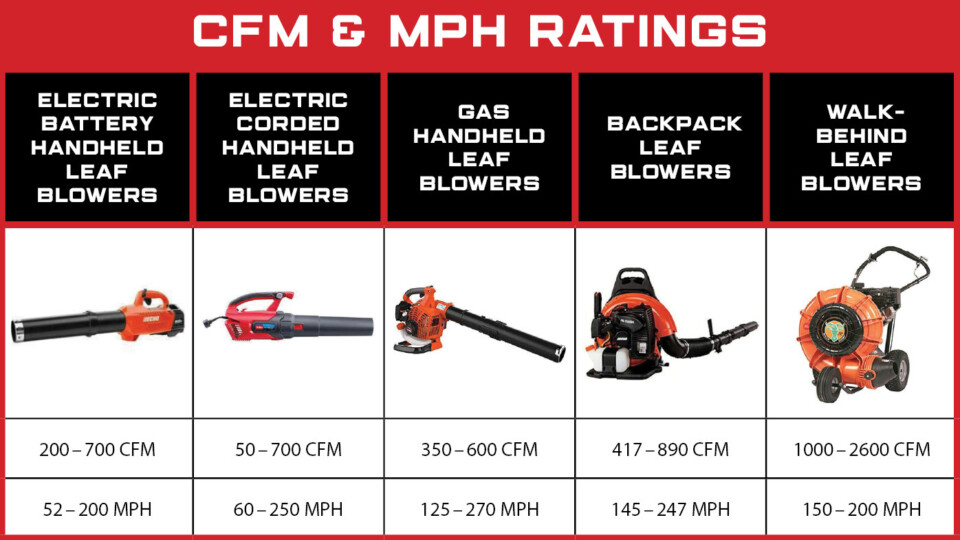
Types Of Leaf Blowers And Their Typical Ratings
There are several types of leaf blowers, and each has its own typical CFM and MPH range.
| Type | CFM Range | MPH Range | Best For |
|---|---|---|---|
| Cordless Electric | 200-550 | 90-150 | Small yards, light debris |
| Corded Electric | 200-600 | 100-180 | Medium yards, dry leaves |
| Gas Handheld | 350-600 | 120-200 | Larger yards, mixed debris |
| Gas Backpack | 500-900 | 150-250 | Big properties, heavy debris |
| Walk-Behind | 1000+ | 150-200 | Commercial/large areas |
For most homeowners, a cordless or corded electric blower is enough. But if you have a lot of heavy debris or a big yard, gas-powered models offer more power.

Common Mistakes When Choosing By Cfm And Mph
Many first-time buyers get tricked by numbers or end up with the wrong tool. Here are mistakes to avoid:
- Focusing only on the biggest number. High CFM or MPH alone doesn’t guarantee better performance.
- Ignoring the nozzle design. A blower with a wide nozzle can have high CFM but low MPH, making it less effective for heavy debris.
- Buying more power than needed. A very powerful blower is heavier, noisier, and uses more battery or gas. For small yards, you don’t need the highest specs.
- Not thinking about weight and comfort. Bigger blowers with high CFM/MPH can be hard to carry for long periods.
- Overlooking battery life. For cordless models, higher power usually means the battery drains faster.
How To Choose The Right Cfm And Mph For Your Yard
Choosing the right specs depends on your yard size, type of debris, and how often you use the blower.
Steps To Find Your Ideal Leaf Blower
- Measure your yard. Small yards (under 1/4 acre) usually need 200–400 CFM. Medium yards (1/4–1/2 acre) do well with 400–600 CFM. Large yards or commercial spaces may need 600+ CFM.
- Think about debris type. For mostly dry leaves, focus on CFM. For wet leaves or heavy debris, make sure MPH is at least 150.
- Check the weight. If you need to use the blower for more than 20 minutes at a time, look for lighter models.
- Test the grip and controls. It should feel balanced and easy to handle.
- Read real user reviews. These often mention practical issues, like battery life or how well the blower works in real-world conditions.
Practical Tips
- If you want a cordless model, check how long the battery lasts at full power. Some blowers advertise high CFM/MPH, but only for a few minutes.
- For city lots, a lower CFM/MPH blower is often quieter and less likely to blow debris into your neighbor’s yard.
- For tight spaces, a blower with a tapered nozzle and higher MPH is easier to control.
Frequently Overlooked Insights About Cfm And Mph
Some important points aren’t obvious, even to many experienced users:
- Noise level goes up with both CFM and MPH. If you live in a quiet neighborhood, check the decibel rating. High-power blowers can be very loud.
- Higher CFM can blow away mulch or gravel. If you have landscaped areas, too much air volume can create a mess.
- Airflow can be more important than speed for clearing grass clippings from driveways and sidewalks. A wide, gentle airflow moves clippings better than a narrow, fast jet.
- Nozzle attachments change the game. Some blowers include special tips to boost MPH for heavy debris or spread out the airflow for lighter jobs.
Real-world Case Studies
Let’s look at how two homeowners made their choices based on CFM and MPH:
Case 1: Clearing A Large, Leafy Yard
Sarah has a half-acre yard with several big oak trees. Every fall, she has to clear piles of dry leaves from the lawn and driveway. She chose a cordless blower with 600 CFM and 110 MPH. It lets her clear large piles quickly.
For stubborn, wet leaves near the garden, she switches to a nozzle that increases the MPH.
Case 2: Small Urban Yard With Pine Needles
Mike lives in the city, with a small front yard and lots of pine trees. Pine needles stick to his grass and get caught between paving stones. He chose a lightweight blower with 350 CFM and 180 MPH. The high speed helps lift the needles, and the narrow nozzle lets him clean cracks easily.
Leaf Blower Maintenance And Performance Tips
To keep your blower working at its best, remember:
- Clean the air intake and nozzle regularly. Dirt and debris can block airflow, lowering both CFM and MPH.
- Check and replace filters (for gas blowers). A dirty air filter reduces power.
- Store batteries correctly. For cordless blowers, keep batteries out of direct sun and avoid letting them fully drain.
- Keep the nozzle clear. Even a small blockage can cut performance.
Environmental And Safety Considerations
High-powered blowers can create a lot of dust and noise. Some cities even ban gas-powered blowers because of pollution and noise.
- Wear hearing protection with any blower over 85 decibels.
- Use a dust mask if you’re blowing dry dirt or leaves.
- Be aware of wind direction to avoid blowing debris into streets or neighbors’ yards.
For more information about noise and environmental rules, check local regulations or see the US EPA Noise Pollution page.
Frequently Asked Questions
What Is The Most Important Number To Look For In A Leaf Blower: Cfm Or Mph?
Both numbers matter, but the best choice depends on your needs. CFM is key for clearing big piles and large areas, while MPH is better for moving stuck or heavy debris. For most homeowners, a balance of both works best.
Can I Increase The Mph Or Cfm Of My Leaf Blower?
You can sometimes increase MPH by using a narrower nozzle attachment. However, this will lower the CFM. The opposite is true if you use a wider nozzle. You cannot change the basic design limits of your blower, but you can adjust airflow for different jobs.
Why Do Some Powerful Blowers Have Lower Mph Than Cheaper Ones?
Blower power isn’t just about speed. A high-end blower might have a lower MPH but much higher CFM, which means it moves more air overall. Cheaper models often focus on high MPH for marketing, but may not move as much debris.
How Do I Know If A Blower’s Cfm And Mph Ratings Are Real?
Look for independent reviews and tests online. Some manufacturers list “maximum” numbers that you won’t see in real use. User reviews and trusted sources can help you find the true working numbers.
Is It Safe To Use A High-powered Blower Around Delicate Plants Or Gravel?
High CFM or MPH can easily damage delicate plants or blow gravel and mulch out of place. Use lower settings or special nozzle attachments in these areas, or switch to a rake for more control.
Final Thoughts
Choosing between CFM vs MPH for a leaf blower doesn’t have to be confusing. Remember, CFM is about moving more air and clearing big areas fast, while MPH gives you the force to handle stubborn or heavy debris. The best blower for you depends on your yard size, the type of debris you face, and how you prefer to work. Don’t just chase the biggest numbers—think about balance, comfort, and real-world needs. With the right information, you’ll find a blower that makes yard work faster, easier, and a lot more satisfying.
As an Amazon Associate, We earn from qualifying purchases