
Thank you for confirming. Here is a comprehensive, in-depth article comparing 4000 count vs 6000 count multimeters, following your requirements.
—
Choosing the right digital multimeter can be confusing, especially when you see numbers like “4000 count” or “6000 count” on the box. What do these numbers mean? Do you really need a higher count, or is a lower count good enough for your work?
Understanding this can help you buy a tool that fits your needs, saves you money, and gives you the accuracy you want.
Let’s explore what “count” means in multimeters, why it matters, and how to choose between 4000 count and 6000 count models. This guide also highlights the real-world differences, common user mistakes, and gives examples that make the concepts clear—even if you are new to electronics.
What Does “count” Mean In A Multimeter?
When you look at a digital multimeter’s display, you see numbers. The “count” tells you the maximum number the display can show, not just the number of digits.
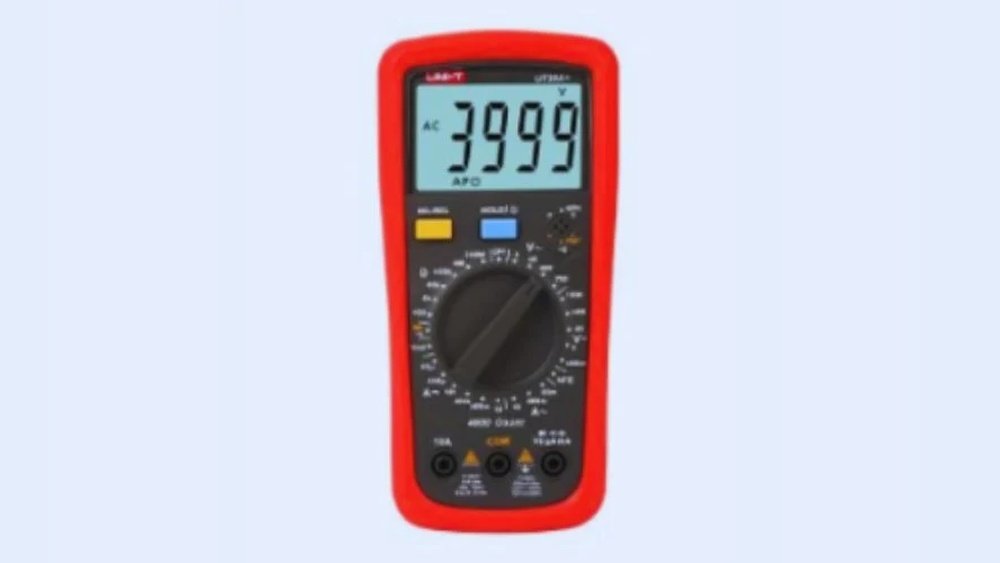
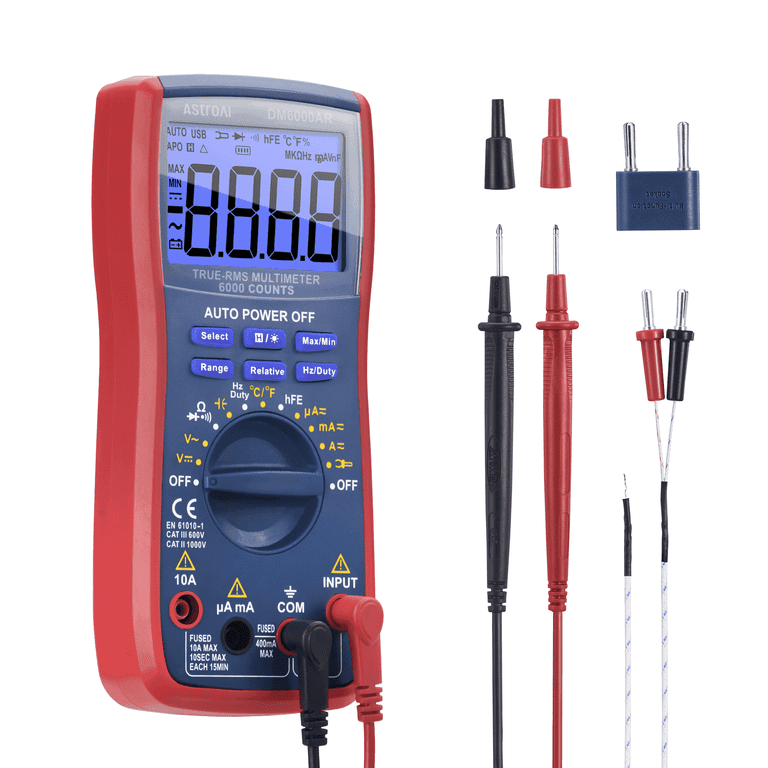
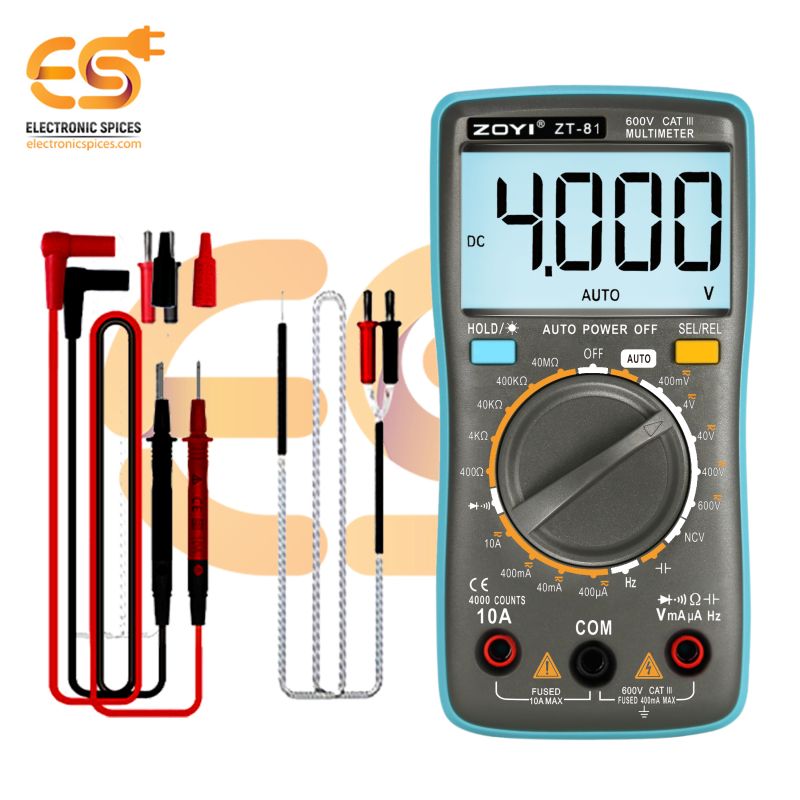
For example, a 4000 count multimeter can show any value from 0000 to 3999. That’s not exactly “four digits” because the maximum isn’t 9999. A 6000 count multimeter can display from 0000 to 5999.
This might sound like a small detail, but it decides how precise your readings are. Higher count means the meter can show smaller changes in measurement, especially as you get closer to the maximum value of the range.
Example:
If you set your meter to measure up to 4 volts, a 4000 count meter can show readings from 0. 000 V to 3. 999 V, with the smallest step being 0. 001 V. A 6000 count meter on a 6 V range can show from 0.
000 V to 5. 999 V, also in 0. 001 V steps.
Why Not Just Focus On Digits?
You might see some multimeters called “3 ½ digit” or “4 digit. ” This is an older way of describing display capability. The “count” is more precise because it tells you the real maximum number. A “3 ½ digit” meter could mean anything from 1999 count to 3999 count, depending on how the manufacturer designed the display.
Always check the actual count, not just digits.
Why Does Count Matter In Everyday Use?
Many users think count is only for advanced professionals, but it affects daily measurements for everyone.
Accuracy And Resolution
- Resolution is the smallest change the meter can detect. Higher count = higher resolution.
- Accuracy is how close the reading is to the true value. Count does not directly affect accuracy, but it does affect how detailed the reading looks.
Example:
Suppose you measure a 4. 7 V battery.
- A 4000 count meter (on the 4 V range) cannot display 4.7 V. It will switch to the 40 V range, where it might only show 4.7, losing the decimal places.
- A 6000 count meter (on the 6 V range) will display 4.700 V, keeping more detail.
This means the higher count meter can show more precise readings before switching to the next range, which usually has less resolution.
Range Switching
Most multimeters have several measurement ranges (e. g. , 4 V, 40 V, 400 V). When the measured value is higher than the range, the meter “jumps” to the next range and often shows fewer decimal places.
A 6000 count meter lets you stay longer in a lower range, showing more detail. This is very useful for:
- Troubleshooting electronics, where small changes matter
- Checking batteries accurately
- Measuring small voltages or currents without losing resolution
Non-obvious Insight: Better For Noisy Signals
If you measure signals that are not stable (they jump up and down), a higher count can help you see these small changes. For example, in automotive work, voltage drops of just a few millivolts can show a bad ground connection.
A 6000 count meter can display these drops more clearly than a 4000 count meter.
Comparing 4000 Count Vs 6000 Count Multimeters
Let’s look at the real differences and when they matter.
Display Ranges
| Feature | 4000 Count Multimeter | 6000 Count Multimeter |
|---|---|---|
| Max display per range | 3.999 (on 4 V range) | 5.999 (on 6 V range) |
| Steps before range jump | Fewer | More |
| Resolution | Lower | Higher |
| Price (typical) | Lower | Slightly higher |
| Common use case | Home, basic electronics | Advanced electronics, automotive |
Real-world Example
Imagine you work with Arduino boards and measure the voltage on a sensor pin. The voltage is 4. 2 V.
- 4000 count meter: On the 4 V range, the meter cannot show 4.2 V (it maxes out at 3.999 V). It will switch to the 40 V range and display 4.2 V (no decimals).
- 6000 count meter: On the 6 V range, the meter shows 4.200 V. You can see small changes if the voltage shifts.
This level of detail can help you notice problems, like a sensor drifting by just a few millivolts.
Does Higher Count Mean Higher Quality?
Not always. A 6000 count meter can have lower accuracy than a 4000 count meter if the electronics inside are not well made. Count is about display, not about the actual measurement circuit.
Non-Obvious Insight: Some brands use high count as a marketing tool. Always check both the count and the accuracy rating. A trusted brand with lower count can be better than a cheap, high-count meter.
When Is 4000 Count Good Enough?
Many users do not need a 6000 count meter. Here are cases when 4000 count is enough:
- Home electrical work: Checking outlets, fuses, or batteries. Most household measurements don’t need high resolution.
- Basic electronics: Learning circuits, checking continuity, measuring 9V or 1.5V batteries.
- Troubleshooting appliances: Finding open wires or checking if a device is live.
A 4000 count meter is usually smaller, cheaper, and easier for beginners.
When Should You Choose 6000 Count?
Some jobs need the extra detail:
- Automotive diagnostics: Small voltage drops matter. You may need to see changes of 1 mV or less.
- Precision electronics: Working with sensors, microcontrollers, or power supplies often needs more digits.
- Lab or professional use: Higher count meters are expected in technical environments.
Even for hobbyists, a 6000 count meter can give peace of mind. You see more, and you spot problems earlier.
Common Mistakes When Choosing A Multimeter
Mistake 1: Focusing Only On Count
Some buyers think higher count is always better. But other factors matter too:
- Build quality (good test leads, strong case)
- Safety ratings (especially for high voltage work)
- Accuracy of the meter
A high-count meter that gives wrong readings is useless.
Mistake 2: Overpaying For Features You Don’t Use
If you never measure tiny signals, you might waste money on a high-count meter with features you will not use.
Mistake 3: Ignoring The Range Labels
Some meters say “4000 count” but actually use strange ranges (like 3. 999 V instead of 4. 000 V). Check the manual or specs.
Mistake 4: Not Considering Display Readability
A higher count often means more digits on the screen. If the screen is small, extra digits can make it hard to read. Make sure the display is clear.
How To Choose The Right Multimeter For Your Needs
Here’s a simple process to decide:
- List your main tasks. What do you measure most? If you work with mains voltage or simple electronics, 4000 count is fine. For sensitive electronics, go higher.
- Check the ranges. Make sure the meter can show the numbers you need with enough detail. Look at the manual or product page.
- Compare accuracy. Look for a specification like “±(0.5%+2).” This tells you how close the reading will be to the real value.
- Read reviews. See what other users say about the display, build quality, and reliability.
- Don’t just buy by count. Make sure the overall quality matches your expectations.
Pro tip: If you are unsure, a 6000 count meter is usually a safer bet for future needs.
Practical Tips For Using Count Effectively
- Stay on the lowest range possible for best resolution.
- If your reading is near the top of the range, switch to a higher range before the meter “overloads” (shows “OL” or “1”).
- Learn to read the last digit. On a 6000 count meter, a reading of 5.678 V means you can see changes of 1 mV.
- If the display is jumping around, try using the “hold” feature or average the readings.

Frequently Asked Questions
Is A 6000 Count Meter Always More Accurate?
No. Accuracy depends on the design of the meter, not just the display count. Check the specifications.
Does “count” Affect Safety?
No. Safety comes from the meter’s internal design and certification (like CAT II, CAT III ratings), not the display count.
Will A 4000 Count Meter Break If I Try To Measure Higher Values?
No, but it will switch to a higher range and lose resolution. Always start on a higher range if you are unsure.
Are There Meters With Even Higher Counts?
Yes, some professional meters offer 20,000, 50,000, or more counts. These are for laboratory or industrial use.
Real-world User Experiences
Many technicians find that after using a higher count meter, it’s hard to go back. You notice small details, and it feels more professional.
However, some beginners get distracted by extra digits and worry about tiny changes that don’t matter for their task. It’s important to know when high resolution is really useful.
Example:
A car mechanic used a 4000 count meter for years. After switching to a 6000 count meter, he found it easier to spot voltage drops in sensors that were causing “check engine” lights. The extra detail saved him time.
Summary: Which One Should You Choose?
- 4000 count: Great for home, basic electronics, and when price matters. Simpler, easier to read.
- 6000 count: Better for advanced electronics, automotive, and when you want more detail. Usually not much more expensive.
If you want a tool that can grow with your skills, go for 6000 count. If you want to save money and keep things simple, 4000 count works well for everyday jobs.
Where To Learn More
If you want to dive deeper into multimeter specs, safety, and how to use them, [Fluke’s learning center](https://www.fluke.com/en-us/learn/blog/digital-multimeters/understanding-digital-multimeter-counts) is a trusted resource for both beginners and professionals.
—
Choosing between 4000 count and 6000 count multimeters is mostly about your needs and how much detail you want in your measurements. Now that you understand “count,” you can pick a tool that fits your work, avoids common mistakes, and gets the job done right.
As an Amazon Associate, We earn from qualifying purchases