

If you work with wood or plan home improvement projects, you’ll soon face a big question: table saw vs circular saw. These two power tools are the backbone of DIY and professional carpentry. But which one do you need? Is it better to own both? Or can you do everything with just one? Let’s break down the differences, strengths, weaknesses, and real-world uses of table saws and circular saws so you can choose with confidence.
What Is A Table Saw?
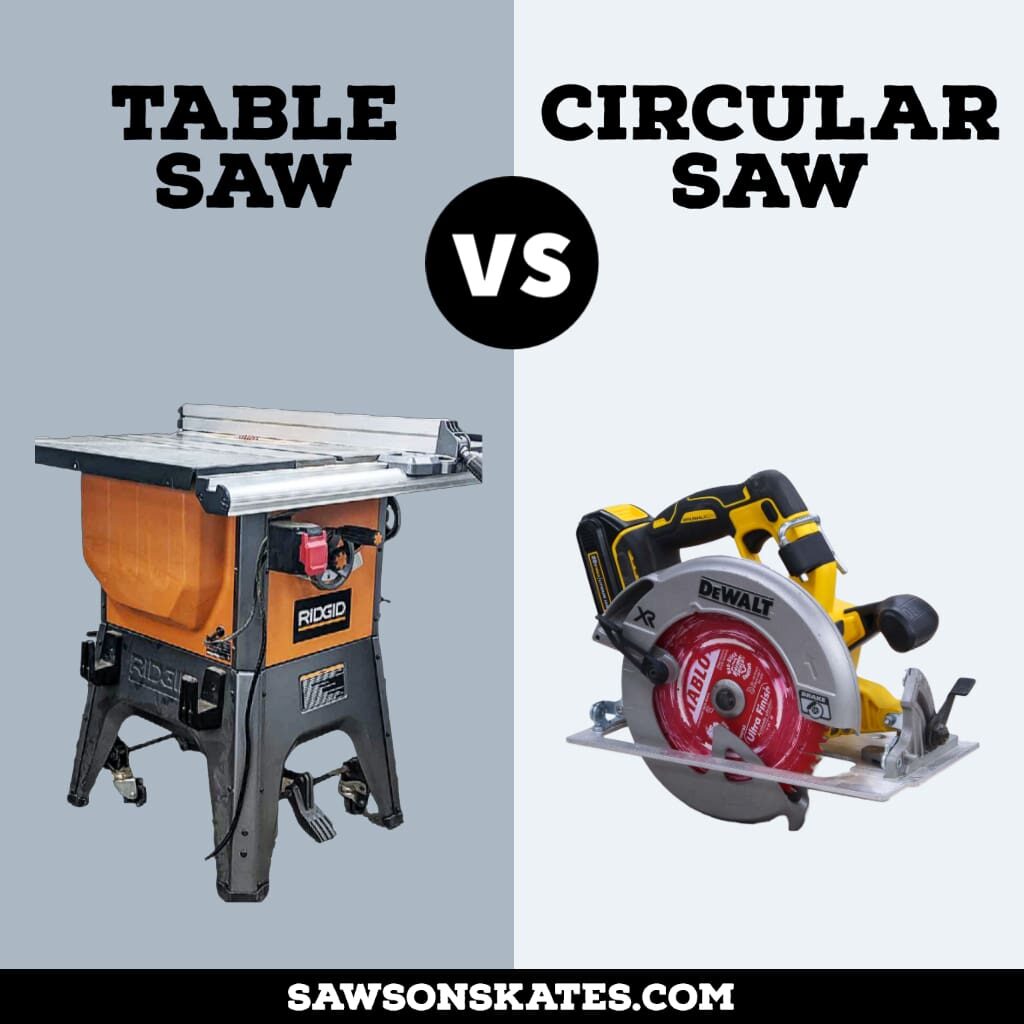
A table saw is a stationary tool with a circular blade mounted under a flat table. You push the wood across the table, and the blade cuts from below. Table saws are known for their power, accuracy, and ability to make straight cuts, called “rips.”
You’ll find table saws in most woodworking shops. They come in several types:
- Benchtop table saws (small, portable, sit on a workbench)
- Contractor table saws (heavier, semi-portable, used on job sites)
- Cabinet table saws (large, heavy, for serious workshops)
A table saw’s large surface keeps wood stable for consistent cuts. Some models include fences and miter gauges for guiding the material, allowing for precise repeat cuts.
What Is A Circular Saw?
A circular saw is a hand-held power tool with a round, spinning blade. You hold the saw and guide it across the wood. Circular saws are famous for their portability and ability to cut large sheets or boards anywhere.
There are two main types:
- Sidewinder circular saws (motor beside the blade, lighter, more common)
- Worm drive circular saws (motor behind the blade, more torque, often used for framing)
Circular saws are not as precise as table saws for long, straight cuts, but they excel in flexibility and speed. You can cut wood, metal, plastic, and more, depending on the blade.

Core Differences At A Glance
Here’s a quick side-by-side comparison to help you see the main differences:
| Feature | Table Saw | Circular Saw |
|---|---|---|
| Portability | Stationary (except small models) | Highly portable |
| Cut Accuracy | Very high | Medium |
| Cut Types | Rip, cross, bevel, dado | Rip, cross, bevel |
| Workpiece Size | Limited by table size | Cut any size |
| Ease of Use | Easier for repeat cuts | Easy for rough cuts |
Table Saw: Advantages And Best Uses
A table saw is the king of accuracy in any workshop. Here’s why many woodworkers consider it essential:
- Precision: The fence and miter gauge keep cuts straight and repeatable. This is critical for furniture or cabinets, where even a small error is visible.
- Speed for Repetitive Cuts: If you need to make many identical cuts (like flooring planks or shelves), a table saw makes the job much faster.
- Versatile Cutting: With the right blade and accessories, you can make rips, crosscuts, bevels, and even joinery cuts like dados and rabbets.
- Safety Features: Many newer table saws have blade guards, riving knives, and even “flesh-sensing” technology to help prevent injuries.
Best Uses For Table Saw
- Building furniture (tables, cabinets, shelves)
- Cutting large numbers of boards to the same size
- Accurate, long straight cuts
- Creating complex joints
Non-obvious Insight
Many beginners do not realize the table saw’s ability to cut sheet goods (like plywood) is limited by the table size. Supporting big sheets can be tricky. You may need extra outfeed tables or helpers for safety and accuracy.
Circular Saw: Advantages And Best Uses
The circular saw is the tool you grab when you need a quick, rough cut, or when you work away from your shop.
- Portability: Carry it anywhere—up a ladder, outside, or to a friend’s house.
- Cutting Sheet Goods: It’s much easier to cut big sheets of plywood or MDF on the ground than wrestle them onto a table saw.
- Versatility: With the right blade, you can cut lumber, panels, plastic, or even metal roofing.
- Cost: Circular saws are generally much cheaper than table saws.
Best Uses For Circular Saw
- Cutting plywood or sheet goods to size
- Framing houses or decks
- Quick cuts on construction sites
- Demolition or remodeling work
Non-obvious Insight
A straightedge guide can make a circular saw nearly as accurate as a table saw for long cuts. Many beginners do not use this simple trick, missing out on better results.
Key Factors To Consider Before Buying
Choosing between a table saw and a circular saw depends on your needs, space, and budget. Consider these important points:
1. Space And Portability
If you have a dedicated workshop, a table saw is a great investment. But if you work in small spaces or need to move your tool often, a circular saw makes more sense.
2. Type Of Projects
For fine woodworking, furniture, or cabinetry, a table saw is almost a must. For construction, framing, or quick jobs, a circular saw is usually better.
3. Budget
| Tool | Basic Model Price Range (USD) | Typical Accessories Needed |
|---|---|---|
| Table Saw | $250–$2,000+ | Blades, fence, miter gauge, push stick, outfeed support |
| Circular Saw | $40–$200 | Blades, straightedge, clamps |
Table saws are a bigger investment, both in money and space.
4. Safety
Table saws can cause serious injuries if not used properly. They require more safety precautions, like using push sticks and never reaching over the blade. Circular saws are also dangerous, but the risk is easier to manage for beginners because you have more control over the tool’s movement.
5. Precision
Table saws are unmatched for perfect, straight cuts. If accuracy is a top priority, this is the better tool. But for many projects, a circular saw’s “good enough” accuracy is fine, especially with a guide.
6. Cutting Capacity
A circular saw can cut any size board or sheet, as you bring the tool to the material. Table saws are limited by their table size—you can only cut pieces that fit on the table safely.
Real-world Scenarios: Which Should You Choose?
Let’s look at common woodworking and home improvement situations to see which saw works best.
Scenario 1: Building A Bookshelf
- Best Choice: Table Saw (for precise, repeatable cuts)
- Alternative: Circular Saw with a straightedge guide (if you don’t have a table saw)
Scenario 2: Framing A Wall
- Best Choice: Circular Saw (for fast, rough cuts on 2x4s and plywood)
- Tip: Mark your cuts clearly and use a speed square for quick accuracy.
Scenario 3: Making A Dining Table
- Best Choice: Table Saw (for rip cuts, joinery, and perfect edges)
- Additional Tools Needed: Jointer and planer for best results.
Scenario 4: Remodeling A Room
- Best Choice: Circular Saw (for demolition, cutting drywall, or trimming floorboards)
- Tip: Use the correct blade for the material—wood, metal, or plastic.
Scenario 5: Cutting Large Sheets Of Plywood
- Best Choice: Circular Saw (easier to move saw across sheet)
- Pro Tip: Clamp a straightedge to the plywood for better accuracy.
Table Saw Vs Circular Saw: Pros And Cons
It’s helpful to see the advantages and disadvantages of each tool side by side.
| Aspect | Table Saw | Circular Saw |
|---|---|---|
| Accuracy | Excellent for straight cuts | Good with guide, fair freehand |
| Portability | Poor (except small models) | Excellent |
| Ease of Use | Easy for repeat cuts | Easy for simple jobs |
| Price | Expensive | Affordable |
| Setup Time | Longer | Very quick |
| Safety | Higher risk, more safety features | Moderate risk |
Common Beginner Mistakes
Many new users make these errors when choosing or using a table saw or circular saw:
- Skipping safety gear. Always use eye and ear protection. Table saws especially require push sticks and guards.
- Wrong blade for material. Use a fine-tooth blade for plywood, a coarse one for framing lumber. Match the blade to the job for cleaner cuts and longer tool life.
- No straightedge guide with circular saw. Freehand cuts are rarely straight. A simple clamp and straight board can make your work look much more professional.
- Trying to cut large sheets alone on a table saw. This is dangerous and can ruin accuracy. Get help or use a circular saw instead.
- Ignoring dust collection. Both tools make a lot of dust. Table saws usually connect to vacuums. Circular saws can be used outdoors or with a dust bag if available.
Should You Own Both Tools?
If you do a lot of woodworking or home improvement, owning both a table saw and a circular saw is ideal. They complement each other:
- Use the table saw in your shop for high-precision, repeatable cuts.
- Use the circular saw for big sheets, rough cuts, or working outside.
But if you must pick only one, think about your main projects, space, and budget. A circular saw is the right choice for most beginners and homeowners. You can do almost any cut with it, as long as you use guides and take your time.
Expert Tips For Getting The Most From Each Saw
- Keep your blades sharp. Dull blades are dangerous and leave rough edges.
- Always measure twice, cut once.
- Use a speed square with your circular saw for fast, square crosscuts.
- Practice on scrap wood before making cuts on your final material.
- Learn the safety features of your table saw—like the riving knife and blade guard. They exist for a reason.
When Not To Use A Table Saw Or Circular Saw
There are times when neither tool is the best choice. For example, miter saws are better for quick, accurate angle cuts. Jigsaws work better for curved shapes. Choose the right tool for the job.
For more on how saws work and their different uses, you can check the Wikipedia page on saws.
Frequently Asked Questions
What Type Of Saw Is Safer For Beginners?
A circular saw is generally safer for beginners, mainly because you control the tool and it’s less likely to cause kickback. However, any saw can be dangerous, so always follow safety guidelines.
Can A Circular Saw Replace A Table Saw?
For many home projects, yes. With a straightedge guide and careful measuring, a circular saw can do most cuts a table saw can, but with less precision and repeatability.
Which Saw Is Better For Cutting Plywood Sheets?
A circular saw is better for large sheets. You can lay the plywood on the ground and move the saw across it, which is safer and easier than lifting heavy sheets onto a table saw.
How Important Is Blade Selection?
Very important. Using the correct blade for the material and cut type makes your work safer and cleaner. For example, use a fine-tooth blade for plywood to avoid splinters.
Is Dust Collection Necessary?
While not required, dust collection is a good idea for both tools. Table saws create lots of fine dust, which is bad for your health. Circular saws used outdoors are less of a problem, but wearing a dust mask is always smart.
Choosing between a table saw and circular saw comes down to the kind of work you want to do, your space, and your budget. With the right tool and a bit of practice, you’ll be making straight, clean cuts in no time.
As an Amazon Associate, We earn from qualifying purchases