
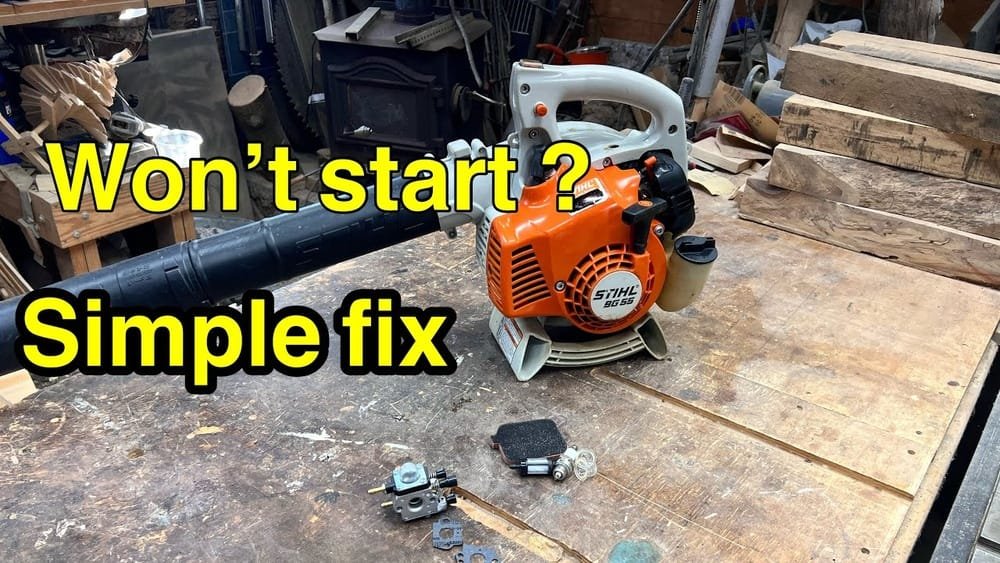
Have you ever pulled your arm off trying to start a leaf blower, and nothing happens? I’ve been there. My trusted Stihl leaf blower just refused to start one Saturday morning when my yard was covered in leaves. I know how frustrating it is when you’re ready to work and the machine won’t cooperate. After years of using and fixing small engines, I’ve learned a lot about these stubborn moments. Let me walk you through everything I know about why a Stihl leaf blower won’t start, and what you can do before calling for help.
Why Won’t My Stihl Leaf Blower Start?
It sounds simple, but there are a handful of things that can keep your blower quiet. I learned early on that even small mistakes can cause big headaches. Most of the time, the answer is something basic. But sometimes, you have to dig deeper.
Let’s break down the possible reasons, step by step.
1. Bad Fuel Or Old Gas
I once left gas in my blower for a few months. When I tried to use it, nothing happened. Old fuel is one of the most common reasons these machines won’t start. Gasoline can go bad in as little as 30 days. If your Stihl blower has old gas, it can form a sticky residue that clogs up everything.
What I do: I always drain out old gas and use fresh, ethanol-free gas if possible. I also add fuel stabilizer if I know I won’t use the blower for a while. This simple step has saved me a lot of trouble.
2. Clogged Air Filter
The air filter is a small, simple part, but if it’s dirty, your blower can choke. I once opened my filter and found it packed with dirt. No wonder it wouldn’t start! The engine needs air to run, and a blocked filter keeps it from breathing.
Check your filter. If it’s brown or looks packed with dust, clean or replace it. I make it a habit to check the filter every few uses.
3. Flooded Engine
After repeated pulls, I sometimes noticed a strong gas smell. That usually meant I flooded the engine. This happens when you pump the primer bulb too much or use the choke incorrectly. Too much gas drowns the spark plug.
Here’s my trick: I set the choke to “run,” hold the throttle wide open, and pull the cord a few times. Usually, the extra fuel burns off and the blower starts up.
4. Spark Plug Problems
A bad spark plug can stop your blower cold. I keep a spare one in my shed just in case. If your plug is dirty, wet, or worn out, it can’t ignite the fuel. I use a socket wrench to remove the plug and check it. If it’s black or oily, I clean it with a wire brush. If it’s really old, I replace it.
Remember: Always use the right spark plug for your Stihl model. The wrong type can cause all sorts of weird issues.
5. Dirty Carburetor
If you’ve checked the basics and nothing works, the carburetor might be clogged. This tiny part mixes air and fuel. Old gas, dirt, or varnish can plug it up. I once had to take mine apart and spray it with carburetor cleaner.
If you’re not comfortable doing this, a small engine shop can help.
6. Faulty Ignition Coil
I once spent hours trying everything, only to find out my ignition coil was bad. This coil sends power to the spark plug. If it’s not working, there’s no spark. You can test it with a spark tester, but sometimes it’s easier to replace it if you’ve tried everything else.
7. Blocked Fuel Lines
I had a blower with brittle, cracked fuel lines. They can get clogged or even collapse inside. Check for cracks, leaks, or soft spots. If you see fuel leaking, replace the lines. It’s a cheap fix and can make a big difference.
8. Primer Bulb Issues
That little rubber bulb under the carburetor? If it’s cracked or not working, your blower won’t get fuel. I’ve replaced a few over the years—easy and cheap.
9. On/off Switch Or Safety Switch
I once forgot I flipped the off switch the night before. Simple mistake, but it happens to everyone. Make sure the switch is set to “on. ” Some models have a safety switch or throttle lock that must be in the right position.
10. Choke Not Set Correctly
The choke helps start a cold engine. If you leave it closed after the engine is warm, it can flood. If it’s open on a cold start, the engine may not get enough fuel to fire. I follow the manual for my model, but as a rule, start with the choke closed, and open it once the engine fires.
Step-by-step Troubleshooting: My Process
When my Stihl blower didn’t start, I followed a simple process. Here’s how I walk through it every time.
- Check for fuel. Is there gas in the tank? Is it fresh?
- Inspect the spark plug. Is it dirty, cracked, or wet? Clean or swap it out.
- Look at the air filter. Is it clean and dry?
- Prime and choke. Use the primer bulb and choke as the manual says.
- Listen and smell. Smell gas? Engine may be flooded. No smell? May not be getting fuel.
- Check switches. Is everything set to “on” and “run”?
- Try starting. Pull the cord a few times. Still nothing? Move to deeper fixes.
If you go through these steps, you’ll solve most problems.

Common Stihl Leaf Blower Problems (and How I Fixed Them)
Here’s a quick look at problems I’ve faced and what fixed them.
| Problem | What I Did | Result |
|---|---|---|
| Old gas in tank | Drained and refilled with fresh gas | Started right up |
| Dirty air filter | Cleaned filter with soapy water | Engine ran smoother |
| Flooded engine | Opened throttle, pulled cord 10 times | Engine started after a few pulls |
| Dead spark plug | Replaced with new plug | Instant start |
| Cracked fuel line | Installed new line | No more leaks, blower started |
How To Prevent Starting Problems
After struggling with my blower a few times, I found some habits that keep it running well.
- Always use fresh gas. I never store gas for more than a month.
- Check the air filter often. Cleaning it is quick and keeps dirt out.
- Run the blower dry before storage. I let it run out of gas if I won’t use it for a while.
- Replace the spark plug every year. Even if it looks fine, a new one is cheap insurance.
- Add fuel stabilizer. This keeps fuel fresh and prevents sticky residue.
A Quick Guide: Stihl Leaf Blower Starting Sequence
If you’re not sure about the starting steps, here’s what I do with my Stihl:
| Step | Action | Tip |
|---|---|---|
| 1 | Switch to ON/RUN | Double-check the switch |
| 2 | Set choke to closed | For cold starts only |
| 3 | Prime the bulb 5 times | Don’t over-prime |
| 4 | Pull starter cord 3-5 times | If it coughs, go to next step |
| 5 | Open choke, pull again | Engine should start |
If it doesn’t start after these steps, I always check for flooding before trying more.
When To Call For Help
I love fixing things myself, but sometimes it’s time to call a pro. If you smell burning, see sparks, or your blower won’t start after all these steps, a repair shop can help. I once spent hours on a blower with a bad ignition module—sometimes you just need the right tools and experience.
Also, if you’re not comfortable opening up the carburetor or replacing fuel lines, don’t risk breaking something. Many shops offer quick turnarounds for basic fixes.

Key Differences: Gas Vs. Battery-powered Stihl Blowers
I switched to a battery-powered blower for small jobs, and it’s a different world. If you’re curious, here’s how they compare:
| Feature | Gas-Powered | Battery-Powered |
|---|---|---|
| Starting method | Pull cord, manual choke | Push-button start |
| Maintenance | Needs fuel, plugs, filters | Little to no maintenance |
| Power | More powerful, longer run time | Quieter, enough for small yards |
| Problems | Hard starting, flooding | Battery charging/aging |
Battery models are much easier to start, but if you need power for big jobs, gas is still king.
Two Insights I Wish I Knew Sooner
Looking back, there are a couple of things I wish someone had told me early on:
- Don’t trust old gas—even if it looks clear. I once wasted an hour cleaning my blower, only to find out that “fresh” gas from last season was the problem. Always use gas from a new can.
- Order spare parts before you need them. Spark plugs and filters are cheap, and shipping delays can ruin your weekend plans.
Real-world Example: Fixing My Stihl Br 350
A few months ago, my Stihl BR 350 blower wouldn’t start. I checked everything—fresh gas, new plug, clean air filter. Still nothing. I finally removed the carburetor, sprayed it with cleaner, and replaced the fuel lines. It started on the third pull. The fix cost me less than $20 and saved a trip to the shop. Sometimes, it’s about patience and following the basics.
Where To Find More Help
If you need official manuals or want to see diagrams, the Stihl website is a great resource. You can find them at Stihl USA Manuals.

Frequently Asked Questions
Why Does My Stihl Leaf Blower Only Run With The Choke On?
If your blower only runs with the choke, it usually means the carburetor is dirty or has a blockage. The choke limits air, which can help if fuel isn’t flowing well. Try cleaning or rebuilding the carburetor.
How Do I Know If The Spark Plug Is Bad?
Remove the spark plug and look for black soot, cracks, or a wet tip. If it’s dirty, clean it. If it’s damaged or old, replace it. A healthy spark plug should look clean and dry.
What Type Of Fuel Should I Use In My Stihl Blower?
Use fresh, unleaded gasoline mixed with 2-cycle oil at the ratio listed in your manual (often 50:1). Avoid gas with more than 10% ethanol, as it can damage small engines.
Can I Use Starting Fluid In My Stihl Leaf Blower?
I don’t recommend using starting fluid unless you know what you’re doing. It can help diagnose fuel delivery problems, but too much can damage the engine. It’s better to fix the root cause.
How Often Should I Service My Stihl Blower?
I service mine every spring—clean the air filter, change the spark plug, and check the fuel lines. If you use it often, check these parts every 25 hours of use.
Getting a Stihl leaf blower started doesn’t have to be a mystery. With some patience, common tools, and a few spare parts, you can solve most problems at home. If you take care of your blower, it will take care of your yard for years.
As an Amazon Associate, We earn from qualifying purchases