
If you’ve ever turned on your AC expecting a rush of cool air—only to feel nothing but warm air or a gentle breeze—you know just how frustrating that is. I’ve been there myself, sweating in my living room on a hot July afternoon, wondering if my HVAC system was broken for good. I want to help you avoid the same headaches I faced. So, let’s walk through why your HVAC might not be blowing cold air and what you can do about it.
My First Clue: Warm Air Instead Of Cold
The first time I noticed my air conditioner was struggling, I kept lowering the thermostat. I thought maybe I hadn’t set it low enough. The room was still warm after an hour. I checked the vents—sure enough, the air was coming out, but it wasn’t cold.
This is a common problem. It can happen for many reasons, from simple fixes to bigger issues. Let’s explore what I learned, step by step.
Common Reasons Your Hvac Is Not Blowing Cold Air
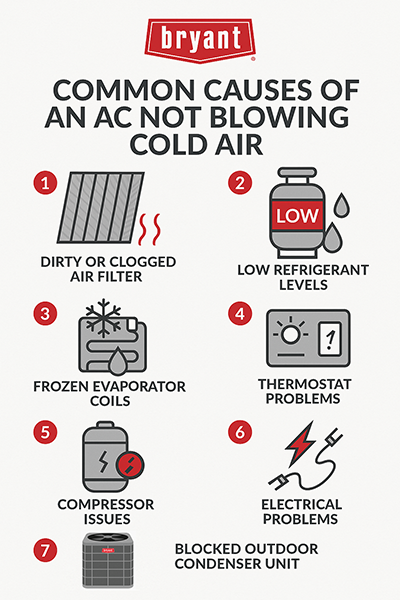
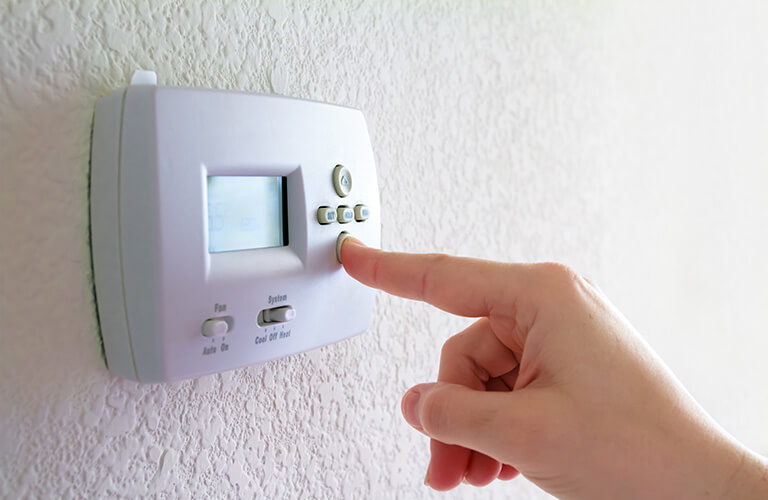
1. Wrong Thermostat Settings
This might sound silly, but the first thing I checked was the thermostat. I had kids running around, and it’s easy for someone to accidentally set it to “heat” or “fan” instead of “cool.”
- Make sure it’s set to “cool.”
- Double-check the temperature setting. Sometimes, it’s set higher than you think.
I once found mine set to “fan,” which only circulates air, not cools it.
2. Dirty Air Filters
I used to forget about my air filters until my AC started blowing warm air. When filters get clogged with dust and hair, air can’t move through easily. This makes your system work harder and cool less.
How to check:
- Find the filter (usually behind a vent or in the unit).
- If it looks gray or dusty, replace it.
Most filters should be changed every 1-3 months. I set reminders on my phone now because I learned the hard way.
3. Blocked Or Closed Vents
Once, I moved furniture around and accidentally covered a vent with a rug. That room stayed hot, and the rest of the house didn’t cool well either.
Walk around your house:
- Make sure all vents are open and clear.
- Look for furniture or curtains blocking airflow.
Blocked vents can make your AC less effective.
4. Dirty Condenser Coils
The condenser is the part of your AC that sits outside. If it’s covered in dirt, leaves, or grass, it can’t release heat well. One summer, I found mine clogged with cottonwood fluff.
Here’s what I do now:
- Turn off the unit.
- Gently rinse the coils with a hose (not a pressure washer).
- Remove leaves and debris by hand.
Keeping the area around your outdoor unit clear makes a big difference.
5. Low Refrigerant
Refrigerant is what cools the air in your AC system. If there’s a leak, your AC can’t cool as well. I noticed this when my system ran nonstop but never got cold.
Signs of low refrigerant:
- Ice on the refrigerant lines or coils
- Hissing or bubbling sounds
- AC runs a lot but doesn’t cool
This is not a DIY fix. You’ll need a technician to find and fix the leak, then refill the refrigerant.
6. Tripped Circuit Breaker
Sometimes, your AC might stop cooling because the outside unit isn’t running at all. That happened to me after a power surge.
What I did:
- Checked the breaker box
- Found the AC breaker was “off.” Flipped it back on.
If the breaker keeps tripping, call a pro. There could be a bigger problem.
7. Frozen Evaporator Coils
Evaporator coils can freeze if there’s not enough airflow or if there’s a refrigerant problem. I once noticed frost on the indoor part of my AC unit. The air coming out of the vents was weak and not cold.
What helps:
- Turn off the AC and let it thaw (can take several hours).
- Check and change the air filter.
- If it happens again, call a technician.
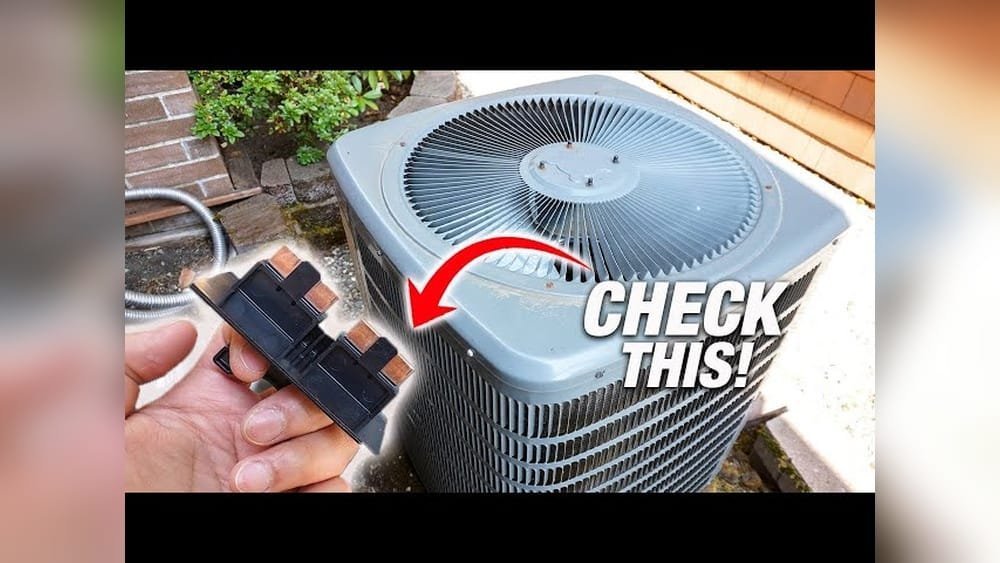
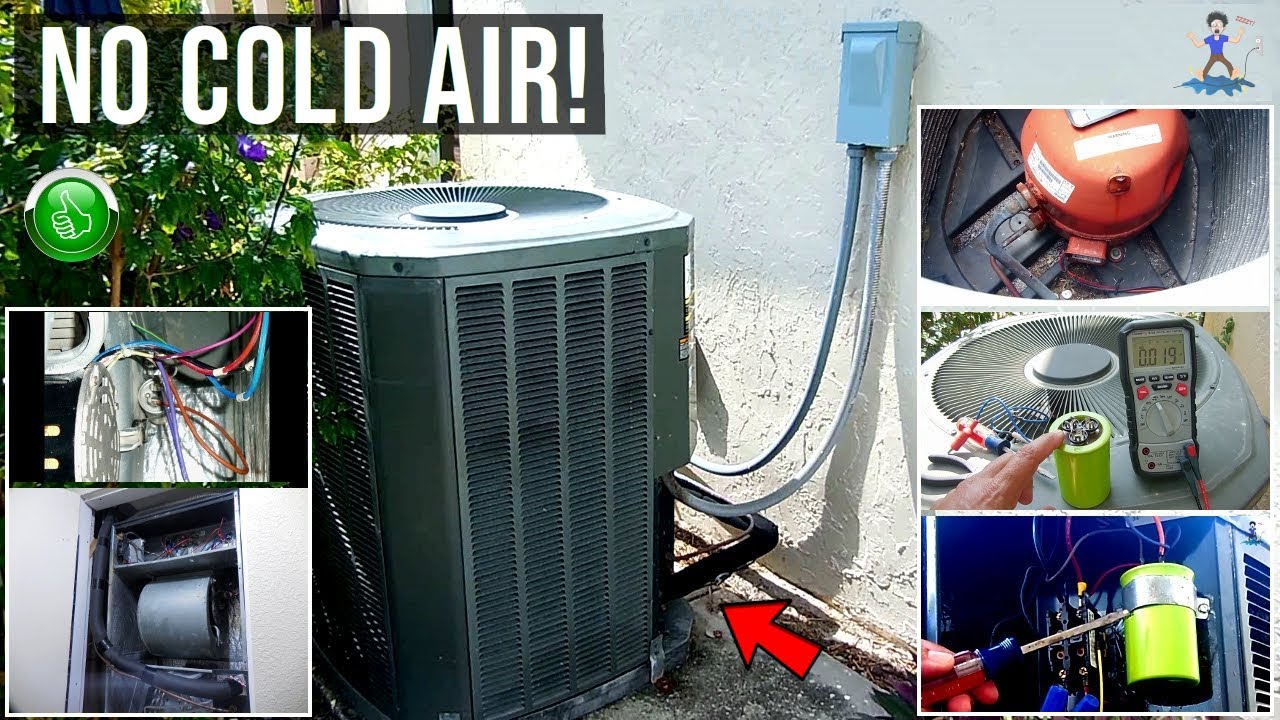
8. Faulty Capacitor Or Contactor
These are electrical parts inside your outdoor unit. If they fail, your compressor or fan won’t run. One spring, I heard a buzzing sound and the fan outside wasn’t spinning.
You’ll need a pro to replace these parts, but it’s good to know what might be wrong.
9. Leaky Ductwork
If you have old or flexible ducts, sometimes they get holes or become disconnected. I once found a section of duct had fallen in my attic, blowing cold air into the insulation instead of the living room.
Signs of duct leaks:
- Rooms that never get cool
- Higher power bills
- Weak airflow
A technician can find and seal leaks with special tools.
10. Old Or Failing System
Sometimes, your system is just old. Most central AC units last 10-15 years. Mine started to need repairs every summer after year 12. At some point, it’s cheaper and more reliable to replace the whole unit.
Here’s a comparison of typical AC lifespan and when problems start to appear:
| System Age | Common Issues | Replacement Needed? |
|---|---|---|
| 0-5 years | Few issues, mostly filter changes | No |
| 6-10 years | Minor repairs, occasional refrigerant top-up | Maybe |
| 11+ years | Frequent repairs, poor cooling | Often yes |
If your system is getting up there in age, start saving for a new one.
How I Troubleshoot My Hvac
When I first ran into cooling problems, I felt lost. Over time, I learned a simple process that saves me time and money.
- Check thermostat settings. Is it on “cool?” Is the temperature right?
- Change the air filter. Even if it looks okay, a new filter is cheap.
- Look at the outdoor unit. Is it running? Is it blocked or dirty?
- Listen for strange noises. Clicking, buzzing, or no noise at all can be clues.
- Check the breaker. Make sure it didn’t trip.
If I still have no cold air, I call a licensed HVAC technician. It’s not worth damaging an expensive unit by guessing.
Professional Repair Vs. Diy
It’s tempting to fix things yourself, especially if you’re handy. But here’s a quick look at what you can try and when to call for help.
| Issue | DIY? | Call a Pro? |
|---|---|---|
| Thermostat settings | Yes | No |
| Air filter replacement | Yes | No |
| Outdoor unit cleaning | Yes | No |
| Refrigerant leak | No | Yes |
| Electrical parts (capacitors, contactors) | No | Yes |
I always try the easy steps first. If there’s no change, it’s time for the experts.
Hidden Causes Most People Miss
Even after years of dealing with HVAC systems, I still find surprises. Here are a couple of things I didn’t realize at first:
- Dirty return vents can block airflow. I used to just clean the supply vents, but the returns matter too.
- Incorrect AC size for your home. If your system is too small, it will run all day and never cool well. Too big, and it cycles on and off, wearing out faster.
A professional can check these during a service call.
Energy Bills And Efficiency
A struggling AC doesn’t just make you hot—it hits your wallet. I noticed my power bills spiked when my system wasn’t cooling right. Here’s what I learned:
- Clogged filters and blocked vents force the system to run longer.
- Leaky ducts waste cooled air.
- Low refrigerant makes the compressor work harder.
- Old systems use more power, even when working.
Regular maintenance pays for itself in lower bills and fewer repairs.
Comparing Ac Problems: What’s Most Common?
In my experience and from talking with neighbors, some problems happen more often than others. Here’s how common each issue tends to be:
| Problem | How Often? |
|---|---|
| Dirty filter | Very common |
| Thermostat setting | Common |
| Low refrigerant | Less common |
| Electrical failure | Occasional |
| Leaky ducts | Occasional |
| Old system | Common after 10 years |
Don’t feel bad if you miss the easy stuff. Even I’ve called a tech for a dirty filter.
Maintenance Tips That Saved Me
I’ve learned that a little attention every few months can prevent most cooling problems. Here’s what works for me:
- Change your filter at least every 3 months.
- Clear leaves and grass from the outdoor unit.
- Keep vents unblocked in every room.
- Schedule a pro checkup once a year (spring is best).
- Listen for odd sounds or weak airflow—and act fast.
These simple steps have kept my home comfortable and avoided expensive repairs.
When It’s Time To Replace
Replacing an AC isn’t cheap, but sometimes it’s the right move. Here’s when I knew it was time:
- My system was over 12 years old.
- Repairs were getting more frequent and expensive.
- The house never got truly cool, even after fixes.
- My energy bills kept rising.
A new system cut my power bill by 20%. And no more sweaty nights!
If you’re not sure, ask an honest technician for their opinion. Get a couple of quotes before you decide.
Where To Find More Help
Sometimes you need a second opinion or want to learn more. I found a ton of reliable info at the U.S. Department of Energy site. They explain how AC systems work and how to get the most from them.
Frequently Asked Questions
Why Is My Hvac Running But Not Cooling The House?
If your AC is on but not cooling, check your thermostat, air filter, and make sure the outdoor unit is running. If those are fine, you might have low refrigerant or a duct leak. A technician can diagnose it.
How Often Should I Replace My Air Filter?
Most filters need changing every 1-3 months. Homes with pets or allergies may need more frequent changes. I do mine every month during summer.
Can A Dirty Outdoor Unit Cause No Cold Air?
Yes, if the condenser coils are dirty or blocked, your AC can’t cool well. Clean the area around the unit and gently rinse the coils once or twice a year.
What Should I Do If My Ac Is Freezing Up?
Turn off the system and let it thaw completely. Replace the filter. If it freezes again, call a pro—there may be a bigger problem like low refrigerant.
Is It Better To Repair Or Replace My Old Ac?
If your system is over 10 years old and needs frequent repairs, replacement is usually more cost-effective. New units are more energy-efficient and reliable.
—
Dealing with an HVAC not blowing cold air can be stressful, but you’re not alone. I’ve been through all these steps, made the mistakes, and learned how to keep my cool—literally. With a bit of attention and quick action, you can get your home comfortable again and avoid the sweaty frustration I once felt.
As an Amazon Associate, We earn from qualifying purchases