
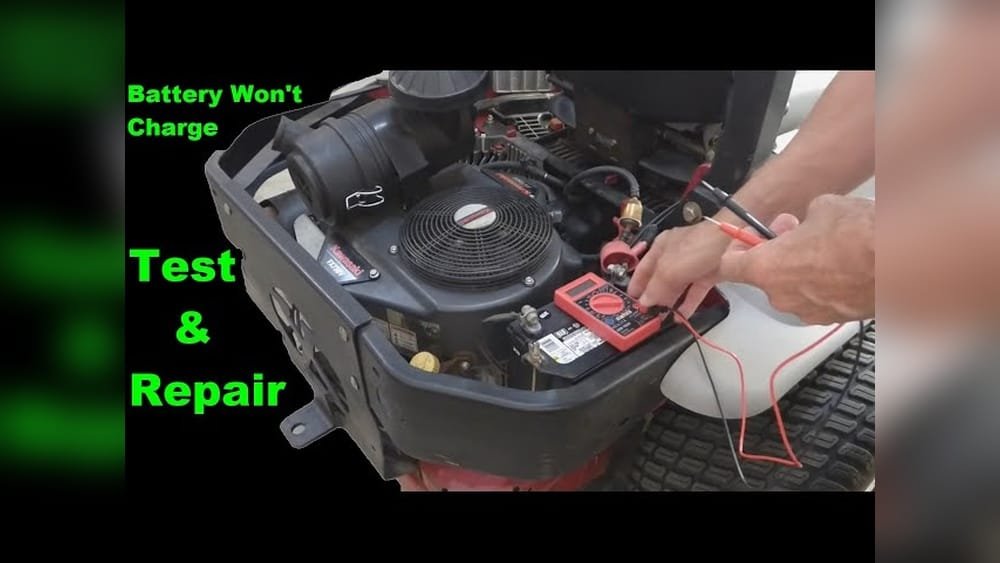
When my lawn mower battery wouldn’t charge, I felt stuck. I was ready to mow, but the machine just sat there, dead. I thought, “How hard can this be?” I tried a few things, made some mistakes, and learned a lot along the way. If you’re having the same problem—your lawn mower battery not charging—let me walk you through what I learned. I’ll share the easy fixes, what to check, and those sneaky mistakes that cost me time.
What Happens When Your Lawn Mower Battery Won’t Charge
When I turned my key and nothing happened, I had a sinking feeling. I thought maybe I left the lights on, or maybe the battery was just old. But it’s not always that simple. Sometimes, the charger is fine, but a small part or a wire is bad.
Other times, the battery is just too old to hold a charge. I realized the problem could be something easy, or something deeper.
A non-charging battery means the mower won’t start. Even if it does, it might stop after a few minutes. I learned not to ignore the little signs—like slow cranking or dim lights. These signs usually point to a charging problem.
Common Reasons Your Lawn Mower Battery Won’t Charge
I want to share the main reasons I found when my mower battery wouldn’t charge. Here’s what I checked first, and what I wish I knew sooner:
- Loose or corroded battery cables – Sometimes, the problem is just a loose or dirty connection.
- Bad battery – Old batteries can’t hold a charge.
- Faulty charger – The charger might not be giving out power.
- Blown fuse – Some mowers have a fuse in the charging line.
- Faulty alternator or stator – This recharges the battery while you mow.
- Damaged wiring – Mice, weather, or age can damage wires.
- Bad safety switches – Some mowers have safety switches that stop charging if not working.
- Wrong battery type – Not all batteries work for every mower.
Most people only check the battery or charger. I made the same mistake. But there’s more to it, and checking everything can save a lot of stress.

Step-by-step: How I Diagnosed My Lawn Mower Battery Problem
I want to break down the steps I took to find out why my battery was not charging. Some steps are easy, others need a little patience. But you don’t need to be a mechanic—just careful.
1. Check Battery Connections
I started by looking at the battery terminals. Sometimes, they get covered in white or blue powder—this is corrosion. I found a wire brush works well to clean them. I made sure the clamps were tight, too. Loose or dirty connections can stop the battery from charging.
2. Test The Battery
Next, I used a simple multimeter. I set it to DC volts and touched the leads to the battery posts. A healthy battery should read around 12.6 volts when fully charged. Mine was much lower—around 11 volts.
If you don’t have a multimeter, most auto parts stores will test the battery for free. I took mine in, and they confirmed it was weak.
3. Try A Different Charger
I thought my charger might be the problem. I borrowed one from a neighbor and tried again. If the battery still wouldn’t charge, I knew the problem was not the charger.
4. Inspect The Fuses
Some mowers have a fuse between the battery and the charging system. I found mine near the engine, in a small plastic holder. The fuse looked burnt, so I replaced it. Sometimes, this is all it takes.
5. Look At The Charging System
Most riding mowers have something called a stator or alternator. This charges the battery while the mower runs. I learned that if the battery dies while mowing, the stator may be bad. I used my multimeter again, following the wires from the engine. If the stator isn’t putting out AC voltage, it’s time to replace it.
6. Check For Damaged Wiring
I once found a chewed wire under the seat. Mice like to hide in mowers. I checked all wires for breaks or damage. Sometimes, just fixing a broken wire can solve everything.
7. Test Safety Switches
Some mowers have safety switches under the seat or on the brake. If these fail, charging stops. I tested by sitting and standing, watching if the engine tried to start. If not, the switch might be bad.
The Most Common Fixes (and What Finally Worked For Me)
I’ll be honest—my problem was simple. My battery was old and the terminals were corroded. Cleaning the posts and buying a new battery fixed it. But here’s what I found are the most common fixes:
- Clean the battery terminals with a wire brush.
- Replace old batteries (they usually last 3-5 years).
- Swap out a blown fuse if you find one.
- Test and replace bad chargers.
- Fix broken wires if you spot them.
- Replace a dead stator or alternator if it isn’t charging the battery.
Below is a summary of common problems and the fix that worked for me:
| Problem | What I Did | Result |
|---|---|---|
| Corroded terminals | Cleaned with brush | Battery started to charge |
| Old battery | Bought new battery | Mower started right up |
| Blown fuse | Replaced fuse | Charging restored |

How To Prevent Battery Problems In The Future
After fixing my mower, I wanted to make sure I didn’t end up in the same spot. Here’s what I do now:
- Keep terminals clean: I check and clean them every month.
- Charge before storage: I fully charge the battery before winter.
- Disconnect in off-season: I remove the battery if I won’t use it for months.
- Use a battery maintainer: This keeps the battery topped up without overcharging.
One mistake I made was leaving the battery in the mower all winter. The cold drained it completely. I lost a battery that way. Now I know better.
When It’s Time To Replace The Battery
You might wonder if you can save an old battery. I used to try to squeeze one more year out of mine. But if your battery:
- Won’t hold a charge
- Shows swelling or leaks
- Is over 3-5 years old
It’s better to replace it. I found that new batteries save time and frustration.
Here’s a quick comparison of old vs. new batteries from my experience:
| Old Battery | New Battery |
|---|---|
| Needs frequent charging | Holds charge for months |
| Engine starts slow | Engine starts right away |
| May leak or bulge | No leaks or swelling |
Do Electric And Riding Mowers Have Different Problems?
Yes, they do. I have an electric push mower and a riding mower. The issues can be a bit different.
- Electric push mowers often use lithium or lead-acid batteries. If the charger light doesn’t come on, the charger might be bad. Sometimes, the battery management system inside the battery fails.
- Riding mowers usually have a lead-acid battery, similar to a car. The charging system can fail, but sometimes it’s just a fuse or a wire.
Here’s a comparison based on my experience:
| Electric Push Mower | Riding Mower |
|---|---|
| Charger or battery pack fails | Alternator, fuse, or wiring issues |
| Battery often sealed, not repairable | Battery replaceable, can check parts |
| Usually lighter, easy to swap | Bigger battery, heavier, more wiring |
Mistakes I Made (so You Don’t Have To)
I want to share a few mistakes I made so you can avoid them:
- Jump-starting a dead battery too often – This can damage the battery and mower.
- Ignoring corrosion – Even small amounts can stop charging.
- Not checking the fuse – I spent hours before finding a $2 blown fuse.
- Buying the wrong battery – Check your owner’s manual for the right type and size.
A less obvious tip: Always check the ground wire. I once thought my battery was bad, but the ground wire was loose.
When To Get Professional Help
If you’ve tried all the steps above and still have trouble, it might be time for a mechanic. I once spent a whole weekend chasing a wiring problem. A local repair shop found a broken wire in ten minutes. Sometimes, it’s worth the cost.
Also, if you see smoke, hear popping sounds, or smell something burning—stop and call a professional. Safety first.
Resources That Helped Me
There’s a lot of confusing info online, but I found clear advice from the Toro Customer Support. They have diagrams and videos for many mower brands.

Frequently Asked Questions
Why Does My New Battery Still Not Charge?
If your new battery won’t charge, check the charger, wiring, and fuses. Sometimes, a new battery can’t fix a broken charging system.
Can I Use A Car Charger On My Lawn Mower Battery?
Yes, but use the lowest setting (2 amps). High settings can damage small mower batteries.
How Long Do Lawn Mower Batteries Last?
Most last 3 to 5 years. Cold winters and long storage can shorten battery life.
What Are Signs Of A Bad Battery?
Look for slow cranking, dim lights, swelling, leaks, or a battery that won’t hold charge.
Should I Remove The Battery For Winter?
Yes. Removing and storing it in a cool, dry place keeps the battery healthy until spring.
If your lawn mower battery is not charging, don’t panic. Most problems are easy to fix with simple tools and a bit of patience. I hope my experience saves you time and keeps your mower ready for action all season long.
As an Amazon Associate, We earn from qualifying purchases