
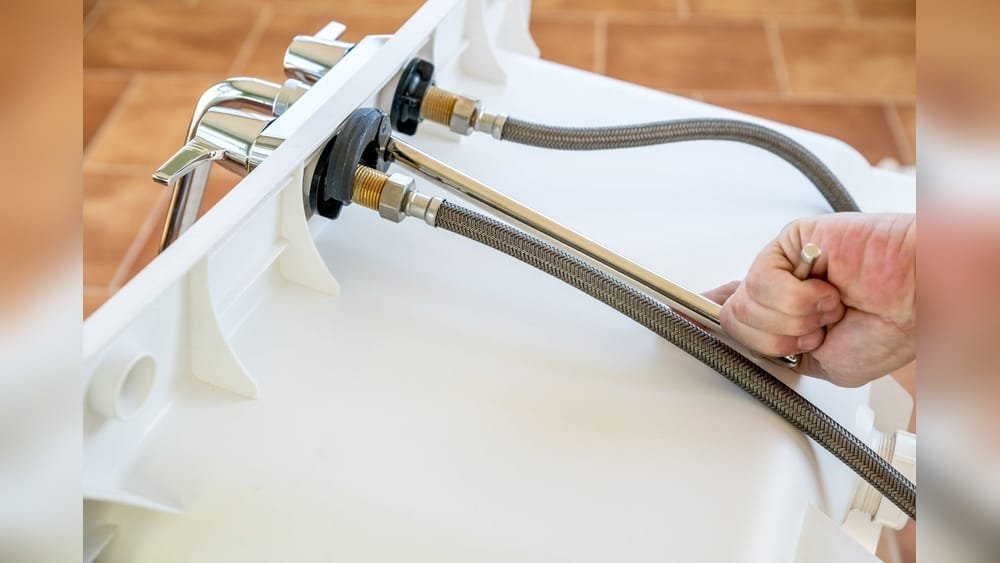
If you’re like me, the first time you crawled under a kitchen sink, you probably had no idea what a basin wrench was. I’ll never forget the day I tried to tighten a leaky faucet with just pliers and a regular wrench. My knuckles got scraped, water dripped into my sleeves, and I almost gave up. That was when a friend—who’s a plumber—told me about the basin wrench. At first, I wondered, “Is a basin wrench really necessary?” Over the years, I’ve learned the answer isn’t as simple as yes or no. Let me share what I discovered from my own repairs, so you can decide if you need this tool in your own toolbox.
What Is A Basin Wrench?
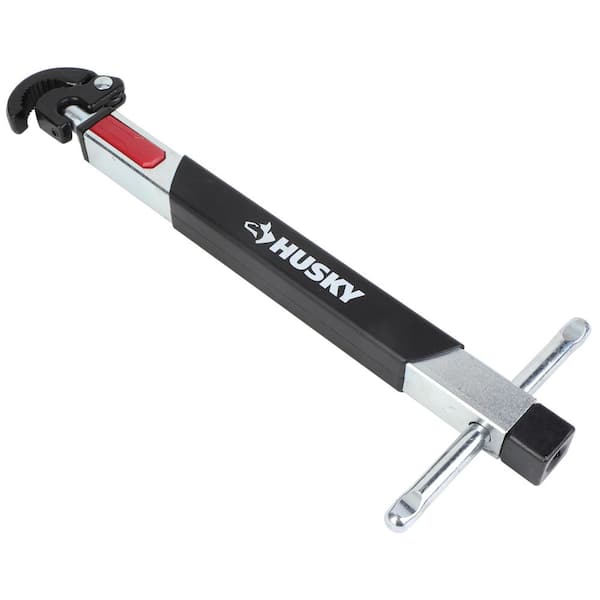
A basin wrench is a long, slim tool with a rotating, spring-loaded jaw at the end. It’s designed to reach nuts that are hard to access, especially the ones under sinks that hold faucets in place. The jaw grips the nut, and the long handle gives you leverage in tight spaces. This tool is different from regular wrenches or pliers, which need more space to turn.
When I first saw one, I thought it looked odd—almost like a robot arm. But that design is what makes it perfect for reaching behind sinks, where your hand or another tool can’t fit. Most basin wrenches can adjust to different nut sizes, and some even have a telescoping handle.
When Do You Need A Basin Wrench?
Let’s be real: most people don’t replace faucets every week. But when you do, the space under the sink is cramped and awkward. Here’s when I found a basin wrench to be a lifesaver:
- Tightening or loosening faucet nuts: Under the sink, the nuts holding the faucet are usually at the very back, surrounded by pipes.
- Replacing old faucets: Old nuts are often stuck or corroded. A basin wrench gives you the leverage to break them free.
- Working in small cabinets: Some bathroom vanities have almost no room to move. Standard tools just don’t fit.
I once tried to change a faucet in my aunt’s old house. The nut was rusted tight, and the space was barely big enough for my wrist. My regular wrench kept slipping. After two hours, I borrowed a basin wrench, and the nut came loose in minutes.
That experience changed how I looked at plumbing jobs.
Can You Do Without A Basin Wrench?
You might be wondering, “Can I skip buying a basin wrench and just use what I have? ” I’ve tried this approach. Here’s what happened.
I used adjustable pliers and a regular crescent wrench for years. Sometimes, if the nut wasn’t too tight and space allowed, I could get the job done. But many times, I scratched up the pipes, rounded off the nuts, or hurt my hands. Once, I even cracked a supply line because I couldn’t get the right angle.
So, yes, it’s possible to work without a basin wrench—if you get lucky and everything is easy to reach. But if you ever run into a stubborn nut or a cramped space, you’ll wish you had the right tool. In my experience, the basin wrench paid for itself in saved time and less frustration.
Comparing Tools For Faucet Installation
To make things clearer, here’s a table comparing common tools I’ve used for under-sink jobs.
| Tool | Best For | Limitations |
|---|---|---|
| Basin Wrench | Hard-to-reach nuts, especially on faucets | Not useful for most other plumbing tasks |
| Adjustable Pliers | General plumbing, large nuts in open space | Can’t reach behind sinks easily |
| Crescent Wrench | Open areas, supply lines | Too bulky for tight spaces |
| Socket Wrench | Bolts with room for a socket | Rarely fits under sinks |
From my own repairs, I’d say a basin wrench is the only tool that works well every time for faucet nuts under a sink.
Benefits Of Owning A Basin Wrench
Here’s why I keep a basin wrench in my toolbox, even though I don’t use it every week:
- Saves time: Jobs that took hours with other tools now take minutes. No more fighting with rusty nuts.
- Reduces injury: I used to cut and bruise my hands squeezing into small spaces. The basin wrench keeps my hands out of harm’s way.
- Protects plumbing: The right tool means less risk of damaging pipes or fittings.
- Peace of mind: I know I can handle leaks or faucet changes without calling a plumber.
A practical tip: I bought my first basin wrench for about $15. It paid off the first time I used it, compared to the cost of a plumber’s visit.
When You Might Not Need A Basin Wrench
Of course, not everyone needs every tool. If you rent and your landlord handles repairs, you probably won’t need a basin wrench. The same goes if you never plan to touch your plumbing. But if you like to fix things yourself—even just once or twice—a basin wrench is a smart investment.
Also, some newer faucets use plastic mounting clips or quick-connect systems instead of traditional nuts. In those cases, the basin wrench might not fit or be needed. It’s always a good idea to check what kind of hardware your faucet uses before buying tools.
Common Mistakes When Working Under A Sink
I’ve made plenty of mistakes trying to avoid buying the right tool. Here are a few lessons I learned the hard way:
- Using the wrong wrench: I tried using locking pliers on a stuck nut and ended up rounding the edges, making it harder to remove.
- Forgetting about water supply: Always turn off the water before working on faucets, or you might get soaked.
- Not checking space: Some cabinets are tighter than others. Measure your space before you start, so you know if a long basin wrench will fit.
- Skipping safety: Protect your eyes from dust and your hands from sharp edges. I once got a metal splinter from a rusty nut.
These mistakes taught me that the right tool—and a little planning—can save a lot of pain.
Real-world Example: My First Faucet Replacement
Let me tell you about the first time I replaced a kitchen faucet by myself. The house was old, and the faucet leaked every time I turned it on. I watched a few videos online and thought, “How hard can it be?
”
I crawled under the sink with my adjustable wrench. The space was so tight, I could barely see the nut. I tried for almost an hour, but the wrench slipped off every time. I got frustrated, and my back started to hurt.
That’s when my neighbor, who’s good with tools, came over. He handed me a basin wrench and showed me how to use it. In less than five minutes, I had the nut loose. I was amazed at how much easier it was.
From that day, I knew a basin wrench was worth having, even for a small job.
How To Use A Basin Wrench (step-by-step)
If you’re new to plumbing repairs, here’s how I use a basin wrench:
- Turn off the water: Always start by closing the supply valves under the sink.
- Clear the area: Remove any cleaning supplies or trash cans under the sink to give yourself room.
- Position the wrench: Slide the jaw of the basin wrench over the nut behind the faucet.
- Adjust the jaw direction: Most basin wrenches can tighten or loosen nuts. Make sure the jaw is facing the correct way.
- Turn the handle: Use the long handle to get leverage. The spring-loaded jaw grips the nut as you turn.
- Finish by hand: Once the nut is loose, you might be able to finish unscrewing it by hand.
One tip I learned: If the nut is really stuck, spray a little penetrating oil and let it sit for a few minutes before trying again.
Are There Alternatives To A Basin Wrench?
There are a few alternatives, but I haven’t found any as reliable. Some companies make faucet and sink installer tools that combine a wrench with other features, like a built-in spirit level. These can work, but they’re often bulkier and more expensive.
For small nuts, some people use socket extensions with a ratchet, but most sinks don’t have enough room for this. I’ve also seen adjustable wrenches with flexible heads, but they still need more space than a basin wrench.
Here’s a table comparing a few alternatives I’ve tried:
| Tool | Space Needed | Cost | Success Rate (from my experience) |
|---|---|---|---|
| Basin Wrench | Small | Low | High |
| Faucet Installer Tool | Medium | Medium-High | Medium |
| Adjustable Pliers | Large | Low | Low |
If you want to see different types of plumbing tools, check out the Wikipedia page on plumber’s wrenches.

How To Choose A Good Basin Wrench
If you decide to buy one, here’s what I look for:
- Strong, sturdy construction: Cheap wrenches can break under pressure.
- Comfortable handle: Since you’re working in tight spaces, a grip that doesn’t slip is important.
- Adjustable jaw: This lets you use the wrench on different nut sizes.
- Telescoping handle: Some models let you extend the handle for better reach.
I recommend buying from a trusted brand. I learned this the hard way after a bargain wrench bent out of shape during a tough job.
Insights Most Beginners Miss
- It’s not just for removal: A basin wrench isn’t only for taking nuts off—it’s just as useful for installing new faucets. It helps tighten nuts in hard-to-reach spots where your hand can’t fit.
- One tool, many faucets: Most homes have several sinks. If you ever need to fix a bathroom or laundry faucet, you’ll use the basin wrench again. It’s not a “one and done” tool.
Final Thoughts: Is A Basin Wrench Necessary?
From my experience, a basin wrench isn’t something you’ll use every day. But when you need it, nothing else works as well. If you plan to do even a little home plumbing, it’s a cheap way to save hours of frustration and maybe a few bruises.
It’s one of those tools that makes you wonder how you ever managed without it.
Frequently Asked Questions
Do I Need A Basin Wrench For Every Faucet Installation?
Not always. Some faucets use clips or hand-tightened nuts. But for most standard faucets, especially older ones, a basin wrench makes the job much easier.
Can I Use Pliers Instead Of A Basin Wrench?
You can try, but pliers often slip or don’t fit. They can also damage the nut or pipes. I’ve done it, but it’s much harder and riskier.
Are Basin Wrenches Expensive?
Most are affordable. You can find a good one for $15–$25. It’s a small investment compared to hiring a plumber.
What Size Nuts Does A Basin Wrench Fit?
Most basin wrenches adjust to fit common faucet mounting nuts, usually from 1/2 inch to 1 inch. Check your faucet’s hardware to be sure.
Is A Basin Wrench Hard To Use?
It takes a little practice, but it’s not hard. The hardest part is working in a tight space. Take your time, and you’ll get the hang of it quickly.
:max_bytes(150000):strip_icc()/SPR-how-to-use-a-basin-wrench-2718720-hero-A-6ba9e7b86b5c4c978b68a58c483237a9.jpg)
As an Amazon Associate, We earn from qualifying purchases