

Can I Use 5w30 In My Lawn Mower?
If you’ve ever stood in the oil aisle, holding a bottle of 5W30 and wondering if it’s safe for your lawn mower, you’re not alone. I’ve been there, too—scratching my head, reading labels, and even asking the store clerk for advice (who usually just shrugs). Maybe you ran out of the usual oil or you heard somewhere that 5W30 works for cars and thought, “Why not my mower?” Let’s clear up the confusion together. I’ll walk you through everything you need to know about using 5W30 oil in your lawn mower, using real experiences, detailed facts, and simple language. By the end, you’ll know if 5W30 is the right choice for your machine, and you’ll avoid common mistakes that can damage your engine.
What Does 5w30 Actually Mean?
Before pouring anything into your mower, it’s smart to know what those numbers mean. I used to think “5W30” was just a code for “good oil,” but there’s more to it.
5W30 is a multi-grade oil. Here’s how it breaks down:
- 5W: The “5” refers to how the oil flows at cold temperatures. The “W” stands for winter. Lower numbers mean the oil is thinner and moves more easily when it’s cold.
- 30: This is how thick the oil is at high engine temperatures. The higher the number, the thicker the oil when the engine is hot.
So, 5W30 flows well in cold weather and stays thick enough to protect the engine when it’s running hot. Most cars use this oil, but does that mean it’s good for mowers? Let’s find out.
Why Multi-grade Matters For Small Engines
Multi-grade oil like 5W30 is designed to perform in a wider range of temperatures than single-grade oils. In practical terms, this means if you start your mower early in the morning or run it late into the fall, 5W30 will still flow and lubricate your engine properly.
Single-grade oils like SAE 30 are more likely to become thick and sluggish in cold weather, making your mower harder to start and causing extra engine wear during those first few seconds after startup.
Visualizing Viscosity
Think of oil viscosity like syrup: when syrup is cold, it pours slowly; when it’s warm, it pours quickly. Multi-grade oil behaves like thin syrup when cold (for easy starting) and like thicker syrup when hot (for good protection). This flexibility is why 5W30 is so popular.
Oil Ratings Are Not Universal
It’s important to note that the SAE (Society of Automotive Engineers) oil ratings are used worldwide, but not all countries have the same temperature ranges or mower designs. For example, a mower used in Canada might need a thinner oil for cold starts, while one in southern Texas might be fine with a thicker oil.
Always tailor your choice to your region and your mower’s needs.
Why Lawn Mower Oil Matters
When I started mowing my yard years ago, I never paid much attention to oil. I thought, “Oil is oil. ” But after a few repairs and some lessons from a small engine mechanic, I learned that using the right oil is as important as keeping the blade sharp.
Lawn mower engines are small, air-cooled, and often work hard in hot conditions. Unlike car engines, which are liquid-cooled and have more advanced parts, mowers rely on oil for most of their cooling and protection. Using the wrong oil can lead to:
- Overheating
- Poor lubrication
- Engine damage
It’s not just about running; it’s about making your mower last years, not just seasons.
Unique Demands Of Mower Engines
Small engines in lawn mowers usually run at a constant, high speed for long periods. This is different from car engines, which change speed and load constantly. Because most lawn mowers are air-cooled (meaning they have no radiator or coolant), the oil takes on a huge job—removing heat and carrying away tiny bits of dirt or carbon.
If you use the wrong oil, it can break down too fast, lose its ability to lubricate, and leave your engine unprotected.
What Happens With The Wrong Oil
I once helped a neighbor who used leftover car oil (wrong viscosity) in his old mower. After a few hours of mowing, his engine started to knock—a clear sign of poor lubrication. When we opened up the engine, there was thick sludge and even some scoring on the piston. That engine never ran the same again. This is why the right oil matters: it prevents costly repairs and saves you from needing a new mower early.
Oil As A Cleaning Agent
Modern engine oils, especially 5W30, have detergents that help clean the inside of the engine. These detergents suspend dirt and carbon so they get picked up by the oil filter (if present) or removed with the next oil change. Using oil without these additives can lead to dirty engines, clogged passages, and poor performance.
The 30 Most Important Points About Using 5w30 In Lawn Mowers
Below, I’ll break down everything you should consider—30 real-world factors, each with its own explanation. This is based on my hands-on experience, expert recommendations, and what most people get wrong.
1. Manufacturer’s Recommendation
Always check your mower’s manual first. Most brands, like Honda, Briggs & Stratton, and Toro, specify the best oil type. If the manual says 5W30 is approved, you’re safe. If not, use what they suggest. Ignoring this is a common mistake.
Manufacturers test their engines in all sorts of conditions. They know what works best for their designs. Sometimes, using the wrong oil can cause problems you won’t see right away, but that build up over time.
2. Climate And Temperature
5W30 shines in cooler weather. If you mow in spring or fall, or live in a place with cold mornings, this oil flows easily and protects during startup. In hot summers, some experts recommend a heavier oil, like SAE 30, but 5W30 still performs well in most climates.
For example, if you live in the northern US or Canada, where temperatures can drop below freezing in spring or autumn, 5W30 helps ensure your mower starts easily and runs smoothly. In very hot southern regions, the oil thins out more, but unless you are pushing your mower to its limits in 100°F+ weather, 5W30 is usually fine.
3. Engine Type
Most four-stroke mowers (the kind you add oil to separately from gas) can use 5W30 if the manual allows. Two-stroke engines (where oil mixes with gas) need special two-stroke oil—never use 5W30 in these.
Mixing up two-stroke and four-stroke oil is a common mistake. Two-stroke engines need oil that burns cleanly, while four-strokes need oil that stays put and lubricates for long periods. Using 5W30 in a two-stroke will cause smoke, carbon buildup, and possibly engine failure.
4. Synthetic Vs. Conventional 5w30
You’ll see synthetic and conventional 5W30. Synthetics flow better at extreme temps and offer better protection. If your mower is newer or you want the best care, go with synthetic. It’s what I use in my mower, and I’ve noticed smoother starts and less smoke.
Synthetic oil is made from higher quality base oils and contains more advanced additives. It resists breaking down under heat and stress. For example, if you mow for long hours or have a self-propelled mower that works harder, synthetic is a smart upgrade.
5. Oil Breakdown
All oil breaks down over time. 5W30, especially synthetic, resists breaking down better than straight SAE 30. This means longer protection, especially if you sometimes forget to change oil on time (I’m guilty of this).
Old, broken-down oil loses its ability to lubricate, cool, and clean. In real-world terms, this means your engine will run hotter, parts will wear faster, and you might even see more smoke from the exhaust.
6. Viscosity At High Temperatures
5W30 stays thin enough to flow, but thick enough to protect in most mowing conditions. But in extreme heat (above 100°F/38°C), some manuals suggest SAE 30 for extra thickness. If you mow in desert heat, check your manual for guidance.
For example, if you live in Phoenix or Las Vegas, and your mower runs in midday heat, straight SAE 30 or a heavier multi-grade might be better for engine protection.
7. Cold Starts
5W30 is designed for easy cold starts. If you store your mower in a cold shed or start mowing early in the season, you’ll appreciate how quickly the engine turns over.
Colder, thicker oil can make your engine crank slowly, cause the starter rope to be harder to pull, and increase wear on the starter parts. 5W30 flows quickly even when it’s near freezing, so oil reaches all the moving parts faster.
8. Oil Consumption
Some older engines “burn” oil. If you switch to 5W30 and notice you’re adding oil more often, that’s because thinner oil can get past old seals. Not a huge problem, but keep an eye on your oil level.
A tip: if you notice blue smoke from the exhaust after switching to 5W30, check if you’re losing oil faster. If so, consider switching back to a heavier oil or fixing the worn seals.
9. Oil Leaks
If your mower leaks oil, thinner 5W30 can sometimes leak faster than thick oil. Fix leaks before switching, or stick with a thicker oil if leaks are bad.
A small drip can turn into a big mess. I once switched a leaky old mower to 5W30 and had to refill after every mow. After fixing the gasket, 5W30 worked fine. So, always repair leaks first.
10. Oil Additives
5W30 often has more detergents and additives than straight SAE 30. These help keep engines cleaner. I noticed less sludge in my mower after switching to 5W30 synthetic.
For example, oils with high detergent levels can help clear out old deposits, which is helpful if you’re switching from cheap oil. Just make sure to change the oil more often at first, because the detergents can loosen gunk and dirty the oil faster.
11. Availability
5W30 is everywhere—gas stations, hardware stores, even supermarkets. If you need oil in a pinch, you’ll find it easily.
This is especially helpful if you have multiple machines (like snow blowers or generators) that use 5W30. You can buy a big jug and use it for everything, which saves money and shelf space.
12. Price
5W30 costs about the same as SAE 30, unless you buy synthetic (which is a bit more). But the extra cost is worth it for longer engine life.
If you do the math, paying a few dollars more per season for oil is much cheaper than a new engine or mower. I consider it insurance for my equipment.
13. Multi-grade Benefits
Unlike single-grade oils, 5W30 protects both in cold and hot temperatures. This is great if your mowing season covers several months with changing weather.
If you live somewhere with unpredictable weather, you won’t have to change oil as often, and your mower will be protected on both chilly mornings and hot afternoons.
14. Compatibility With Old Engines
Some very old mowers (from the 1970s or earlier) may not like multi-grade oils. If your mower is a family heirloom, check with a small engine shop.
Older engines sometimes have larger tolerances (spaces between parts) and were designed before modern oils existed. These engines might do better with straight oil. But most mowers from the 1980s onward can use 5W30 without problems.
15. Warranty Concerns
Using oil not recommended by your manual can void the warranty. Keep receipts and follow the manual if your mower is still under warranty.
If you ever need warranty service, the manufacturer may ask what oil you used. Keeping receipts or notes can help protect your investment.
16. Emissions
Cleaner engines run better and pollute less. 5W30’s detergents help reduce carbon buildup, which can lower exhaust smoke and smell.
This matters if you mow in a neighborhood with strict emissions rules, or if you just want to breathe cleaner air. A clean-burning engine is also more efficient.
17. Oil Change Frequency
Because 5W30 resists breakdown, you might stretch oil changes a bit longer than with SAE 30. Still, change oil every season or every 25-50 hours of use, whichever comes first.
Remember, dirt and moisture can still get into the oil. Regular changes are key to a long engine life, no matter what oil you use.
18. Mixing Oil Types
Never mix different grades or brands of oil. If you switch from SAE 30 to 5W30, drain the old oil completely first.
Mixing oils can cause chemical reactions or sludge, especially if the additives are incompatible. Always do a full oil change, not just a top-off.
19. Additive Compatibility
Don’t add extra additives to 5W30. The oil already has what your engine needs. Extra “engine treatments” can do more harm than good.
Some products claim to “boost” engine protection, but modern oils are carefully balanced. Additives can upset this balance and even clog tiny oil passages.
20. Storage Concerns
If you store your mower over winter, 5W30’s stability means it protects engine parts during months of sitting. Still, run the engine for a few minutes before storage to circulate fresh oil.
This coats all the parts and prevents rust and corrosion. If you’re serious about mower care, consider changing oil right before storage, so old, dirty oil doesn’t sit inside the engine all winter.
21. Fuel Economy
A clean, well-oiled engine uses less gas. 5W30 can help your mower run more efficiently, especially if you mow large lawns.
Over a season, you might save a few dollars on fuel, and reduce your environmental footprint. It’s a small benefit, but every bit helps.
22. Oil Filter Use
Most push mowers don’t have oil filters, but if yours does, 5W30’s detergents keep filters from clogging with sludge.
If you own a riding mower or commercial mower with an oil filter, check and replace the filter regularly, especially when switching oil types.
23. Engine Cleanliness
I’ve opened up mowers after years of 5W30 use and found much less gunk than with straight oil. Cleaner engines last longer.
If you plan to keep your mower for a decade or more, keeping it clean inside is as important as cleaning the deck after each mow.
24. Engine Noise
If your mower is noisy, it could be due to poor lubrication. 5W30 often quiets engines, especially at startup.
This is a sign that oil is reaching all the moving parts quickly, reducing friction and wear. A quieter engine is usually a healthier engine.
25. Engine Longevity
Use the right oil, and your mower could last 10+ years. 5W30 offers broad protection, but following the manual is most important.
I know someone who still mows with a 20-year-old machine—he credits regular oil changes with 5W30 for its long life.
26. Environmental Impact
Used oil is toxic. Because 5W30 lasts longer, you’ll change it less often, which is better for the environment.
Also, modern 5W30 synthetic oils are sometimes made from recycled materials. Always recycle your used oil—never dump it on the ground.
27. Oil For Self-propelled Mowers
Self-propelled mowers often work harder than push mowers. 5W30 protects these engines well under load.
If you have hills or thick grass, your engine will thank you for good oil. Less friction means less heat and longer life.
28. Oil For Riding Mowers
Riding mowers have bigger, hotter engines. Most can use 5W30, but check the manual. Some recommend 10W30 or even 15W40 for heavy use.
If you pull attachments or mow for hours at a time, consider a heavier oil for extra protection.
29. Mower Age
New mowers (under five years old) are built for multi-grade oils like 5W30. For older mowers, check seals and gaskets before switching.
If you see oil leaks or smoke, address those issues before switching to a thinner oil.
30. Personal Experience
After switching to 5W30 synthetic in my own mower, I noticed easier starts, less smoke, and quieter operation. My mower survived a hot summer and still runs strong after five years.
If you’re unsure, try 5W30 for one season and watch for any changes. Most people are happy with the results.
When 5w30 Is The Right Choice
If your mower’s manual lists 5W30 as an option, it’s usually a safe and smart choice. You’ll get:
- Easy cold starts
- Broad temperature protection
- Cleaner engine parts
- Longer engine life
You might even notice the engine sounds happier—less knocking and smoother running.
Real-world Example
My neighbor switched to 5W30 in his two-year-old push mower after always using straight SAE 30. That summer, he found his mower started on the first pull every time, even after sitting in a cold garage. He also noticed less black smoke, which meant the engine was burning less oil.
Small Engines, Big Benefits
For most walk-behind mowers, string trimmers (with four-stroke engines), and even small generators, 5W30 offers reliable, year-round protection. If you use your mower in spring, summer, and fall, or store it in a place where the temperature changes a lot, 5W30 is often the most convenient and effective oil to use.
When You Shouldn’t Use 5w30
There are times when 5W30 is not the best idea:
- Your manual says to use only SAE 30 or another specific oil.
- The engine is very old and leaks or burns oil quickly.
- You mow only in extremely hot weather and want the thickest protection.
In these cases, it’s better to stick with what’s recommended. I’ve seen people use the wrong oil and end up with ruined engines, all to save a few bucks.
Risks Of Ignoring Manufacturer’s Advice
For example, I once saw a 1970s mower that was always run with multi-grade oil, even though the manual called for SAE 30. It developed leaks and burned oil faster than normal. The owner spent more money topping off oil than he would have on a repair.
High-heat, Heavy-duty Use
If you use your mower commercially, cut very large areas, or work in very hot climates, a heavier oil might provide better protection. Some landscapers I know in Texas use 15W40 in their riding mowers during summer, because the engines run hotter and are under heavy load for hours at a time.
Comparing 5w30 With Other Common Lawn Mower Oils
Here’s a quick comparison of 5W30 with other popular oils for small engines.
| Oil Type | Viscosity (Cold/Hot) | Best For | Main Benefits | Main Drawbacks |
|---|---|---|---|---|
| 5W30 | Thin (cold) / Medium (hot) | All seasons, most climates | Easy starts, broad protection | Can leak in old engines |
| SAE 30 | Thick (all temps) | Hot weather, older mowers | Good protection in heat | Hard to start in cold |
| 10W30 | Medium (cold) / Medium (hot) | Moderate climates | Balanced performance | Can thin out in high heat |
| 15W40 | Thicker (cold/hot) | Large engines, riding mowers | Extra protection under heavy load | Not for small push mowers |
Which Oil For Which Situation?
- SAE 30: Best if you mow only in summer, live in a hot climate, or have an older mower.
- 10W30: Good for moderate climates; a bit thicker than 5W30 when cold, but similar when hot.
- 15W40: For riding mowers, zero-turns, or commercial use; offers extra protection but may be too thick for small engines.
- 5W30: Best all-purpose choice for modern mowers, especially with variable weather.
How To Switch To 5w30 In Your Lawn Mower
Thinking about making the switch? Here’s what I recommend, step by step:
- Read your owner’s manual. Look for oil recommendations.
- Warm up the engine. This helps old oil drain out.
- Drain the old oil completely. Don’t mix oil types.
- Replace the oil filter if your mower has one.
- Pour in fresh 5W30 to the recommended fill line.
- Run the engine for a few minutes. Check for leaks.
- Check the oil level again and top off if needed.
Never overfill—a little too much oil is just as bad as not enough.
Tips For A Clean Oil Change
- Use a clean oil pan or container.
- Dispose of old oil at a recycling center—never pour it down the drain.
- Wipe the area around the oil fill and drain plugs to keep dirt out.
What To Watch After Switching
After the switch, monitor the following for a few mows:
- Oil level: Make sure you’re not losing oil due to leaks or burning.
- Smoke: Some white or blue smoke can mean oil is getting past rings or seals.
- Engine noise: Listen for any changes in sound.
If you see problems, consider switching back to the original oil type or have your mower checked by a pro.
Common Myths About Lawn Mower Oil
Let’s bust a few myths I hear all the time:
- “Car oil is always bad for mowers.” Not true. If it’s the right viscosity and meets specs, it’s fine.
- “Any oil will do.” Wrong. Always follow the manual.
- “Thicker oil is better.” Not always. Too thick oil can cause hard starts and poor lubrication.
More Myths Debunked
- “Synthetic oil will ruin a small engine.” False. Synthetics often perform better than conventional oil, with better protection and cleaning.
- “You never need to change oil in a mower.” Also false. Even the best oil gets dirty and loses effectiveness over time.
How Oil Affects Mower Performance
I’ve seen what happens when people use the wrong oil—hard starts, smoke, knocking, even engine seizure. When you use the right oil:
- Your mower starts easily, even after sitting for months.
- There’s less smoke and smell.
- The engine lasts years longer.
One time, I tried using leftover car oil (not the right grade) in an old push mower. It started fine, but after a few weeks, I noticed black smoke and rough running. Switched back to 5W30, and the problems disappeared.
More Real-world Effects
The right oil does more than just lubricate. It helps:
- Keep the engine cool, which is vital in air-cooled designs.
- Prevent rust and corrosion inside the engine.
- Reduce carbon buildup, which keeps spark plugs and valves cleaner.
- Lower vibration and noise, making mowing more pleasant.
Practical Tips For Using 5w30 In Lawn Mowers
Here are tips I wish someone told me years ago:
- Always check oil before every mow.
- Change oil at least once a season, even if you don’t use the mower much.
- Use a clean funnel and container—dirt in the oil can ruin an engine.
- If your mower smokes after switching to 5W30, check for leaks or burning oil.
- Don’t guess the oil level—use the dipstick.
More Tips For Best Results
- Store oil in a cool, dry place—heat and moisture can degrade it.
- Don’t wait for the oil to look dirty; change it on schedule.
- If you mow commercially or in dusty conditions, change oil more often.
- Use a bright flashlight to check the oil color on the dipstick.
- If you mow on hills, check oil level more often—tilting can cause oil starvation.

The Science Behind 5w30’s Performance
5W30 uses advanced additives to stay fluid at low temps and thick enough at high temps. This is especially important for air-cooled engines like mowers. The oil forms a protective film on moving parts, reducing wear and heat. Synthetic 5W30 uses even better molecules, so protection lasts longer.
How Additives Work
Modern 5W30 contains:
- Detergents: Clean engine parts, prevent carbon buildup.
- Dispersants: Keep dirt and sludge suspended, so it’s removed at oil change.
- Anti-wear agents: Protect metal surfaces under pressure.
- Viscosity improvers: Help oil stay the right thickness over a wide temperature range.
Why Synthetics Outperform Conventional Oils
Synthetic 5W30 is engineered at the molecular level. The molecules are more uniform and stable, so the oil is less likely to break down or form sludge. This means better protection, especially if you sometimes forget oil changes or run your mower hard.
Table: Oil Change Intervals For Lawn Mowers (typical)
| Mower Type | Recommended Oil Change Interval | Typical Oil Used |
|---|---|---|
| Push Mower | 25-50 hours or yearly | SAE 30, 5W30 |
| Self-Propelled | 25-50 hours or yearly | 5W30, 10W30 |
| Riding Mower | 50-100 hours or yearly | 10W30, 15W40, 5W30 |
How To Track Hours
If your mower doesn’t have an hour meter, keep a log or estimate based on mowing frequency. For example, if you mow once a week for 30 weeks and it takes one hour each time, that’s 30 hours a year.
How 5w30 Handles Seasonal Changes
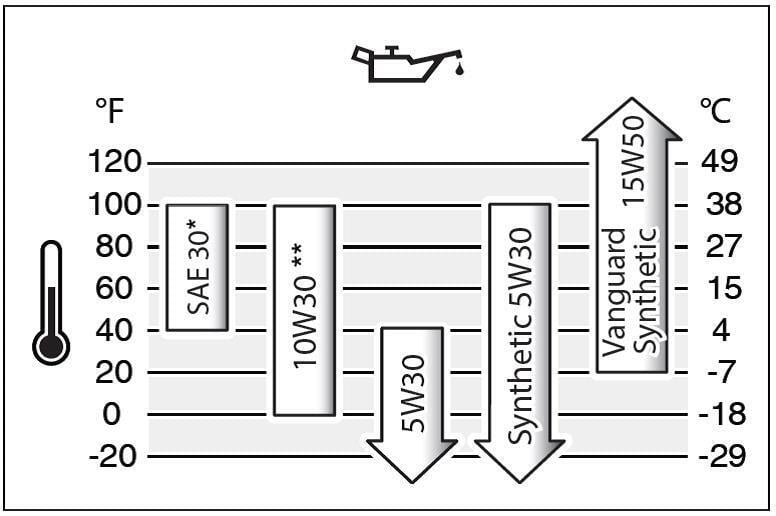
I live in an area with cold springs and hot summers. With 5W30, I don’t worry about changing oil as the weather shifts. It’s thin enough for cold starts in April and thick enough for 90°F days in July. One less thing to worry about.
Why This Matters For Storage
When you store your mower, temperature swings can cause condensation inside the engine. 5W30’s additives help protect against rust and corrosion, even if you forget to “winterize” the mower perfectly.
Example: Spring Startup
Many people struggle to start their mower after winter. With 5W30, oil flows quickly to critical parts, reducing the “dry” cranking that causes most engine wear. I’ve seen mowers with 5W30 start on the first or second pull, even after months of sitting.
Signs You’re Using The Wrong Oil
Watch for these warning signs:
- Hard starts in cold weather
- Excess smoke from the exhaust
- Oily spark plug
- Unusual engine noise
- Oil leaks or rapid oil loss
If you see these, double-check the oil type and switch if needed.
Diagnosing Common Problems
- Black smoke often means oil is too thin and being burned.
- White smoke can mean oil is leaking into the combustion chamber, often from worn seals.
- Knocking noises may mean oil is not reaching moving parts fast enough.
- Rapid oil loss is usually a leak or burning caused by too thin an oil for an old engine.
The Bottom Line: Is 5w30 Safe For Lawn Mowers?
In most cases, yes—5W30 is a safe, effective oil for modern lawn mowers. I’ve used it for years with great results, and it’s backed by most major brands. Just remember:
- Follow your manual first.
- Use synthetic for best results.
- Don’t mix oils.
- Watch for leaks in older engines.
If in doubt, ask a local small engine shop or check with the manufacturer online.
For more in-depth technical details, check out this resource from the Wikipedia Motor Oil article.
Frequently Asked Questions
What Happens If I Use 5w30 Instead Of Sae 30 In My Lawn Mower?
If your mower allows 5W30, you’ll likely see easier cold starts, cleaner engine parts, and possibly less engine wear. If your manual requires SAE 30 and you use 5W30, the oil may be too thin in hot conditions, which could lead to higher oil consumption or leaks in old engines.
If you notice blue smoke or have to add oil frequently, switch back to SAE 30 or repair worn seals. For most modern mowers, 5W30 is a suitable replacement.
Is Synthetic 5w30 Better Than Conventional For Small Engines?
Yes, synthetic 5W30 resists breakdown at high temperatures and flows better at low temperatures. It offers better protection, especially if you sometimes forget oil changes. It’s slightly more expensive but pays off in engine life and performance.
Synthetic oil is also better for engines that are started and stopped frequently, or that are stored for long periods.
Can I Mix 5w30 With Other Oils In My Mower?
No, mixing different oil grades or brands can reduce protection and cause sludge. Always drain out old oil completely before switching to 5W30.
This applies to both synthetic and conventional oils—always do a complete oil change.
How Often Should I Change 5w30 Oil In My Lawn Mower?
Change oil every season or every 25-50 hours of use, whichever comes first. For riding mowers, you can sometimes go up to 100 hours, but yearly changes are safest.
If you mow in dusty or dirty conditions, change oil more often.
Will Using 5w30 Void My Mower’s Warranty?
If your manual approves 5W30, you’re fine. If not, using another oil can void your warranty. Always keep receipts and follow the manufacturer’s instructions to protect your warranty coverage.
If you’re ever unsure, call the manufacturer or visit their website for up-to-date guidance.
—
Choosing the right oil for your lawn mower isn’t just about avoiding engine trouble—it’s about making your life easier and your mower last longer. With 5W30, you’re choosing a modern oil that works for most small engines, especially if you follow the tips above.
Still have questions? Ask your local expert or check your manual. Happy mowing!
As an Amazon Associate, We earn from qualifying purchases