
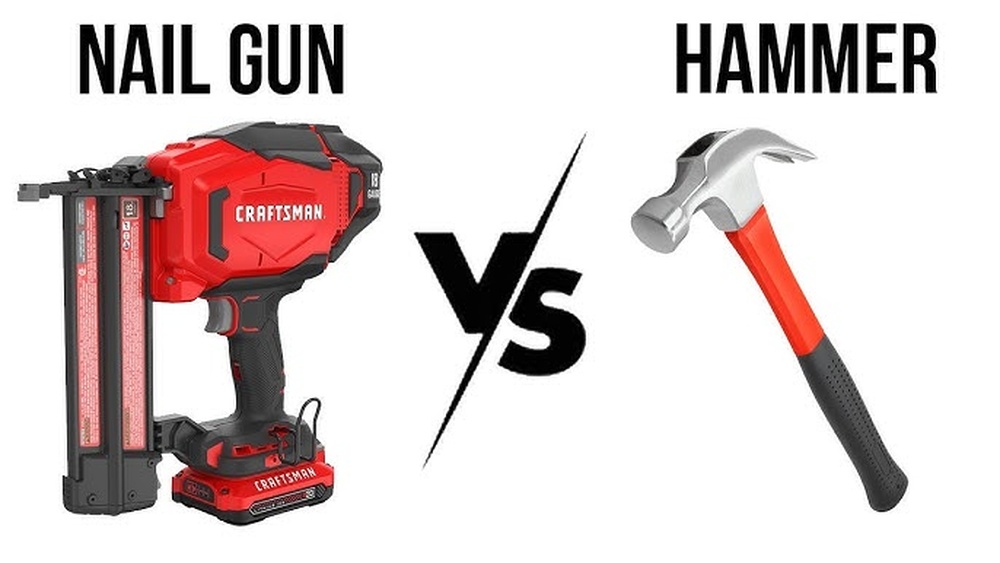
If you’ve ever started a DIY project at home, you’ve probably stood in the tool aisle wondering, Can I use a hammer instead of a nail gun? I’ve been there myself, staring at the shelf and wondering if I really need a fancy power tool or if my old hammer will do the trick. Over the years, I’ve tackled everything from simple wall shelves to building a backyard deck, sometimes with just a hammer and other times with a nail gun. I want to share what I’ve learned, the good and the bad, and help you make the best choice for your own projects.
What’s The Real Difference Between A Hammer And A Nail Gun?
When I first started, I thought a hammer and a nail gun were basically the same — both drive nails, right? But after using both, I realized there are some big differences.
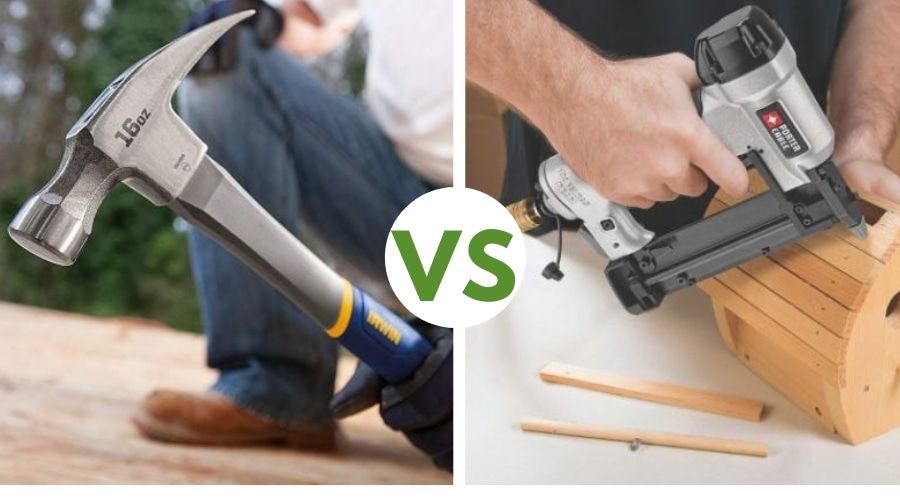
A hammer is a simple, manual tool. You swing it, and it drives the nail in. There’s no electricity or air compressor needed. A nail gun, on the other hand, is a power tool. It uses air, electricity, or gas to shoot nails into wood or other materials in a split second.
Here’s a quick comparison that helped me see the differences more clearly:
| Feature | Hammer | Nail Gun |
|---|---|---|
| Speed | Slower, one nail at a time | Very fast, multiple nails quickly |
| Effort | Physical, requires swinging | Minimal, just a trigger pull |
| Cost | Cheap, often under $20 | Expensive, $50–$300+ |
| Maintenance | Very low | Needs cleaning, sometimes oiling |
| Noise | Low | Loud “pop” with each nail |
When A Hammer Works Just Fine
From my experience, a hammer is great for small jobs and when you want more control. Here are situations where I reached for my hammer:
- Hanging pictures or shelves — I can tap in a few nails without much fuss.
- Tight spaces — A hammer fits where a bulky nail gun can’t.
- Small woodworking projects — Building a simple birdhouse or a box, a hammer feels natural.
- Repair work — Fixing a loose board or fence picket, the hammer is always ready.
I remember once building a small table for my kitchen. I used only a hammer, and it took a bit longer, but I could feel how tightly each nail went in. If you like hands-on work and don’t mind a little sweat, a hammer is reliable and satisfying to use.
Where A Nail Gun Makes A Big Difference
I didn’t buy a nail gun until I started bigger projects. The change was huge. For large or repetitive jobs, a nail gun saves time and energy. Here’s when I found it essential:
- Framing a wall — Driving hundreds of nails in a day would be exhausting by hand.
- Deck building — My hand got tired after a few hours with a hammer, but the nail gun kept me going.
- Flooring — When you need a lot of nails close together, a nail gun keeps everything tight and neat.
- Trim and molding — The finish nailer gives a clean look, with almost invisible nail holes.
I once helped a friend build a wooden fence. We started with hammers, but after the first few posts, we switched to his nail gun. We finished in a day instead of a weekend. The difference in speed and energy was clear.
Pros And Cons: Hammer Vs Nail Gun
Whenever I choose between a hammer and a nail gun, I weigh the pros and cons. Here’s what I’ve found over the years:
| Aspect | Hammer | Nail Gun |
|---|---|---|
| Precision | High, you control each strike | Can misfire if not placed right |
| Fatigue | Arms get tired on big jobs | Much less tiring |
| Safety | Possible to hit your fingers | Risk of accidental firing |
| Setup | No setup, just grab and go | Needs power source or compressor |
| Repair | Easy to fix bent nails | Clearing jams can be tricky |
The Real-world Challenges I Faced Using A Hammer
I want to be honest: using a hammer instead of a nail gun isn’t always easy. Here are some things that caught me by surprise:
- Bent nails. It’s easy to bend a nail if you swing at the wrong angle or if the wood is very hard. I wasted quite a few nails learning this.
- Sore hands. After a few hours, my hands and arms would ache, especially if I wasn’t used to the work.
- Speed. On big projects, I fell behind compared to friends using nail guns.
- Precision. Sometimes, I missed and left small dents in the wood.
Still, there’s a simple pleasure in using a hammer. It’s quiet, and you can feel the progress with each swing.
Where A Hammer Is Better Than A Nail Gun
Despite all the hype about nail guns, there are times when I still prefer a hammer:
- Delicate work: When I need to be gentle, like tapping in small nails for trim, I have more control with a hammer.
- Access: In corners or tight spots, a hammer can reach where a nail gun simply can’t fit.
- Learning curve: There’s almost no learning curve with a hammer. Anyone can use it safely with a bit of practice.
- No power needed: If I’m working outside or somewhere without electricity, the hammer is always ready.

Where A Nail Gun Clearly Wins
But I can’t ignore the advantages of a nail gun:
- Consistency: Every nail goes in at the same depth, which looks better.
- Less physical strain: I can work longer without getting tired.
- Speed on big jobs: Projects that would take hours with a hammer can be done in minutes.
- Holding power: Especially with framing nailers, the nails go deep and hold strong.
I learned this building a shed. My hammer worked fine for part of the job, but once I switched to the nail gun, the whole project sped up and felt more professional.
Common Mistakes Beginners Make
If you’re new to DIY, here are a few mistakes I made, and I see others make too:
- Choosing the wrong nail. Not all nails are the same. For example, finishing nails for trim and framing nails for structure.
- Not aligning the nail. With a hammer, it’s easy for the nail to go in at an angle if you’re not careful.
- Swinging too hard. You don’t need to hit hard every time — control matters more than force.
- Skipping safety gear. Even with a hammer, wear safety glasses. Nails can bounce or wood can splinter.
- Not checking wood type. Some woods are harder and will bend nails easily. Pre-drilling can help.
Practical Tips For Using A Hammer Instead Of A Nail Gun
If you decide to use a hammer, here’s what I found helpful:
- Start the nail with a gentle tap. Hold the nail near the top, tap until it stands on its own, then swing harder.
- Keep your fingers out of the way. I’ve hit my thumb more times than I care to admit.
- Use the right size hammer. For small nails, a lightweight hammer works best. For big framing nails, use a heavier one.
- Pre-drill holes for hard wood. This stops the nail from bending.
- Take breaks. If you feel tired, stop before you make a mistake.
When You Should Not Use A Hammer
There are times when a hammer is not the best tool, and I learned this the hard way:
- High-speed work: If you need to drive hundreds of nails fast, like in framing or roofing, a hammer will slow you down.
- Precision finish work: For crown molding or baseboards, a finish nail gun gives cleaner results.
- If you have hand or wrist problems: Repetitive hammering can make injuries worse.
Nail Gun Safety Vs Hammer Safety
Both tools can be dangerous if you’re not careful. Here’s what I’ve learned about safety:
- Hammer: Most common injury is hitting your fingers. Sometimes, nails can bounce or fly out.
- Nail gun: Can misfire and shoot a nail unexpectedly. Always keep the gun pointed away from you and others.
For both, wearing safety glasses is a must. I once had a small wood chip fly into my eye — a lesson I never forgot.
Can You Always Use A Hammer Instead Of A Nail Gun?
The short answer is yes — you can use a hammer instead of a nail gun for almost any project. But that doesn’t always mean you should. For small jobs, repairs, or when you want more control, a hammer works fine.
For big projects, where time and energy matter, a nail gun makes life much easier.
Here’s a quick reference I use when deciding:
| Project Type | Hammer | Nail Gun |
|---|---|---|
| Picture hanging | ✔️ | ❌ |
| Building furniture | ✔️ | ✔️ |
| Wall framing | ❌ (Possible but slow) | ✔️ |
| Installing trim | ✔️ (with care) | ✔️ (best for clean look) |
| Deck building | ❌ (Very slow) | ✔️ |
Non-obvious Insights Most People Miss
From my experience, here are a few things people often overlook:
- Noise matters: Nail guns are loud. If you have close neighbors or sleeping kids, a hammer is much quieter.
- Nail gun jams happen: Even the best nail gun can jam, especially with cheap nails. You need to learn how to clear jams safely.
- Nail cost: Nails for nail guns are often more expensive and sold in big packs.
- Portability: If you’re working somewhere remote, a hammer is always ready, no batteries or air needed.
My Honest Recommendation
If you’re just starting out, or you do small projects now and then, a good hammer is all you need. It’s reliable, cheap, and you’ll learn a lot about how materials work. If you plan to build a deck, frame a room, or do lots of trim work, invest in a nail gun.
It will save your energy and make your work look more professional.
I always keep both around. Sometimes, I start with a nail gun for speed, then switch to a hammer for tight spots or to fix mistakes. Each tool has its place.
If you want to learn more about tool safety and best practices, I found the guide from the Occupational Safety and Health Administration very useful.
Frequently Asked Questions
Can I Use A Hammer Instead Of A Nail Gun For Framing A House?
Yes, you can, but it will take much longer and require more effort. For a whole house, professionals almost always use nail guns because they’re faster and less tiring.
Is It Safe To Use A Hammer If I’m A Beginner?
Absolutely. Just start slow, keep your fingers away from the nail, and wear safety glasses. The hammer is often the first tool people learn to use.
Will My Project Be As Strong If I Use A Hammer Instead Of A Nail Gun?
Yes, if you use the right nails and drive them in properly, your project will be just as strong. Nail guns are about speed and convenience, not strength.
What Kind Of Nails Should I Use With A Hammer?
It depends on your project. Use finishing nails for trim, common nails for framing, and galvanized nails for outdoor work. If you’re unsure, ask at the hardware store.
Is A Nail Gun Worth Buying For Small Projects?
Usually, no. For small, occasional projects, a hammer is cheaper and simpler. A nail gun is worth it if you plan to do lots of building or renovation work.
Using a hammer instead of a nail gun is sometimes a matter of choice, sometimes necessity. After years of projects, I’ve learned that knowing when to use each tool is just as important as the tool itself. Choose what works best for your project, your budget, and your comfort.
Happy building!
As an Amazon Associate, We earn from qualifying purchases