
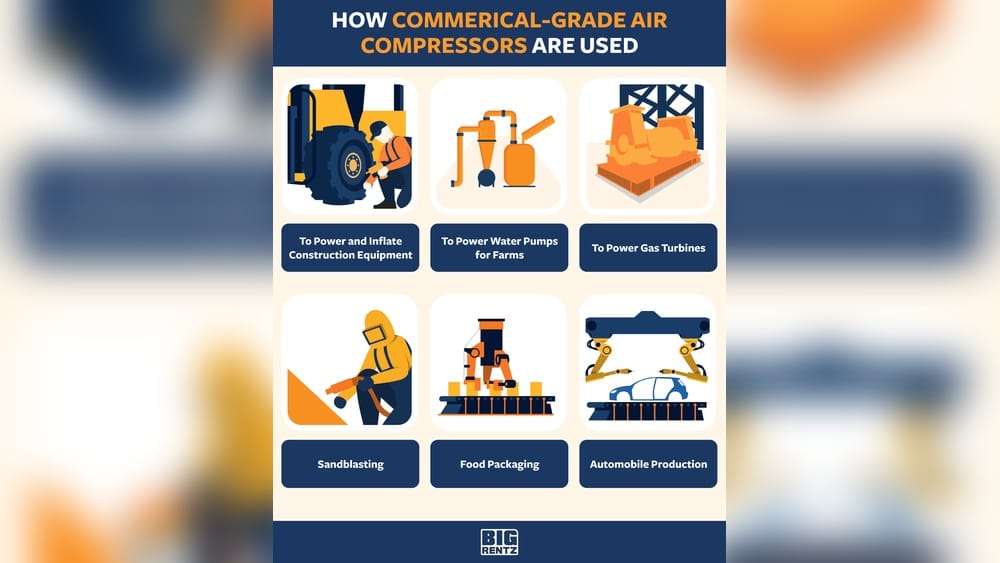
When I first bought an air compressor, I had no idea how much it would change the way I worked at home and in my garage. At first, I thought it was just for inflating tires. But soon, I found out that air compressors are like the Swiss Army knife of tools. They can do so many things that make daily tasks faster, easier, and sometimes even more fun. If you’re wondering, what can I use an air compressor for, you’re not alone. Let me share what I’ve learned from years of using one, so you can get the most out of yours.
Everyday Uses That Make Life Easier
I started with the basics. The first time my bike tire went flat, I realized how much faster it was to use my air compressor compared to a hand pump. No more sore arms! From there, I found new uses almost every month.
Inflating Tires And Sports Equipment
This is the most obvious one, but it’s also the most satisfying. Cars, bikes, motorcycles, and even wheelbarrows are easy to fill up. I also use it for soccer balls and basketballs. It takes seconds, not minutes, and I never worry about under- or over-inflating anymore.
Most compressors come with a pressure gauge, so you get it just right.
Blowing Away Dust And Debris
Cleaning out my garage or workbench used to be a chore. Now, I just grab the compressor and blow away sawdust, leaves, or dirt in seconds. It’s perfect for getting dust out of tight spots like computer keyboards or behind appliances.
I’ve even used it to clean out car air filters and radiators—places brushes can’t reach.
Pool Toys And Air Mattresses
If you have kids, you know how hard it is to blow up pool toys by mouth. With an air compressor, even the giant flamingo float is ready in minutes. Same goes for air mattresses. This has saved me more than once when guests came over unexpectedly.
Powering Pneumatic Tools: The Real Game-changer
After a while, I wanted to do more than just inflate things. That’s when I discovered pneumatic, or air-powered, tools. They’re lighter, last longer, and work faster than electric ones. Here’s what I found most useful:
Nail Guns And Staplers
I love woodworking, but hammering nails by hand is slow and tiring. With a pneumatic nail gun, I can build a deck, put up trim, or finish a fence in a fraction of the time. The same goes for staplers when making furniture or installing insulation. The difference is night and day.
Impact Wrenches And Ratchets
Changing car tires or working on engines used to be tough. The lug nuts are always too tight. Once I tried an impact wrench with my compressor, I never went back. It removes even the most stubborn bolts in seconds. Air ratchets are also great for tight spots where a normal wrench won’t fit.
Paint Sprayers
Painting used to be messy and slow. With an air-powered paint sprayer, I can paint furniture, fences, or even walls with a smooth, even coat. It uses less paint, and the finish looks professional. There’s a bit of a learning curve, but it’s worth it.
Sanders And Grinders
Sanding by hand is exhausting. The air-powered sander I use now is light and powerful, perfect for refinishing tables or smoothing wood. I also use a die grinder for metalwork and sharpening tools. These tools don’t overheat like electric ones, so they last longer.
Home, Garage, And Garden Projects
I didn’t expect my air compressor to be so helpful outside of the workshop, but it’s become part of my gardening and home maintenance routine too.
Cleaning Gutters And Lawnmowers
My gutters fill with leaves every fall. I used to climb up and scoop them out by hand, but now I use the compressor to blow everything out safely from the ground. It also helps clean out the mower deck after cutting wet grass, which keeps the blade sharp and the engine running well.
Winterizing Sprinkler Systems
If you live where it freezes, you know the risk of pipes bursting. I learned to use my compressor to blow water out of my sprinkler system before winter hits. It’s simple: attach the hose, turn on the air, and watch the water fly out. This trick saved me from expensive repairs more than once.
Power Washing Preparation
Before pressure washing my driveway, I use the compressor to blow away loose dirt and leaves. It makes the whole process faster and helps the pressure washer work better.
Creative And Unusual Uses
Some uses surprised me. Not everything is about power tools or cleaning.
Aerating Fish Tanks And Ponds
My friend who keeps fish showed me how he uses a small air compressor to aerate his pond. It keeps the water healthy and the fish happy. You just need the right attachments.
Operating Small Machinery
In my woodworking group, a few people use air compressors to run small machines like engraving tools or even to automate doors in their shops. It’s more common in professional settings, but it’s cool to see what’s possible.
Arts And Crafts
Airbrush kits work with compressors too. I tried airbrushing model cars and it was fun. The paint goes on thin and smooth, and you can do fine details you can’t get with a brush.
Comparing Air Compressors: Finding The Right One
When I first started, I was confused by all the types—pancake, hotdog, twin-stack, and even big stationary models. Here’s a quick comparison that helped me pick mine:
| Type | Best For | Portability | Noise Level |
|---|---|---|---|
| Pancake | Small jobs, nail guns | High | Medium |
| Hotdog | Inflation, staplers | High | Low-Medium |
| Twin-stack | Pneumatic tools, painting | Medium | Medium |
| Stationary | Garages, workshops | Low | High |
I went with a hotdog compressor. It’s easy to carry but strong enough for most jobs. If you plan to use big tools or work in a shop, a stationary model might be better.
Air Compressor Power: What Matters
One mistake I made early on was not checking the specs. Here’s what really counts:
- CFM (Cubic Feet per Minute): This tells you how much air the compressor delivers. More CFM means you can run bigger tools.
- PSI (Pounds per Square Inch): This is about pressure. Most home tools need 90-120 PSI.
- Tank Size: Bigger tanks mean you can work longer before the motor kicks in. But they’re heavier.
Here’s how different jobs match up with compressor specs:
| Task | Recommended PSI | Recommended CFM | Tank Size |
|---|---|---|---|
| Inflating tires | 90-120 PSI | 2-3 CFM | 1-6 gallons |
| Painting | 40-60 PSI | 4-7 CFM | 6-20 gallons |
| Nail gun | 70-120 PSI | 2-4 CFM | 1-6 gallons |
| Impact wrench | 90-120 PSI | 5-7 CFM | 6-20 gallons |
If you only plan to inflate things, a small tank is fine. For painting or running tools, you’ll want more power and capacity.
Common Mistakes I Learned To Avoid
I wish someone told me these things at the start:
- Ignoring duty cycle: Some compressors need to rest after running for a while, or they overheat. Read the manual and don’t push it.
- Wrong hose or fittings: Not all hoses and tools fit every compressor. Make sure the connectors match, or you’ll waste time and money.
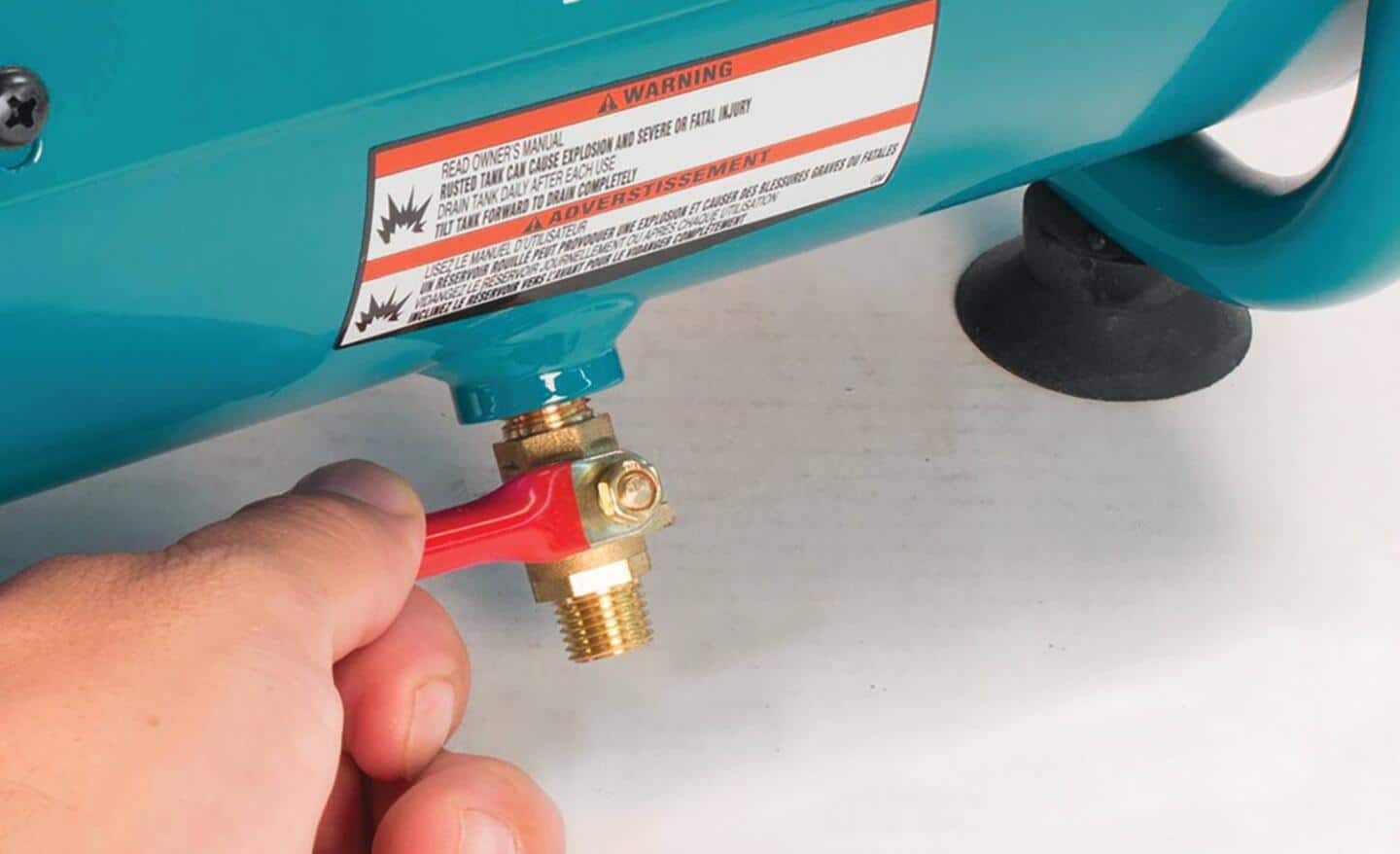
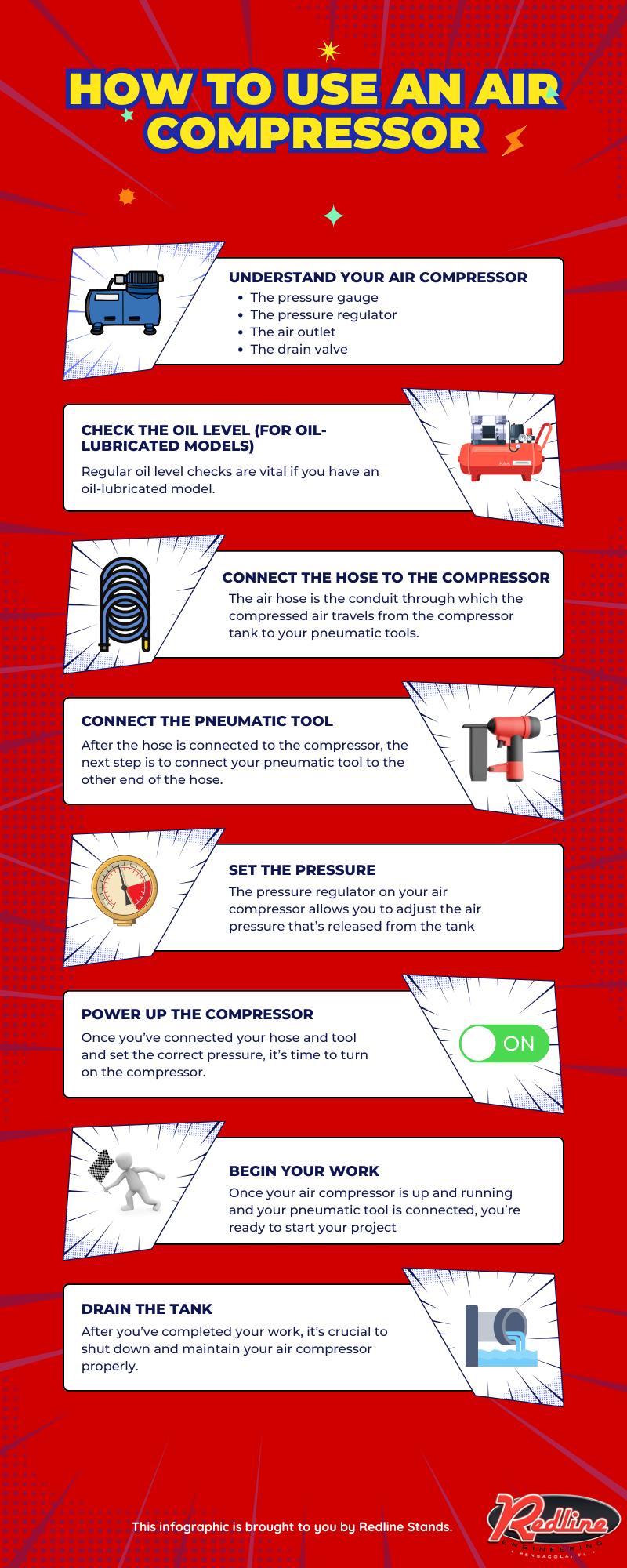
- Not draining the tank: Water collects inside from compressed air. If you don’t drain it, the tank can rust. I make it a habit to empty mine after every use.
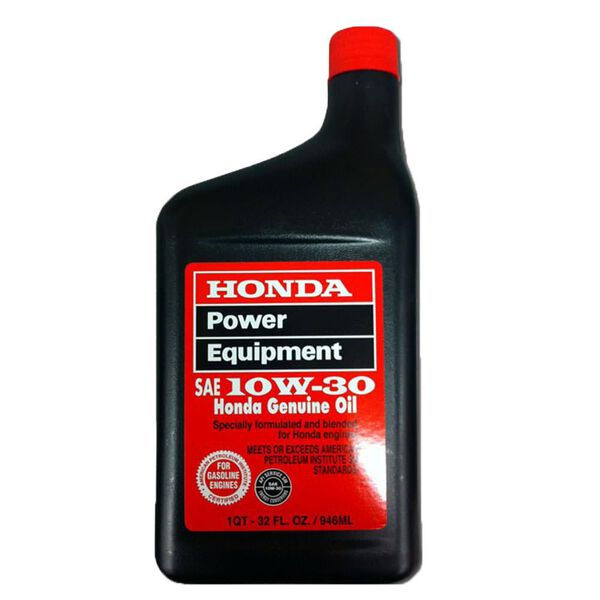
- Skipping maintenance: Oil-lubricated models need regular oil changes. Skipping this can kill the motor.
- Overloading the circuit: Compressors use a lot of power. Plugging into a weak outlet can trip breakers. I use a dedicated outlet whenever possible.
These small details make a big difference in how long your compressor lasts and how well it works.
Safety First: What I Always Remember
Air compressors are safe when used right, but they can be dangerous if ignored.
- Wear safety glasses: Debris can fly everywhere, especially when cleaning.
- Check hoses for leaks: Air leaks waste energy and can cause sudden hose whips.
- Never point the nozzle at people or pets: The air pressure can hurt.
- Store it dry and clean: A dry place keeps the tank from rusting.
I learned the hard way that ignoring these tips can end in minor accidents or equipment damage.
When An Air Compressor Isn’t The Best Tool
Sometimes, using an air compressor is overkill. For example, small jobs like blowing up a single balloon or inflating a bike tire once a year might be easier with a hand pump. Also, air compressors can be noisy. If you live in an apartment, this might annoy your neighbors.
I also found that for painting tiny objects, brushes or spray cans are simpler and less cleanup.
How Air Compressors Save Time And Money
Looking back, my air compressor has easily paid for itself. I don’t pay for tire inflation at gas stations, and I’ve done many repairs and home projects myself. It also lets me use tools that would be too expensive or heavy if they were electric.
For me, the biggest benefit is the flexibility—it’s like having a whole toolbox powered by air.
Frequently Asked Questions
How Do I Know What Size Air Compressor I Need?
Think about what you’ll use it for most. For inflating tires or sports equipment, a small compressor works fine. If you want to use tools like impact wrenches or sprayers, check their CFM and PSI needs, then buy a compressor that meets or exceeds those numbers.
Bigger is not always better—pick what fits your space and your main jobs.
Can I Use An Air Compressor For Cleaning Electronics?
Yes, but be careful. Use a low-pressure setting and keep the nozzle at a safe distance to avoid damaging parts. For sensitive electronics, consider using canned air or a special electronics attachment with your compressor.
How Often Should I Maintain My Air Compressor?
Check the oil (if it’s oil-lubricated) and drain the tank after every use. Inspect hoses and fittings regularly. Most manuals suggest a full checkup every few months if you use it often. Regular care keeps it running safely and longer.
Are Air Compressors Expensive To Run?
Most home compressors don’t use much electricity for small jobs. Running big tools or painting for hours will use more power. I noticed my energy bill didn’t change much, but it’s smart to unplug the compressor when not in use.
Can I Use An Air Compressor Indoors?
You can, but watch out for noise and ventilation. Oil-lubricated compressors may emit fumes, so use them in well-ventilated areas. If noise is a problem, look for “quiet” models or use it during the day.
If you want more details or official specs, check out this guide from Wikipedia.
Owning an air compressor has made my DIY life much easier and opened up new projects I never thought possible. With a little care and the right attachments, it’s a tool that keeps finding new ways to help. If you’re thinking about getting one, I hope my experience helps you make the most of it.
As an Amazon Associate, We earn from qualifying purchases