
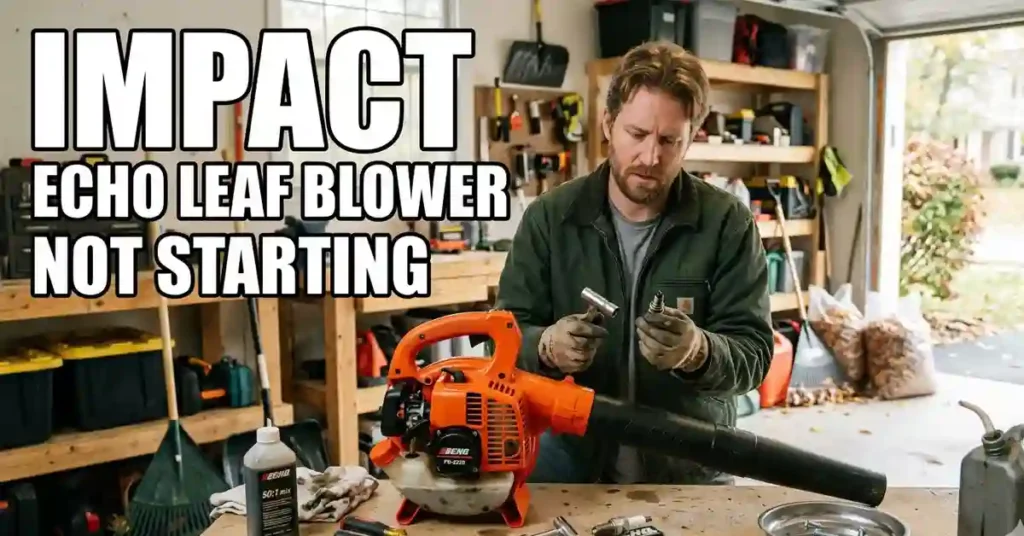
I remember last Saturday morning. The sun was out, and my lawn was hidden under oak leaves. I grabbed my Echo blower, pulled the cord, and nothing happened. My arm started to ache while my neighbor finished his yard.
It is a bad feeling when a tool fails you. I have spent years fixing engines in my garage. I have learned that an Echo leaf blower not starting is rarely a dead tool. Most of the time, it just needs a quick and easy fix.
In this guide, I will share how I get my blowers back to life. I will use short steps so you can get back to work fast. These tips save me time and money every single year.

Why Your Echo Blower is Giving You Trouble
Before we look at the parts, let’s find the cause. Most failures come from a few common spots. I made this table to show you what to check based on what you hear.
Common Failure Symptoms and Causes
| What You Hear | Likely Problem | Fix Level |
| Engine “pops” then dies | Old gas or dirty plug | Easy |
| Smells like gas | Flooded engine | Very Easy |
| No sound at all | Kill switch or spark | Easy |
| Starts but has no power | Clogged muffler screen | Medium |
The Main Culprit: Old Fuel and Ethanol
If I had a dollar for every time bad gas ruined a day, I would be rich. Modern gas has ethanol which attracts water. When gas sits for three weeks, it turns into a sticky goo.
Last fall, I left gas in my tank for too long. When I tried to start it, the engine just coughed. I smelled the tank, and it smelled like old paint. That is a clear sign of bad fuel.
How to Fix the Fuel Issue
I always drain the old gas into a safe can first. Do not try to “run it through” or you will clog the engine. Fresh fuel is the best medicine for a grumpy leaf blower.
Next, check your mix ratio. Echo engines need a 50:1 blend of gas and oil. I use 89-octane gas to keep the engine cool. High-quality oil makes the tool last much longer.
Did You Flood the Engine?
We have all been there. You pull the cord twenty times with the choke on full. Soon, you smell raw gas in the air. The spark plug is now too wet to fire.
When this happens to me, I stop pulling right away. If you keep pulling with the choke on, you make it worse. I take a deep breath and switch my tactic.
My Simple “Clear Out” Method
- Move the choke lever to the Run position.
- Hold the throttle trigger down all the way.
- Pull the starter rope fast five times.
The engine will usually roar to life with a puff of smoke. That smoke is just the extra gas burning off. Once it clears, the blower will run smooth and loud.
Checking the Spark Plug: The Engine Heartbeat
If the fuel is fresh, I look at the spark plug next. This is the soul of your Echo leaf blower. I keep a small wrench in my pocket just for this job.
I pull the wire and unscrew the plug to see the tip. If it is black and oily, it is dirty. If it is a light brown color, it is healthy and good to go.
The Hidden Blockage: The Spark Arrestor Screen
This is a fix that makes people think I am a pro. Behind the muffler, there is a tiny metal screen. It stops sparks from flying out, but it clogs with soot over time.
If your Echo leaf blower is not starting or has no power, check this screen. If it is black and blocked, air cannot get out. This act like a cork in a bottle.
How I Clean the Screen
I remove the small screw on the muffler cover to find the screen. I use a small torch to burn the soot away. The black gunk turns to grey ash and falls off easily.
I tap it on my bench and slide it back in place. Usually, the engine screams back to life instantly. It is a satisfying fix that takes only five minutes.
Is the Air Filter Choking the Engine?
Think about how hard it is to run while wearing a thick mask. That is what a dirty air filter does to your tool. I check the air box on the side of the unit.
If the felt filter is black or dusty, I replace it. I have tried washing them, but a new one works better. A clean filter lets the engine breathe and stay cool.
Understanding the Kill Switch and Wires
Sometimes the fix is even simpler than a filter. I once spent ten minutes frustrated, only to find the switch was off. Check the “Stop” switch on the handle first.
Check the wires leading to the switch for any cracks. Sometimes a wire shakes loose and touches the metal frame. This stops the spark and keeps the engine from firing.
Looking at the Fuel Lines
Echo uses clear fuel lines so you can see the gas move. Check the lines for tiny cracks or air bubbles. If you see bubbles, the engine is sucking air instead of gas.
These lines get brittle after a few years of use. I keep a spare roll of fuel line in my shop. Swapping a cracked line is a quick ten-minute job for any DIY fan.
Fuel System Component Check
| Part | What to Look For | My Advice |
| Primer Bulb | Cracks or leaks | Replace it |
| Fuel Lines | Air bubbles inside | Swap them out |
| Fuel Filter | Heavy dirt or debris | Get a new one |
Why Professional Repair Might Be Next
I love fixing my own tools in my garage. But sometimes, a tool has reached its final limit. If the cord is too easy to pull, the engine may have no compression.
This happens if you run the tool with no oil in the gas. At that point, a repair might cost more than a new blower. But don’t give up until you try the basics first.
My Final Tips for a Fast Start
To keep my Echo blower running well, I use a fuel stabilizer. This keeps the gas fresh for many months. I also never leave gas in the tank over the winter.
I run the engine until it dies so the carburetor stays dry. This prevents clogs and keeps the tool ready for spring. A little care goes a long way with these machines.
I hope these steps help you get back to your yard work. There is nothing like a clean driveway and a strong engine. Your Echo will be back in action if you follow this guide.
As an Amazon Associate, We earn from qualifying purchases