
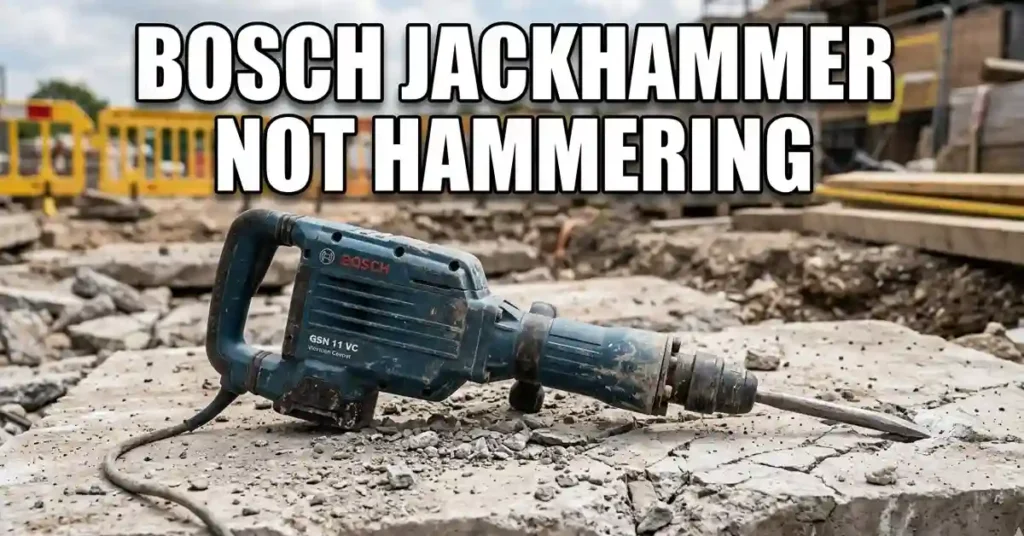
Last Tuesday, I was out in the driveway under a gray sky. I had a big slab of six-inch concrete to break before the rain started. I pulled out my Bosch jackhammer and plugged it in. I pulled the trigger and the motor roared. It sounded very strong. But when I pushed the bit against the stone, nothing happened. There was no punch and no vibration. It was just a loud motor and a very still chisel.
If your Bosch jackhammer not hammering is driving you crazy, I feel your pain. It is a heavy tool to hold when it is not doing any of the work. Over the years, I have torn these down many times. Most of the time, the fix is quite simple. You do not always need to buy a new one. I want to share what I found on my own workbench.
The Morning I Learned About Cold Grease
I used to live in a place where the winters were very cold. I kept my tools in a shed with no heat. One morning, I grabbed my Bosch Brute for a basement job. I spent ten minutes leaning on it with zero results. I thought the gears were stripped. I was ready to throw it in the trash out of pure anger.
It turns out, the grease inside these hammers is very thick. When it gets cold, it turns into something like hard wax. The internal striker must slide back and forth like a piston. If the grease is too stiff, the striker stays stuck in the back. It cannot move fast enough to hit the bit.
Table 1: Temperature and Hammer Performance
| Temperature | Grease State | Hammer Action |
| Above 60°F | Fluid and Slick | Immediate Hit |
| 40°F to 50°F | Tacky and Sticky | Weak Initial Hit |
| Below 32°F | Solid and Wax-like | No Hit at All |
The fix for this is very easy. Just let the tool run for a bit. Do not push it against anything yet. Let the motor spin for three minutes. The friction from the gears will warm up the metal box. Once the tool feels warm to your hand, try a test hit. Usually, the loud thump comes right back.
Why My Dry Bits Were Killing the Punch
I like to keep my tools clean, but I used to make a big mistake. I would wipe the bit shanks totally dry. I thought I was keeping dust out of the tool. I was actually killing the hammer action. The bit needs to slide freely inside the chuck. If the metal is dry, it creates too much heat.
This friction slows down the timing of the strike. On a Bosch, the timing is the most vital part. If the bit does not move back fast enough, the striker misses its mark. It is like trying to hit a ball that is not there. I felt like a fool when I finally figured this out.
I started keeping a small tube of Bosch grease in the tool case. Now, every time I swap a bit, I put a small dab on the end. You can actually feel the difference in your hands. The hits feel much more crisp. The tool does not jump around as much as it used to. It makes the work go much faster.
The Day the Air Cushion Popped
If your motor sounds high and light, you likely have an air leak. These tools use a piston to squash air. That air then flings a heavy metal striker into the bit. Last summer, my hammer stopped hitting right in the middle of a big job. It did not sound broken, but it sounded very empty.
I took it to my shop and pulled the front housing off. I found the main piston ring had snapped into two pieces. When that rubber ring fails, the air just leaks out. It is like trying to pump up a bike tire with a hole in the hose. There is no air pressure to move the striker at all.
Table 2: Identifying O-Ring vs. Gear Failure
| Symptom | Probable Cause | Fix Difficulty |
| High motor sound, no hit | Worn O-Rings | Simple for DIY |
| Grinding noise, motor stalls | Stripped Gears | Needs a Shop |
| Heavy vibration, no hit | Broken Striker | Medium Task |
Replacing these rings is a messy job, but it is very cheap. You can get a seal kit for most Bosch models for a low price. It is much better than spending a lot of money on a new breaker. I felt so proud when I put it back together. It hit just like a brand new tool should.
Fighting the Concrete Dust Monster
Concrete dust is like liquid sandpaper. It gets into every tiny crack. I once had a jackhammer stop because the lock was jammed. Most Bosch hammers have a safety feature. They will not hammer unless you press down. This keeps the tool from shaking itself apart in the air.
There is a small metal catch inside that feels the bit. If dust gets packed into the nose, that catch gets stuck. The tool thinks you are still holding it up. It will not fire the striker until it feels that pressure. I had to learn how to clean the nose out the hard way.
I now use a can of air to blow out the hole. If I see gray mud, I use a spray to loosen it up. I wipe it out and put in fresh grease. This keeps the safety lock moving as it should. It saves a lot of time on the job site. You do not want to fight your tool all day long.
Check Your Carbon Brushes Regularly
Sometimes a Bosch jackhammer not hammering is an electrical glitch. Bosch uses brushes that stop the tool when they get low. I had a tool once that would hit for five seconds and then quit. I thought the piston was stuck. It turned out the brushes were just barely touching the motor.
The vibration of the hammering was causing the brushes to bounce. Replacing brushes takes only five minutes of your time. Most Bosch models have two small caps on the side. You just unscrew them and slide the old ones out. Then you click the new ones in and you are done.
A jackhammer is a simple beast at heart. It needs air, grease, and power. If you give it those three things, it will work hard. It will break through anything you put in front of it. I hope my experience helps you get back to your project today.
As an Amazon Associate, We earn from qualifying purchases