
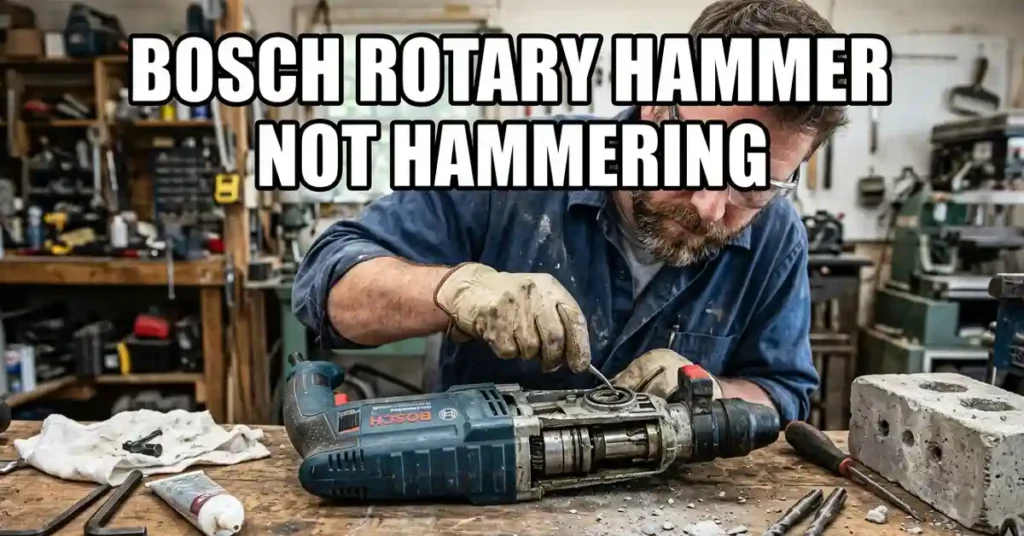
It was a very cold Tuesday in my shop. I had a big wall to drill for a frame. The damp air made my hands ache a bit. I grabbed my trusty Bosch tool from the shelf.
I plugged the thick cord into the wall socket. I put a heavy stone bit in the chuck. I wore my clear safety glasses to stay safe. I pressed the tool to the hard, gray block.
I pulled the red trigger with my right hand. The motor spun fast, but nothing else took place. The drill whined with a loud, high pitch sound. But there was no punch on the hard wall.

The Sound of a Broken Tool
The steel bit just spun in place very fast. It did not hit the stone block at all. My tool acted just like a plain, normal drill. A Bosch rotary hammer not hammering is bad news.
I felt a quick flash of pure, hot anger. I had a huge job to finish that day. Now I had a dead tool on my bench. A good hammer drill makes a very loud noise.
It goes clack, clack, clack when it works right. You can feel it kick hard in your hands. When it stops hitting, the sound changes very fast. It just hums or whines like a small toy.
You do not feel the hard kick in your arms. The steel bit gets hot fast from the rubbing. The gray concrete stays smooth and completely flat. I wiped the cold metal grip with my rag.
I felt the heat build on the plastic case. I knew I had to open the tool up soon. I cleared a spot on my wood work bench. I turned on my bright light to see well.
Why Your Bosch Tool Stops Hitting
This power tool is a smart and strong machine. It uses trapped air to hit the steel bit. A metal piston moves back and forth deep inside. It pushes a thick metal striker with great force.
This tight air pushes the striker very hard. The striker hits the back end of the bit. The bit hits the hard wall with a smash. If the air leaks, the tool stops working fast.
The Cold Grease Problem
Thick grease keeps the inner parts moving very well. But grease gets very hard in the freezing cold. My garage was very cold that slow morning. The thick, cold grease stopped the heavy steel striker.
The air could not push the stuck metal piece. This is the most common issue we see here. The fix is very fast and quite simple. You just need to warm the cold tool up.
Let the motor spin for three whole minutes. Press the bit on a soft wood block. Do not press too hard with your hands. Just let the tool shake and warm up well.
The striker will break free from the sticky trap. You will hear the loud clack sound once again. You can then get right back to your work. It saves a trip to the local tool shop.
Tool Heat Data and Wait Times
Here is a data table I made for you. It shows how long to warm up the tool. It depends on your room heat level that day. Follow this guide to save time and fix it.
| Room Heat Level | Warm Up Wait Time | Fix Success Rate |
| Below 40 F | 5 full minutes | Low |
| 40 to 50 F | 3 full minutes | High |
| 50 to 60 F | 1 full minute | High |
| Over 60 F | No wait needed | Very High |
The times in the chart are just a base guide. Your tool might need more time in the cold. Do not rush the warm up step at all. Let the motor heat melt the grease inside completely.
Quick Checks to Do Right Now
Before you take the tool apart, check the switch. Look at the mode dial on the top side. Make sure it points right at the hammer mark. Sometimes the dial gets stuck right in the middle.
Move the round knob back and forth three times. Make sure it clicks loud into the right place. If the switch is fine, check the power cord. A bad cord can cause very low tool power.
The Dirty Chuck and Stuck Bit
Sometimes the big problem is right at the front. The steel bit must slide back and forth freely. It moves deep inside the metal chuck nose. If the chuck is full of dirt, it sticks.
It forms a hard, dry paste inside the chuck. I pulled my long bit out of the tool. The end was black and very rough to touch. It felt like thick glue on my bare hands.
Cleaning the Metal Parts
You must clean the chuck nose out right now. Wipe the bit base with a clean, dry cloth. Get all the old dirt off the hard steel. Look deep inside the chuck with a small light.
Use a long cotton swab to clean it well. Then, you must add fresh, clean grease to it. Put a small drop on the steel bit base. Slide it in and out of the chuck twice.
This keeps the moving parts slick and very fast. A clean chuck stops the bit from getting stuck. It lets the tool hit the wall with power. You should do this after every big stone job.
The Internal O-Ring Failure
If the tool is warm and clean, test it. If it is still dead, look deep inside it. The air seal is likely broken or torn up. The piston and striker have soft, round rubber rings.
These soft rings trap the fast moving air tight. Over time, high heat makes them go flat. Rough dirt makes them tear and rip apart fast. When the rubber fails, the air leaks out fast.
Opening the Gear Box Safely
You must open the top gear case right now. This takes more time and some extra shop care. You need a few simple hand tools for this. Get a clean shop rag and a hex wrench.
Always stay safe when you work in the shop. Remove the black screws on the top tool case. Lift the hard plastic cover right off the tool. You will see the gears and the piston tube.
Look close at the thin rubber rings on it. Are they flat on the outside ring edge? Are they cut, split, or worn down bad? My rings were flat and hard as a rock.
They were completely dead and of no use. The thick grease inside looked like deep, black mud. It smelled like old, burnt toast in my nose. I knew I had to replace the parts fast.
Fix Costs and Shop Time Data
I bought a cheap rebuild kit fast online. It had brand new, soft rubber rings inside. It had a small tube of fresh white grease. Doing it yourself saves a lot of money today.
| Type of Fix | Parts Cost | Shop Time Needed |
| Warm Tool Up | Free | 5 minutes |
| Clean Nose Chuck | Free | 10 minutes |
| Install New Rings | 15 dollars | 45 minutes |
| Send to Tool Shop | 100 dollars | 2 full weeks |
Putting in the New Seals
Take the bad, old rings right off the metal. Clean the piston and striker very well right now. Use a dry, clean rag for this key step. Do not use strong soap or harsh wet sprays.
Put the new soft rings on the empty grooves. They should fit very tight and nice and snug. Now, pack the tube with the new white grease. Use the exact grease from the small parts kit.
Do not use standard truck or car grease here. It will turn to liquid when it gets hot. It will leak right out of the air vents. Put the clean parts back in the open case.
Put the top plastic cover back down flat. Drive the black screws in tight with your tool. Do not pinch any wires under the plastic shell. Your tool is now ready for a quick test.
Testing the Final Fix
I plugged the tool back in the wall socket. I put the bit back in the clean chuck. I placed a thick block of wood on the floor. I held the tool tight with both my hands.
The tool roared to life with a loud sound. I pressed it down on the wood block hard. It kicked hard in my hands right away. The loud clack sound was back in the room.
I smiled big and wiped my dirty hands. I saved a lot of cash by doing this. I saved two whole weeks of waiting for a shop. I got right back to work on my wall.
When to Call It Quits on a Tool
Sometimes the power tool is too far gone. If the steel gears are bald, you have trouble. Gear teeth break off and ruin the whole box. If the electric motor sparks a lot, it is dead.
I love my blue Bosch tool very much. It is a very tough piece of gear for me. But no power tool lives forever in a shop. If the plastic case is cracked open, toss it.
If the main plug is bad, change it right now. Do not tape it up and hope for the best. A bad wire can shock you and cause great harm. Always look for deep cracks in the black cord.
Keep Your Tools Clean
A Bosch rotary hammer not hammering is not the end. It is mostly just a cry for some good help. The tool needs a little basic care from you today. Clean the dust off it well after every job.
Give it new thick grease when it sounds rough. Power tools do a lot of hard work for us. They break concrete and drill deep holes in stone. We just need to help them out sometimes.
Listen to the motor sound when you pull the trigger. Feel the kick in your hands when you push it. You will know when it needs a small quick fix. Treat the tool right and it will last for years.
Safety Tips for Tool Repair
You must always put safety first in the shop. Never work on a tool that is plugged in. A tool can start fast and hurt your bare hands. Always pull the plug out of the wall socket first.
Wear clear glasses when you test the fixed tool. Small bits of wood or stone can fly up fast. They can hit your eyes and cause a lot of pain. Keep your work bench clean and well lit always.
Store Your Tool Right
Where you keep your tool matters a whole lot. Do not leave it on the damp, cold floor. The floor makes the grease cold and very hard. Keep it inside its hard plastic case all the time.
Take the heavy bit out of the chuck when done. This rests the inner spring and keeps it strong. It keeps the chuck clear for the next big job. Wipe the tool down with a dry rag before storing.
Why I Trust This Fix
I have fixed many tools over the long years. I see this exact same issue all the time. Guys bring me tools that do not hit at all. They think the whole motor is burned out completely.
Most of the time, it is just a cheap ring. Or it is just some hard grease blocking the way. A basic kit and an hour of time is all. If you follow these clear steps, you can fix it.
You just need some basic hand tools and good light. Take your time and go slow on each step. Look at how the parts fit together in the case. Take a photo with your phone if you need to.
As an Amazon Associate, We earn from qualifying purchases