
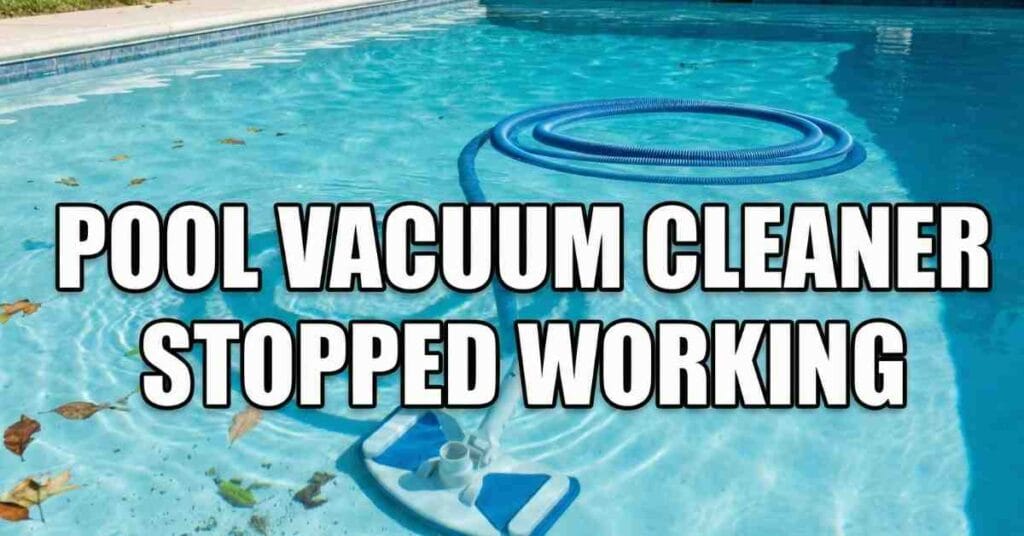
It was a hot Saturday morning in July. I had my coffee ready and the sun was out. I looked at my pool and saw a mess. Sand and leaves sat on the floor. I dropped my suction cleaner in. I waited for that familiar hum. Nothing happened at all.
My pool vacuum cleaner not working was a huge pain. I run a site called ToolsEngineers . I fix power tools for a living. But a pool vacuum is just another tool. It uses flow and pressure to move. When it stops, there is always a clear reason.
I spent three hours that day in the sun. I found the bugs in the system. If your vacuum is stuck, do not panic yet. You do not need a pro right away. Most fixes are very simple. They just take a little bit of time.
Why Your Pool Vacuum Lost Its Suction
The most common issue is a loss of flow. My vacuum was moving at first. Then it just died. I realized the water was not moving. If there is no flow, there is no go. Water must move through the hose to create a grip.
I checked my skimmer first. It was packed with old pine needles. This blocked the water from the pump. Once the pump starves, the vacuum stops. I dumped the basket and rinsed it. The suction came back right away.
Checking the Flow Path
| Component | What to Look For | My Personal Fix |
| Skimmer Basket | Full of leaves | Dumped it and rinsed it |
| Pump Basket | Tiny stones or seeds | Found a twig in the grate |
| Main Filter | High pressure on gauge | Ran a quick backwash |
| Vacuum Head | Clog in the throat | Poked a stick to clear it |
Troubleshooting Suction-Side Vacuums
Most of us use suction-side cleaners. They plug into the wall or skimmer. They are simple but they hate air. Air is the enemy of suction. If air gets in, the vacuum will fail to move.
I noticed my vacuum hose was floating. That is a very bad sign. It means there is air inside the line. I pulled the hose out of the pool. I found a tiny crack near the cuff. This leak killed my suction.
When the pump pulls, it sucks air through the crack. The vacuum loses its power. I did not have a spare hose that day. I used some waterproof tape as a fix. It worked well for the weekend. I bought a new hose the next day.
When the Vacuum Moves Too Slowly
Sometimes the vacuum works but it crawls. It looks very tired. This is usually a filter issue. I checked my filter gauge. It was up at 25 PSI. Normally it sits at 15 PSI. This was the problem.
A dirty filter slows down the water. If the water is slow, the vacuum has no power. I gave my filter a good wash. The vacuum started zooming again. It felt like a brand new machine on the floor.
I have a 3-way valve at my equipment pad. One side is the drain and one is the skimmer. If both are open, the vacuum is weak. I turned the valve to give the skimmer more flow. The vacuum took off like a race car.
Fixing Pressure-Side Cleaners
My neighbor has a pressure-side cleaner. These use a booster pump. He called me over because his was spinning. It was not picking up any dirt. We had to look at the hose and the bag.
We watched it for five minutes. Every few minutes, a piece on the hose sprayed water. That is the backup valve. It is meant to pull the vacuum out of corners. His valve was cracked and leaking.
This took all the power away from the head. We swapped the valve and it went to work. Also, check the debris bag on top. If the bag is full, the water cannot exit. This makes the cleaner heavy and very slow.
Robotic Pool Cleaners: The High-Tech Headache
I love my robotic cleaner but it can be moody. Last month, it just stopped in the deep end. There were no lights and no movement. I had to pull it out by the cord to see what was wrong.
I checked the blue box on the deck. The outlet had tripped. I reset the button. It turned on and then tripped again. This told me there was a short circuit. I looked at the power cord closely.
My dog had chewed a small spot on the cord. Water got into the wires. I had to dry it out and seal it up. If your robot is dead, check the power box first. It is often a simple electrical trip.
Advanced Steps: Diaphragms and Gears
Some vacuums use a rubber part called a diaphragm. It pulses to move the cleaner along. I opened the throat of my old cleaner once. I found a small pebble stuck inside the rubber tube.
Even a small grain of sand can stop the pulse. If the rubber is torn, the vacuum will stay still. These parts are cheap to buy. I keep a spare in my shed just in case. It saves a trip to the store.
| Vacuum Type | Core Moving Part | Common Failure |
| Suction Pulse | Rubber Diaphragm | Tears or small pebbles |
| Suction Geared | Plastic Turbine | Broken gear teeth |
| Pressure Side | Water Drive | Clogged internal screen |
| Robotic | Drive Belts | Slipped or old belts |
My Maintenance Checklist to Prevent Failures
I hate fixing things twice. Now I follow a routine. This keeps my pool clean and my stress low. I check the baskets every Friday. Do not wait for them to overflow with leaves.
Store your vacuum hose flat on the deck. Coiling it tightly causes cracks. Watch your pressure gauge every week. If it rises by 10 PSI, clean the filter. This keeps the water moving fast.
Use pool-safe lube on your O-rings. Do this once a month on the pump lid. It creates a tight seal. This stops air from getting into the system. A good seal means your vacuum will always have power.
Final Thoughts on Pool Vacuum Fixes
Fixing a pool vacuum cleaner not working is not magic. It is just basic physics. You need a clear path for water. You also need a tight seal for air. My lost Saturday taught me a good lesson.
Look at the small things first. A single leaf in the pump can ruin a day. I felt so proud when I saw the clean tracks. It was worth the sweat in the sun. My pool is clear once again.
I can finally enjoy my coffee now. It is cold, but the pool looks great. Taking care of your tools saves you money. It also gives you more time to swim and relax.
As an Amazon Associate, We earn from qualifying purchases