
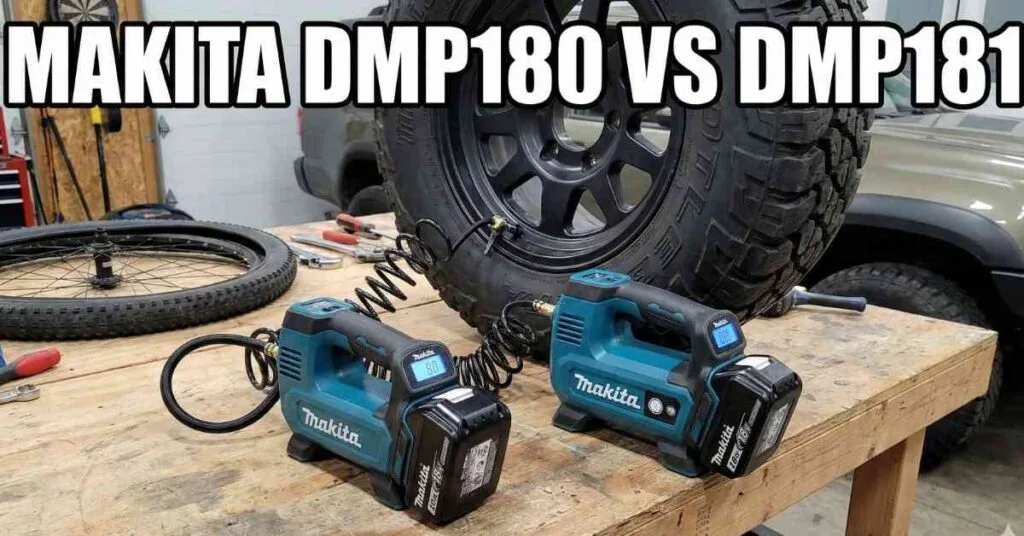
Makita DMP180 vs DMP181 is a test I wanted to do for a long time. I use a lot of hand tools in my home shop. I test them hard to find real flaws. I used both of these air pumps for a full month. I will share my true thoughts below.
Makita DMP180 Review
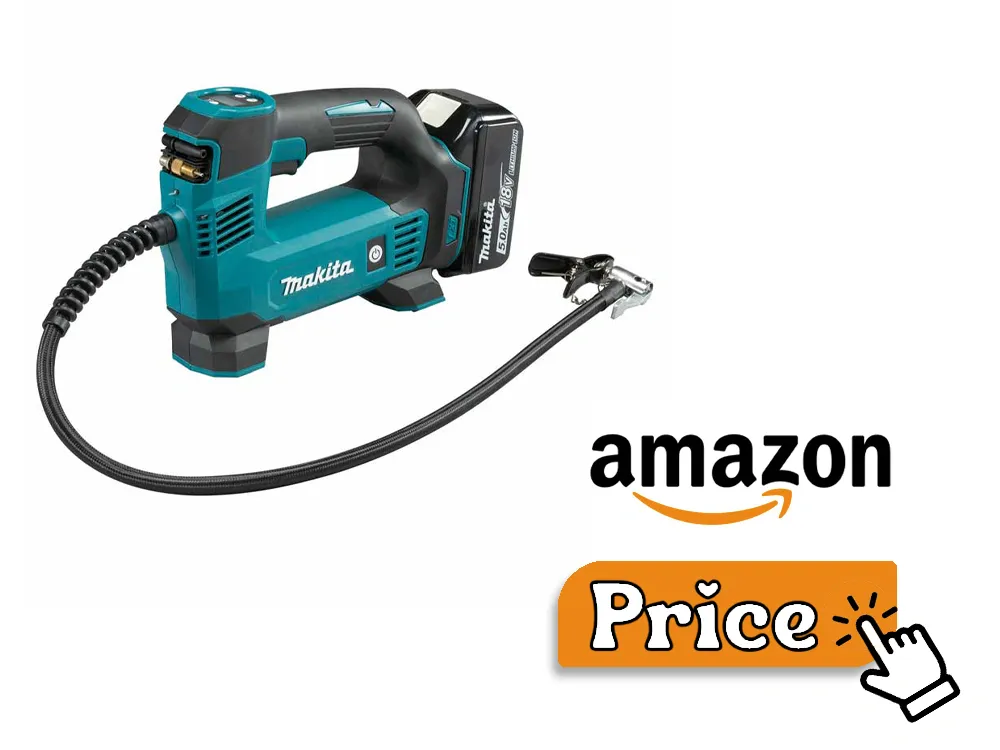
I got this small pump first to keep in my car. I wanted a fast tool for quick fixes on the road. It is a very light tool to hold in one hand. You can pack it in a small trunk box.
I took it out on a real job site test. I checked the air in my small sedan tires. It filled them up just fine and stopped on time. I also pumped up a few flat bike tubes.
It takes a long time to fill a full flat tire. It is a slow pump that gets warm fast. It moves twelve liters of air in one minute. You must let it rest after five minutes of work.
| Pros | Cons |
| Very light to hold | Slow to fill flat tires |
| Small size for the car | Gets hot fast on long jobs |
| Great for simple home use | No vent to let air out |
| Turns off on its own | Hard to use on big trucks |
After four weeks of use, the tool is still strong. I tossed it in my hard tool bag many times. The plastic shell did not crack or break at all. The bright screen is clear to read in the dark.
I checked the air marks with a hand gauge. The pump reads the air right on the dot. It stops at the exact point I tell it to. I like that it is strict and safe to trust.
But it has one big flaw for daily use. You can put too much air in a wheel by mistake. If you do, you must take the hose off to fix it. There is no quick vent to help you work fast.
Makita DMP181 Review
I bought the big pump next for my main shop. I needed a strong tool to work on big truck tires. This pump is made for hard and tough tasks. It feels very strong and heavy in your hands.
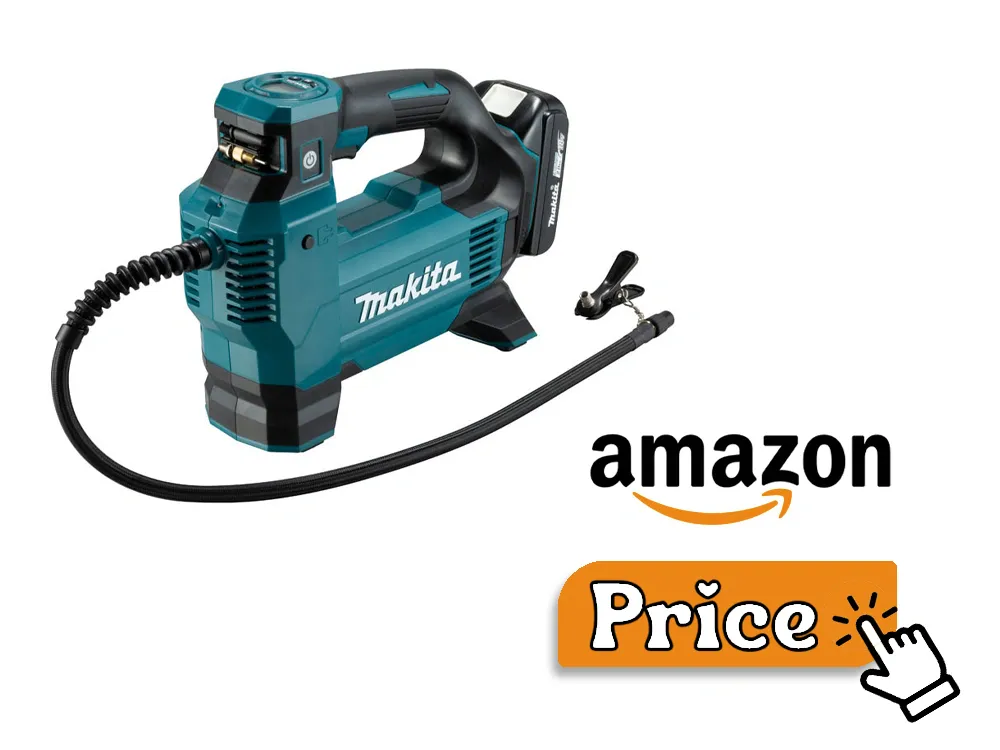
I used it on a large work truck last week. I filled up four large van tires in a row. It sits flat on the floor while it runs loud. The sheer weight keeps it firmly in its place.
This pump is very fast on a flat tire. It moves twice as much air as the small one. It fills a flat truck tire in half the total time. It does not get hot as fast as the old pump.
| Pros | Cons |
| Fills large tires very fast | Heavy to hold for long times |
| Lets out extra air fast | Takes up more shelf space |
| Runs for ten full minutes | Costs more cash to buy |
| Saves the last air setting | Loud on hard bare floors |
My best find was the side air release switch. If I put too much air in, I just push it. The extra air comes right out of the tire fast. This small change saves a huge amount of time.
It also saves your last air target on the screen. I turn it off, and it still knows the number. I move from wheel to wheel with great speed. It makes my long work day much more simple.
I used it for a full month on rough tasks. The build is solid and the base stands up to drops. The screen marks stay true all day long. It is a top choice for a large shop task.
Detailed Comparison for Makita DMP180 vs DMP181
This part shows how the tools match up in real life. I look at five key traits that matter to me. I do not just read the claims on the box. I use them and test them out on my own.
Accuracy and Range
A good air pump must stop at the right spot. I set a firm air target on both of the tools. Both of them stop at that exact same mark. They are right on point every time I use them.
I tested them both with a trusted hand dial gauge. The numbers match up fine without any drift over time. They give a stable result day after day. You can trust the screen to tell the truth.
The small pump goes up to one hundred twenty marks. That is great for basic cars and light road bikes. The big tool goes to one hundred sixty one marks. That is built for big work vans and commercial trucks.
| Point | Makita DMP180 | Makita DMP181 |
| Top Range limit | 120 max mark | 161 max mark |
| Stops on Target | Yes it does | Yes it does |
| Best Range Use | Cars and bikes | Work vans and big trucks |
Speed and Air Flow
Speed is key when you wait out in the cold rain. The small pump feels quite slow on a flat tire. It pushes twelve liters of air per minute. You will stand and wait a long time to finish.
The big tool is a lot faster on an empty tire. It pushes twenty two liters of air per minute. It gets the job done in half the total wait time. It makes a huge shift in your daily work pace.
The big pump also gives you three speed modes to pick. You can go fast, slow, or pick a ball mode. The small pump only runs at one set speed rate. The big pump wins the race hands down.
| Point | Makita DMP180 | Makita DMP181 |
| Air Flow Rate | 12 liters a minute | 22 liters a minute |
| Speed Modes | Just one set mode | Three clear speed modes |
| Work Wait Time | Slow and very long | Fast and very quick |
Size and Daily Weight
You want a tool that is nice to hold all day. The small pump weighs less than four pounds total. It is very light and your arm feels fine. It fits well in a tight spot in your car.
The big pump weighs more than six full pounds. It is heavy and takes up more room on a shelf. It makes your hand tired after a short while. But the mass stops it from sliding on the floor.
I like to hold the small pump for a fast check. I grab it to top off a tire in a rush. I keep the big pump on the floor for heavy work. They both have a smart place in a tool shop.
| Point | Makita DMP180 | Makita DMP181 |
| Tool Mass | Under four pounds | Over six full pounds |
| Easy to Pack | Very good size | Takes up more room |
| Floor Shake | Shakes a slight bit | Stays very firm and still |
Screen and Smart Use
You need to see the screen clear in the bright sun. Both pumps have bright screens that are simple to read. They light up well in the deep dark night. The large thick buttons feel good to push.
I can press the keys with thick work gloves on my hands. The big tool wins on the smart use tests. It saves the last air target you set on the screen. The small pump forgets the goal each time you stop.
The big pump has a quick vent switch to let out air. The small pump lacks this key helpful trait. These small upgrades make hard work much less tough. The big pump is built for a wise user.
| Point | Makita DMP180 | Makita DMP181 |
| Screen Look | Bright and quite clear | Bright and quite clear |
| Save Last Goal | No it does not | Yes it saves it |
| Quick Air Vent | No it does not | Yes it has a vent |
Battery Life and Heat
Both tools take the same base power pack design. I used a fresh five amp pack for my true tests. The small tool runs fine for a short fast job. But you must force it to stop after five minutes.
The small motor gets too hot to run a long time. The big tool stays cool for a much longer span. You can run it for ten straight minutes with no rest. It fills up tires twice as fast as the old pump.
You do more real work on one single power charge. The cost to own them is close since they share packs. The large pump handles the high heat stress much better. It is safe for long harsh work cycles.
| Point | Makita DMP180 | Makita DMP181 |
| Max Run Time | Five minute strict limit | Ten minute long limit |
| Heat Control | Fair for small tasks | Very good for long tasks |
| Power Source | Same base power pack | Same base power pack |
Conclusion
This test proves both pumps are great tools. The small pump is ideal for a basic home and car need. The big pump is the best pick for a busy shop job. Pick the one that fits your own real life work style.
As an Amazon Associate, We earn from qualifying purchases