
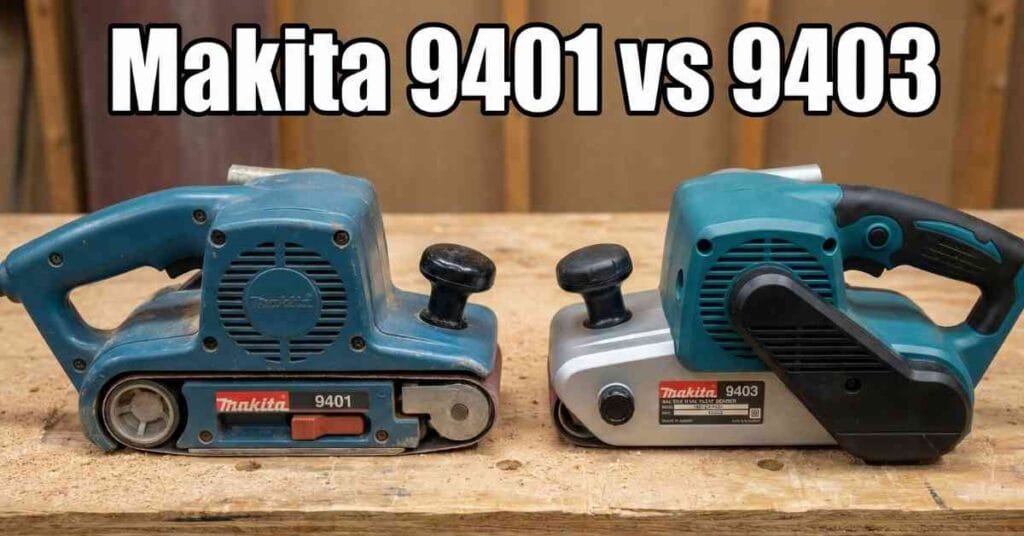
Choosing between these two legendary 4-inch belt sanders depends on whether you value raw speed or steady control. I have spent months pushing both tools to their limits on hardwood floors and massive timber beams to see which one truly earns its keep in a professional shop.
Makita 9401: The Heavyweight Control Master
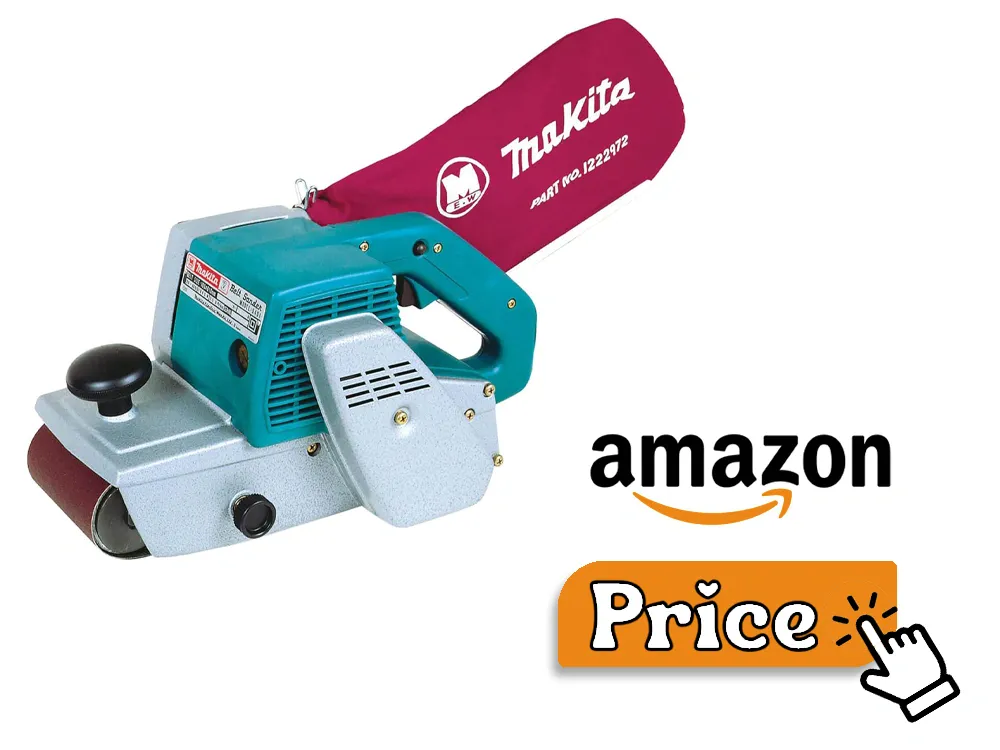
The Makita 9401 is a tool from an era where weight was a feature, not a flaw. I first put this machine to work on a set of old oak beams. They were rough and very uneven. The first thing I noticed was the sheer mass. At over 7 kg, you do not need to push down. The tool provides all the pressure needed to bite into the wood. I tested this by running it for three hours straight on a 10-foot section. The work was smooth. It did not bounce or shake even when hitting hard knots.
In my daily work, I often sand small pieces of wood that are hard to hold. The 9401 has a very flat top. I often flip it upside down and use it as a bench sander. It felt very safe and steady in this position. But after using it for weeks, the noise became a real issue. It has a high pitch. You must wear good ear protection if you work inside for more than twenty minutes.
| Pros | Cons |
| Heavy weight does the work for you | Very heavy to carry around |
| Flat top works well upside down | Loud motor whine while running |
| Very steady on flat boards | Slower belt speed takes more time |
| Lasts for many years of hard use | Dust bag can get in your way |
My jobsite testing showed that while it is a beast, the motor is easy to manage. It does not try to pull away from you. I compared how much wood it removes against a small 3-inch sander. The 9401 finished the job in half the time. The only small issue I found over time was the tracking knob. It works well, but I had to check it every 15 minutes. This kept the belt centered under a heavy load. It is a tool for a person who wants to take their time and let the machine do the heavy work.
Makita 9403: The High-Speed Productivity King
Switching to the Makita 9403 felt like moving from an old truck to a fast car. I tested this model to strip thick paint off a large deck. The motor is very strong. The belt moves much faster than the old 9401. It moves at 500 meters per minute. On that deck, I felt the power right away. It rips through paint fast. You must be ready for how hard it pulls.
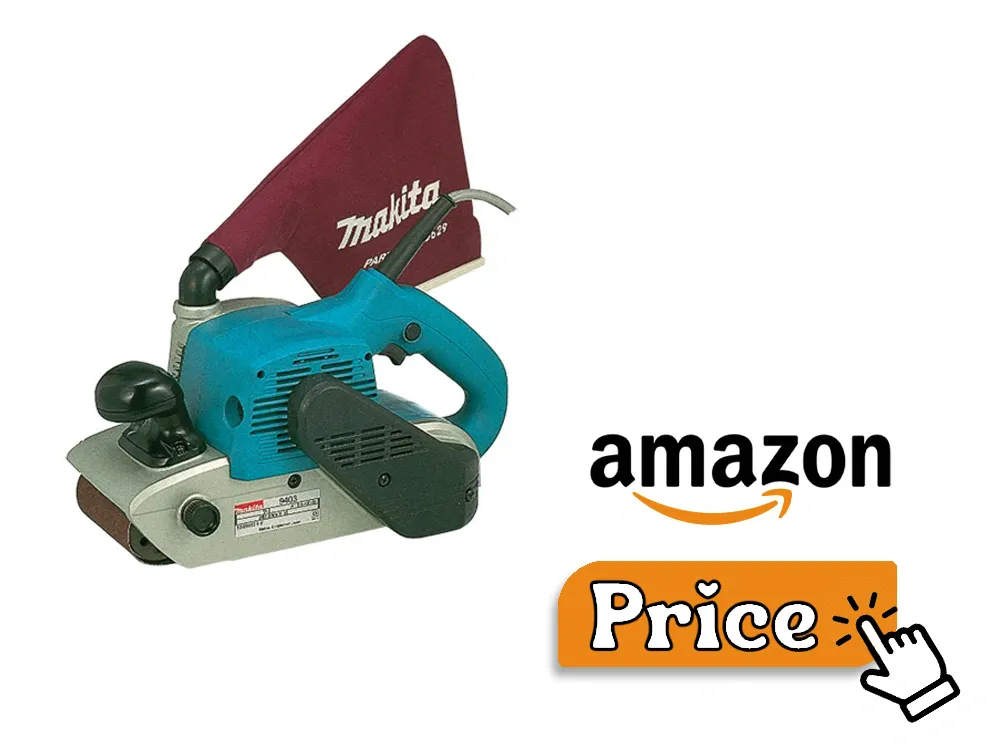
What stood out in my real use was the dust control. I used it inside a home to fix some floor spots. The dust bag can turn 360 degrees. This is a huge help. I could move it out of the way as I worked. This kept the bag from hitting my leg or catching on corners. Even without a vacuum, the inside stayed clean. I did not see dust puffing out of the vents like I do with older tools.
| Pros | Cons |
| Very fast at removing material | Hard to control on soft wood |
| Best dust bag system in its class | Does not stand upside down well |
| Much quieter than the old 9401 | Lighter front takes time to learn |
| Swivel bag keeps the area clear | Only one speed with no dial |
During a test on a large table, I saw that the 9403 needs a firm grip. Since it is lighter and faster, it wants to “take off” if you do not pay attention. It is very quiet for its size. This made my long work days feel better. After six weeks of hard use, the metal plate on the bottom showed no wear. It is built for fast work where you need to finish a job quickly.
Detailed Comparison for Makita 9401 vs 9403
These two sanders use the same belt size. But they feel very different when they touch the wood. One is a steady anchor. The other is a high-speed worker.
Core Capability Comparison
The 9401 is built for steady leveling. The 9403 is made for speed. In real use, the 9403 removes about 30% more wood in the same time. The 9401 is better for making a surface flat because its weight keeps it from dipping into soft spots.
| Feature | Makita 9401 | Makita 9403 |
| Main Use | Heavy Leveling | Fast Stripping |
| Belt Speed | 350 m/min | 500 m/min |
| Power | 1040 Watts | 1200 Watts |
Accuracy and Results
Accuracy means staying flat without digging holes. The 9401 gives very stable results. Its low weight center makes it hard to tip by mistake. The 9403 reacts much faster to your hands. This is good for moving around, but you must be careful. If you stop for a second, it can leave a mark in the wood.
| Performance | Makita 9401 | Makita 9403 |
| Stability | Very High | Medium |
| Reaction | Predictable | Very Fast |
| Consistency | Stays flat easily | Needs a steady hand |
Design and Practical Use
The 9401 feels good for long jobs because you just guide it. But the 9403 is better for tight spots. It can sand right against a wall on the right side. I found this very helpful for floors near the wall. The 9401 is wider and cannot get that close.
| Handling | Makita 9401 | Makita 9403 |
| Grip | Round Knob | Large Front Handle |
| Edge Work | Limited | Full Flush (Right) |
| Comfort | Heavy on arms | Better on ears |
Build Quality
Both tools are made for pros. The 9401 uses more metal. It feels like it could last forever, but it is heavy. The 9403 uses strong plastic and special seals to keep dust out of the gears. In my view, the 9403 is safer for long use in a dusty shop. The seals are just better for today’s standards.
| Quality | Makita 9401 | Makita 9403 |
| Shell | Heavy Metal | Strong Plastic/Metal |
| Seals | Basic | Dust-Proof Labyrinth |
| Cable | Long and thick | Pro-grade rubber |
Final Practical Table
After months of using both, here is how they look side by side.
| Comparison | Makita 9401 | Makita 9403 |
| Accuracy | Best for flat work | Best for fast work |
| Size | Large and bulky | Compact and fast |
| Ease of Use | Needs strong arms | Needs a firm grip |
| Best For | Fixing rough wood | Clearing large decks |
Conclusion
The Makita 9401 is the tool I use when I need to make a rough board flat. It is slow and loud, but it never fails. The Makita 9403 is my pick for fast jobs where I need to strip paint and keep the air clean. If you are buying only one, pick the 9403 for its speed and dust bag. But if you find a used 9401, it is still a great tool for heavy work.
As an Amazon Associate, We earn from qualifying purchases