
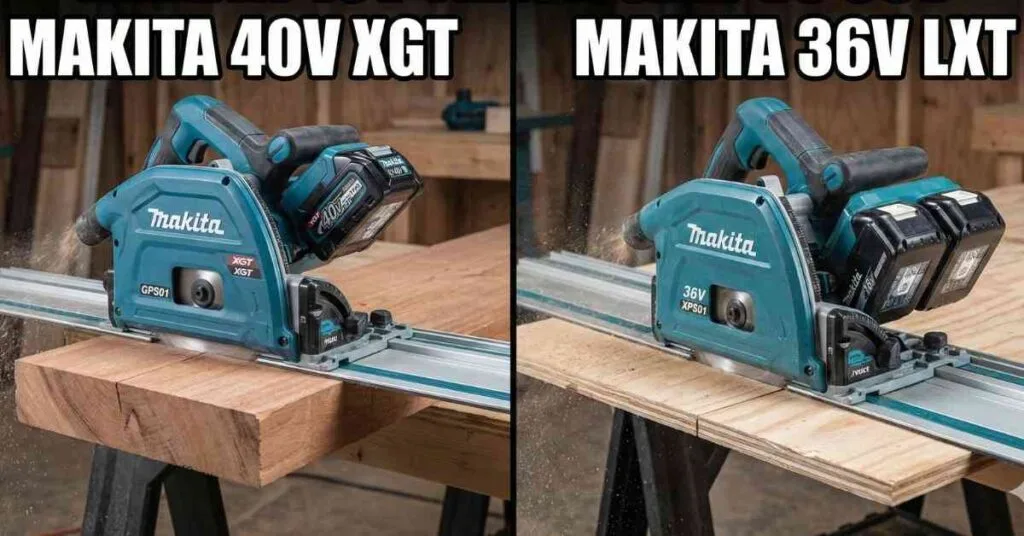
I spent weeks testing the makita 40v track saw vs 36v to see which one works best on a busy jobsite. I broke down many sheets of plywood and ripped thick oak boards. I found that the choice is not just about the battery. It is about how the tool feels in your hand when the work gets tough.
My Experience with the Makita 40V Max XGT (GPS01)
I first tried the 40V XGT track saw on a big project. I had to cut thick white oak for a table. I wondered if one battery could really beat my old dual-battery saw. In my test, the 40V saw felt very strong. The motor did not slow down even when the wood was hard. It felt like a corded saw.
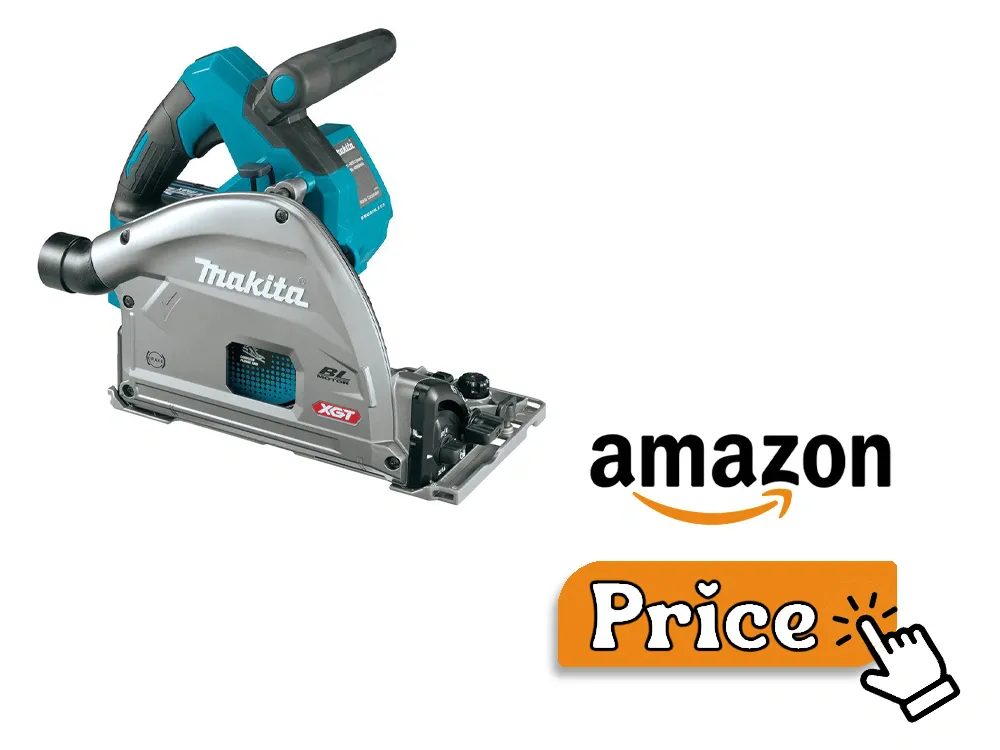
I tested it first on 3/4-inch plywood. The saw moved very smoothly. I liked the safety brake that stops the blade if it binds. This gave me peace of mind. One small issue is the depth scale. It is only in metric. I had to use a chart to find the right depth in inches. This was a bit slow at first.
| Pros | Cons |
| Very high power for hard wood | Depth scale is only in metric |
| Great balance with one battery | Costs more to start this system |
| Battery charges very fast | Dust port is a bit small |
| Smooth and safe to use | Heavier than the older tool |
After three weeks, the saw still looks new. I dropped it once on a wood floor by mistake. The base stayed straight and true. The battery life was good too. I made 20 long cuts on one charge. It is a tool for pros who want the best power.
The wireless vacuum start worked great. I linked it to my dust vac. The vac turned on as soon as I pulled the trigger. This kept my work area clean. The cuts were very straight every time. I checked the blade with a square and it never moved. It is a very solid tool for daily use.
My Time with the Makita 36V (18V x2) LXT (XPS01)
The 36V LXT has been my main saw for a long time. It uses two 18V batteries to get its power. I tested it on many MDF boards. For this kind of work, the saw is perfect. It spins very fast. This helps it make very clean cuts on thin wood.
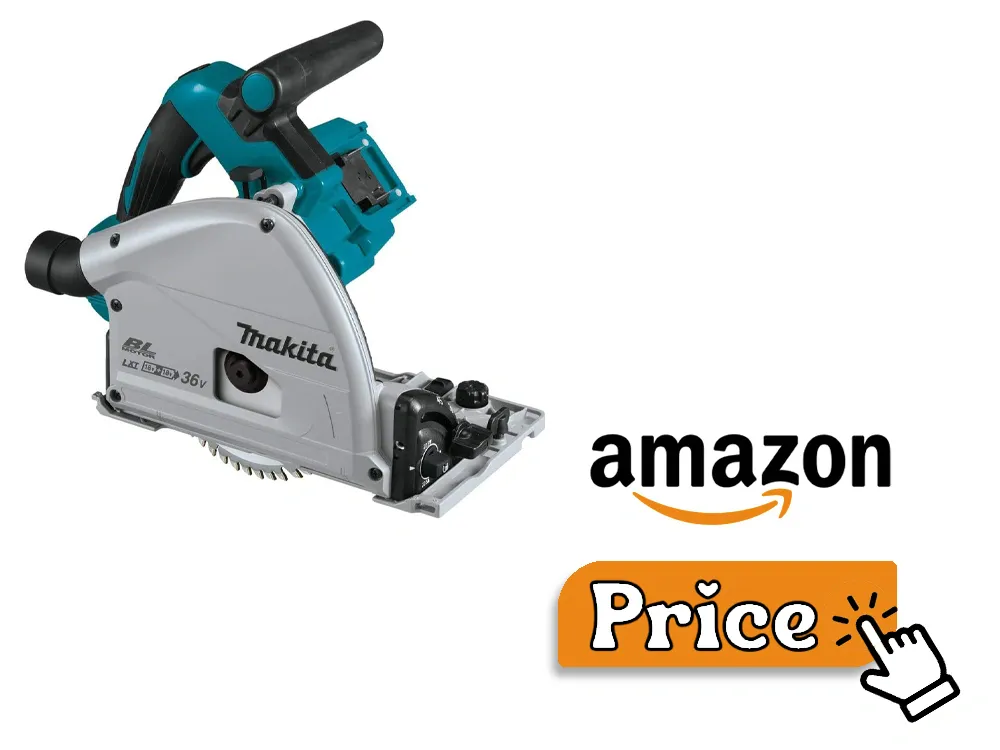
But using two batteries can be a chore. You must charge both to full. One time, one battery was low and the saw stopped mid-cut. This does not happen with the 40V saw. But since I own many 18V tools, I always have extra batteries ready. This makes it easy to keep working.
| Pros | Cons |
| Makes very clean and smooth cuts | Charging two batteries takes time |
| Works with all 18V Makita tools | Can feel top-heavy on tilt cuts |
| Good price for the tool alone | No kickback safety brake |
| Very accurate out of the box | Shakes a bit more than the 40V |
On the job, this saw feels a bit tall. The two batteries sit high up. This can make the saw tip if you are not careful on angle cuts. I used it to trim doors and it worked well. I just had to hold it steady.
I have used this saw for a year. The parts still move well. It is still very accurate. It is a great tool for most woodworkers. If you already have Makita 18V tools, this is the saw to buy. It is a proven tool that gets the job done.
Detailed Comparison for Makita 40V Track Saw vs 36V
Both saws fit the same tracks. But they feel different when you start to cut. Here is how they stack up in real use.
Core Capability Comparison
The 40V saw has more torque. This means it stays strong in thick wood. The 36V saw is fast but can slow down if the wood is too hard. In my shop, the 40V saw is my choice for big slabs. The 36V saw is my choice for light trim.
| Feature | Makita 36V LXT | Makita 40V XGT |
| Best Use | Light sheet goods | Heavy thick wood |
| Main Strength | Fast blade speed | High turning force |
| Real Feel | Good hobby tool | Pro grade power |
Accuracy and Stability
Accuracy is key for a track saw. Both saws cut very straight lines. I checked ten cuts in a row. Both were within a tiny fraction of an inch. But the 40V saw feels more stable. It does not shake as much as the 36V saw. This helps you feel more in control.
| Accuracy Factor | Makita 36V LXT | Makita 40V XGT |
| Steady Cut | Good | Great |
| Blade Drift | Very Low | None |
| Speed to Start | Fast | Instant |
Design and Practical Use
The 40V saw uses one battery. This makes it thinner. I could cut closer to walls with the 40V saw. The handle on the 40V saw also feels better. The 36V saw feels wide and bulky because of the two batteries. The 40V saw is easier to use with one hand.
| Design Feature | Makita 36V LXT | Makita 40V XGT |
| Ease of Use | Average | Very Easy |
| Balance | Top-heavy | Well balanced |
| Grip Feel | Standard | Very Soft |
Battery Life and Daily Power
The 36V saw runs for a long time with two big batteries. But the 40V saw charges much faster. I can get a full charge in about 30 minutes. This helps me stay busy all day. The 40V saw also keeps its power even as the battery gets low. The 36V saw starts to slow down at the end.
| Battery Aspect | Makita 36V LXT | Makita 40V XGT |
| Cut Count | Very High | High |
| Charge Time | Slow | Fast |
| Power Flow | Fades at end | Stays steady |
Final Practical Comparison
The 40V saw is safer because it has a better brake. It stops the blade fast if things go wrong. The 36V saw is a better deal if you want to save money. Both are great, but the 40V is the clear winner for hard daily work.
| Final Factor | Makita 36V LXT | Makita 40V XGT |
| Price | Low | High |
| Best For | Home shops | Pro job sites |
| Build | Tough | Very Tough |
In the end, the makita 40v track saw vs 36v comes down to your needs. If you have many 18V batteries, get the 36V saw. It is a solid tool. But if you want the best power and a single battery, go with the 40V XGT. It is the best saw I have used in years.
As an Amazon Associate, We earn from qualifying purchases