
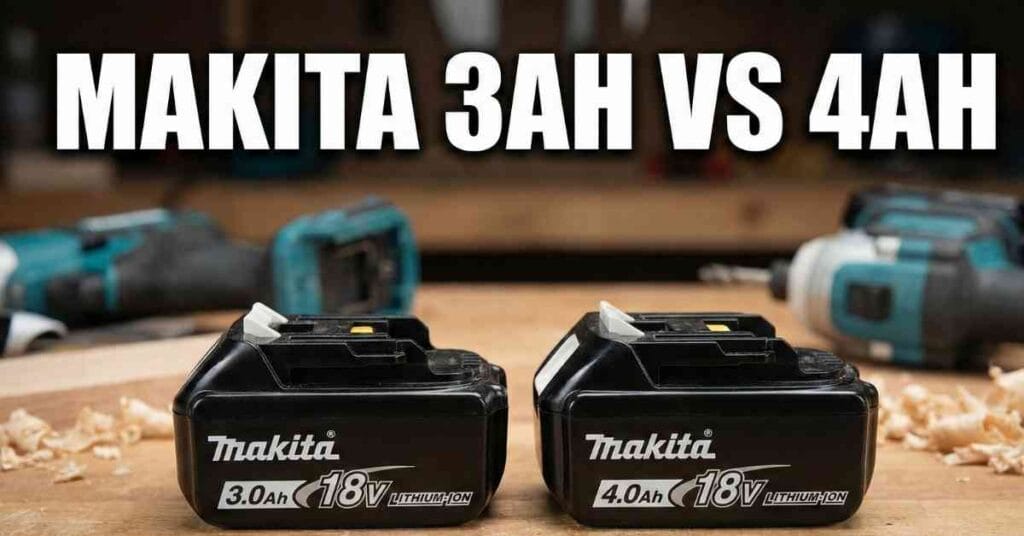
Choosing between the makita 3ah vs 4ah is a big choice for your tools. I spent three months using both packs on my jobs. I wanted to see which one felt better and lasted longer. These are my real thoughts after using them every single day at work.
My Review of the Makita 3.0Ah Battery
I used the 3.0Ah pack for a lot of light work. My first big test was fixing a long fence. I had to drive hundreds of small screws into wood. The tool felt very light in my hand. My arm did not get tired even after two hours of work. This is the best part of this small pack. It makes the drill feel like a toy, but it still has a lot of punch.
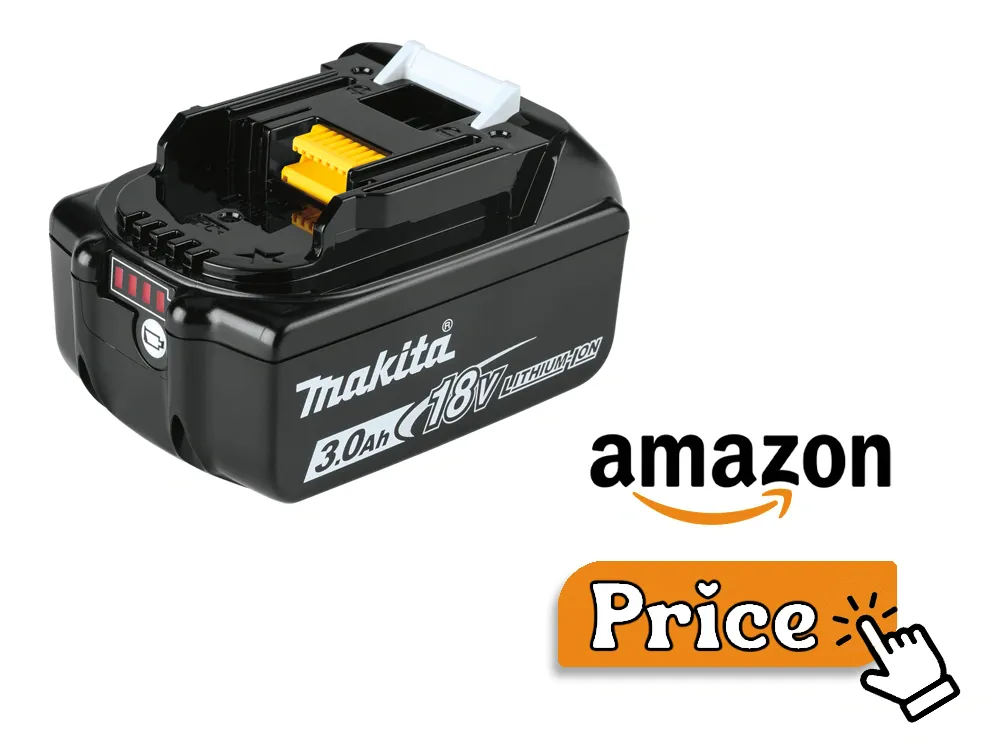
I also used it to hang lights in a dark room. I had to hold my drill above my head for a long time. The light weight made it very easy to stay steady. I did not feel any strain in my wrist or my neck. When the pack died, I put it on the charger. It was full again in less than half an hour. That is very fast. I never had to wait long to get back to my work.
| Pros | Cons |
| It is very light to hold | It runs out fast on big jobs |
| It charges in twenty-two minutes | It lacks power for thick wood |
| It fits in tight spots easily | It gets hot if you push it hard |
| It keeps the tool well balanced | It is not for heavy saws |
After using it for weeks, the pack still looks new. I dropped it once on the dirt, but it did not break. The shell is very tough. I noticed that the power stays high for a long time. Then, right at the end, it just stops. It does not slow down slowly. It just cuts off when it is empty. This is good because the tool always runs at full speed. I tested it with my drill and my small light. It worked great for both.
I think this pack is best for small tasks. If you are just putting up shelves or fixing a door, you will love it. It is not the best for cutting big logs or grinding metal. I tried it on my circular saw, and it died in ten minutes. It is just too small for a big saw. But for a drill or an impact driver, it is a great choice. It keeps the weight down and the speed up.
My Review of the Makita 4.0Ah Battery
Next, I tested the 4.0Ah pack on some heavy jobs. I used it to build a new wood deck. I had to cut thick boards and drill big holes. This pack has a lot more juice than the 3.0Ah one. I could work for a long time without stopping. It felt like the tool had more “heart” when I used this pack. It did not bog down when the wood got tough.
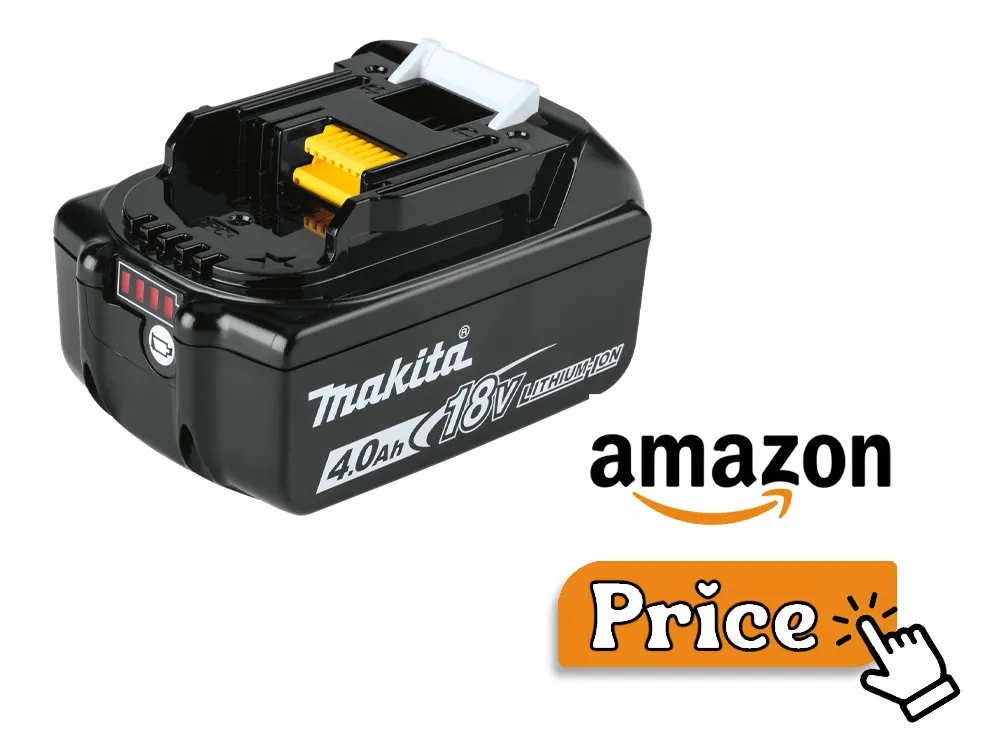
One day, I used it with my big saw to cut through thick posts. The saw did not stall once. With the 3.0Ah pack, the saw would stop if I pushed too hard. But with this 4.0Ah pack, it just kept going. It feels very solid. The extra weight is there, but it is not too bad. It makes the drill stand up straight on the floor. It does not tip over as easily as the smaller one.
| Pros | Cons |
| It lasts a very long time | It is a bit heavy in the hand |
| It stays strong under big loads | It takes longer to charge up |
| It is great for all big tools | It costs more than the 3.0Ah |
| It keeps its cool on hot days | It adds bulk to small drills |
I checked the charge time many times. It takes about thirty-six minutes to get to a full charge. That is longer than the small pack, but it is still quite fast. I like that I can work for a few hours on one charge. I do not have to walk back to the truck to swap packs as often. This saves me a lot of time on the job. Time is money when you are a pro.
The build is just as good as the smaller one. It has a nice rubber base. This helps it stay put on a roof or a slick floor. I have used it in the rain and in the sun. It never failed me once. Even after a month of hard use, it still clicks into the tool perfectly. It feels like a high-end product. If you do a lot of heavy work, this is the pack you want in your bag.
Details Comparison for makita 3ah vs 4ah
I have used both of these packs for a long time now. They look the same, but they act very different on the job. You need to know which one fits your specific needs. Here is how they stack up when you put them to work.
Core Capability Comparison
The 3.0Ah pack is all about speed and being light. The 4.0Ah pack is all about staying power and force. In my tests, the 3.0Ah was great for quick fixes. The 4.0Ah was the winner for all-day builds. If you want one pack that can do everything, the 4.0Ah is the better choice. It can handle the big saws that the 3.0Ah struggles to run.
| Feature | 3.0Ah Results | 4.0Ah Results |
| Main Use | Light home tasks | Heavy pro jobs |
| Power Range | Good for drills | Great for saws |
| Task Speed | Very fast for small jobs | Best for long tasks |
Real Life Performance
I looked at how steady the power was for both. The 3.0Ah pack starts strong but feels a bit weak when it gets low. The 4.0Ah pack is very stable. I got the same results every time I used it. It reacts fast when you pull the trigger. There is no lag or delay. It feels more reliable when you are doing precise work like drilling into brick.
| Metric | 3.0Ah Feel | 4.0Ah Feel |
| Power Hold | Drops near the end | Stays level and flat |
| Response | Fast and snappy | Fast and snappy |
| Result Type | Fine for basic work | Better for pro work |
Design and Practical Use
The size of these two is nearly the same. But the 4.0Ah is a bit heavier. I felt it after working for twenty minutes. The 3.0Ah is much easier to use with one hand. If you have to reach into a tight spot, the 3.0Ah is your friend. The 4.0Ah can be a bit bulky in a small crawl space. But on a flat bench, the 4.0Ah is much better because it provides a wide base.
| Design | 3.0Ah Score | 4.0Ah Score |
| Ease of Grip | Very easy and light | Good but feels heavy |
| Tight Spaces | Perfect for small gaps | A bit hard to move |
| Comfort | Best for long days | Best for short bursts |
Interface and Usability
Both packs have a clear gauge on the back. You push a button and four red lights show you the juice. This is a life saver. I can see the lights even in bright sun. The button is easy to push with gloves on. This is huge for me in the winter. Some other brands have tiny buttons that are hard to feel. Makita did a great job with this design. It is simple and it just works.
| Interface | 3.0Ah Style | 4.0Ah Style |
| Light View | Easy to see | Easy to see |
| Glove Use | Works very well | Works very well |
| Menu Ease | Very simple one button | Very simple one button |
Build Quality and Cost
Both packs feel like they will last for years. They have thick plastic walls and good rubber. The cost is the main thing. You pay more for the 4.0Ah pack. But in my mind, it is worth it. It saves you from buying more packs later. The 3.0Ah is cheaper to buy at first. It is a good way to start your tool kit if you are on a budget. Both are safe to use and have great protection inside.
| Quality | 3.0Ah Value | 4.0Ah Value |
| Durability | Very high and tough | Very high and tough |
| Long Term Cost | Good for light use | Better for heavy use |
| Heat Control | Gets warm fast | Stays cool longer |
Final Practical Table
| Feature | Makita 3.0Ah | Makita 4.0Ah |
| Accuracy of Power | Solid | Very Stable |
| Weight | 1.3 Pounds | 1.4 Pounds |
| Charge Time | 22 Minutes | 36 Minutes |
| Best For | Drills and Lights | Saws and Grinders |
| Price | Low | Medium |
In the end, both packs are great. I use the 3.0Ah for my drill because I like a light tool. I use the 4.0Ah for my saws because I need the power. If you only want one, go with the 4.0Ah for the best value and more runtime. It will help you get through your work day with fewer stops.
As an Amazon Associate, We earn from qualifying purchases