
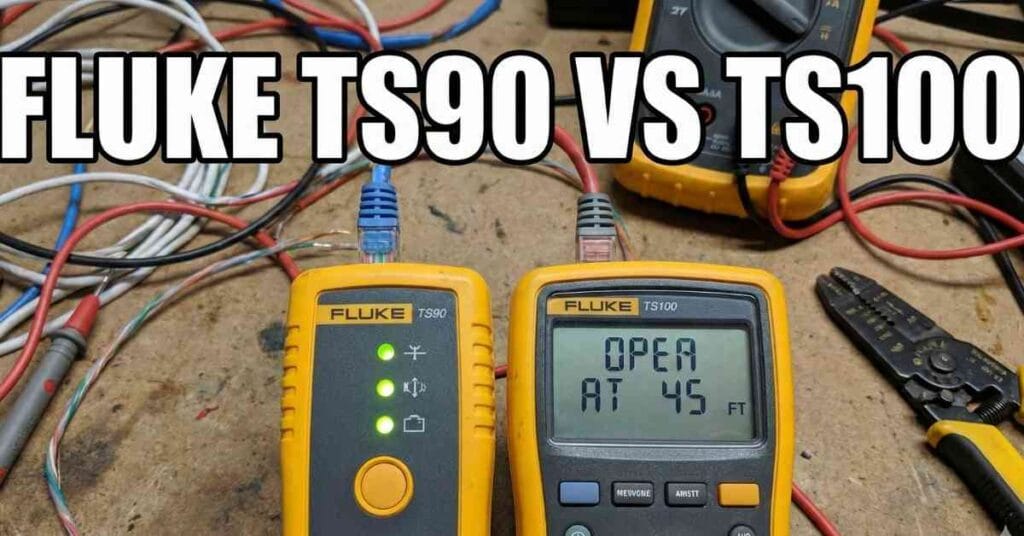
I hate guessing where a wire is broken. It wastes time and ruins my day. I bought both the Fluke TS90 and TS100 to see which one actually helps me find faults faster. Here is what I learned after months of testing them in the field.
Fluke TS90 Cable Fault Finder
I picked up the TS90 when I was working on a messy renovation project. I had a coil of Romex wire and needed to know if it was shorted before I pulled it through the wall.
Using it is very simple. I just clipped it on the wires and pressed the button. It does not have a fancy screen. It uses LED lights to show you the distance. This took me a minute to get used to. You have to do a little math in your head to read the distance based on which light is on.
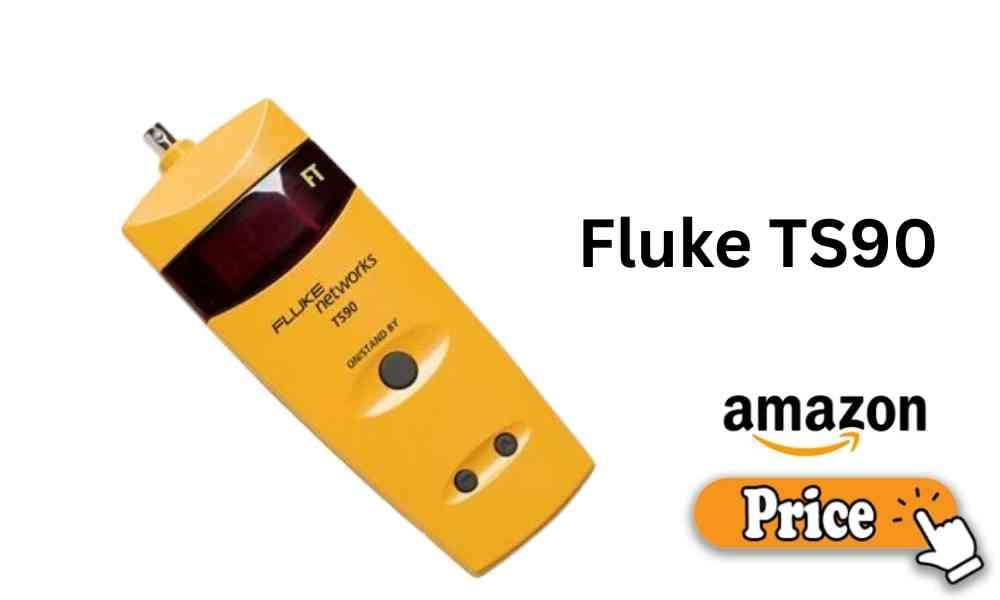
But for power lines, it is great. I tested it on a 12/2 wire that had a staple through it. The TS90 told me the short was 25 feet away. I cut the wall at 25 feet, and the staple was right there. It saves me from tearing down the whole wall. It feels tough, too. I dropped it off a ladder once, and it still works fine.
| Pros | Cons |
| Very easy to use | No digital screen |
| Great for power cables | Hard to get exact distance |
| Detects dangerous voltage | Clips are a bit small |
| Survives drops well | LED system takes practice |
Fluke TS100 Cable Fault Finder
I needed more precision for a network job, so I bought the TS100. This tool feels different right away. It has a real LCD screen that shows numbers.
I tested this on a long run of coaxial cable for a TV install. The cable was old, and the signal was bad. I plugged the TS100 into the wall jack. The screen showed “Open at 45 ft.” This was way better than the blinking lights on the TS90.
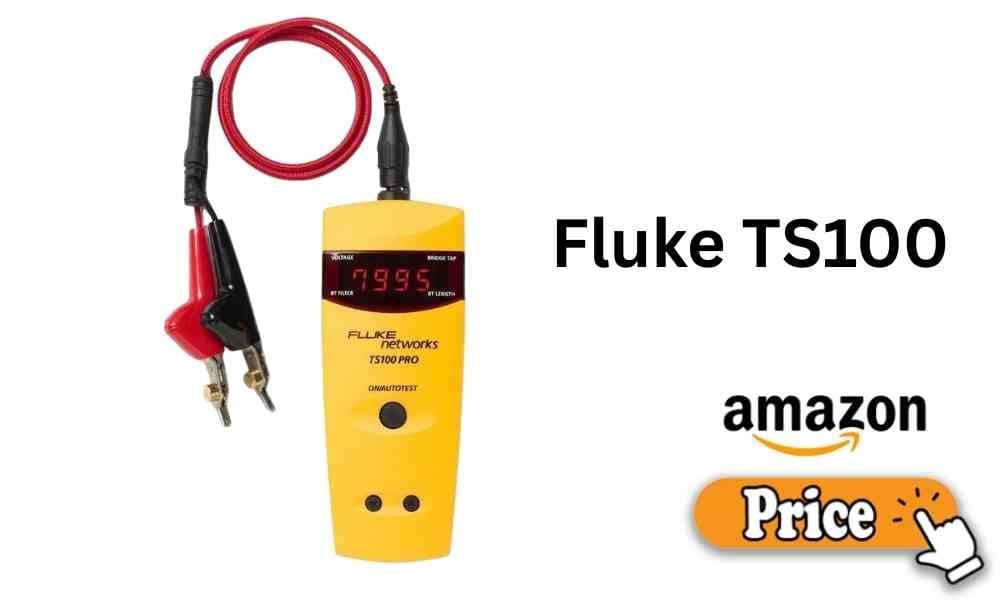
It is also smarter with settings. I could adjust the “Velocity of Propagation” (VOP) to match the cable type. This makes the distance reading very accurate. I also liked the tone generator. I used it to trace a Cat6 cable through a crowded ceiling. It sends a loud tone that my probe picked up easily. It feels like a pro tool for data guys.
| Pros | Cons |
| Clear LCD screen | Costs more money |
| Shows exact distance | Buttons feel stiff |
| Works on Coax and Data | BNC adapter is extra |
| Adjustable settings | Not for live power |
Details Comparison for Fluke TS90 vs TS100
Here is how they stack up when you put them head-to-head.
Reading the Display
The biggest difference I saw was the display. The TS90 uses three LEDs. It tells you “open” or “short” and gives a range. It is okay for a quick check, but it is not precise. The TS100 has a screen. It tells you the exact feet to the fault.
| Feature | Fluke TS90 | Fluke TS100 |
| Display Type | LED Lights | LCD Screen |
| Readability | Good in dark | Clear in light |
| Info Shown | Range only | Exact numbers |
Cable Compatibility
I found the TS90 is the king of 2-wire power cables. It handles thick electrical wire well. The TS100 is built for data. It shines with Ethernet and Coax cables. If you do electrical work, the TS90 fits better. If you do IT work, get the TS100.
| Feature | Fluke TS90 | Fluke TS100 |
| Best Cable | Power / 2-Wire | Data / Coax |
| Connector | Banana Jacks | BNC / Banana |
| Adapter Need | Low | High |
Accuracy in the Field
Accuracy matters when you are digging into a wall. The TS90 gets you close. It might say the break is between 15 and 20 feet. That is a big gap. The TS100 gets you to the inch. It told me a break was at 42 feet, and it was right.
| Feature | Fluke TS90 | Fluke TS100 |
| Precision | +/- 10% | +/- 2% |
| Resolution | Ranges | 1 foot |
| Trust Level | Good | Excellent |
Safety Features
I worry about clipping onto a live wire. The TS90 is safer for electricians. It warns you if it sees high voltage. The TS100 also has protection, but it is meant for lower phone voltages. I feel safer with the TS90 on unknown wires.
| Feature | Fluke TS90 | Fluke TS100 |
| Voltage Warning | High Voltage | Low Voltage |
| Protection | up to 250V | up to 250V |
| Alarm Type | Visual | Visual |
Durability and Build
I treat my tools hard. Both of these are tough. They have thick rubber cases. But the TS90 feels a bit more solid because it has no screen to crack. I toss the TS90 in my bag without looking. I am more careful with the TS100 screen.
| Feature | Fluke TS90 | Fluke TS100 |
| Case Material | Hard Plastic | Hard Plastic |
| Weak Point | LEDs | LCD Screen |
| Drop Rating | Very High | High |
Conclusion
If you pull wire for a living, the TS90 is your best friend. It is simple, safe, and tough. But if you need to know exactly where a data cable is broken, spend the extra cash on the TS100. The screen alone is worth the price.
As an Amazon Associate, We earn from qualifying purchases