
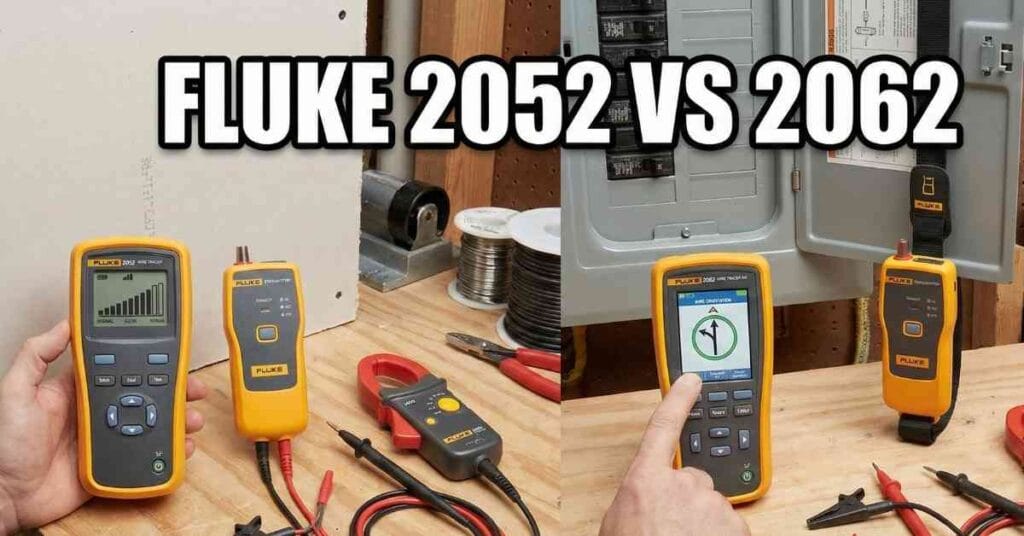
I spent the last two weeks on a messy renovation job to see which of these tracers actually works better. The Fluke 2052 is a solid tool that gets the job done with audio and lights. The Fluke 2062 is the fancy new sibling with a color screen that shows you exactly where the wire is. Here is what I found when I put them to work.
Fluke 2052 Advanced Wire Tracer
I started with the 2052. It felt familiar right away. It reminds me of the older tracers I have used for years, but it feels much more solid in the hand. I used this mainly to map out breakers in an old office building where the panel labels were all wrong.
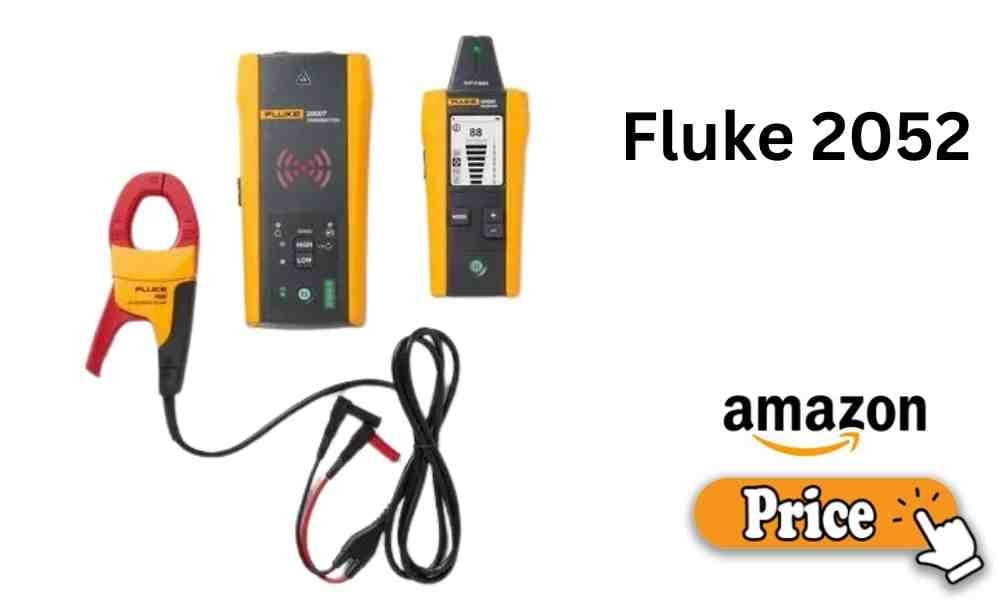
The best thing about the 2052 is the audio. It is loud and clear. When I was scanning the breaker panel, the signal peaked perfectly on the right breaker. I did not have to second-guess it. I also used the included clamp to induce a signal on a conduit. It worked great. I could trace the conduit up three floors without making electrical contact.
However, it takes some practice. You have to sweep the wand back and forth to find the strongest signal. It works well, but you have to be patient. It does not tell you “the wire is that way.” You have to hunt for it.
Pros and Cons
| Pros | Cons |
| Very loud and clear audio signal | No screen to show wire direction |
| Signal strength bar graph is fast | Harder to use in crowded junction boxes |
| Costs less than the 2062 | You must sweep back and forth manually |
| Rugged build feels very tough | Battery life is average with heavy use |
Fluke 2062 Advanced Pro Wire Tracer
Next, I picked up the 2062. This tool changes the game because of the screen. I had to find a wire buried behind drywall in a finished kitchen. I did not want to cut unnecessary holes.
I turned on the “Smart Sensor” mode. This is the main selling point. A little arrow popped up on the color screen. It pointed right at the wire. As I moved the tool, the arrow stayed locked on the cable. It even showed me when the wire turned a corner. That was impressive.
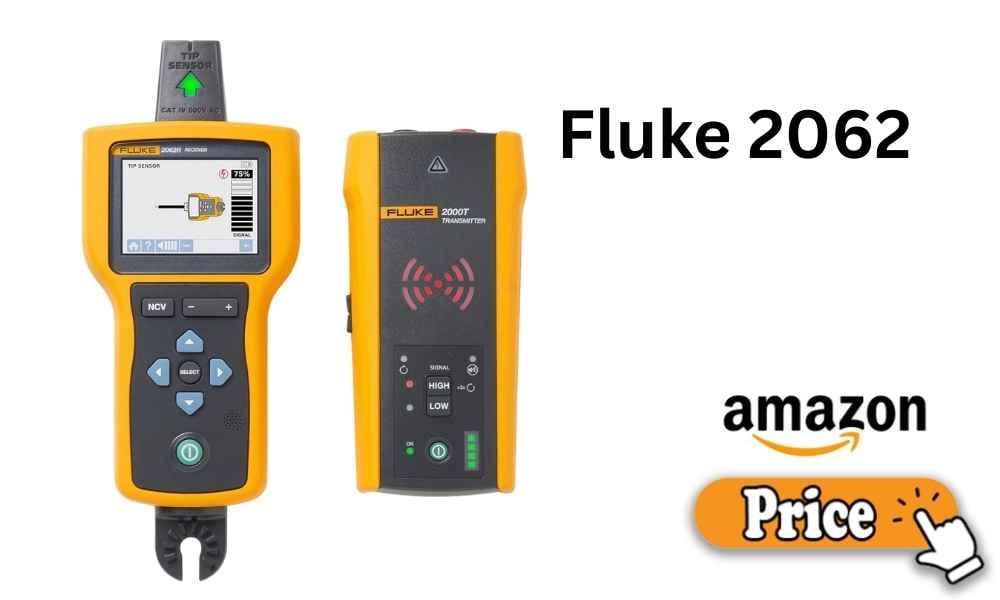
I also liked the magnetic strap that comes with this kit. It sounds small, but being able to hang the receiver on the panel door while I worked was a huge help. The battery life seemed a bit shorter, probably because of the color screen. But the speed I gained was worth it.
Pros and Cons
| Pros | Cons |
| Smart Sensor shows wire orientation | Much more expensive to buy |
| Color screen is easy to read in dark | Screen drains battery faster |
| Includes a magnetic hanging strap | Boot-up time is a little slower |
| Eliminates guesswork behind walls | Slightly heavier in the hand |
Details Comparison for Fluke 2052 vs 2062
I wanted to break down the specific differences that mattered most during my testing. Here is how they compare head-to-head.
Smart Sensor Technology
This is the biggest difference I noticed. The 2052 uses a standard sensor. You have to twist and turn the receiver to find the strongest signal. The 2062 uses a patented Smart Sensor. It processes the signal to show you the wire’s angle. On a busy wall, the 2062 saved me about ten minutes of hunting.
| Feature | Fluke 2052 | Fluke 2062 |
| Sensor Type | Single Coil | Smart Sensor Array |
| Visual Aid | Bar Graph only | Graphic Wire View |
| Orientation | Manual rotation needed | Automatic detection |
Display and Readability
I work in dark basements a lot. The display matters. The 2052 has a simple black and white screen with a backlight. It works fine for reading numbers. The 2062 has a 3.5-inch color LCD. It is bright and crisp. The color helps you see the “red” energized wire warning instantly.
| Feature | Fluke 2052 | Fluke 2062 |
| Screen Type | Black & White LCD | Color TFT LCD |
| Size | 2.5 inches | 3.5 inches |
| Outdoor View | Good contrast | Excellent brightness |
Tracing Accuracy
Accuracy is why we buy Fluke. Both units use the same transmitter, so the signal quality is identical. I found both to be CAT IV 600 V rated, which is vital for safety. In open air, they are equally accurate. But in a tight bundle of wires, the 2062 wins. The visual display helps you pick out the right cable from the mess.
| Feature | Fluke 2052 | Fluke 2062 |
| Safety Rating | CAT IV 600 V | CAT IV 600 V |
| Signal Source | Same Transmitter | Same Transmitter |
| Pinpointing | Good (Audio/Bar) | Best (Visual/Audio) |
Ease of Use
The 2052 is simple. Turn it on and go. There are fewer menus to get lost in. The 2062 has more settings. You can adjust the sensitivity and view modes. For a quick breaker check, the 2052 is faster to set up. For a complex troubleshooting job, the 2062 is easier to use because the screen does the thinking for you.
| Feature | Fluke 2052 | Fluke 2062 |
| Learning Curve | Very Low | Low to Medium |
| Setup Speed | Instant | Fast |
| User Interface | Buttons | Buttons + Menu |
Kit Accessories
Both come in a nice hard case. They both include test leads, alligator clips, and the current clamp for inducing signals. The main difference is the strap. The 2062 comes with a magnetic hanger. I missed this when using the 2052. You have to put the 2052 down on a shelf or the floor. The 2062 hangs right where you need it.
| Feature | Fluke 2052 | Fluke 2062 |
| Hard Case | Included | Included |
| Signal Clamp | Included (i400) | Included (i400) |
| Magnetic Hanger | Sold Separately | Included |
Conclusion
If you trace wires every day, get the Fluke 2062. The screen saves time and frustration. If you only need to find a breaker once a month, stick with the Fluke 2052. It is robust, accurate, and saves you money. Both are excellent tools that I trust on the job.
As an Amazon Associate, We earn from qualifying purchases