
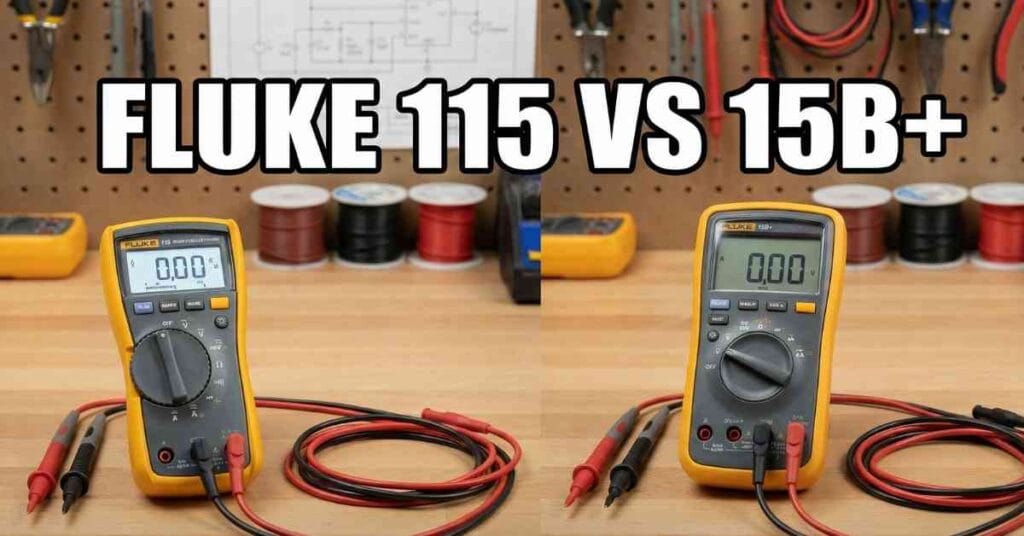
I spent a full month using both of these meters side by side. I wanted to see if the cheaper model could keep up with the pro version. The price difference is huge, but does the performance match the cost? Here is exactly what I found in the field.
My Experience With The Fluke 115
I have carried the Fluke 115 in my main tool bag for weeks now. It feels like a tool made for daily abuse. I used it to troubleshoot a finicky HVAC control board last Tuesday. The “True RMS” feature was a lifesaver there. The board had a weird voltage drop that my cheaper meter missed.
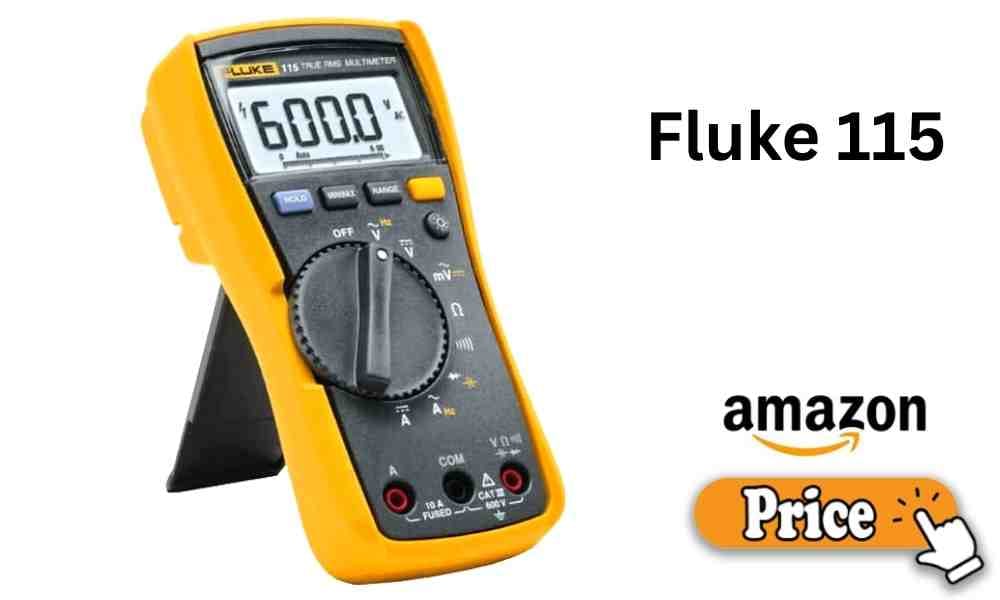
The best part is the speed. When I touch the probes together for a continuity test, it beeps instantly. There is no lag. It helps me work fast when I am tracing a long wire bundle. The curved shape fits my hand perfectly. It does not slip, even when I am wearing gloves. I also love the white LED backlight. It makes the screen pop in dim basements.
The only downside is the battery. It uses a 9V block battery. These are pricey and I don’t always have a spare one in my truck.
| Pros | Cons |
| Beeps instantly for continuity checks | Uses expensive 9V batteries |
| True RMS is accurate on modern electronics | Costs a lot more upfront |
| Fits perfectly in one hand | The stand feels a bit flimsy |
| Screen is easy to read from any angle |
My Experience With The Fluke 15B+
I bought the 15B+ to see if I could save some money for my home kit. It is a bit bigger and boxier than the 115. It feels like a brick. I used it to check some wall outlets and car batteries in my garage. For those simple jobs, it was spot on. The voltage readings matched my trusted reference meter perfectly.
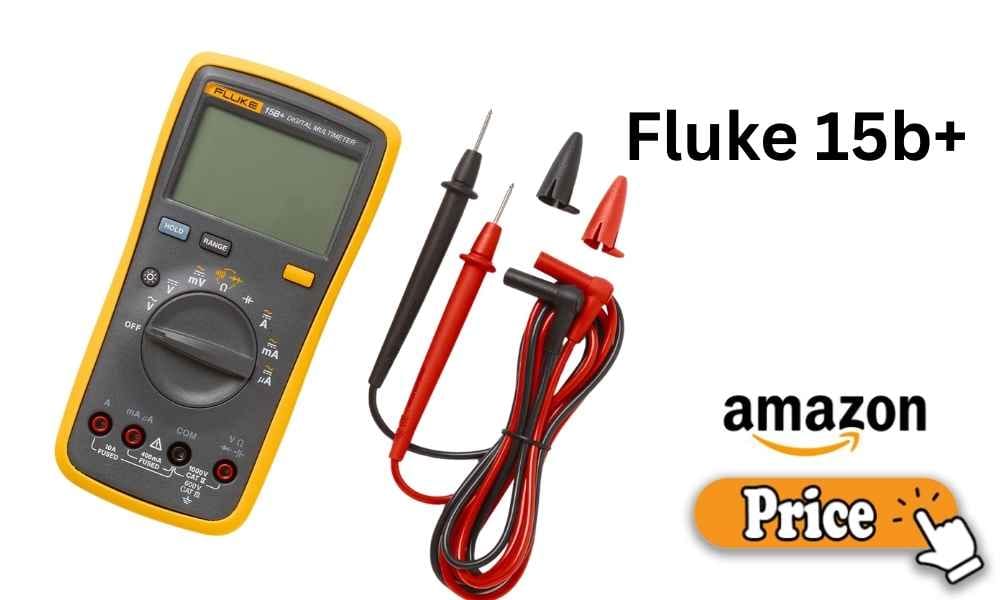
I did run into trouble with a dimmer switch. The readings jumped around a lot. This meter is “Average Responding,” not True RMS, so it gets confused by complex signals. It is also slower. When I check for a broken wire, I have to hold the probes for a split second before it beeps. It is a small delay, but it adds up.
On the plus side, it runs on two AA batteries. I have tons of those lying around. That makes it very cheap to own over time.
| Pros | Cons |
| Runs on cheap AA batteries | Slower continuity beep |
| Very affordable price | No True RMS (bad for electronics) |
| Big, clear display | Bulky, brick-like shape |
| sturdy build quality | Harder to get warranty support |
Detailed Comparison For Fluke 115 vs 15B+
Here is how these two stack up when you look at the details that matter most.
Core Measurement Capabilities
This is the biggest technical difference I found. The 115 is a True RMS meter. This means it stays accurate even when I test messy signals, like a variable speed motor or a computer power supply. The 15B+ is an Average Responding meter. It works great for clean power, like a lamp or a car battery. But if you measure something with a microchip or a drive, the 15B+ might lie to you.
| Feature | Fluke 115 | Fluke 15B+ |
| Tech Type | True RMS | Average Responding |
| Best For | Electronics & HVAC | Basic Home Wiring |
| Accuracy | High on all loads | Good on clean power only |
Speed and Responsiveness
I hate waiting for my tools. The 115 feels snappy. The numbers on the screen settle down fast. The continuity beeper is latched, which means it sounds the moment metal touches metal. The 15B+ feels a step behind. The numbers take a moment to stop moving. The beeper has a tiny delay. If you are just checking one fuse, it is fine. If you are checking fifty wires, it gets annoying.
| Feature | Fluke 115 | Fluke 15B+ |
| Beeper Speed | Instant | Slight Delay |
| Screen Update | Fast (Bar graph helps) | Slower |
| Auto Range | Quick | Moderate |
Display and Readability
Both meters have nice, big digits. I had no trouble reading either of them in sunlight. The 115 has a slight edge with its backlight. It is bright and white. The 15B+ backlight is okay, but a bit dimmer. The 115 also has a 6,000 count display, while the 15B+ has 4,000. This just means the 115 can show a slightly more precise number before it has to shift the decimal point.
| Feature | Fluke 115 | Fluke 15B+ |
| Counts | 6,000 | 4,000 |
| Backlight | Bright White LED | Standard LED |
| Clarity | Excellent | Very Good |
Build Quality and Ergonomics
The 115 is designed for the western market. It has a curvy “hourglass” shape. It is easy to hold with just your thumb and fingers. The 15B+ is sold mostly in Asian markets. It uses an older, square case design. It feels tough, but it is clunky. It takes up more space in my bag. The rubber holster on both is thick and protects them from drops. I dropped both from my workbench and neither broke.
| Feature | Fluke 115 | Fluke 15B+ |
| Shape | Curved, Compact | Square, Bulky |
| Grip | Rubberized, Ergonomic | Harder to hold |
| Drop Test | Survived 1 meter drop | Survived 1 meter drop |
Battery Life and Power
The 15B+ wins here, hands down. It uses two AA batteries. You can buy these anywhere for pennies. They seem to last forever in this meter. The 115 uses a 9V battery. These are expensive and die faster if you use the backlight a lot. If you want a meter you can throw in a drawer for a year and trust it to turn on, the 15B+ is the safer bet.
| Feature | Fluke 115 | Fluke 15B+ |
| Battery Type | 9V (Square) | 2x AA |
| Run Time | Good | Excellent |
| Cost to Run | High | Low |
Conclusion
If you do this for a living, buy the Fluke 115. The speed and True RMS accuracy are worth the extra cash. It saves me time every day. But if you just need to check batteries or outlets at home, get the 15B+. It is tough, accurate enough for house work, and cheap to run.
As an Amazon Associate, We earn from qualifying purchases