
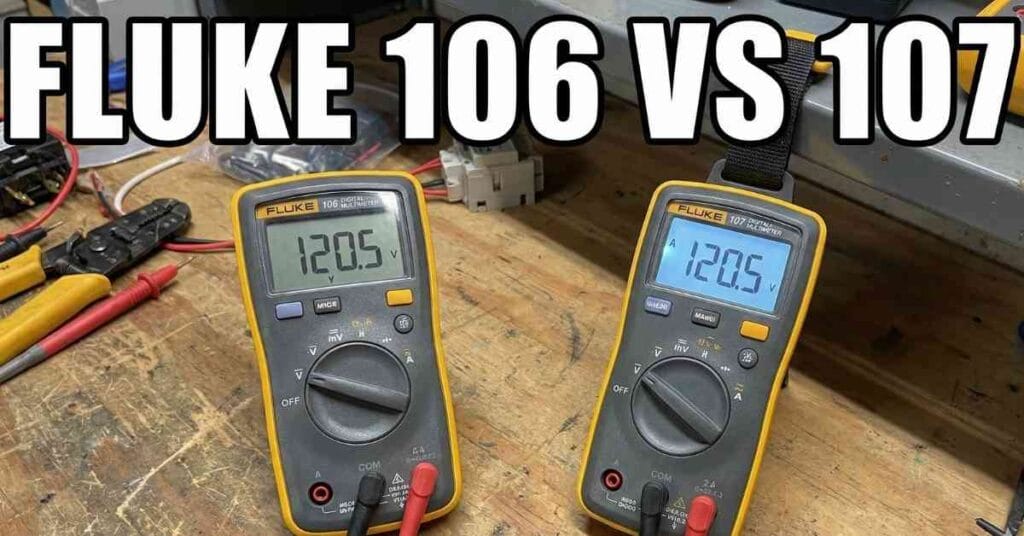
I needed a small, reliable meter for my grab-and-go tool bag. I picked up both the Fluke 106 and the 107 to see which one earned a spot in my pocket. Here is the truth about how they handle real work, not just what the box says.
My Experience with the Fluke 106
I started with the Fluke 106. It is incredibly small. It fits right into the front pocket of my work shirt. I first used it to check a few outlets in a client’s living room. The readings were fast. There was no lag. I like that it is simple. It does not have too many dial positions to confuse you.

However, I ran into an issue quickly. I went to check a wired doorbell transformer in a dim hallway closet. I could not see the screen. This meter has no backlight. I had to hold my flashlight in my mouth just to read the numbers. It felt durable, though. I dropped it on the hardwood floor once, and it did not care. It is a solid tool, but the lack of light is a pain in dark spots.
| Pros | Cons |
| Very small and light | No screen backlight |
| Fast continuity beeper | No diode test mode |
| Simple and easy to use | Leads feel a bit stiff |
| Fits in a shirt pocket | Hard to read in the dark |
My Experience with the Fluke 107
Next, I swapped to the Fluke 107. It feels exactly the same in the hand. It has the same tough plastic case. But the differences showed up fast. I had to troubleshoot a control board on a washing machine. The lighting was terrible behind the washer. I hit the backlight button, and the screen glowed bright. That feature alone is worth the extra cost to me.
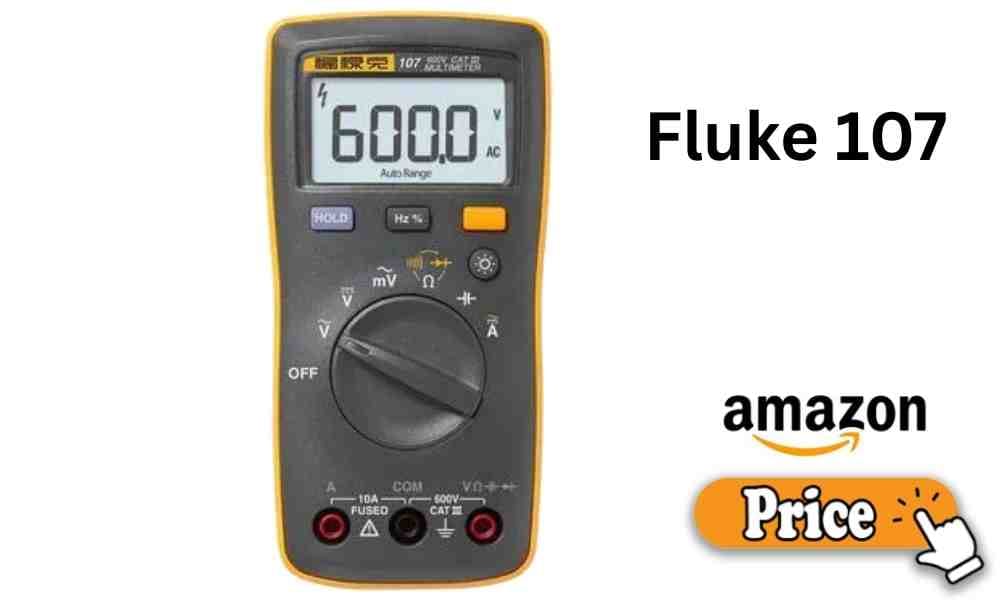
I also used the SmartStrap that comes with it. It has a magnet. I stuck the meter to the side of the metal washer panel. This let me use both hands for the probes. I also tested a few diodes on the board. The 106 cannot do that, but the 107 handled it fine. It feels like a complete tool, while the 106 feels a bit stripped down.
| Pros | Cons |
| Bright backlight | Costs a little more |
| Magnetic hanger included | Same stiff test leads |
| Tests diodes and frequency | Still no true RMS |
| Great for one-handed use | Auto-off can be annoying |
Fluke 106 vs 107 Detailed Comparison
Here is how these two stack up when you look at the details that actually matter on the job.
Display and Backlight
This is the biggest difference I found. The 106 depends on room lighting. If you work in a bright office, it is fine. If you work in attics, basements, or inside cabinets, you will struggle. The 107 solves this. The light is even and bright. It makes the numbers pop out in the dark.
| Feature | Fluke 106 | Fluke 107 |
| Backlight | No | Yes |
| Contrast | Good | Excellent |
| Dark Visibility | Poor | Great |
Measurement Features
The 106 is for basic checks. It tells you if voltage is there or not. It measures resistance. That is about it. The 107 adds more tools. I use the diode test often for electronics. The 107 also measures frequency and duty cycle. These are vital if you work on sensors or drives. If you just do home wiring, the 106 is enough. For electronics, you need the 107.
| Feature | Fluke 106 | Fluke 107 |
| AC/DC Volts | Yes | Yes |
| Diode Test | No | Yes |
| Frequency | No | Yes |
Handling and Strap System
The 106 is just the meter. You have to hold it or lay it down. The 107 comes with the SmartStrap. This is a clever magnetic loop. You can hang it on a nail. You can stick it to steel. You can use it as a stand on a table. I found myself missing this strap every time I used the 106. It makes the work flow much smoother.
| Feature | Fluke 106 | Fluke 107 |
| Strap Included | No | Yes |
| Magnetic Mount | No | Yes |
| Table Stand | No | Yes |
Speed and Accuracy
I compared both against my expensive bench meter. They are both accurate enough for field work. They are both 6000-count meters. The response time is the same. The continuity beeper is fast on both. I did not see any drift in readings. They share the same brain inside. You do not lose accuracy by going cheaper with the 106.
| Feature | Fluke 106 | Fluke 107 |
| Counts | 6000 | 6000 |
| Accuracy | Same | Same |
| Speed | Fast | Fast |
Price and Value
The 106 is cheaper. It is a great entry point into the Fluke brand. But the price gap is small. When you add up the backlight, the magnet, and the extra modes, the 107 offers way more value. I think the 106 is a hard sell unless your budget is extremely tight. The 107 just gives you more options for a few dollars more.
| Feature | Fluke 106 | Fluke 107 |
| Cost | Lower | Higher |
| Value for Money | Good | Excellent |
| Best For | Basic Repairs | All-Around Use |
Conclusion
If you work in well-lit rooms and only check outlets, the Fluke 106 works. It is tough and simple. But for me, the Fluke 107 is the winner. The backlight and magnetic strap make my daily tasks much easier. It is the better tool for the real world.
As an Amazon Associate, We earn from qualifying purchases