
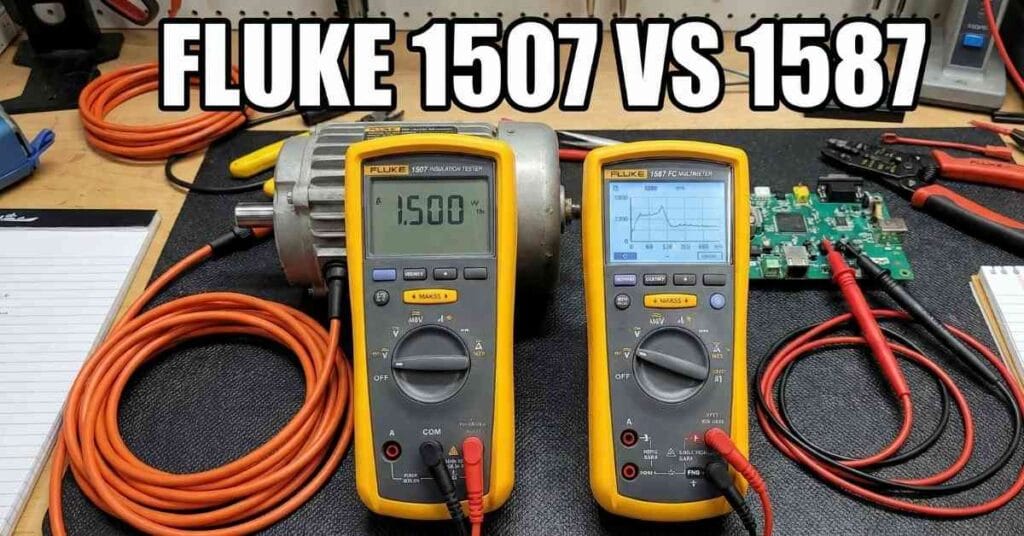
I have spent the last month carrying both the Fluke 1507 and the 1587 FC to job sites. I wanted to see if the “all-in-one” 1587 could truly replace my trusty specialized tools. Here is what I found when I put them to work on real motors and wiring.
Fluke 1507 Insulation Tester Review
I grabbed the 1507 when I had a specific job to do: compliance testing on a new wiring install. The first thing I noticed was the simplicity. It does not try to be everything. It just tests insulation, and it does it well.
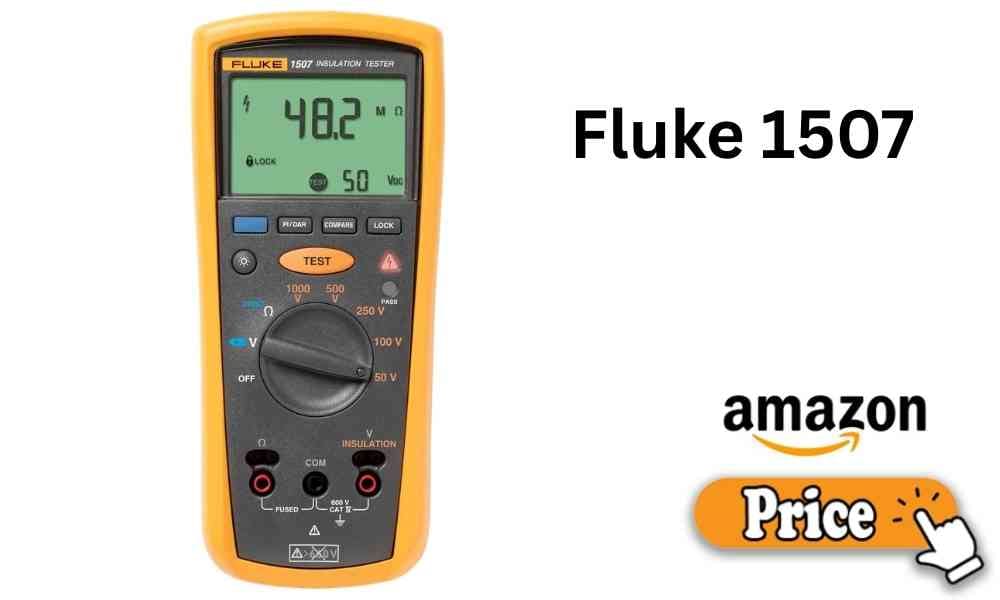
I tested it on a 480V motor that was acting up. I needed to see if the windings were breaking down. The 1507 has a dedicated “Compare” mode. I set my pass/fail limit, and I could just move from phase to phase. I did not have to stare at the numbers. The green “Pass” light just let me work fast.
One day, I needed to test a very old transformer. The resistance was extremely high. The 1507 reads up to 10 Gigohms. Most meters stop way before that. It gave me a steady reading where my cheaper meter just showed “OL” or open loop. The remote probe is also a life saver. I could keep my eyes on the test point and trigger the test from the probe handle.
However, it is limited. I reached for it to check a fuse, and I realized I could not measure current. I had to walk back to the truck to get my multimeter. That was a pain.
| Pros | Cons |
| Reads up to 10 Gigohms | No current (Amp) measurement |
| Fast “Pass/Fail” mode | No frequency measurement |
| Remote probe included | Requires a second meter for daily use |
| Very long battery life | Screen lacks advanced logging |
Fluke 1587 FC Multimeter Review
The 1587 FC stayed in my main bag. It promises to be the only tool you need. For the most part, it is true. I used it to troubleshoot a VFD (Variable Frequency Drive) that was tripping offline.
This is where the Low-Pass Filter saved me. I turned it on, and I got a smooth voltage reading on the drive output. My standard meter was jumping all over the place because of the electrical noise. After checking voltage, I switched the dial to “Insulation” to check the motor cables. I did not have to swap leads. I did not have to swap meters. That speed is addictive.
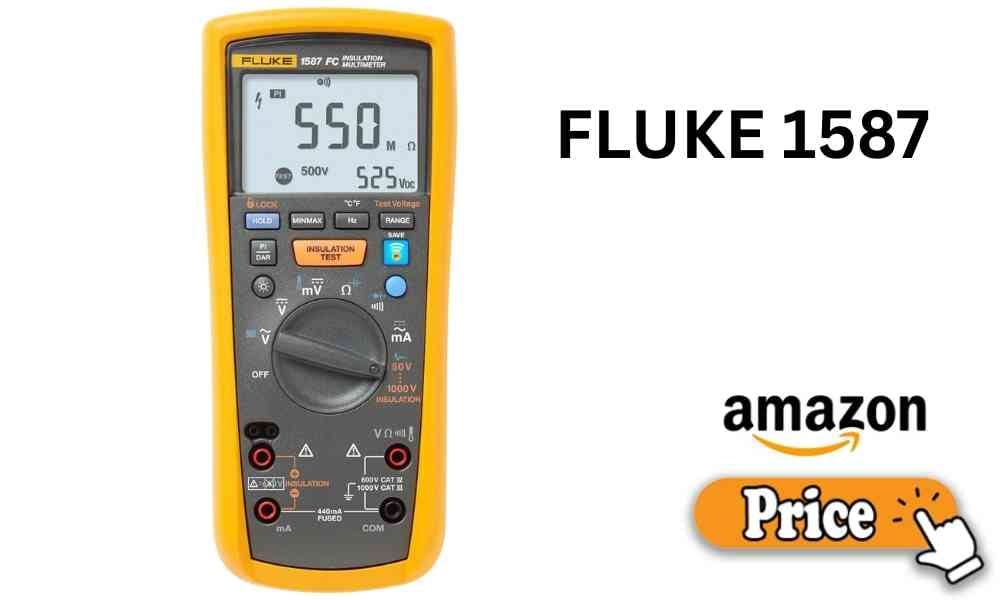
I also tried the Fluke Connect feature. I linked it to my phone while the panel was closed. It was safe, and I could see the trend line on my screen. That is great for safety.
But there are trade-offs. It felt a bit slower to settle on high resistance readings compared to the 1507. Also, it eats batteries faster. I left it on for a few hours of logging, and I lost a bar of power. It also tops out at 2 Gigohms. For that old transformer I mentioned earlier? The 1587 could not read the full resistance range.
| Pros | Cons |
| True-RMS Multimeter built-in | Max resistance is only 2 Gigohms |
| VFD Low-Pass Filter | Drains batteries faster |
| Phone connectivity (Fluke Connect) | Higher price tag |
| Saves bag space (2-in-1) | Heavier than the 1507 |
Details Comparison for Fluke 1507 vs 1587
Here is a breakdown of how these two meters compare when you look at the raw data and daily usability.
Core Measurement Capabilities
I looked at the raw specs and how they translate to field work. The big difference here is the range. The 1507 is a beast for high-spec testing. It goes up to 10 GΩ. The 1587 caps at 2 GΩ. For 90% of service work, 2 GΩ is fine. But for strict commissioning, you might need the 1507.
| Feature | Fluke 1507 | Fluke 1587 FC |
| Insulation Range | Up to 10 GΩ | Up to 2 GΩ |
| Test Voltages | 50V to 1000V | 50V to 1000V |
| AC/DC Voltage | 600V (Basic) | 1000V (True RMS) |
Accuracy and Stability
I ran both meters against a resistance decade box to check them. Both were spot on within their specs. But the feel was different. The 1507 felt like it “locked on” to the insulation value faster. The 1587 took a split second longer to settle. On a cold morning, the 1507 display also seemed a bit more responsive.
| Feature | Fluke 1507 | Fluke 1587 FC |
| Insulation Accuracy | +/- 2.0% + 2 counts | +/- 1.5% + 5 counts |
| Reading Settle Time | Fast | Moderate |
| Drift | Very Low | Low |
Display and Usability
The 1587 wins on tech, but the 1507 wins on readability. The 1587 has a large, crisp display with plenty of room for data. But the 1507 has a simple charm. The buttons are bigger and spaced out. I could use the 1507 easily while wearing thick safety gloves. The 1587 buttons are a bit closer together.
| Feature | Fluke 1507 | Fluke 1587 FC |
| Backlight | Bright Blue | Bright White |
| Button Spacing | Wide (Glove friendly) | Standard |
| Menu System | Simple (Dial based) | Deep (Menus & App) |
Safety Ratings and Build
Both meters feel like tanks. I dropped the 1507 from a 6-foot ladder onto concrete. It did not care. The rubber boot protected it. Both are rated CAT IV 600V. This means they are safe for use at the service entrance. You can trust your life with either one. The leads on the 1587 felt slightly more premium out of the box.
| Feature | Fluke 1507 | Fluke 1587 FC |
| Safety Rating | CAT IV 600V | CAT IV 600V |
| Drop Protection | High (Rubber Boot) | High (Integrated Case) |
| Probe Safety | Remote Probe included | Remote Probe included |
Battery Life and Power
This is a huge practical difference. The 1507 uses 4 AA batteries. Since it is just an insulation tester, those batteries last forever. I have not changed them in weeks. The 1587 also uses 4 AA batteries. But because it runs a backlight, Bluetooth, and complex multimeter functions, it dies faster. You need to carry spares for the 1587.
| Feature | Fluke 1507 | Fluke 1587 FC |
| Battery Type | 4x AA | 4x AA |
| Battery Life | Excellent (1000+ tests) | Good (Dependent on usage) |
| Auto-Off | Yes | Yes |
Conclusion
If you already own a good multimeter, save your money and get the Fluke 1507. It tests higher resistance and the batteries last longer. But if you want to lighten your tool bag and carry just one tool, the Fluke 1587 FC is incredible. It handles VFDs and daily troubleshooting better than anything else I have used.
As an Amazon Associate, We earn from qualifying purchases