
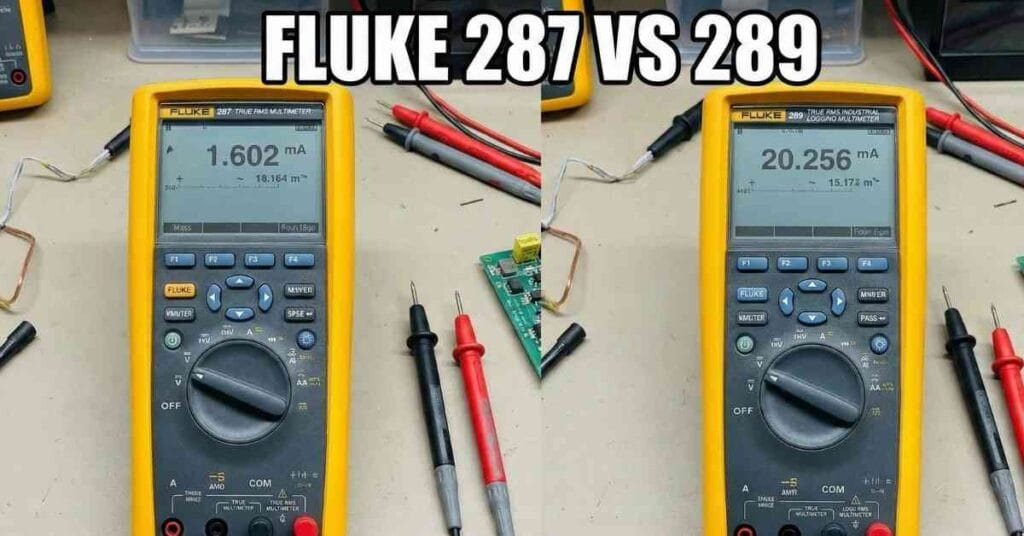
I have spent weeks swapping between these two yellow bricks. On paper, they look like twins. But after using them on my workbench and out in the garage, I found distinct personalities in each one. Here is what I found when I put them to work.
Fluke 287 Review
I kept the Fluke 287 primarily on my indoor electronics bench. It feels built for this calm environment. I spent a few days diagnosing a faulty audio amplifier with it. The “TrendCapture” feature is a standout. I set it up to log the DC bias on a transistor for an hour while I went for lunch. When I came back, the screen showed me a clear graph of the voltage drift. I didn’t need a laptop or cables. It was right there on the screen.
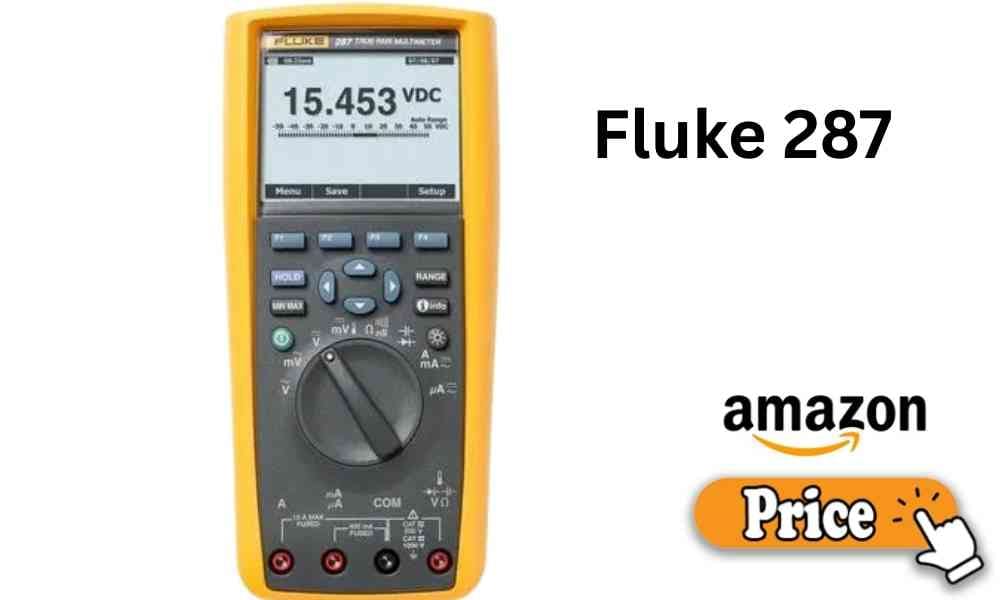
However, I did notice the startup time. It is slow. I counted about 10 to 15 seconds before I could take a reading. If you are in a rush, this gets annoying. I also tested the continuity on a dense circuit board. The latch is fast, which is great. But be careful with the batteries. I left the logging on overnight once, and it killed the 6 AA batteries completely. It is a power-hungry beast when it is thinking hard.
| Pros | Cons |
| incredible logging graphs on-screen | Boot-up takes over 10 seconds |
| Very high precision for electronics | Eats through batteries quickly |
| Screen is crisp and easy to read | Heavy for a handheld meter |
| Fast continuity beeper | No Low Impedance (LoZ) mode |
Fluke 289 Review
The Fluke 289 went with me to the garage and the breaker box. This meter is built for the messy, noisy world of AC power. I used it to check a motor that was tripping a breaker. The “Low Pass Filter” was the hero here. My other meters jumped around because of the electrical noise. The 289 smoothed it out and gave me a steady voltage reading. It gave me confidence.
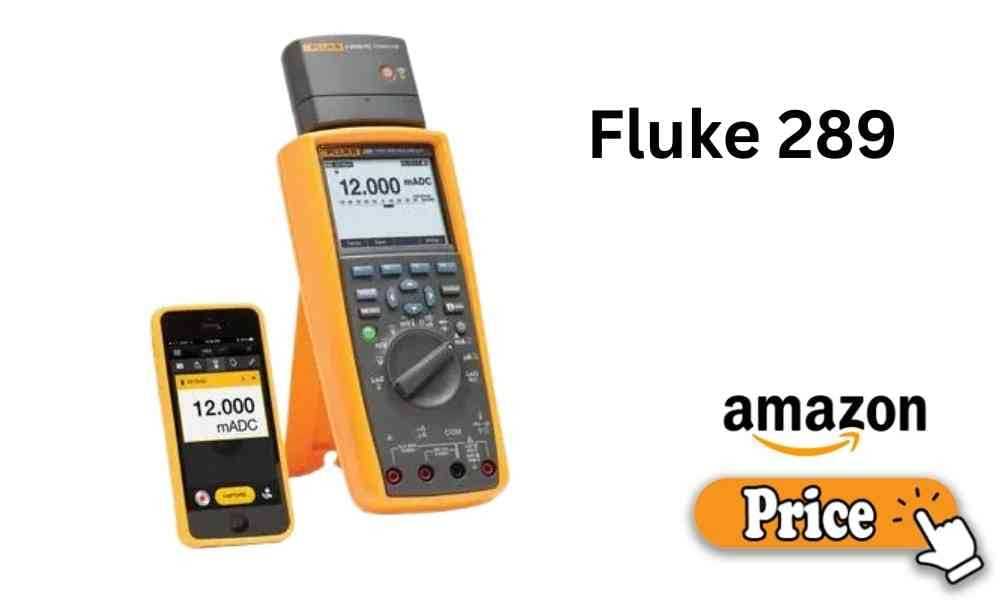
I also tested the “LoZ” (Low Impedance) mode on a dead wall switch. A cheaper meter told me there was 40 volts there, which was just “ghost voltage” from nearby wires. The 289’s LoZ mode correctly showed zero volts. That is a safety feature I now rely on. It feels just as heavy as the 287, and the dial is stiff. You can’t really operate it with one hand. But for heavy-duty work, it feels solid and trustworthy.
| Pros | Cons |
| LoZ mode clears ghost voltage | Same slow boot time as the 287 |
| Low Pass Filter works on motors | Dial is stiff to turn |
| 50-ohm range is great for coils | Expensive price tag |
| Accurate True-RMS readings | Poor screen contrast at angles |
Details Comparison for Fluke 287 vs 289
Both meters are top-tier, but they shine in different spots. I broke down the five biggest differences I felt during my testing.
Ghost Voltage Handling (LoZ)
This was the biggest difference for me. The 289 has a specific setting called “LoZ” on the dial. The 287 does not. When I tested wiring in my old house, the 287 picked up stray voltage from wires running next to each other. The 289 cut right through that.
| Feature | Fluke 287 | Fluke 289 |
| LoZ Mode | Not Available | Included on Dial |
| Safety | Good | Better for AC Mains |
Variable Frequency Drives (VFD)
I tried to measure the output of a pool pump controller. The 287 struggled to lock onto a number. It displayed values that jumped up and down. The 289 has a “Low Pass Filter” button. I pressed it, and the reading settled instantly. If you work on motors, you need the 289.
| Feature | Fluke 287 | Fluke 289 |
| Filter Type | None | Low Pass Filter |
| Motor Readings | Unstable | Stable and Clear |
Battery Life and Power
Both units use 6 AA batteries. I found they both drain power fast compared to simple meters. I got about 100 hours of use from each. However, both have a nice capacitor backup. This let me swap batteries quickly without losing the time and date settings.
| Feature | Fluke 287 | Fluke 289 |
| Battery Type | 6x AA | 6x AA |
| Runtime | ~100 Hours | ~100 Hours |
Display Clarity
The screens are huge, which I love. But I noticed something odd on both. The viewing angles are not perfect. If I set the meter flat on a table and stood up, the text washed out a bit. I had to prop them up on their stands to read them clearly. The white backlight is very bright on both, which helps in dark attics.
| Feature | Fluke 287 | Fluke 289 |
| Screen Type | Dot Matrix | Dot Matrix |
| View Angle | Fair | Fair |
Low Ohms Accuracy
This is a niche feature, but I tested it. I measured a small relay coil. The 287 gave me a standard resistance reading. The 289 has a special 50-ohm range. It sends more current to get a super precise reading. It felt like using a specialized bench tool rather than a handheld meter.
| Feature | Fluke 287 | Fluke 289 |
| Low Ohms | Standard | High Resolution |
| Best For | Resistors | Motor Windings |
Conclusion
If you stay at a desk and fix circuit boards, the Fluke 287 is your best friend. It saves you money and does the job well. But if you ever touch building wiring, motors, or heavy machinery, get the Fluke 289. The ghost voltage and filter features are worth the extra cost.
As an Amazon Associate, We earn from qualifying purchases