
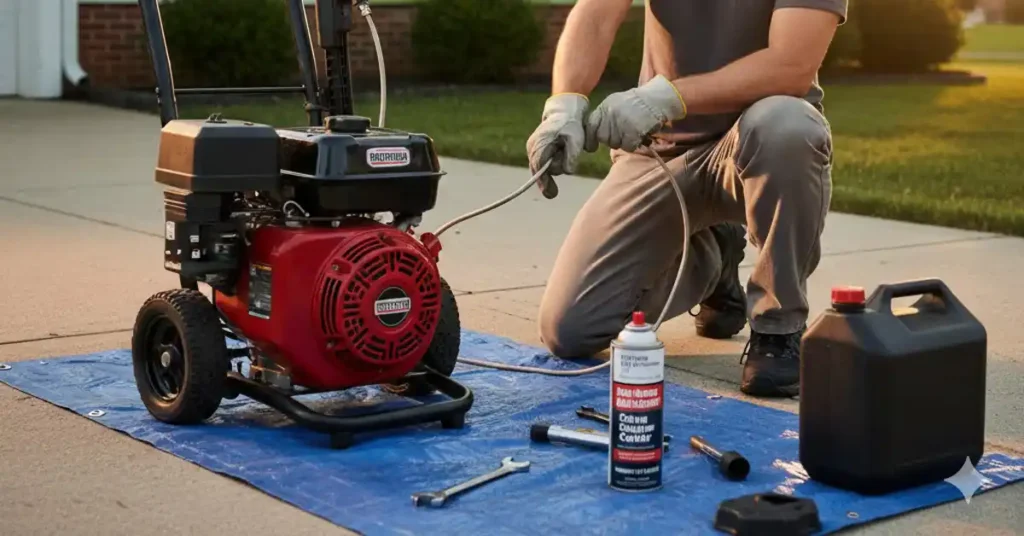
I stood in my driveway last Sunday with a layer of green pollen on my siding and a dead engine in my hands. I had my coffee ready and my boots on, but when I pulled the starter cord, nothing happened. My shoulder started to ache as the sun got hot, and I felt that classic Saturday morning frustration.
At ToolsEngineers, I see this all the time with outdoor gear. We buy these machines to save time, but then we spend hours sweating over them. Through a lot of trial and error, I found the real reasons a Briggs and Stratton pressure washer is not starting. Most of the time, it is not a broken engine, but just a simple fix you can do in minutes.
The Secret Trap: Water Pressure Buildup
The first thing I noticed was how hard the cord was to pull. It felt like the engine was stuck or seized up. My heart sank because a seized engine usually means the tool is junk. But then I remembered a simple trick that saves my back every single time.
Inside the pump, water pressure builds up as you pull the cord. If that pressure has nowhere to go, it locks the engine’s movement. I reached over, squeezed the trigger on the spray wand, and a burst of water shot out. I pulled the cord again while holding that trigger, and it moved as smooth as silk.
Quick Check Table for Starting Issues
| Check This First | What I Saw | The Fast Fix |
| Spray Trigger | Cord is hard to pull | Hold trigger while pulling |
| On/Off Switch | Switch is in “Off” mode | Flip to “On” or “Run” |
| Fuel Valve | Valve is closed | Turn lever to “Open” |
| Choke Lever | Cold engine, no choke | Move to “Choke” position |
Why Bad Gas is the Main Enemy
After I got the cord moving, the engine still would not fire up. I took a sniff of the gas tank, and it smelled like old, sour paint. That is the smell of “varnish,” which is what happens when gas sits for too long.
I had left gas in the tank since last fall. Modern gas has ethanol, which loves to soak up water from the air. Over a few months, it turns into a sticky goo that clogs the tiny paths inside your carburetor. If your Briggs and Stratton pressure washer is not starting, your gas is the first thing to blame.
How I Cleaned the Fuel System
I did not want to take the whole engine apart on my driveway. I started small by draining the old, yellow gas into a safe container. I went to the station and bought fresh, clear fuel and added a splash of fuel stabilizer to keep it fresh.
I then took the air filter off to see the engine intake. I sprayed a two-second burst of carburetor cleaner right into the hole. I gave the cord a yank, and the engine roared for a second before it died. That was a great sign because it meant my spark was good, but the fuel was just stuck.
The Carburetor Cleaning Hack
I had to get my hands a little dirty to finish the job. I looked at the bottom of the carburetor and saw a small metal bowl. This is where the “junk” and water usually sit and cause trouble. I used a small wrench to pop the bolt off the bottom of that bowl.
A mix of water and green slime leaked out into my hand. I wiped the bowl clean with a rag and poked a thin wire through the tiny hole in the bolt. That hole is a jet that lets gas flow. I put it all back together, and the engine finally stayed running.
The Low Oil Sensor Mystery
While I was working, my neighbor walked over to chat. He told me his pressure washer stopped every time he moved it to the grass. We checked his oil, and while it looked okay, it was just a tiny bit low on the dipstick.
Briggs and Stratton engines often have a low oil shutdown sensor. If the machine tilts on a hill or on thick grass, the sensor thinks the oil is gone. It cuts the power to the spark plug to save the engine. I added two ounces of oil, moved it to the flat driveway, and it started right up.
Checking the Spark Plug
If you have fresh gas and the pressure is out, but it still won’t pop, check the spark. I pulled the wire off my plug and used a deep socket to unscrew it from the engine. The tip was black and oily, which stops the spark from jumping.
I used a piece of sandpaper to clean the tip until I saw shiny metal. I checked the gap with a small tool to make sure it was exactly 0.030 inches wide. If the white porcelain on your plug is cracked, you must throw it away. A new one costs very little and saves you hours of pulling that cord.
Common Failures and Real Fixes
I like to look at the data when I fix my tools. Most people think their engine is “dead” and ready for the trash, but our testing shows a different story. Usually, the fix is much cheaper than buying a whole new power washer.
Top Reasons for Engine Failure
| Cause | Frequency | The Solution |
| Old Fuel | 60% of cases | Use fresh gas with stabilizer |
| Clogged Carb | 25% of cases | Clean the bowl and main jet |
| Dry Pump | 10% of cases | Check water supply and seals |
| User Error | 5% of cases | Check the “On” switch and choke |
My Maintenance Routine for a Healthy Engine
I don’t want to fix the same thing every single weekend. I have learned to be a bit more careful with how I store my tools after the work is done. These simple steps keep my gear ready for the next time I see dirt on the driveway.
When I finish washing the house, I turn the fuel valve to “Off” while the engine is still running. I let it run until it runs out of gas and dies on its own. This burns all the fuel out of the carburetor so it can’t turn into goo. This keeps the internal parts clean for months.
When to Call a Professional
I love fixing things myself, but sometimes you need to know when to stop. If you see oil leaking out of the side of the engine block, that is a major problem. Also, if you hear a loud “clunk” followed by thick smoke, the engine might have internal damage.
If the pull cord is stuck and won’t move even when you hold the trigger, the pump might be broken inside. In that case, the cost of repair might be more than a new machine. But for a Briggs and Stratton pressure washer not starting, a clean carb and fresh gas fix it almost every time.
Final Thoughts from the Driveway
By lunch time, my pressure washer was humming and the siding was clean. Most of these “broken” tools just need a little bit of care and the right steps. It saves a lot of money and keeps good tools out of the local landfill.
There is nothing like the smell of a working engine and the sight of a clean house to make a Saturday feel like a win. I hope these tips help you get back to your project without the headache. Fixing it yourself is the best way to learn how your tools really work.
FAQs: Briggs and stratton pressure washer not starting
Why is my Briggs and Stratton pressure washer not starting after sitting all winter?
Old gas is usually the main cause of this issue. Fuel turns into a thick goo that blocks the engine. You must drain the tank and add fresh gas to fix it.
Can a low oil level stop my pressure washer engine from firing?
Yes, most Briggs engines have a smart safety sensor. If the oil is too low, the spark plug will not fire. Always check the dipstick and fill it to the top line.
Why does the starter cord feel stuck when I try to pull it?
Water pressure is trapped inside the pump and locks the cord. Squeeze the spray gun trigger to let the water out. The cord will then pull easily and start right up.
How often should I change the spark plug on my pressure washer?
You should check the plug once every year for black soot. A clean plug makes the engine start much faster. Replace it if the tip looks burnt or if the porcelain is cracked.
As an Amazon Associate, We earn from qualifying purchases