
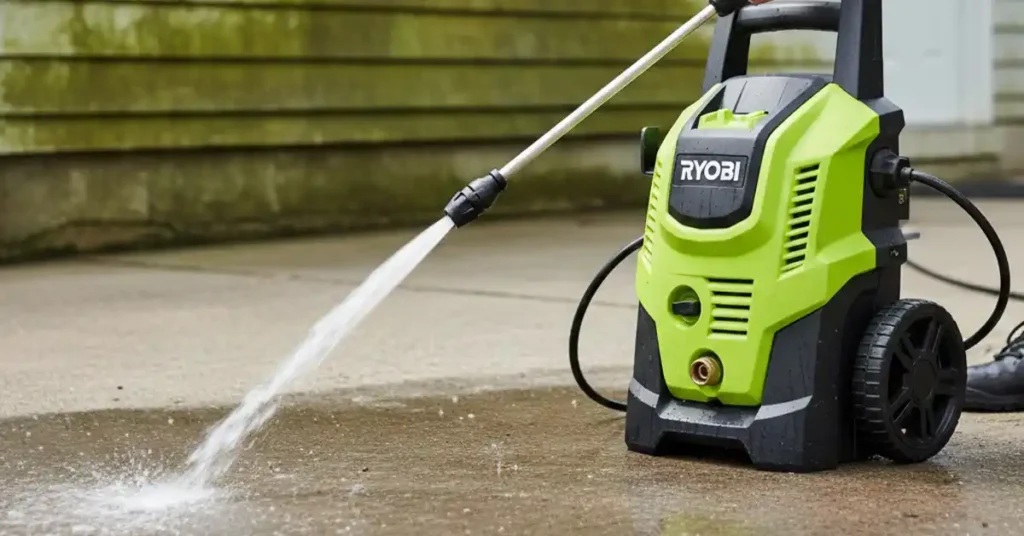
It was a hot Saturday morning in my dusty driveway. I had my coffee in one hand and my Ryobi wand in the other. I was ready to blast the green moss off my old brick patio. I pulled the starter cord and the engine roared to life. I squeezed the trigger, but I only got a sad, weak dribble of water.
My Ryobi pressure washer not building pressure was a total mood killer. I felt that sudden spike of heat in my chest. You know that feeling when your gear fails right when you have time to work. I spent the next three hours in my garage getting grease on my shirt. But I learned exactly why these machines lose their punch and how to fix them for free.
Why Is My Ryobi Pressure Washer Not Building Pressure?
When I first sat on my garage floor, I felt lost. I looked at the pump and the hoses like they were a giant puzzle. Most pressure issues come from the water source, the pump, or the tiny nozzle at the end. I made a simple table to track what I checked to stay calm.
Troubleshooting Checklist for Low Pressure
| What I Checked | What I Looked For | My Final Result |
| Water Hose | Kinks or leaks | No kinks found |
| Inlet Screen | Dirt or rocks | Found small pebbles |
| Spray Tip | Tiny clogs | Tip was clear |
| Pump Oil | Color and level | Oil looked good |
Step 1: The Air Bubble Trap
The first thing I learned is that air is the enemy of your pump. Water does not compress, but air does. If a big bubble gets stuck in your pump, the pistons just squish the air. They never build the force needed to blast dirt off your siding.
This happens to me every time I let the machine sit for a month. I call it the purging phase of the job. It is the most common reason a Ryobi pressure washer is not building pressure. It takes sixty seconds and saves a lot of stress.
How I Clear the Air
I turn the engine off but keep the garden hose turned on full blast. Then I squeeze the trigger on the gun and wait for the water to sputter. Once the stream is steady and quiet, I know the air is gone. This simple trick fixes most of my power issues.
Step 2: The Battle of the Clogged Inlet Filter
After I cleared the air, my pressure was still very low. I felt the vibration in the handle, but the power was gone. I looked at the brass fitting where my garden hose meets the Ryobi. I unscrewed the hose to look inside.
Inside the intake, there is a tiny mesh screen filter. I pulled it out with a pair of pliers and saw the mess. It was covered in slimy green gunk and a few tiny bits of gravel. Our outdoor spigots often have sediment that we never see.
If that screen is even half full of dirt, the pump starves for water. It is like trying to run a race while breathing through a tiny straw. I rinsed the screen under my kitchen sink and popped it back in. My Ryobi pressure washer not building pressure was starting to make sense.
Step 3: Dealing With a Stuck Unloader Valve
If you have cleaned your filters and purged the air, the valve might be stuck. This is the heart of the machine. It tells the water to either go out the wand or loop back into the pump. It can get stuck if the unit sits all winter.
I remember my valve got stuck after a long, cold winter in the shed. The water just sat there and did nothing. The engine was running, but no pressure built up at all. I had to find a way to wake up the internal spring.
My Tapping Method
I am not a fan of taking things apart if I can avoid it. I took a rubber mallet and gave the brass valve body a few light taps. This can vibrate the internal spring back into place. If that fails, you might need to clean it with a bit of spray.
Step 4: The Mystery of the Wrong Nozzle
I once spent twenty minutes wondering why my pressure was gone. Then I realized I was using the black soap nozzle. We all do it at least once. The black tip is very wide and is only meant to pull soap.
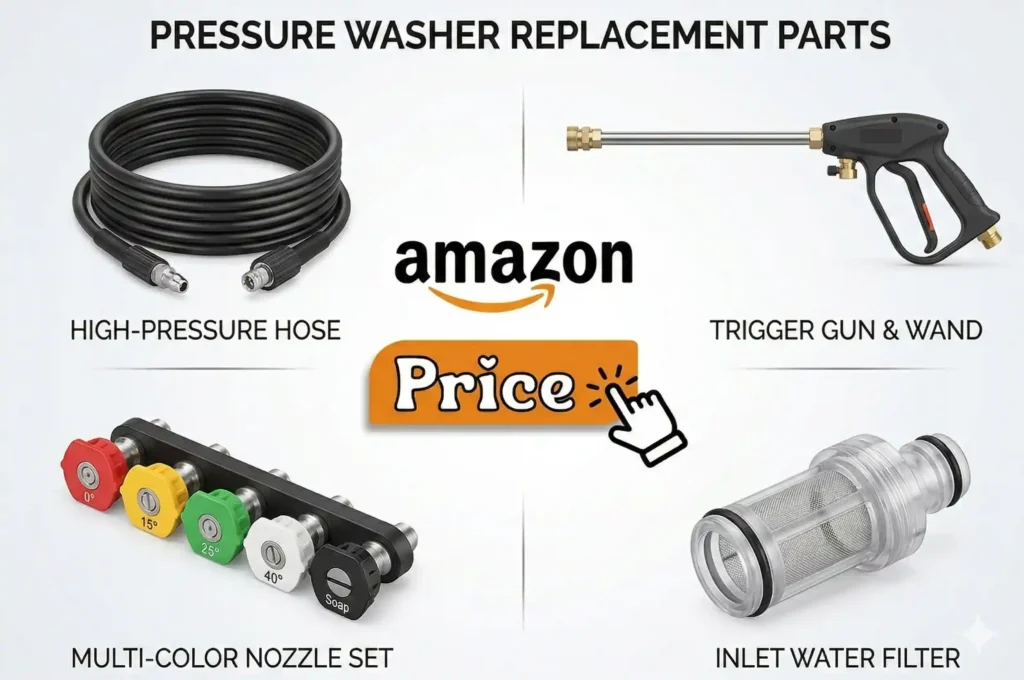
I always keep my nozzles in a neat row on the handle now. If you use the wrong tip, your Ryobi pressure washer not building pressure is just a user error. I use the green tip for my deck and the yellow one for concrete.
Comparing Nozzle Pressure Levels
| Nozzle Color | Spray Degree | Best Use Case | Pressure Level |
| Red | 0 Degrees | Stains on stone | Very High |
| Yellow | 15 Degrees | Stripping paint | High |
| Green | 25 Degrees | General cleaning | Medium |
| Black | 65 Degrees | Applying soap | Very Low |
Step 5: Checking for Pump Leaks
I noticed a small puddle under my Ryobi last summer near the pump. That is a bad sign for your cleaning power. If water is escaping from the pump housing, you won’t get pressure at the wand. You have to seal the system to make it work.
I looked closely at the thermal release valve on the bottom. This is a small piece that lets water out if the pump gets too hot. If you let the engine run without spraying, the water gets boiling hot. The valve opens to save the pump from melting.
If that valve fails, it stays open and leaks all the time. Water leaks out and your pressure drops to nothing. I had to replace mine once after a long day of cleaning. it cost ten dollars and took five minutes to fix.
Lessons from My Garage
Fixing my own tools has taught me a lot about how things work. I used to think a broken tool meant a trip to the dump. Now I know that a Ryobi pressure washer not building pressure is usually a cry for help.
When your machine acts up, start with the basics of water and air. Check the hose for kinks and the filter for dirt. These Ryobi units are tough and want to work. They just need a little regular care to keep humming along.
My Routine for a Happy Pump
I always use a pump protector spray before I store it for the winter. This keeps the seals moist and prevents the valves from sticking. I also never let the engine run for more than two minutes without spraying water.
Wrapping Up the Work
By noon that Saturday, my patio was clean and the bricks looked new. My back was a bit sore, but I felt very proud of my work. I did not have to call a repair shop or buy a new machine. I just had to slow down and look.
If you are stuck with a weak stream, go through my steps one by one. Check the air, clean the screen, and look at your nozzle. Most of the time, your Ryobi just needs a little nudge to get back to full power.
FAQs: Ryobi Pressure Washer Not Building Pressure
Why does my Ryobi pump lose power while I am cleaning?
Most of the time, air is trapped in the pump lines. Turn the motor off and squeeze the gun trigger for a full minute to purge the air. This simple trick fixes a Ryobi pressure washer not building pressure quickly.
Can a dirty garden hose cause low pressure?
Yes, a kinked or clogged hose starves the pump of water. Check your hose for any sharp bends or blockages that slow the flow. The pump needs a steady stream of water to create high pressure for cleaning.
How do I know if my spray nozzle is clogged?
If the engine sounds strained but the water flow is weak, the tip is likely blocked. Use a small wire or a pin to clear dirt out of the nozzle hole. A clean tip helps your Ryobi pressure washer not building pressure issues vanish.
As an Amazon Associate, We earn from qualifying purchases