
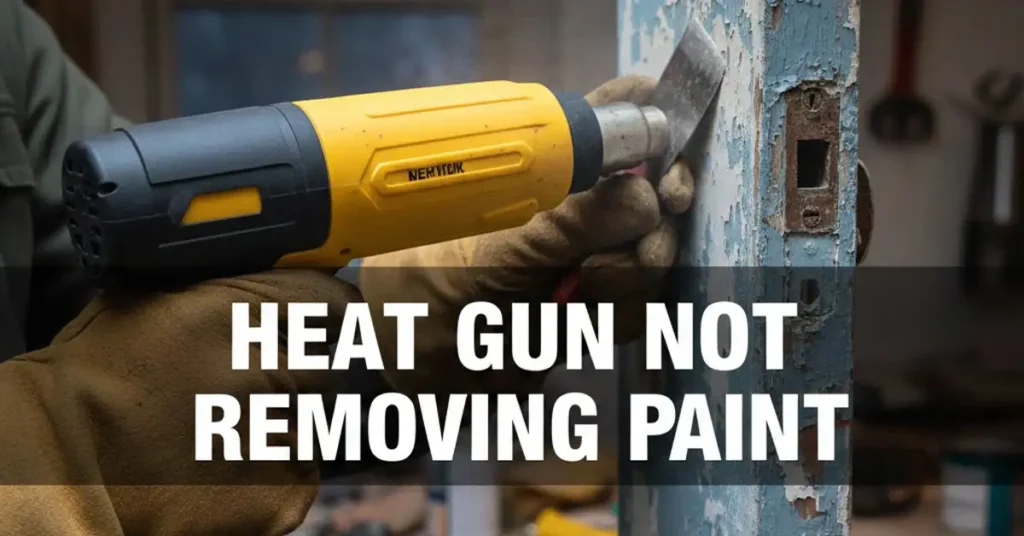
Last Tuesday, I stood in my shop with a goal. I wanted to strip an old oak chair. I had my favorite heat gun in hand. I felt ready for the task. But ten minutes in, I was just staring at flat, dry paint.
The paint would not budge an inch. If you are facing a heat gun not removing paint situation, I know that look. It is a mix of confusion and a sore wrist. I have spent years testing power tools and fixing gear.
I have learned that a heat gun is a tool you must tame. It is not just about pointing a nozzle. It is about the science of the bond. I want to share why your paint stays put and how I finally cracked the code.
The Real Reasons Your Heat Gun Is Failing
When my tool failed me on that oak chair, I had to stop. I took a breath and looked at the wood. I realized I was fighting two things: the wrong heat and the wrong paint. Some coatings just laugh at high heat.
Other paints need a very specific touch to move. If you are stuck, it usually boils down to chemistry. You might be heating up a rock instead of melting a plastic. Knowing the type of paint is the first step to success.
Table 1: Common Paint Types and Heat Reactions
| Paint Type | How It Reacts to Heat | Best Tool for the Job |
| Oil-Based Paint | Bubbles and curls quickly | Heat Gun |
| Latex Paint | Softens and gets gummy | Heat Gun or Scraper |
| Milk Paint | Chars and stays hard | Chemical Stripper |
| Water-Based Stain | Dries out more | Sander |
| Lead Paint | Becomes a toxic vapor | Infrared Stripper |
How I Adjusted My Technique for Better Results
I used to hold my gun way too far back. I was scared of a fire in my shop. But all I did was warm up the air. I smelled the dust, but I saw no action on the wood. I had to get much closer.
I moved my nozzle until it was just an inch from the wood. Then, I saw it. A tiny wrinkle appeared on the surface. That is the magic moment for any DIY fan. If you miss that split second, the paint cools down fast.
The paint then grabs the wood again. It is like a dance between the gun and the blade. You heat with one hand and scrape with the other. You cannot wait for the paint to rest or it will stick again.
The Heat Sink Problem on Hard Surfaces
I once tried to strip paint off an old metal box. It was a cold morning in the shed. I ran the gun for five minutes straight. The paint did not care at all. This is because metal is a heat thief.
The metal sucks the heat away from the paint. It spreads the heat through the whole box. If you work on metal, you have to pre-heat the area. You need a lot more power and a lot more time to see a result.
Tools and Gear That Actually Work for Me
I have a shelf full of tools in my garage. Some are great and some are junk. When it comes to a heat gun not removing paint, your scraper matters as much as your gun. I used to use a cheap putty knife from the store.
It was dull and did not help at all. It just slid over the warm paint like a sled on ice. I finally bought a sharp carbide shave hook. It changed my life. It has a curved blade that digs into the layers.
The blade pulls the paint off in long, clean ribbons. If your tool is not sharp, you are just pushing hot mud. Spend a few extra dollars on a good blade. It will save your arms and your sanity on a long day.
Table 2: My Go-To Gear for Paint Stripping
| Item | Why I Use It | My Top Tip |
| Variable Heat Gun | Better control for wood | Start low and go up |
| Carbide Scraper | Stays sharp forever | Pull, don’t push |
| P100 Respirator | Keeps my lungs clean | Always wear it inside |
| Concentrator Nozzle | Focuses the heat | Great for tight corners |
Safety Mistakes I Made So You Don’t Have To
I will be honest with you. I once scorched a piece of trim because I got a text. A heat gun is a real fire hazard. It is not a hair dryer for your hair. You are dealing with 1000 degrees of hot air.
I also forgot my mask once during a big job. The smell of old, burning paint is not just bad; it is toxic. If that house was built before 1978, that dust is lead. You do not want that in your body at all.
I now keep a fan in the window. I put my mask on my face before I even plug the gun in. Safety is the most important part of the job. No project is worth a trip to the doctor or a fire in the house.
Is It Time to Give Up on the Heat Gun?
Sometimes, the heat gun is just the wrong tool for the job. I spent three hours on a porch post once. The paint was a weird, chalky mess. It turns out it was old milk paint.
Heat does nothing to milk paint but make it smell like burnt toast. I had to switch to a wet chemical stripper. It was messy, but it worked in twenty minutes. Part of being a pro is knowing when to stop.
If you see smoke but no bubbles, you should stop. You are just burning the wood under the paint. This can ruin a nice piece of furniture. Switch to a sander or a liquid if the heat fails you for too long.
Step-by-Step Guide to Fix Your Flow
If you are stuck right now, try this plan. This is my “reset” plan when a project goes south. It helps me find the problem fast. First, check your power source.
Is your gun getting enough juice from the wall? If you use a long cord, you might lose heat. Plug it directly into the wall outlet. You will feel the difference in the air blast right away.
Change Your Working Angle
Don’t just point the gun straight down. Angle the gun so the heat gets under the edge of the paint. This “pre-heats” the next inch of the job. It makes the whole process move much faster for you.
Sharpen Your Metal Blade
Take a file to your scraper often. A sharp edge makes the paint pop off with very little effort. I do this every ten minutes to keep the edge fresh. A sharp tool is a safe tool when you work with wood.
Watch the Wood Grain
Always scrape with the grain of the wood. If you go across it, you will gouge the surface. Then you have a whole new problem to fix with wood filler. That is a waste of your time and your money.
The Sensory Details of a Good Strip
You know you are doing it right when you hear a soft crackle. The paint should look like it is boiling on the wood. The smell should be like warm wax. It should not smell like acrid smoke or fire.
When the scraper hits the wood, it should sound clean. If it sounds crunchy, you did not heat it enough. I love the feeling of a long strip of paint curling away. It shows the clean, beautiful wood underneath the mess.
It is why I keep doing this type of work. It is a slow process, but the result is worth the wait. Seeing that fresh grain for the first time is a great feeling for any maker.
Final Thoughts on Dealing With Stubborn Paint
Dealing with a heat gun not removing paint is a test of patience. It is easy to get mad at the tool. Most of the time, the tool is fine. It is the surface or the paint that is the real problem.
If you adjust your heat, get closer, and use a sharp blade, you will win. And if you don’t? Well, there is always the sander. But give the heat one more try with these tips first.
FAQs: Heat Gun Not Removing Paint
Why is my heat gun not removing paint from wood trim?
The paint may be a milk or water-based type. These do not melt like oil paint. You might need a sharp scraper or a sander to finish the job.
Can I use a Wagner or DeWalt heat gun on metal surfaces?
Yes, but metal sucks the heat away fast. You must hold the tool closer and use a high heat setting. This helps the paint bubble despite the cold metal.
Is it safe to strip paint in a cold garage or workshop?
Cold air can make your heat gun work much harder. Keep your workspace vented but try to block cold drafts. This helps the tool stay at a steady, hot temperature.
As an Amazon Associate, We earn from qualifying purchases