
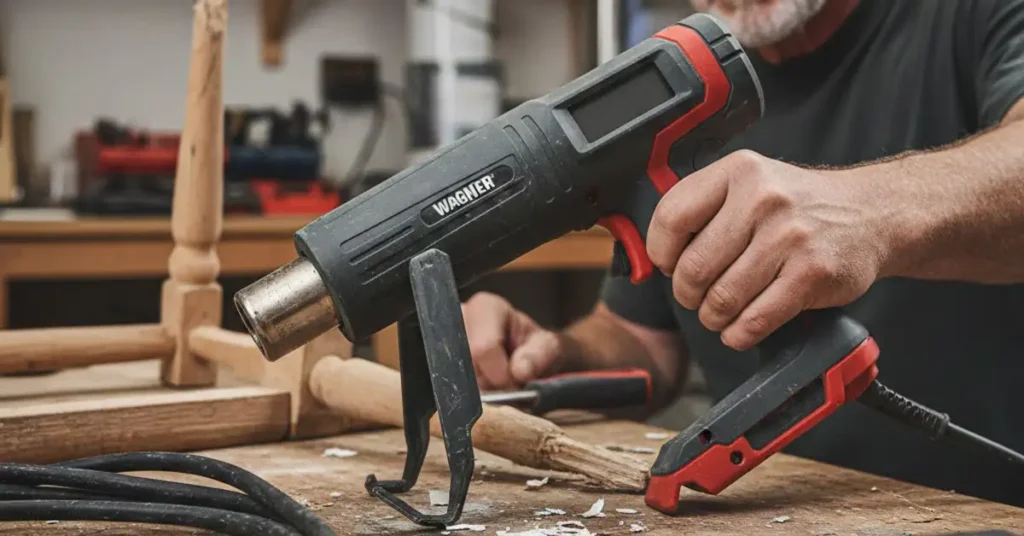
Last Tuesday, I was in my garage. I had a heat gun in one hand. I had a scraper in the other. I was finally stripping old paint off a porch chair. The sun was out and the radio was on. Then, it happened. My Wagner heat gun just died. There was no pop or smoke. It was just total silence.
If you are reading this, you are likely holding a cold tool. You might feel that same punch of annoyance. I have used tools like the Furno 500 for years. When your Wagner heat gun stopped working, it feels like a total mess. But after fixing mine many times, I know it is usually a simple fix.
The Day My Heat Gun Quit on Me
I remember the smell of hot pine. I heard the hum of the fan. Then, the fan stopped. I shook the tool. I flipped the switch back and forth. Nothing happened. I felt like tossing it into the yard. Instead, I sat down and took a breath.
Tools fail for a reason. Most of the time, they want to save themselves from heat. If your tool is dead, do not buy a new one yet. Let us walk through what I found that day. It might save you a trip to the store.
Quick Troubleshooting Guide
| Issue | Possible Cause | The Fix |
| No Power | Blown Fuse | Reset the outlet |
| No Fan | Tripped GFI | Push reset button |
| No Heat | Broken Coil | Replace the tool |
| Tool Quits | Too Much Heat | Let it cool down |
Why Your Wagner Heat Gun Stopped Working
A heat gun is a simple machine. It has a fan and a heater. That is all. But when one part fails, the whole thing shuts down. I have found that most people give up way too fast. They think the motor is fried. In reality, it is often a safety switch.
The Mystery of the Thermal Cut-Out
My biggest win came when I learned about the thermal cut-out. Most Wagner guns have a tiny brain. If the tool gets too hot inside, it cuts the power. This keeps the plastic from melting in your hand. This is a very good thing for your safety.
One day, I was working too close to a wall. The heat bounced off the wall. It went right back into the nozzle. The gun quit fast. I thought I broke it. I left it on my bench to get some water. When I came back, it worked perfectly again.
The Power Cord Problem
Sometimes the tool is fine, but the power is not. These guns pull a lot of juice. I once tried to run my Wagner on a thin cord. The cord got warm, but the gun kept cutting out. It just did not have the power it needed.
Always use a thick, heavy-duty cord. If you are in a garage, check your outlet. Those little buttons on the wall trip often. Push the reset button on the wall. You might find that your tool is not broken at all.
Fixing the Cold Air Issue
There is nothing worse than a heat gun that just blows cold air. It is like a very loud, very weak hair dryer. It will not strip paint or shrink tubes. When this happened to me, I had to look much deeper into the tool.
The Cracked Heating Element
Inside the nozzle is a ceramic core. It has thin wires wrapped around it. These wires get red hot. When the tool is hot, those wires are very brittle. They can snap if you are not careful.
I once dropped my gun while it was still cooling down. The next day, I had no heat. I looked inside the nozzle with a light. I could see a tiny break in the wire. If that wire is broken, the heat cannot flow. The tool is then done.
Checking the Switches
Sometimes the switch gets dirty. This happens if dust or paint chips get inside the cracks. I like to use a can of air. I blow it into the switch gaps. It sounds simple, but a clean switch can bring a tool back to life.
How to Keep Your Tool Alive
I have owned many Wagner heat guns over the years. My first one lasted only six months. My current one has lasted four years. My habits changed. I stopped treating it like a hammer. I started treating it like a hot, fragile tool.
The Rule of Cooling Down
This is the most important tip I can give you. Never just flip the switch to off. Most Wagner guns have a cool mode. When I finish a job, I set the gun to low heat. I let it run for two full minutes.
This pulls the trapped heat out of the core. If you turn it off while it is glowing hot, that heat stays inside. It bakes the wires. That is how most heating elements die. A cool tool is a happy tool that lasts.
Proper Storage Tips
| Part | What to Check | How Often |
| Air Vents | Dust or lint | Every use |
| Power Cord | Fraying | Once a month |
| Nozzle | Paint bits | Every day |
| Stand | Stability | Every week |
When to Get a New Tool
I love to fix things, but I know when a tool is toast. If you smell burning plastic, the motor is likely gone. If the tool sparks near the cord, it is a fire risk. Do not mess with sparks.
Wagner has a great warranty. Some have a five-year plan! Before you throw it away, check your receipt. I once got a free tool just by calling them. They were very nice and sent a new one fast.
Final Thoughts on Your Fix
Repairing a tool feels great. It saves cash and keeps junk out of the trash. If your Wagner heat gun stopped working, start with the basics. Let it cool. Check the plug. Look for any broken wires inside.
Most of the time, you will be back to work soon. If you do need a new one, it is a nice upgrade. The new models have great screens. My chair is finally done now. It looks great and my gun is safe on the shelf.
FAQs: Wagner Heat Gun Stopped Working
Why did my Wagner heat gun stopped working after only a few minutes?
Your tool likely got too hot and tripped the safety switch. Unplug the gun and let it sit for thirty minutes. This allows the internal sensor to reset so you can work again.
Can I fix a Wagner heat gun that blows air but will not get hot?
This usually means the heating coil is broken or cracked inside. It happens if the tool is dropped while hot. You often need to replace the heating element or the entire unit.
Does a Wagner heat gun have a reset button for power issues?
There is no physical button on the tool to reset it. You must unplug the cord from the wall to clear the thermal cut-out. Wait for the tool to cool down before you plug it back in.
Is it safe to use my Wagner heat gun with a long extension cord?
Using a thin or very long cord can cause the motor to fail or lose power. Always use a heavy-duty 12-gauge cord. This ensures the tool gets the high amps it needs to stay hot.
As an Amazon Associate, We earn from qualifying purchases