
I remember the exact moment I realized I needed a new saw. A heavy storm had just rolled through my town. It left a mess of broken oak branches all over my lawn. I stared at the wood and knew my old electric saw would not cut it. I needed gas power.
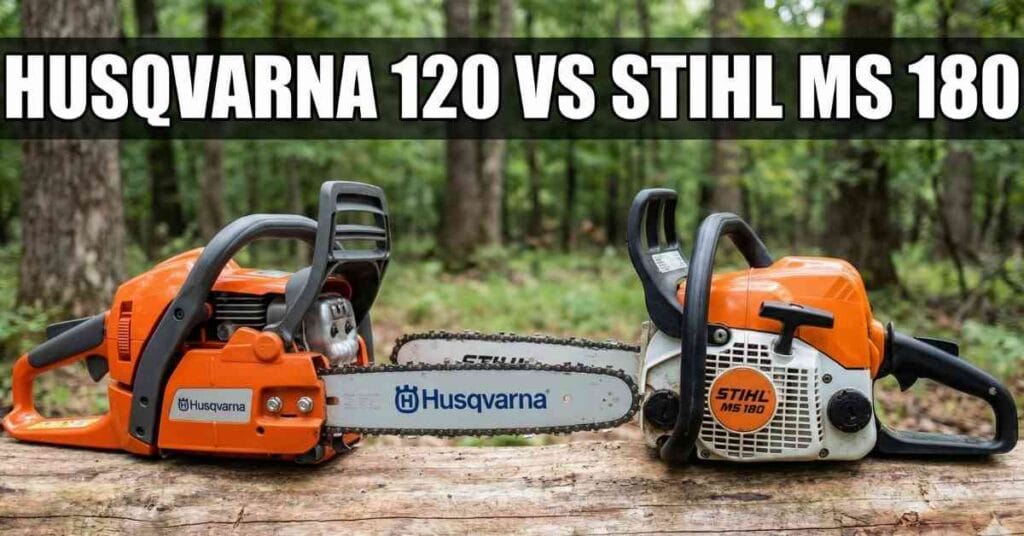
This led me to the two most popular options on the market. I spent a lot of time with both the Husqvarna 120 Mark II and the Stihl MS 180. These are the saws you see in every hardware store or dealer. They are small, they are cheap, and they promise to get the job done. But they are very different tools.
I want to share my honest experience with you. I will tell you how they feel, how they cut, and which one I prefer. I am not selling you anything. I just want to help you pick the right tool so you do not waste your money.
The Vital Stats: A Quick Look
Before we pull any starter cords, we need to look at the numbers. I like to know what I am holding in my hands. On paper, these two saws look very close. They both have 16-inch bars. They are both made for homeowners. But the specs tell a secret story about weight and power.
Here is the data I collected during my time with them.
Comparison Table: The Raw Numbers
| Feature | Husqvarna 120 Mark II | Stihl MS 180 |
| Engine Size | 38.2 cc | 31.8 cc |
| Horsepower | 1.88 hp | 2.0 hp |
| Weight (Powerhead) | 10.7 lbs | 8.6 lbs |
| Fuel Tank Size | 9.5 oz | 8.5 oz |
| Chain Type | 3/8 Low Profile | 3/8 PICCO (Low Profile) |
| Anti-Vibration | Metal Springs | Rubber Buffers |
You can see the strange thing right away. The Husky has a bigger engine, but the Stihl has more power. And the Stihl is much lighter. That two-pound gap is a very big deal when you are working all day.
First Impressions and Build Quality
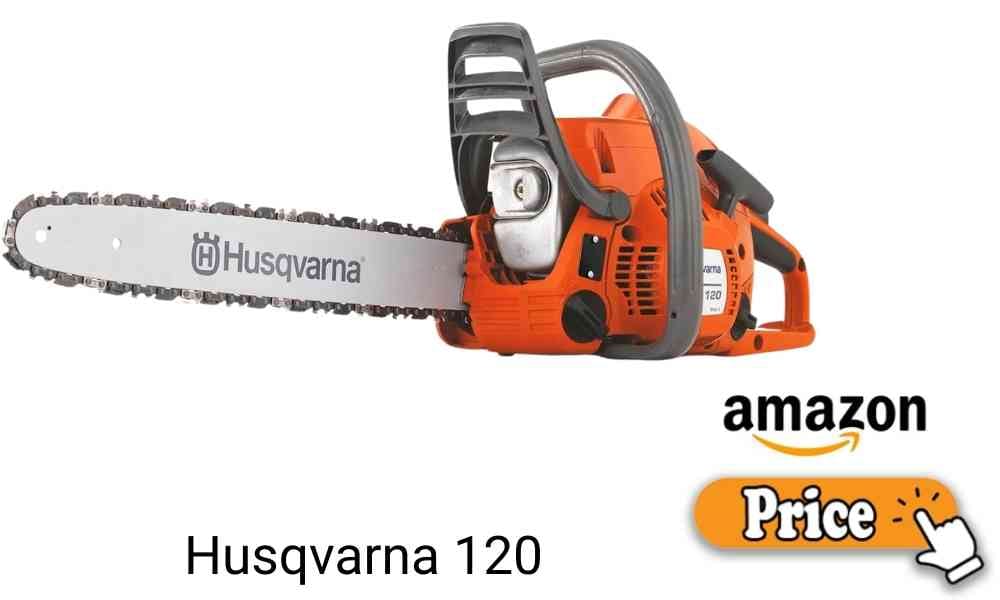
When I first picked up the Husqvarna 120, it felt heavy. It felt solid, like a tank. It did not feel like a toy. The plastic felt thick and tough. It sat flat on the ground and did not tip over. It felt like a tool that could take a beating in the back of my truck.
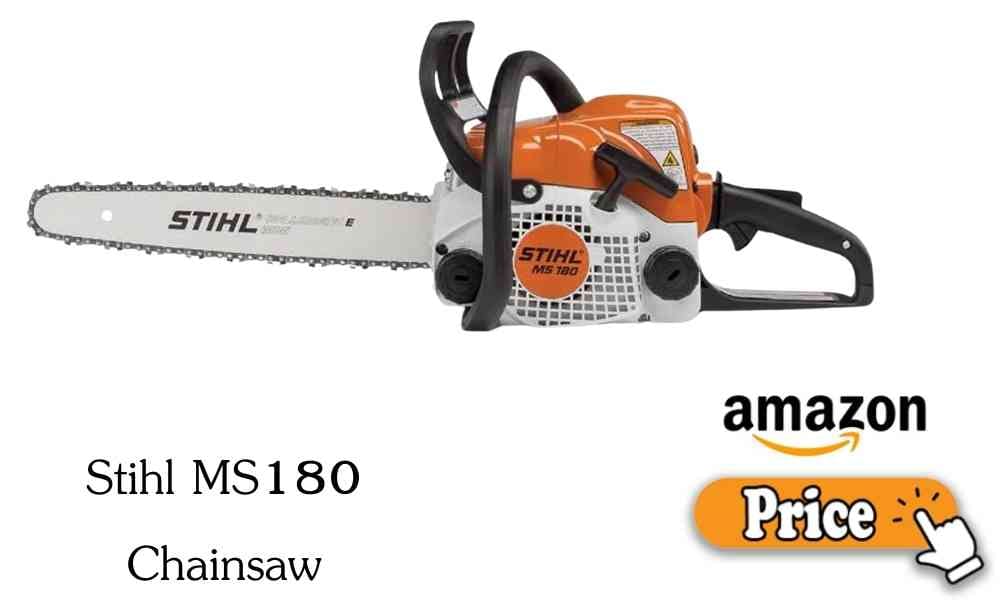
Then I picked up the Stihl MS 180. It was a shock. It felt so light. I almost thought the gas tank was empty, but it was full. The plastic felt a bit smoother and maybe a bit thinner than the Husky. But the weight difference was huge. It felt like I could hold it with one hand.
If you have bad shoulders or a bad back, you will notice this right away. I knew my arms would thank me later if I used the Stihl. But I also liked the sturdy feel of the Husky. It felt planted and safe. Both saws look good, but they follow different design rules.
Starting Them Up: The Cold Morning Test
It was a chilly morning when I tested them side by side. It was about 45 degrees outside. Small engines can be very fussy in the cold. I wanted to see how they handled a cold start. This is often where cheap saws fail.
The Husqvarna Experience
I started with the Husky. It has a purge bulb on the side. I love this feature. You can press it and see the fuel moving into the carb. It gives me confidence that the saw has gas. I pulled the choke lever out and gave the cord a pull.
It took two pulls to hear a pop. I pushed the choke in and pulled again. It roared to life. The sound was deep and angry. It sounded like a real chainsaw. I let it idle for a minute to warm up. The whole saw shook a bit, but it settled down quickly.
The Stihl Experience
I moved to the Stihl next. This saw does not have a purge bulb. You have to trust the choke system. I set the master lever to the bottom setting. I pulled the cord. And I pulled it again. And again.
It took four strong pulls to hear it burp. Then I moved the lever up one notch to the run setting. It started on the next pull. The sound was higher pitched. It screamed a little more than the Husky. It sounded fast.
I have flooded this Stihl before. It is easy to do if you miss that first pop sound. If you keep pulling on full choke, you will wet the plug. I was careful this time, so it worked fine. But the Husky was easier to start for me.
Cutting Firewood: The Power Test
I had a pile of oak logs waiting for me. Oak is hard wood. It is dense and heavy. It is a real test for these small home saws. I wanted to see if they would bog down in the cut.
I went in with the Stihl first. I revved it up. The chain speed felt very fast. As soon as the chain touched the wood, it bit in hard. The saw felt eager. It wanted to eat the wood. I applied a little pressure.
The engine held its speed well. It did not slow down much. I was surprised. This is a small engine. But it cuts like a bigger saw. The chips flew out of the side. The saw is so light I could move it easily. I felt like a surgeon.
Then I switched to the Husky. I made a cut right next to the first one. The first thing I noticed was the torque. The engine is bigger. It feels like it has more grunt at lower speeds. But it cuts a little bit slower.
The chain speed seemed a tiny bit less than the Stihl. But here is the good part. The saw is heavier. That extra weight helps it sit in the cut. It does not bounce as much. It felt stable. I let the weight of the saw do the work.
Handling and Vibration Control
After about twenty minutes of cutting, I stopped to check my hands. This is where you learn about vibration systems. Chainsaws vibrate a lot. This can make your hands numb if you cut for a long time.
The Stihl uses rubber buffers between the handle and the engine. They are okay. But I could feel the buzz in my gloves. My fingers had a slight tingle after the wood pile was done. It is not terrible, but it is there.
The Husqvarna uses metal springs. They call it LowVib. I have to say, it works very well. The handle feels separated from the engine. My hands felt better after using the Husky. The buzz was much lower.
If I had to cut wood for four hours straight, I might pick the Husky just for the springs. But the weight of the Husky would tire my arms. It is a trade-off. You have to choose between weight and vibration.
Maintenance: Keeping Them Running
I cut some dry, dusty wood next. This creates fine dust. It is the enemy of engines. I wanted to see how the air filters held up. This is a big part of owning a saw. You have to clean them often.
I popped the top cover off the Stihl MS 180. The filter is a flat white pad. It sits right on top of the carb. It was covered in dust. A lot of dust. The seal is okay, but the design is simple. I had to tap it out against my boot.
Then I opened the Husky. This saw has a feature called Air Injection. It spins the air before it hits the filter. This throws the heavy dust out. I looked at the filter. It looked much cleaner. There was barely any dust on it.
This system really works. It is not just sales talk. I was impressed. This means I can cut longer without stopping to clean the saw. If you cut dirty wood, the Husky wins here. It will save you time.
Chain Tensioning: A Small Annoyance
The chain stretched on both saws as they got hot. This is normal. I had to tighten them. This is where I found a feature that annoyed me on the Husky.
On my Stihl MS 180, the screw is on the side. It is easy to reach. I just used my scrench tool. It was quick and simple. I was back to cutting in thirty seconds.
On the Husky 120, the screw was on the front. It is right next to the bar. This is a pain. It is hard to get the tool in there. It is even harder with gloves on. I know some newer models fixed this, but mine is the older style.
It took me twice as long to adjust the Husky. I had to take my glove off. I scraped my knuckle on the chain brake. It is a small thing, but it matters when you are in the woods.
Fuel Efficiency: Who Drank More?
I ran both saws until they were dry. I wanted to see who lasted longer on a tank of gas. I did not time it with a watch, but I noted the work done.
The Husky tank is a bit bigger. It holds 9.5 ounces. The engine is also bigger. The Stihl tank is smaller at 8.5 ounces.
The Stihl ran out first. But not by much. The Husky kept going for another few minutes. It seems the Husky is a bit more thirsty due to the engine size, but the larger tank makes up for it.
In the end, they are very close. You can get a lot of work done on one tank with either saw. I could cut up a whole small tree on one tank. That is plenty for me.
The Price and Buying Experience
I bought the Husky 120 on sale at a big box store. It is often cheaper than the Stihl. You can find it easily. I picked it up with some oil and a spare chain. It was easy.
The Stihl MS 180 is usually sold at dealers. It costs a bit more. You pay for the brand name. But you also pay for the dealer support. The dealer started it for me. He showed me how to use it.
If something breaks on the Stihl, I can drive to the shop. They will fix it. With the box store saw, you are often on your own. You have to ship it away or fix it yourself. This is worth thinking about.
Who Should Buy the Stihl MS 180?
After all this testing, I have a clear picture. The Stihl is for the person who wants a light tool. It is for the person who needs to work fast.
If you are smaller or older, get the Stihl. The weight savings are real. It is so easy to toss around. It makes the work feel less like a chore. It is great for limbing trees.
If you have a local dealer you trust, get the Stihl. Having a pro nearby to help you is worth the extra money. It is a reliable saw that will last a long time.
Who Should Buy the Husqvarna 120?
The Husky is for the person on a budget. If you want to save fifty bucks, this is a great choice. It is a very capable saw.
If you cut a lot of dirty or dry wood, get the Husky. The air filter system is much better. It will keep the engine running clean.
If you hate vibration, get the Husky. The spring system is smoother than the rubber buffers on the Stihl. It is a bit heavier, but it feels more solid in the cut.
My Final Verdict: The Winner
If I could only keep one saw, which one would it be? I looked at them both on my workbench. They are both dirty. They are both worn.
I would keep the Stihl MS 180.
Here is why. When I do yard work, I am moving around a lot. I am dragging branches. I am climbing over logs. The light weight of the Stihl is just too good. It makes me less tired.
The power is also better. It cuts faster. It feels more agile. The Husky is a great saw, but it feels a bit clumsy compared to the Stihl. The Stihl feels like an extension of my arm.
That day in the yard, I finished the job with the Stihl. My arms were not tired. The wood was stacked. The saw went back on the shelf, ready for the next storm. And I knew I made the right choice.
FAQs – Husqvarna 120 vs Stihl MS 180
Is the Stihl MS 180 good for beginners?
The Stihl MS 180 is great for beginners because it is very light and easy to hold. Its low weight helps you feel safe and in control while you cut branches in your yard.
Does the Husqvarna 120 have a better air filter?
Yes, the Husqvarna 120 is better if you cut dirty or dry wood often. Its special Air Injection system keeps the air filter clean for a much longer time than other saws.
Which chainsaw cuts wood faster?
The Stihl MS 180 cuts faster because it has a high chain speed that rips through wood. The Husqvarna 120 has more torque, but it cuts a little bit slower than the Stihl.
Can I cut down big trees with these saws?
These saws are made for light tasks like pruning branches and cutting firewood. They are not strong enough to cut down large trees, so stick to small logs in your yard.
What fuel do these chainsaws use?
Both the Stihl MS 180 and Husqvarna 120 run on a standard 50:1 gas and oil mix. Always use fresh gas and high quality two-cycle oil to keep your engine running smooth.
As an Amazon Associate, We earn from qualifying purchases