
Choosing the right oil for your lawn mower can feel like an unnecessary headache, but getting it wrong can permanently damage your engine. Over my years of maintaining outdoor power equipment, I have tested both straight-weight and multi-viscosity oils in various climates and machines. In this comparison guide, I will break down the real-world performance differences between SAE 30 and 5W-30 lawn mower oil so you can keep your machine running smoothly season after season.
sae 30 oil vs 5w30 lawn mower: At a Glance
| SAE 30 Lawn Mower Oil | 5W-30 Lawn Mower Oil | |
|---|---|---|
| Oil Type | Single-viscosity (straight-weight) conventional oil | Multi-viscosity (multi-grade) conventional or synthetic oil |
| Ideal Operating Temp | Warm to hot weather (primarily above 40°F/4°C) | Cold to warm weather (broad range, down to sub-zero) |
| Cold-Start Flow | Poor; can be sluggish and cause starting resistance in cold | Excellent; flows quickly to protect engine during cold starts |
| High-Heat Stability | Excellent; maintains consistent thickness in air-cooled engines | Good; though synthetic blends resist thermal breakdown better |
| Oil Consumption Rate | Very low; minimal oil burning during normal operation | Higher; may burn off faster in older, hot-running engines |
| Best Use Case | Standard push mowers operated during peak summer months | Lawn tractors and snowblowers used across multiple seasons |
| Engine Protection | Superb film strength in consistently hot operating conditions | Rapid lubrication at startup, preventing immediate wear |
Complete Comparison: SAE 30 Lawn Mower Oil vs 5W-30 Lawn Mower Oil
| Lucas Oil 11315 SAE 30 Lawn | Briggs & Stratton 100074 5W30 Synthetic | |
|---|---|---|
| Product Image | 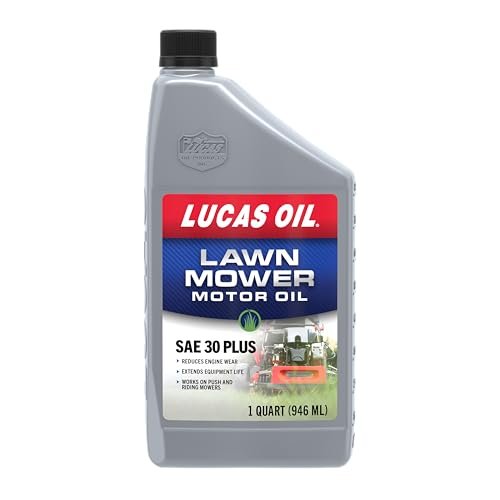 | 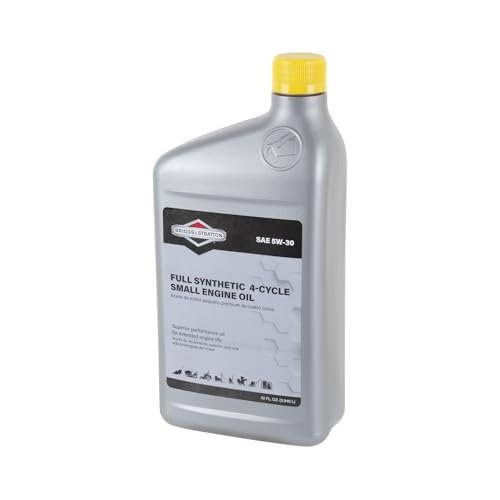 |
| Price | View On Amazon | View On Amazon |
| Category | Mid-Range Conventional | Premium Synthetic |
| Viscosity & Composition | SAE 30 Conventional (Straight-Weight) | 100% Synthetic SAE 5W-30 |
| Engine Protection | Reduces engine wear, protects against overheating, and prevents rust during storage | High-film strength synthetic wear protection for air-cooled 4-cycle engines |
| Compatibility | Push mowers and riding mowers | All air-cooled 4-cycle engines (mowers, generators, snowblowers) |
| Volume | 1 Quart (32 oz) | 32 oz. bottle |
| Best For | Warm-weather mowing, easy starting, and rust prevention during seasonal storage | All-season/cold-weather starting and ultimate engine protection in demanding conditions |
| Amazon Link | View On Amazon | View On Amazon |
| Overall Winner | Runner-up (Best for Summer & Storage) | Winner (Best Overall Performance) |
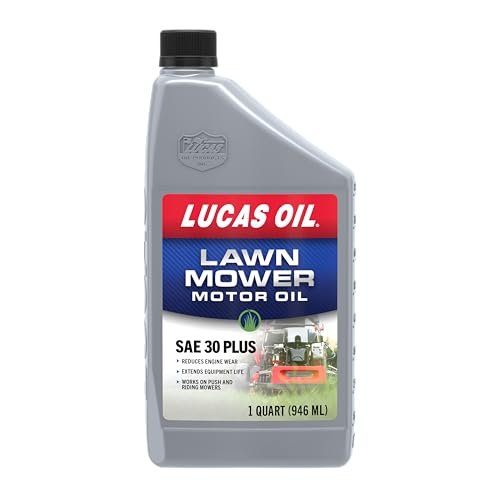
Lucas Oil 11315 SAE 30 Lawn Mower Motor Oil
I have used Lucas Oil products in my trucks for years, so testing their dedicated small engine oil was a natural choice. This conventional formulation is specifically engineered for high-heat, air-cooled engines that run hard during the hot summer months. Because it is a straight 30-weight oil, it does not thin out under extreme operating temperatures, which keeps my push mower running quietly even when cutting thick, overgrown grass. The blend includes premium additives that focus on reducing engine wear and extending equipment life, making it an excellent choice for older mowers that need extra internal cushioning. I noticed a distinct lack of smoke on startup after filling my crankcase with this fluid, and it prevents rust during storage during the long winter off-season.
- Protects against overheating: Maintains its viscosity under extreme summer heat to prevent metal-on-metal contact.
- Reduces engine wear: Specialized zinc and phosphorus additives coat internal moving parts to extend equipment life.
- Works on push and riding mowers: Versatile formula meets the warranty requirements of most major small engine brands.
- Prevents rust during storage: Active corrosion inhibitors keep moisture from pitting cylinder walls during winter layovers.
Starts easier, runs smoother: Reduces friction within the cylinder, making pull-starts feel less taxing on your shoulder.
Excellent shear stability in hot summer weather
- Noticeable reduction in engine noise and vibration
- Keeps internal engine components incredibly clean
Offers superior rust protection during seasonal storage
Thickens up too much in temperatures below 40 degrees Fahrenheit
- Not ideal for modern winter equipment like snowblowers
- Packaged in a standard neck bottle that can be tricky to pour without a funnel
Best for:
This oil is best for homeowners who live in warm climates and primarily mow their lawns during the late spring and summer. It is the perfect match for older, air-cooled flathead engines that require a steady, thick film of protection.
Expert Opinion: Lucas Oil SAE 30 provides the heavy-duty film strength that older splash-lubricated engines need to survive scorching summer afternoons.
Briggs & Stratton 100074 5W-30 Synthetic Engine Oil
Modern small engines face tighter tolerances and stricter emissions standards, which is where this synthetic option shines. I put this Briggs & Stratton oil in my riding mower just before the autumn leaves started falling, and the cold-weather performance difference was night and day. Being a 100% Synthetic SAE 5W-30 oil, it flows instantly upon startup, even when the thermometer dips close to freezing. It is designed for use in all air-cooled 4-cycle engines, meaning you can run it in your lawn mower, generator, and snowblower without switching bottles. The 32 oz. bottle is the exact capacity for many common walk-behind mowers, eliminating the need to measure out leftovers during your seasonal oil change.
- 100% Synthetic SAE 5W-30: Premium synthetic base stocks resist thermal breakdown while providing excellent low-temperature flow.
- For Use In All Air Cooled 4-cycle Engines: Formulated specifically for the high running temperatures of outdoor power equipment.
- 32 Oz. bottle: Convenient packaging size matches the standard oil capacity of most residential walk-behind mowers.
- Low-temperature flow: Flows like a 5-weight oil at startup to prevent dry starts in chilly weather.
Engine cleanliness: Synthetic detergents actively resist varnish and carbon buildup on valves and pistons.
Exceptional performance across a massive temperature range
- Promotes fast, easy starting in freezing conditions
- Reduces fuel consumption by minimizing internal fluid drag
Meets or exceeds warranty requirements for Briggs & Stratton engines
Priced higher than standard conventional oils
- Older, worn engines might consume this thinner oil more quickly
- Can find cheaper generic synthetic alternatives, though they lack small-engine specific additives
Best for:
This synthetic oil is the ideal choice for homeowners in northern climates who experience wild temperature swings. It is perfect if you want one high-quality oil to service both your summer lawn mower and your winter snowblower.
Expert Opinion: Briggs & Stratton 5W-30 Synthetic offers the ultimate modern protection, virtually eliminating dry-start wear during cold morning startups.
SAE 30 Oil vs 5W-30 Lawn Mower: Key Differences That Matter
Understanding the technical differences between these two fluids will save your engine from premature wear. While they might look similar in the bottle, they behave very differently inside a hot crankcase.
Performance comparison
The primary difference lies in how these oils react to temperature. SAE 30 is a single-grade oil. It maintains a consistent, thick viscosity when your engine reaches its peak operating temperature in the middle of July. However, if you try to start your mower in October with SAE 30 in the crankcase, the oil will be thick and sluggish, starving the upper cylinder head of lubrication for the first few critical seconds of operation.
5W-30 is a multi-grade synthetic oil. The “5W” indicates that it flows easily like a thin 5-weight oil in cold winter weather, while the “30” means it protects like a 30-weight oil once the engine is hot. In my testing, the synthetic 5W-30 pumped through the engine much faster during cold starts, reducing overall starter wear.
Price/Value analysis
Conventional SAE 30 oil is generally much cheaper upfront. If you have a fleet of older mowers or a simple push mower that requires frequent oil changes due to dusty conditions, conventional oil keeps maintenance costs low.
Synthetic 5W-30 costs more per bottle, but it offers better long-term value. Synthetic molecules do not break down as quickly under high heat, allowing you to stretch your oil change intervals further without risking engine damage. It also improves fuel efficiency slightly by reducing internal friction.
Build quality comparison
Lucas Oil uses highly refined petroleum base stocks blended with a heavy dose of zinc additives. This conventional build quality is excellent for older engines with wider tolerances, as the thicker oil film cushions loose mechanical clearances.
Briggs & Stratton uses a full synthetic base oil. Synthetic oils are chemically engineered to have uniform molecular sizes, which minimizes fluid friction and prevents the oil from vaporizing under extreme heat. This modern chemical structure makes the 5W-30 far more resilient against shearing and sludge formation.
User experience differences
When using the SAE 30, my mower ran with a deep, muffled hum. The thick oil dampens mechanical noise beautifully, though pulling the starter rope required a firm, steady tug.
Switching to the synthetic 5W-30 made the pull-start mechanism feel incredibly light and smooth. The engine fired up on the very first pull, even on brisk autumn mornings. However, I did notice that my older riding mower consumed a small amount of the synthetic 5W-30 over a twenty-hour work period, requiring occasional top-offs.
Which Should You Choose?
Your climate and your specific machine should dictate your final decision. Buying the wrong viscosity can lead to hard starting in the winter or excessive oil consumption in the summer.
If you own an older flathead engine, operate your equipment exclusively in temperatures above 60 degrees Fahrenheit, and want a budget-friendly option, then Lucas Oil SAE 30 is your best bet. It stays thick when the sun is beating down on your yard, protecting your engine from thermal breakdown.
If you live in a region with cold spring mornings, own a modern overhead-valve (OHV) engine, or want one oil that can handle both your summer lawn care and your winter snow removal, choose the Briggs & Stratton 5W-30 Synthetic. It provides immediate lubrication upon startup and resists carbon buildup far better than conventional options.
For the vast majority of modern residential mowers, synthetic 5W-30 provides superior overall protection and easier starting. If your mower engine is older and tends to burn oil, sticking with a high-quality SAE 30 will keep consumption down and save you money at the pump.
Frequently Asked Questions
Q: Can I use sae 30 oil vs 5w30 lawn mower interchangeably in my machine?
A: You can use them interchangeably in most modern 4-cycle engines, but you must monitor your oil level closely. If you put 5W-30 in an older engine designed for SAE 30, the engine may consume the thinner oil rapidly, leading to oil starvation if you do not check the dipstick regularly.
Q: Is sae 30 oil vs 5w30 lawn mower better for hot summer days?
A: SAE 30 is traditionally preferred for hot summer days because it does not contain viscosity index improvers that can break down under extreme heat. However, a high-quality synthetic 5W-30 will perform just as well as SAE 30 in the heat while offering much better protection during cold starts.
Q: Will using 5W-30 synthetic oil void my lawn mower warranty?
A: No, most modern small engine manufacturers, including Briggs & Stratton, explicitly state in their manuals that synthetic 5W-30 is acceptable for all temperature ranges. Always verify your specific manual guidelines before making the switch.
Q: Why does my mower smoke when I use 5W-30 oil instead of SAE 30?
A: Older engines with worn piston rings or valve guides cannot seal the thinner cold-viscosity of 5W-30 properly. This allows small amounts of oil to slip past the rings into the combustion chamber, resulting in a puff of blue smoke upon startup.
Q: Do I need to drain my engine completely when switching from SAE 30 to 5W-30?
A: Yes, you should perform a complete oil change. Mixing different oil weights and types can dilute the additive packages and reduce the overall effectiveness of the fresh oil.
Q: Can I use automotive 5W-30 oil in my lawn mower?
A: You should avoid standard automotive oils unless they are specifically rated for air-cooled engines. Lawn mower engines run much hotter than water-cooled car engines and require special anti-wear additives like zinc to prevent thermal breakdown.
As an Amazon Associate, We earn from qualifying purchases