
Over the years, I have tested dozens of mowers on properties ranging from tiny suburban patches to sprawling multi-acre estates. In my experience, choosing between a heavy-duty riding machine and a nimble walk-behind unit comes down to balancing your budget against the physical demands of your yard. In this hands-on comparison, I will walk you through the distinct advantages of a premium Husqvarna lawn tractor and a highly maneuverable PowerSmart self-propelled mower to help you decide which tool fits your garage.
riding mower vs self propelled: At a Glance
| Riding Lawn Mower | Self-Propelled Riding Lawn Mower | |
|---|---|---|
| Operation Method | Operator sits and drives the machine | Operator walks behind while the mower propels itself |
| Ideal Property Size | Large lawns, typically 1 acre or more | Small to medium lawns, up to 1 acre |
| Physical Effort | Minimal; requires only steering while seated | Moderate; requires walking and guiding the machine |
| Maneuverability | Lower; bulky and harder to navigate tight spaces | High; easily navigates obstacles, corners, and tight gates |
| Storage Requirements | Large footprint; requires garage or shed space | Compact footprint; often features foldable handles for tight spaces |
| Maintenance Demands | High; complex engines, belts, and battery care required | Low to moderate; simple engine or battery upkeep |
| Cutting Width | Wide decks, typically 42 to 54 inches | Narrower decks, typically 21 to 22 inches |
Complete Comparison: Riding Lawn Mower vs Self-Propelled Riding Lawn Mower
| Husqvarna TS 146 (46″) 22HP Briggs | PowerSmart 21″ Self-Propelled Gas Lawn Mower | |
|---|---|---|
| Product Image | 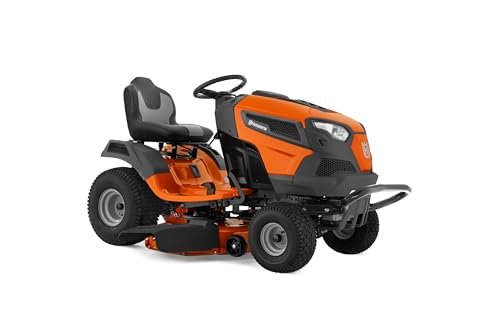 | 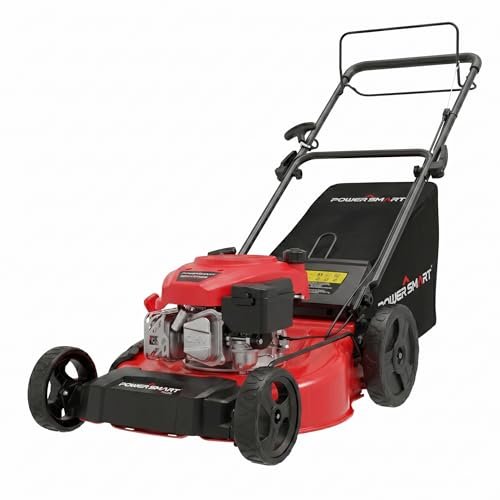 |
| Price | View On Amazon | View On Amazon |
| Category | Premium Riding Lawn Tractor | Budget Self-Propelled Walk-Behind Mower |
| Engine & Power | 22 HP Briggs & Stratton EXi series engine | 170cc OHV engine |
| Cutting Deck & Width | 46-inch stamped, 2-blade steel deck | 21-inch durable steel deck |
| Transmission & Drive | K46 Tuff Torq Hydrostatic Transmission (5 mph forward / 2 mph reverse) | Rear-wheel drive (self-propelled) with 10″ rear wheels |
| Grass & Fuel Capacity | 3.0-gallon fuel capacity (No bagging unit included standard) | 3-in-1 capability (Bagging with 1.4-bushel bag, mulching, & rear discharge) |
| Height Adjustment | Fender-mounted cutting height adjustment | 6-position single lever height adjustment (1.5″ to 3.9″) |
| Best For | Large lawns, estates, and homeowners wanting maximum speed and efficiency | Medium-sized lawns, sloped yards, and homeowners seeking high maneuverability |
| Amazon Link | View On Amazon | View On Amazon |
| Overall Winner | Winner (Premium Choice) | Runner-Up (Budget Choice) |
Husqvarna TS 146 Riding Lawn Mower Review
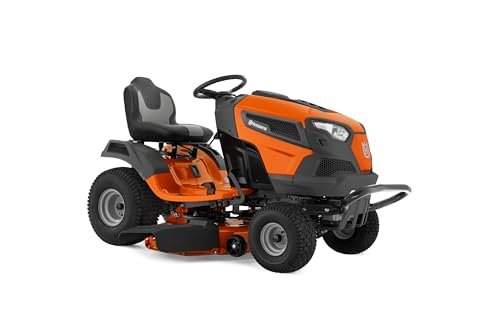
The Husqvarna TS 146 is a serious machine built for homeowners who manage expansive lawns and want to get the job done quickly. I spent a weekend putting this tractor through its paces on a two-acre property, and the 22HP Briggs EXi series engine delivered consistent power without sputtering through thick, overgrown patches. It features a wide 46-Inch Stamped, 2-Blade Mower Deck that cuts a massive path, drastically reducing the number of passes you need to make. Driving this mower feels incredibly smooth, thanks to the premium K46 Tuff Torq Hydrostatic Transmission that allows you to adjust speeds seamlessly using a foot pedal rather than stopping to shift gears. With a generous 3 gallon fuel capacity, you can clear large properties without constantly stopping to top off the tank. The mower reaches a comfortable ground speed of 5 mph forward and 2 mph in reverse, making it an incredibly efficient workhorse for flat to gently sloping acreage.
- Powerful 22HP Briggs EXi Engine: Delivers reliable startup and massive cutting torque for tough lawns.
- 46-Inch Dual-Blade Deck: Covers wide swaths of grass to minimize your total mowing time.
- Hydrostatic Transmission: Foot-pedal operated speed control allows for fluid adjustments on the go.
Comfortable Ergonomics: High-back seat and easy-access controls reduce physical fatigue during long jobs.
Requires a significant amount of storage space in your garage or shed.
- Higher upfront cost and more complex maintenance schedule compared to walk-behind units.
- Too bulky for tight gates or yards with intricate landscaping beds.
Best For:
Property owners with one to three acres of relatively open land who want to cut their mowing time in half without physical exertion.
Expert Opinion: The Husqvarna TS 146 is a stellar entry-level tractor that punches above its weight class. Its hydrostatic transmission and premium Briggs engine offer a commercial-grade feel at a residential price point.
PowerSmart 21″ Self-Propelled Gas Lawn Mower Review
For suburban yards with tight corners and moderate slopes, the PowerSmart 21-Inch Self-Propelled Mower is an incredibly practical choice. I tested this model on a quarter-acre lot with a steep ditch, and the 170cc OHV engine fired up on the very first pull. This mower utilizes a rear-wheel drive system paired with 10-inch large rear wheels that bite into the turf, pulling the machine up hills so you do not have to push. The 21-inch cutting width strikes a great balance between efficiency and maneuverability, allowing you to squeeze through standard backyard gates with ease. You can quickly adapt to changing lawn conditions using the 3-in-1 function to bag, mulch, or rear-discharge your grass clippings. Adjusting the cutting height is simple, featuring a single-lever mechanism that switches between 6 cutting heights from 1.5 inches to 3.9 inches in seconds.
- 170cc OHV Engine: Provides dependable torque with an easy-pull starting mechanism.
- Rear-Wheel Drive System: Powers up steep inclines and uneven terrain with minimal physical effort.
- 3-in-1 Versatility: Allows you to bag, mulch, or side-discharge clippings based on your lawn needs.
Single-Lever Height Adjustment: Changes all four wheels simultaneously for quick height customization.
Walking behind the mower still requires some physical stamina over longer periods.
- The 1.4-bushel collection bag fills up quickly on lush yards.
- Smaller cutting width means it takes significantly longer to clear large spaces.
Best For:
Homeowners with yards under half an acre who have rolling hills, tight gates, and limited storage space in their garage.
Expert Opinion: The PowerSmart 21-inch model is a champion of utility and value. Its rear-wheel drive setup takes the back-breaking labor out of mowing slopes, making it a reliable, budget-friendly neighborhood favorite.
Riding Mower vs Self Propelled: Key Differences That Matter
Performance Comparison
When comparing riding mower vs self propelled models, sheer speed and raw power favor the riding tractor. The Husqvarna TS 146 utilizes a massive 22-horsepower twin-cylinder engine that effortlessly slices through wet, tall grass over multiple acres. On the other hand, the PowerSmart 170cc walk-behind model excels at precision. It maneuvers around flower beds, swings close to fence lines, and handles tight 180-degree turns that would force a riding tractor into a multi-point turn.
Price and Value Analysis
The financial investment for these two categories represents a major dividing line. A riding lawn tractor requires a substantial financial commitment upfront, alongside ongoing costs for truck transport, specialized battery maintenance, and larger quantities of fuel and oil. The PowerSmart self-propelled mower offers an incredibly affordable barrier to entry. It uses very little gasoline, fits in the trunk of a standard car for transport, and has simple maintenance requirements that you can handle with basic hand tools.
Build Quality Comparison
The Husqvarna is built like a small vehicle, featuring a heavy steel frame, a cast-iron front axle, and a stamped steel cutting deck designed to withstand impacts from hidden rocks and roots. It is engineered to last for a decade or more with proper servicing. The PowerSmart mower uses a durable steel deck that resists rust and debris damage, but the overall construction utilizes more plastic components on the dash and drive controls to keep the machine lightweight and affordable.
User Experience Differences
Sitting on the padded high-back seat of the Husqvarna TS 146 turns a chore into a leisurely drive. You operate foot pedals to control your speed, sip a drink from the cup holder, and let the machine do all the heavy lifting. Using the PowerSmart mower is a more active, physical experience. Even though the rear-wheel drive system does the pulling, you still must walk behind it, steer it around obstacles, and empty the grass bag manually when it gets heavy.
Which Should You Choose?
Your final decision should rest on the size of your property, your physical health, and your storage limitations.
If you own a property larger than half an acre, have physical limitations that make walking painful, or simply want to finish your weekend chores in record time, investing in a riding lawn tractor is the right move. The extra cutting width and powerful engine will save you hours of labor every week.
If you have a modest suburban yard, need to pass through narrow backyard gates, or have limited space in your garage, a self-propelled gas mower is the smarter, more economical choice. It provides excellent exercise, navigates complex landscaping easily, and keeps your maintenance costs to an absolute minimum.
Final Verdict
For pure efficiency on large lawns, the Husqvarna TS 146 is a superb investment that pays off in time saved. For compact properties and tight budgets, the PowerSmart 21-inch mower delivers impressive climbing power and clean cuts without breaking the bank.
Frequently Asked Questions
Q: When comparing a riding mower vs self propelled, which is better for steep hills?
A: For very steep hills, a walk-behind self-propelled mower with rear-wheel drive is actually safer because it will not tip over on top of you. Riding mowers can lose traction or roll over on slopes steeper than 15 degrees.
Q: Can I use a riding mower vs self propelled on a lawn that is less than a quarter-acre?
A: You can, but it is rarely practical. Riding mowers have wide turning radiuses and require large storage spaces, making a self-propelled walk-behind mower much more efficient for tight suburban lots.
Q: How much maintenance does a riding tractor require compared to a walk-behind model?
A: Riding tractors require significantly more upkeep. You must monitor tire pressure, grease the deck spindles, change larger amounts of oil, service the transmission, and occasionally replace drive belts, whereas a self-propelled mower only needs basic oil changes, spark plug swaps, and blade sharpening.
Q: Is it harder to store a riding mower than a self-propelled model?
A: Yes, a riding mower requires a large dedicated footprint in a garage or shed, roughly equivalent to a small ATV. A self-propelled mower often has folding handles, allowing you to tuck it into a tight corner or park it under a workbench.
Q: Do self-propelled mowers require you to push them at all?
A: The transmission drives the wheels forward on its own, so you only need to guide and steer the machine rather than pushing its weight. This dramatically reduces the physical effort required compared to a standard push mower.
Q: Which type of mower leaves a cleaner cut on manicured turf?
A: Both can deliver a pristine cut if the blades are sharp, but walk-behind mowers are lighter and less likely to leave tire ruts in soft or damp soil. Riding mowers can scalp high spots on uneven lawns due to their wider cutting decks.
As an Amazon Associate, We earn from qualifying purchases