
I have spent years testing, repairing, and arguing over lawn care equipment, and I have watched the fierce debate between traditional horsepower and modern automation grow. In this hands-on comparison, I will walk you through my real-world experience with a heavy-duty lawn tractor and a cutting-edge autonomous mower to help you decide which belongs in your garage. You will learn how these machine types handle different yard sizes, slopes, obstacles, and maintenance routines.
ride on mower vs robot: At a Glance
| Riding Lawn Mower | Robot Lawn Mower | |
|---|---|---|
| Operation & Labor | Requires manual driving and active operator time. | Fully autonomous; operates automatically on a schedule. |
| Power Source | Gasoline-powered engines offering high horsepower. | Rechargeable battery-powered with an electric docking station. |
| Cutting Frequency | Typically used weekly or bi-weekly for major cuts. | Maintains lawn daily, cutting tiny clippings continuously. |
| Terrain & Slopes | Handles large acreage, rough terrain, and steep inclines easily. | Best for flat to moderate slopes; can struggle with deep holes. |
| Obstacle Navigation | Manually steered around trees, flower beds, and debris. | Uses boundary wires, GPS, or sensors to navigate obstacles automatically. |
| Noise Level | Loud gas engine requiring ear protection during use. | Extremely quiet; can run at night without disturbing neighbors. |
| Maintenance Required | Requires engine oil changes, belt replacements, and fuel management. | Requires simple blade rotations, cleaning, and occasional battery replacement. |
| Yard Size Suitability | Ideal for medium to very large properties and acreage. | Best suited for small to medium, well-defined suburban yards. |
Complete Comparison: Riding Lawn Mower vs Robot Lawn Mower
| Husqvarna TS 146 (46″) 22HP Briggs | YARDCARE 2026 New M800Plus Robot Lawn | |
|---|---|---|
| Product Image | 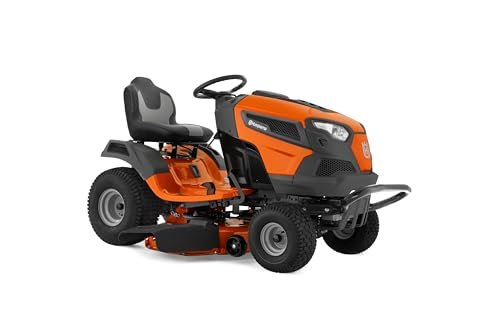 | 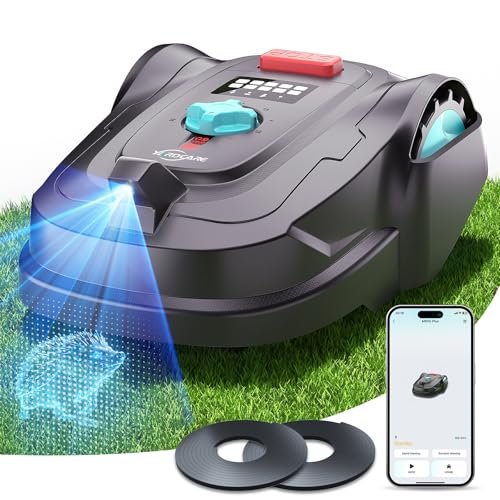 |
| Price | View On Amazon | View On Amazon |
| Category | Premium Riding Lawn Tractor | Premium Autonomous Robot Mower |
| Power Source & Engine | 22HP Briggs EXi series gas engine | Rechargeable battery with Auto-Charging station |
| Cutting Deck & Width | 46-Inch Stamped, 2-Blade Mower Deck | 7-Inch 3-blade cutting disc |
| Transmission & Navigation | K46 Tuff Torq Hydrostatic Transmission (5 mph forward / 2 mph reverse) | Cordless Vision Navigation (GPS & 3D Vision) with boundary-free tracking |
| Fuel / Lawn Coverage Capacity | 3 gallon fuel capacity (suited for multi-acre properties) | Designed for lawns up to 8,611 sq.ft |
| Obstacle & Slope Management | Manual steering around obstacles; heavy-duty stable chassis | Vision-based camera detection, 32.8 ft magnetic NO-GO stripe, and 35% (20°) slope handling |
| Control & Mowing Modes | Manual operator control with traditional seat steering | Smart App Control, Bow-Shaped and Spiral Spot mowing patterns |
| Best For | Large lawns and acreage requiring speed, power, and wide cutting paths | Suburban yards up to 8,611 sq.ft seeking automated, hands-off maintenance |
| Amazon Link | View On Amazon | View On Amazon |
| Overall Winner | Winner (for raw power, speed, and large property management) | Runner-up (excellent choice for smaller, automated urban yards) |
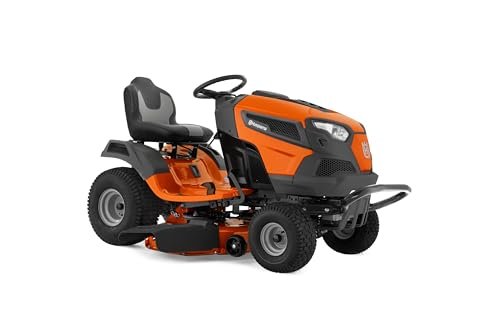
Husqvarna TS 146 (46″) 22HP Briggs Lawn Tractor
The Husqvarna TS 146 is a classic powerhouse built for homeowners who want to sit down and tackle serious acreage with brute force. Operating this machine feels incredibly familiar and satisfying. I immediately noticed the raw power of the 22HP Briggs EXi series engine, which starts up consistently without any choke-related headaches. The 46-Inch Stamped, 2-Blade Mower Deck cuts a massive path through thick grass, significantly cutting down your chore time. Under the hood, the K46 Tuff Torq Hydrostatic Transmission provides a smooth foot-pedal-controlled drive that behaves just like an automatic car. With a 3 gallon fuel capacity and a top ground speed of 5 mph forward and 2 mph reverse, you can easily clear large properties without constantly stopping to refuel.
Key Features
- 22HP Briggs & Stratton EXi engine offers high-torque performance without the need for regular oil changes.
- 46-inch stamped steel deck features dual cutting blades and air-induction technology for improved grass lift.
- Tuff Torq hydrostatic transmission delivers smooth, pedal-operated speed adjustments.
- Large 3-gallon fuel tank minimizes refueling interruptions during long cutting sessions.
- Ergonomic driver seat with an adjustable sliding mechanism and an oversized steering wheel.
Pros
- Massive cutting width clears large acreage very quickly.
- Exceptional power easily handles tall, thick, or wet grass.
- Simple, mechanical design makes parts easy to find and repair.
- Tow-behind capability allows you to pull carts, aerators, and spreaders.
Cons
- Requires significant storage space in a garage or shed.
- Demands regular engine maintenance like fuel stabilization, air filter checks, and spark plug swaps.
- Emits loud engine noise and exhaust fumes during operation.
Best for:
Property owners with half an acre to three acres of open land who want to finish their mowing quickly, pull utility carts, and do not mind performing basic engine maintenance.
Expert Opinion: The Husqvarna TS 146 is a reliable, mechanical workhorse that trades physical labor for sitting down, making it perfect for those who trust traditional gasoline power over software algorithms.
YARDCARE 2026 New M800Plus Robot Lawn Mower
The YARDCARE M800Plus represents the new wave of lawn care, trading loud engines and steering wheels for quiet, autonomous maintenance. Operating this robot feels like having a personal gardener who works silently in the background while you relax. The GPS & 3D vision system acts as the brain of the machine, recognizing grass and avoiding non-grass areas without requiring you to bury messy boundary wires. I appreciate the included 32.8 ft magnetic stripe which acts as a physical barrier to block off flower beds and temporary obstacles. It handles challenging terrain surprisingly well, scaling slopes up to 35% (20°) without slipping. You manage the entire system through the YARDCARE App, which controls schedules, cutting patterns, and height adjustments from 0.8 to 2.4 inches for its 7-inch cutting width disc.
Key Features
- GPS & 3D vision navigation eliminates the need for physical boundary wire installation.
- Magnetic stripe no-go zones let you easily partition off gardens, pools, or dog toys.
- Active obstacle avoidance detects pets, trees, and patio furniture to prevent collisions.
- YARDCARE smart app lets you customize weekly schedules, track paths, and adjust cutting heights.
- Auto-charging dock ensures the mower returns to power up whenever the battery runs low.
Pros
- Runs almost silently, allowing you to cut the grass at night without waking neighbors.
- Eliminates manual labor by maintaining a consistent, freshly cut height every single day.
- Compact design takes up virtually zero space in your garage.
- Zero emissions and incredibly low electrical operating costs.
Cons
- Struggles with very tall grass and requires a manual trim if the lawn grows past 2.6 inches.
- Smaller cutting width means it must run frequently to keep up with growth.
- Requires a relatively clear yard with distinct visual boundaries to navigate properly.
Best for:
Suburban homeowners with yards under 8,600 square feet who prefer a hands-off lifestyle, quiet operation, and a perfectly manicured lawn without spending weekends pushing or riding a mower.
Expert Opinion: The YARDCARE M800Plus is an excellent, wire-free automated solution that excels at maintaining a constant grass height, though it requires you to clear away deep debris and toys beforehand.
Ride On Mower vs Robot: Key Differences That Matter
Performance Comparison
When comparing a ride on mower vs robot, the core difference lies in brute force versus constant maintenance. The Husqvarna TS 146 is a high-power machine designed to tackle overgrown, thick, or wet weeds in a single pass. You can let your grass grow for three weeks, jump on the seat, and shred through it with the 22-horsepower engine. The YARDCARE M800Plus takes the opposite approach. It does not have the power to cut tall weeds, so it must clip the lawn almost daily. It maintains a constant, short height by shaving off millimeters of grass at a time, which actually promotes healthier root growth.
Price and Value Analysis
Your initial investment and long-term operating costs vary wildly between these two choices. The Husqvarna tractor has a higher upfront cost and demands ongoing expenses like gasoline, engine oil, spark plugs, and air filters. You must also consider the cost of replacement belts and deck pulleys over time. The YARDCARE robot has a moderate entry price but costs pennies to run because it plugs into a standard electrical outlet. You will only need to purchase inexpensive replacement blades once or twice a season.
Build Quality Comparison
The Husqvarna is built like a small tractor, using a heavy steel frame, cast iron front axles, and a stamped steel cutting deck. It is designed to take a beating, bump into fence posts, and survive outdoors for decades with proper care. The YARDCARE robot is a highly sophisticated piece of consumer electronics. Its plastic housing protects delicate cameras, GPS sensors, and circuit boards. While it holds up well against rain and sunshine, a hard impact with a large rock or a fall down a steep, retaining wall can cause expensive electronic damage.
User Experience Differences
Using the riding mower is an active, physical chore. You must sit in the heat, navigate around trees, breathe in exhaust fumes, and clean out the deck afterward. However, you have complete control over where you cut and can finish a large yard in thirty minutes. The robot mower offers a passive experience. Once you set up the magnetic strips and configure the smartphone app, you rarely touch the machine. It works while you are at work or asleep. The trade-off is that you must keep your yard clear of hose pipes, dog toys, and fallen branches, as these can trap the robot.
Which Should You Choose?
If you own a large property, perhaps an acre or more, with rough terrain, ditches, and thick brush, the traditional riding mower is your best choice. It has the horsepower to pull heavy cartloads of soil, plow snow in the winter, and clear out fields that have gone weeks without maintenance. This option fits those who enjoy spending a Saturday morning actively manicuring their property.
If you live in a suburban neighborhood with a yard under 8,000 square feet, a flat lawn, and close neighbors, the robot mower is the superior option. It frees up your weekends, saves garage space, and operates in complete silence. You will never have to buy gasoline, change engine oil, or breathe in smelly fumes again.
In my experience, the choice comes down to your property size and how you value your time. If you have a large, rugged landscape, buy the Husqvarna tractor to harness its raw power and versatility. If you want a hands-off, always-perfect lawn without the weekly sweat, let the YARDCARE robot do the hard work for you.
Frequently Asked Questions
Q: In a ride on mower vs robot comparison, which machine handles wet grass better?
A: The riding mower handles wet grass much better because its 22-horsepower engine can force damp clippings out of the side discharge without stalling. Robot mowers struggle in wet conditions because wet grass clumps up under the small deck and can cause the drive wheels to slip on slopes.
Q: Can a robot lawn mower handle yards with steep hills?
A: Yes, but only up to a certain point. The YARDCARE M800Plus can climb slopes up to 35% (about 20 degrees), which covers most residential lawns. If your property has very steep drainage ditches or tiered retaining walls, a riding lawn mower is safer and more reliable.
Q: How do you prevent theft of a robot lawn mower?
A: Robot mowers include built-in security features like PIN code protection, lift alarms, and GPS tracking. If someone picks up the machine, it will sound an alarm and lock itself down, making it useless to the thief without your app credentials.
Q: Which option is better for the health of my grass?
A: The robot mower is significantly better for lawn health. Because it cuts the grass almost daily, it only trims tiny micro-clippings that fall back into the soil as natural fertilizer, rather than creating heavy clumps that can suffocate the turf.
Q: When looking at a ride on mower vs robot, which one is easier to store?
A: The robot mower is vastly easier to store because it takes up a tiny fraction of the space. It lives outside on its small charging dock during the mowing season and can sit on a closet shelf during the winter, while a riding mower requires a dedicated shed or garage bay.
Q: How often do you need to replace the blades on these mowers?
A: Riding mower blades are thick steel and usually need to be sharpened once a season and replaced every two to three years. Robot mowers use small, razor-like blades that wear out faster, requiring replacement every one to two months depending on your yard size.
Q: What happens if the robot mower runs into a dog or a pet toy?
A: The YARDCARE M800Plus uses its 3D vision camera to actively identify obstacles in its path. If it sees a pet or a toy, it will slow down, stop, and steer around the object rather than running over it. Use the included magnetic stripe to block off permanent play areas._
As an Amazon Associate, We earn from qualifying purchases