
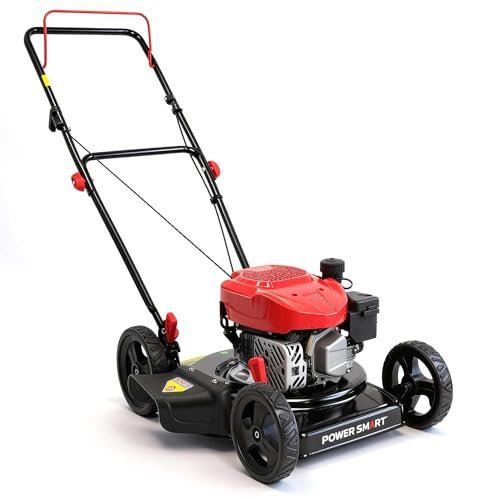
For years, I have tested, pushed, and repaired all kinds of lawn care machinery. In my experience, choosing between a lightweight side-discharge machine and a heavy-duty rear-bagging unit comes down to how you prefer to handle your grass clippings and yard terrain. I put two representative machines from PowerSmart head-to-head to show you exactly how these cutting styles perform in real-world conditions.
lawn mower side discharge vs bag: At a Glance
| Side-Discharge Lawn Mower | Rear-Bagging Lawn Mower | |
|---|---|---|
| Clipping Management | Discharges cut grass back onto the lawn surface. | Collects grass clippings in an attached rear bag. |
| Lawn Appearance | Can leave visible clumps if grass is long or wet. | Leaves a clean, debris-free, manicured look. |
| Soil Health Benefit | Returns valuable nutrients and nitrogen to the soil. | Removes organic matter, requiring separate fertilizing. |
| Weight & Maneuverability | Lightweight and highly maneuverable without extra bag weight. | Heavier and harder to turn as the bag fills. |
| Physical Effort | Requires no stopping to empty clipping containers. | Requires frequent stops to detach and empty the bag. |
| Obstacle Clearance | Side chute can catch on trees, fences, and flowerbeds. | Narrower profile allows for easier trimming close to obstacles. |
| Thatch Prevention | May contribute to thatch buildup if mowing is infrequent. | Prevents thatch buildup by completely removing clippings. |
Complete Comparison: Side-Discharge Lawn Mower vs Rear-Bagging Lawn Mower
| PowerSmart EasyCut 18-Inch Gas Lawn Mower, | PowerSmart 21″ Self-Propelled Gas Lawn Mower | |
|---|---|---|
| Product Image | 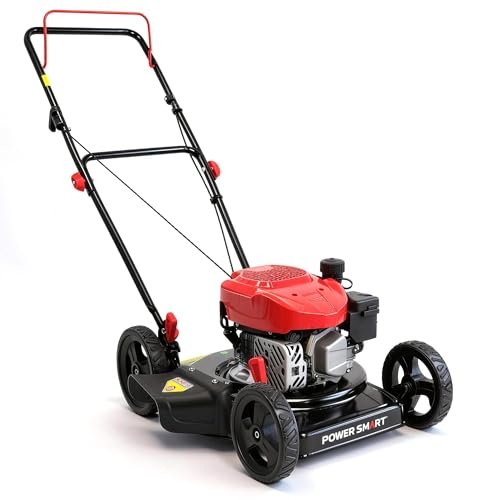 | 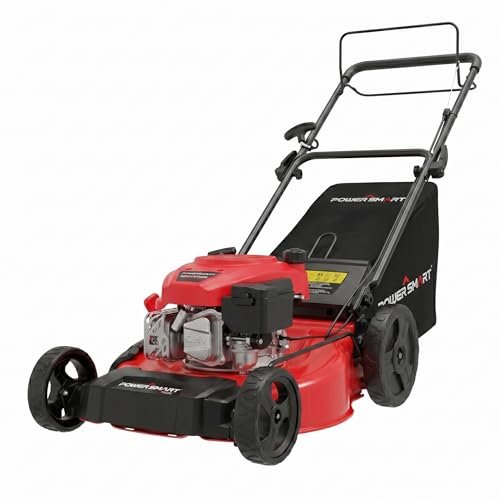 |
| Price | View On Amazon | View On Amazon |
| Category | Budget / Compact Push | Mid-Range / Self-Propelled |
| Engine Displacement | 144cc 4-Stroke OHV Engine (with Auto Choke & Primer) | 170cc 4-Stroke OHV Engine (Smooth Start-up) |
| Cutting Deck Width | 18-inch Steel Deck | 21-inch Steel Deck |
| Drive System | Push (Manual Walk-Behind) | Self-Propelled (Rear-Wheel Drive) |
| Grass Clipping Options | Side Discharge Only | 3-in-1 (Bagging, Mulching, Rear Discharge) |
| Height Adjustment Settings | 5-Position (1.5″ to 3.9″) | 6-Position (1.5″ to 3.9″ with Single Lever) |
| Wheels & Maneuverability | 7″ Front / 8″ Rear Wheels | 8″ Front / 10″ Rear Wheels (High Traction) |
| Best For | Small yards, flat terrain, and tight corners | Medium to large yards, slopes, and uneven terrain |
| Amazon Link | View On Amazon | View On Amazon |
| Overall Winner | Runner-Up | Winner |
PowerSmart EasyCut 18-Inch Gas Lawn Mower
The PowerSmart EasyCut 18-Inch Gas Lawn Mower is a highly maneuverable, lightweight walk-behind machine designed to make quick work of compact lawns. When I first pushed this mower, the lightweight frame immediately stood out, allowing me to pivot around tight garden borders without breaking a sweat. It features a reliable 144cc 4-cycle engine that starts up easily thanks to its auto choke design and manual primer button. The 18-inch steel deck feels remarkably sturdy for such a compact machine, holding up well against hidden rocks and roots. Adjusting the cutting depth is straightforward with a 5-position height adjustment lever, allowing you to choose between 1.5 inches and 3.9 inches depending on your turf health. Finally, the easy maneuverability of the 8-inch rear and 7-inch front wheels gives you great control over the machine, making it a breeze to push through dense patches.
- 144cc 4-Stroke Engine: Delivers consistent cutting power without the hassle of mixing oil and gas.
- Side Discharge Design: Expels grass clippings instantly to prevent clumping and keep the deck clear.
- 18-Inch Steel Deck: Offers a compact cutting path that excels at navigating tight passages and narrow gates.
- 5-Position Height Lever: Quickly alters the cutting height from 1.5 inches up to 3.9 inches for seasonal adjustments.
Compact Wheel Setup: Built with 8-inch rear and 7-inch front wheels for effortless manual pushing and turning.
Extremely lightweight and easy to push, which reduces physical fatigue during longer mowing sessions.
- Simple side-discharge path rarely clogs, even when cutting tall, damp grass.
Compact footprint takes up very little storage space in a crowded shed or garage.
Manual push design requires physical effort, making it less suitable for steep slopes.
- Lacks a collection bag, so you must leave clippings on the lawn or rake them up manually.
- The 18-inch cutting width requires more passes to cover larger yards.
Best for: Homeowners with small, flat yards who want a simple, reliable machine that maneuvers easily around tight landscaping features.
Expert Opinion: This mower is an absolute workhorse for compact properties. The lack of a drive system actually works in its favor here, keeping the machine lightweight, easy to lift, and incredibly simple to maintain over the years.
PowerSmart 21″ Self-Propelled Gas Lawn Mower
The PowerSmart 21-Inch Self-Propelled Gas Lawn Mower is a versatile machine designed to handle larger yards and hilly terrain with ease. This model features a powerful 170cc OHV engine that provides ample torque for both spinning the blade and driving the rear wheels. I love the self-propelled rear-wheel drive system on this unit, as it does the heavy lifting for you on steep inclines and uneven ground. The generous 21-inch cutting width drastically cuts down your mowing time on open stretches of grass. With its 3-in-1 function, you can easily collect clippings in the 1.4-bushel rear bag, mulch them back into the turf, or use the rear discharge chute. Setting your cutting depth is incredibly easy using the 6-position height adjustment single lever, giving you precise control over your lawn appearance.
- 170cc OHV Engine: Provides high torque output to plow through thick weed patches and power the self-propelled system.
- Rear-Wheel Drive System: Self-propelled traction helps pull the mower up hills and across thick turf with minimal operator effort.
- 3-in-1 Versatility: Offers the choice between bagging, mulching, or rear-discharging your grass clippings.
- 21-Inch Steel Deck: Covers a wider path on each pass to finish mowing medium and large yards quickly.
10-Inch High Rear Wheels: Large rear wheels roll smoothly over rough ground, holes, and bumpy terrain.
Rear-wheel drive takes the strain out of mowing, making hills and slopes incredibly easy to manage.
- The large 1.4-bushel collection bag leaves your lawn looking perfectly clean and free of debris.
Thick steel deck feels exceptionally durable and handles rough terrain without flexing.
Considerably heavier than push models, making it harder to lift into a car trunk or carry up steps.
- Bagging requires you to stop periodically to empty the clippings, which can slow down your progress.
- Self-propelled drive parts require extra maintenance and cable adjustments over time.
Best for: Homeowners with medium to large yards, hilly terrain, or those who want a pristine, manicured lawn completely free of visible grass clippings.
Expert Opinion: The combination of rear-wheel drive and a large capacity bag makes this machine a standout performer for hilly yards. It transforms a grueling uphill chore into a simple walk, while leaving a clean path behind it.
Lawn Mower Side Discharge vs Bag: Key Differences That Matter
Understanding the core differences between a lawn mower side discharge vs bag setup will help you avoid buyer’s remorse. These two mowing methods affect everything from your physical stamina to the health of your turf.
Performance Comparison
When you compare a lawn mower side discharge vs bag system, you will notice a massive difference in how they handle tall grass. A side-discharge mower cuts the grass and immediately throws it out of the side chute. This open design allows the blade chamber to stay clear of debris, meaning you can cut through tall weeds and overgrown lawns without the engine bogging down.
A rear-bagging mower forces the clippings through a chute into a rear-mounted collection bag. This airflow requires more engine power. If the grass is tall or wet, the collection chute can clog easily, forcing you to stop the engine and clear the wet grass by hand. However, the bagging system wins when it comes to clean finishes. It acts like a vacuum cleaner, sucking up leaves, twigs, and weed seeds, leaving you with a spotless lawn.
Price and Value Analysis
The physical design of these mowers directly impacts their price tag. Side-discharge mowers are generally much simpler machines. They lack collection bags, complex chute systems, and in the case of the PowerSmart 18-inch model, self-propelled drive systems. This simplicity makes them highly affordable to purchase and inexpensive to maintain.
Rear-bagging mowers, especially those with 3-in-1 capabilities and self-propelled drives, cost more upfront. You are paying for the extra engineering, the collection bag, the drive transmission, and a larger engine to power those systems. If you have a flat, small yard, a budget-friendly side-discharge push mower offers incredible value. For larger yards with slopes, the extra investment in a self-propelled bagging mower pays off in saved physical effort.
Build Quality Comparison
Both PowerSmart machines feature durable steel decks, which is a major plus over cheaper plastic decks. However, the self-propelled bagging mower is built to handle more demanding workloads. Its drive components, larger 10-inch rear wheels, and heavier frame are designed for durability over long distances. The side-discharge model is simpler, meaning there are fewer moving parts to break. With no drive belts to wear out and no bagging cables to stretch, the side-discharge model often wins on long-term durability simply due to its mechanical simplicity.
User Experience Differences
Using these two mowers feels completely different. Pushing the lightweight 18-inch side-discharge mower feels nimble. You can zip around trees and flower beds with a flick of your wrist. The downside is that you must plan your mowing path carefully. If you shoot the clippings toward your driveway or flower beds, you will end up spending extra time sweeping up the mess.
The 21-inch self-propelled bagging mower does the physical work for you. You simply guide it along, and the rear-wheel drive pulls the machine forward. However, the user experience slows down when the bag fills up. Stopping the engine, detaching the heavy bag, carrying it to your compost pile, and putting it back on adds time and physical lifting to your routine.
Which Should You Choose?
If you want a quick, affordable, and lightweight solution for a small, flat yard, choose the PowerSmart 18-Inch Side-Discharge mower. This machine is perfect for homeowners who do not mind leaving clippings on the lawn to naturally decompose and nourish the soil. It is also the ideal choice if you have tight backyard gates or narrow paths between garden beds where a wider mower simply cannot fit.
If you have a medium to large yard with hills, or if you struggle with allergies and want to collect weed seeds and clippings, choose the PowerSmart 21-Inch Self-Propelled Bagging mower. This unit is the best choice for anyone who wants a spotless lawn without the physical exhaustion of pushing a heavy machine uphill.
My final verdict favors the PowerSmart 21-Inch Self-Propelled model for overall versatility. The ability to switch between bagging, mulching, and rear discharge means you can adapt to any lawn condition throughout the changing seasons.
Frequently Asked Questions
Q: When comparing a lawn mower side discharge vs bag, which is better for the health of my grass?
A: Side discharging is generally better for your lawn health because leaving the clippings on the grass allows them to decompose, returning valuable nitrogen and nutrients back into the soil.
Q: Can I convert a side-discharge mower into a bagging mower later on?
A: Usually no. Most dedicated side-discharge mowers lack the rear deck opening and mounting points required to attach a collection bag safely.
Q: Is a lawn mower side discharge vs bag better for dealing with wet grass?
A: Side discharge is far superior for wet grass because the open side chute allows the wet clumps to fly out immediately, whereas a bagger will quickly clog the chute with wet, sticky grass.
Q: Does bagging my grass clippings help reduce backyard weeds?
A: Yes, bagging is highly effective at collecting dandelion heads, weed seeds, and crabgrass before they can drop onto your soil and sprout next season.
Q: How often do I need to empty the bag on a rear-bagging lawn mower?
A: For a typical medium-sized yard, you will likely need to empty a 1.4-bushel bag 3 to 5 times per mow, depending on how tall and thick your grass is.
Q: Why does the self-propelled system matter so much on a bagging mower?
A: A full bag of wet grass clippings adds significant weight to the rear of the machine, making a manual push mower incredibly heavy to move without the assist of rear-wheel drive.
As an Amazon Associate, We earn from qualifying purchases