
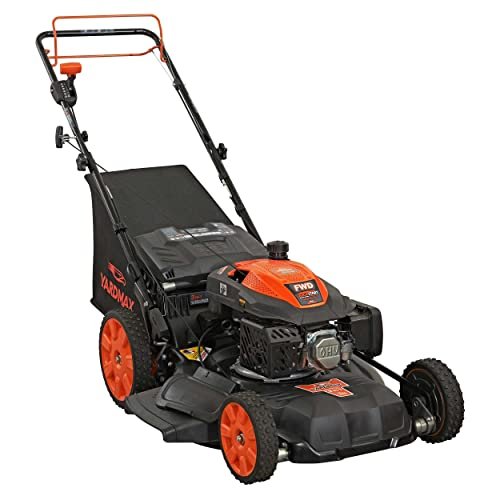
Choosing the right walk-behind lawn mower often comes down to a choice that many homeowners overlook until they are sweating on a hill. I have spent years testing outdoor power equipment, and I have pushed both drive styles across every imaginable terrain. In this comparison, I will help you understand how front-wheel-drive (FWD) and rear-wheel-drive (RWD) systems handle real-world challenges so you can buy the perfect machine for your yard.
mower fwd vs rwd: At a Glance
| Front-Wheel-Drive Lawn Mower | Rear-Wheel-Drive Lawn Mower | |
|---|---|---|
| Best Terrain | Flat lawns with obstacles and gardens | Hilly terrain, slopes, and uneven ground |
| Traction Control | Can lose traction on slopes when bag fills | Excellent traction as weight shifts to the rear |
| Maneuverability | Easy to turn by pushing down handlebars to lift drive wheels | Requires releasing the drive clutch to turn manually |
| Ease of Use | Highly intuitive for flat yards with frequent direction changes | Saves significant physical effort on inclines and large areas |
| Mowing Pace | Great for variable speeds and quick stop-and-go maneuvers | Best for maintaining a steady, powerful forward momentum |
| Suited Yard Size | Small to medium, flat residential yards | Medium to large yards with diverse topography |
| Maintenance & Complexity | Generally simpler drive mechanisms and easier belt access | Slightly more complex drive systems integrated with rear axles |
Complete Comparison: Front-Wheel-Drive Lawn Mower vs Rear-Wheel-Drive Lawn Mower
| YARDMAX 22 in. 201cc Select PACE | PowerSmart 21″ Self-Propelled Gas Lawn Mower | |
|---|---|---|
| Product Image | 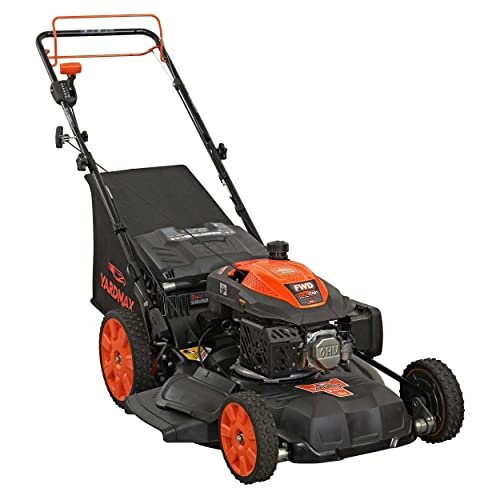 | 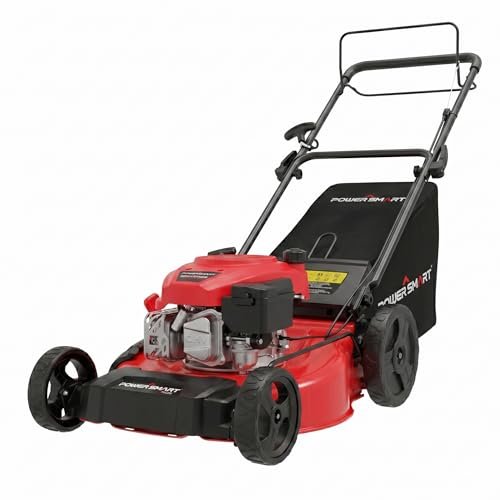 |
| Price | View On Amazon | View On Amazon |
| Category | Premium FWD Walk-Behind | Mid-Range RWD Slope Mower |
| Engine Displacement | 201cc with Automatic Choke System (No priming required) | 170cc OHV Engine |
| Drive System & Speed Control | Front-Wheel Drive (FWD) with Select PACE 6-Speed CVT | Rear-Wheel Drive (RWD) with 10″ Large Rear Wheels |
| Cutting Deck & Width | 22-inch steel deck with cleanout port | 21-inch durable steel deck |
| Tires & Traction | Exclusive rubber tires with aggressive spiked tread pattern | Standard tread tires with 10″ rear wheels |
| Height Adjustment | Single-lever deck adjustment | 6-position height adjustment (1.5″ to 3.9″) with single lever |
| Grass Management | 3-in-1 capability | 3-in-1: Bagging (1.4-bushel), Mulching, & Rear Discharge |
| Best For | Flat lawns, high maneuverability around obstacles, and variable walking paces | Hilly terrain, slopes, and medium-to-large uneven yards |
| Amazon Link | View On Amazon | View On Amazon |
| Overall Winner | Winner (Superior engine power, premium CVT transmission, and better traction tires) | Runner-Up (Excellent budget-friendly choice for slopes and hilly terrain) |
Front-Wheel-Drive: YARDMAX 22 in. 201cc Select PACE FWD Mower (YG2860)
The YARDMAX YG2860 is a heavy-duty machine that brings premium features to the front-wheel-drive category. This mower relies on a massive 201cc engine that delivers relentless cutting power through thick weeds and tall grass. I found that the Select PACE 6 Speed CVT (Continuously Variable Transmission) allows you to match the mower’s speed to your natural stride by using a simple shift lever. The front wheels feature exclusive rubber tires with an aggressive spiked tread pattern that grabs the turf much better than standard plastic wheels. You do not have to worry about priming or choking the engine before a job because the automatic choke system ensures quick starts on the first pull. When you finish cutting, the deck cleanout port lets you attach a garden hose to blast away sticky clippings, while the single-lever deck adjustment lets you change the cutting height of all four wheels at once.
- Select PACE CVT Transmission: Six distinct speed settings allow you to easily match your walking pace.
- High-Traction Spiked Tires: Deep rubber treads improve grip and maneuverability on flat lawns.
- 201cc Gas Engine: One of the largest engines in its class, offering superior torque for tough grass.
- Single-Lever Height Adjustment: Changes the cutting height of the entire deck with one motion.
- Automatic Choke System: Eliminates the need to prime the engine, ensuring hassle-free starts.
Pros
- The massive 201cc engine handles overgrown lawns without bogging down.
- Turning is incredibly easy because you can simply push down on the handlebar to lift the drive wheels.
- Six-speed CVT transmission offers precise control over your walking speed.
- Rubber spiked tires provide excellent lateral stability on flat turf.
Cons
- Front wheels lose traction easily when mowing up steep inclines.
- Heavy rear bagging can cause the front wheels to lift slightly, reducing self-propelled power.
Best for:
Homeowners with mostly flat yards who value easy turning around flowerbeds, trees, and tight landscaping corners.
Expert Opinion: The YARDMAX YG2860 is a powerhouse FWD mower that excels at navigating flat yards with complex landscaping because you can pivot the machine without disengaging the drive system.
Rear-Wheel-Drive: PowerSmart 21″ Self-Propelled Gas Lawn Mower (PSM2121)
The PowerSmart PSM2121 utilizes a rear-wheel-drive system designed to conquer hills and uneven terrain. This model is powered by a reliable 170cc OHV engine that delivers consistent starting performance and plenty of torque for standard residential yards. The 21-inch cutting width balances speed and maneuverability, allowing you to finish medium to large lawns quickly. This machine offers a 3-in-1 function for bagging, mulching, and rear discharge, giving you complete control over how you handle your grass clippings. You can customize the look of your turf using the 6-position height adjustment lever to set your cutting height from 1.5 inches to 3.9 inches. This mower shines on slopes because the self-propelled drive with 10-inch large rear wheels pushes the weight of the machine from behind, keeping the drive wheels firmly planted on the ground.
- Rear-Wheel-Drive System: Directs power to the back wheels to maximize traction on slopes and hills.
- 10-Inch Rear Wheels: Oversized rear tires roll over dips, ruts, and rough terrain with ease.
- 170cc OHV Engine: Provides reliable, fuel-efficient power for daily residential mowing tasks.
- 3-in-1 Grass Management: Easily switch between mulching, bagging, or side discharging.
- 6-Position Height Adjustment: Simple lever adjusts the cutting height to suit different grass species.
Pros
- Rear-wheel drive prevents slipping on hills and damp grass.
- Large 10-inch rear wheels glide smoothly over bumps and uneven soil.
- Added weight from a full grass bag actually increases traction rather than hurting it.
- Steel deck is durable and resists damage from hidden stones.
Cons
- You must release the drive bail before turning or the mower will fight against you.
- The 170cc engine has less raw cutting power than the YARDMAX.
Best for:
Homeowners with hilly lawns, slopes, or uneven ground who need consistent climbing traction and reliable bagging performance.
Expert Opinion: The PowerSmart PSM2121 is a dependable workhorse for sloped yards where rear traction is essential to prevent sliding and operator fatigue.
Mower FWD vs RWD: Key Differences That Matter
Understanding the mechanics of a mower fwd vs rwd setup will save you from buying a machine that frustrates you every weekend. The fundamental difference lies in traction and maneuverability under load.
Performance Comparison
A front-wheel-drive mower pulls the machine forward. This configuration works beautifully on flat ground. When you reach the end of a mowing row, you simply push down on the handlebar to lift the front wheels off the turf, pivot the mower, and lower it to start the next pass.
A rear-wheel-drive mower pushes the machine forward. This design is superior for hills. When you walk up an incline, gravity naturally shifts the weight of the mower to the rear wheels. An RWD mower grips the ground tighter as the slope gets steeper, whereas an FWD mower will spin its front wheels uselessly on the incline.
Price and Value Analysis
FWD mowers generally cost less to manufacture because the drive linkage to the front wheels is less complex. The YARDMAX offers incredible value by packing a massive engine and premium CVT transmission into an affordable package. RWD mowers like the PowerSmart often cost slightly more for similar engine sizes because the rear axle drive systems require more robust components to handle the weight shifts.
Build Quality Comparison
Both machines feature durable steel decks. The YARDMAX utilizes heavier gauge materials and premium rubber tires, making it feel more substantial during operation. The PowerSmart relies on its simple, proven rear-drive axle and large plastic wheels. The PowerSmart design is highly durable but focuses more on utility than refined operator comfort features.
User Experience Differences
Operating these two drive types requires different physical techniques. With the YARDMAX FWD system, you can keep the self-propelled drive engaged constantly. You just lift the front wheels to make quick turns around obstacles.
The PowerSmart RWD system requires you to release the drive lever before you make a turn. If you try to turn an active RWD mower, the rear wheels will scuff your turf and resist your guidance.
Which Should You Choose?
Your lawn topography is the single most important factor when choosing between these two self-propelled drive systems.
If you have a flat yard with lots of garden beds, trees, and tight corners, the front-wheel-drive YARDMAX is your best option. The ability to pivot the mower on its rear wheels without turning off the self-propelled drive will save you time and physical effort. The massive 201cc engine is also ideal if you occasionally let your grass grow too tall before cutting.
If your yard has slopes, ditches, terraces, or uneven ground, you should choose the rear-wheel-drive PowerSmart. It will climb hills safely without slipping or requiring you to push. The RWD setup is also the correct choice if you plan to bag your grass clippings regularly. The weight of the full bag presses the drive wheels into the grass, giving you maximum traction.
Frequently Asked Questions
Q: In the debate of mower fwd vs rwd, which one is better for bagging grass?
A: Rear-wheel-drive is vastly superior for bagging. As the rear grass bag fills up, it adds weight to the back of the mower. This extra weight presses the rear drive wheels into the ground, which increases traction. On a front-wheel-drive mower, a heavy bag lifts the front wheels off the ground, causing them to spin and lose self-propelled power.
Q: Can I use a front-wheel-drive mower on steep hills?
A: I do not recommend it. When you mow uphill, the weight of the mower shifts backward. A front-wheel-drive mower will lose traction and spin its wheels, forcing you to push the heavy machine up the hill yourself.
Q: Is a mower fwd vs rwd easier to turn at the end of a row?
A: Front-wheel-drive mowers are much easier to turn. You can leave the drive bail engaged and simply push down on the handlebar to lift the spinning front wheels off the turf to pivot. With a rear-wheel-drive mower, you must release the drive bail before turning, otherwise the rear wheels will push you forward and scalp your grass.
Q: Why do rear-wheel-drive mowers usually cost more?
A: The drive mechanics for rear-wheel mowers are more complex. The transmission must connect to the rear axle, which also bears the weight of the grass bag and the engine torque during climbs, requiring more durable parts.
Q: Does rear-wheel-drive work well on wet grass?
A: Yes, rear-wheel-drive handles damp conditions much better than front-wheel-drive. The rear wheels maintain traction on slick grass because the engine weight and operator pressure keep the rear tires planted.
Q: How do I wash the underside of the deck on the YARDMAX?
A: You can connect a standard garden hose to the integrated deck cleanout port. Start the mower engine, turn on the water, and the spinning blade will distribute the water to wash away stuck grass clippings.
As an Amazon Associate, We earn from qualifying purchases