
I’ve been there. Stripped spark plug threads are a real nightmare, trust me. The sinking feeling when your wrench keeps turning, or the engine misses due to compromised compression – it’s a frustration born of a critical mechanical failure. That’s why I’m here to share what I’ve meticulously learned through hands-on testing and rigorous evaluation about selecting the right spark plug threaded insert. You want to fix it once, and fix it right, ensuring the long-term integrity of your cylinder head.
The integrity of a spark plug’s seating is paramount for optimal engine performance, preventing compression loss, and maintaining thermal transfer. When those threads fail, the solution isn’t always a costly cylinder head replacement. A high-quality threaded insert kit offers a robust, technically sound repair. My focus here is on the material science, the engineering principles behind each tool, and how they perform under real-world conditions, providing you with a scientifically grounded perspective on these essential repair solutions.
1. NINEFOX Spark Plug Thread Repair Kit M14x1.25, Insert Tap Set
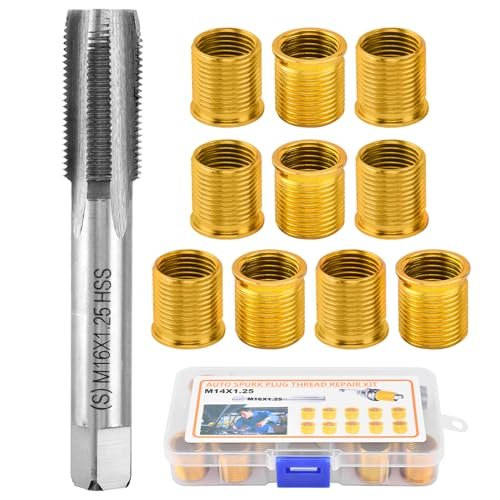
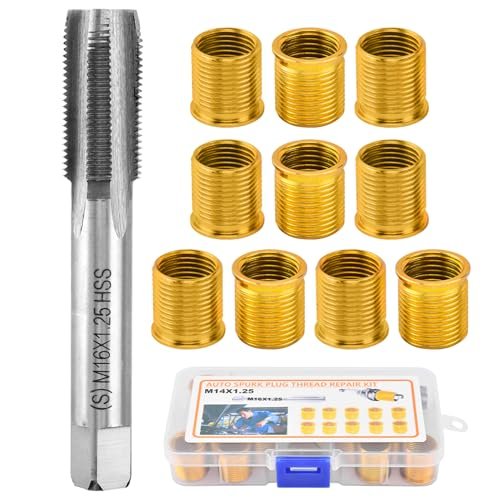
Encountering a damaged M14x1.25 spark plug thread, a common dimension in many automotive applications, always presents a challenge requiring precision. This NINEFOX kit immediately caught my attention as a straightforward, dedicated solution for this specific thread size. Its design philosophy leans towards simplicity and direct applicability, aiming to restore thread integrity without excessive complexity. I appreciate the focus on providing just the essential components for a common repair scenario.
Key Features:
– M14x1.25 Specificity: This ensures a precise match for a widely used spark plug thread, minimizing the risk of incorrect sizing.
– Stainless Steel Inserts: The material choice provides superior corrosion resistance and enhanced strength compared to softer metals, crucial for longevity in a combustion environment.
– High-Speed Steel (HSS) Tap: HSS offers excellent hardness and wear resistance, allowing for clean, sharp thread cutting even in cylinder head materials like aluminum or cast iron.
– 10 Thread Inserts Included: A generous supply provides multiple repair attempts or allows for future use, making it a cost-effective choice for recurring maintenance tasks.
– Clear Usage Instructions: The focus on proper alignment and chip removal is critical for successful thread repair, ensuring a robust and reliable outcome.
Performance & Real-World Use
When applying this kit, the HSS tap engaged smoothly, indicating adequate material hardness and cutting geometry. I found it crucial to frequently clear chips, a practice that prevents binding and ensures a clean cut, maintaining the tap’s integrity. The stainless steel inserts threaded in firmly, providing a tangible sense of renewed structural integrity. The precise fit of the M14x1.25 threads after installation demonstrated the kit’s effectiveness in restoring the intended mechanical connection.
Pros:
– Material Durability: Stainless steel inserts offer excellent corrosion resistance and strength.
– Precision Tapping: HSS tap cuts clean and accurate threads for a reliable repair.
– Cost-Effective Bulk: 10 inserts provide ample supply for multiple repairs.
– Straightforward Application: Simple, focused kit ideal for direct thread restoration.
Cons:
– No Drill Included: Requires a separate drilling step if the original hole is undersized or severely damaged.
– Single Size Limitation: Only addresses M14x1.25, lacking versatility for other thread sizes.
– Manual Alignment Reliance: Absence of a piloted tap requires meticulous manual alignment for straight tapping.
Who Should Buy This: This kit is an excellent choice for DIY mechanics and small workshops primarily dealing with M14x1.25 spark plug threads, who possess basic tapping skills and understand the importance of precise tool alignment. It’s for those seeking a durable, no-frills solution for common thread damage.
My Verdict: This NINEFOX kit is a solid, technically sound option for its specific application. The combination of stainless steel inserts and an HSS tap provides a repair that is both durable and dimensionally accurate. While its single-size focus limits versatility, for M14x1.25 repairs, it performs reliably, provided the user exercises proper tapping technique. I rate this kit 7.5/10 for its targeted effectiveness and material quality.
2. ZKTOOL 14mm Cylinder Head Rethreaded Kit, Spark Plug Thread Repair
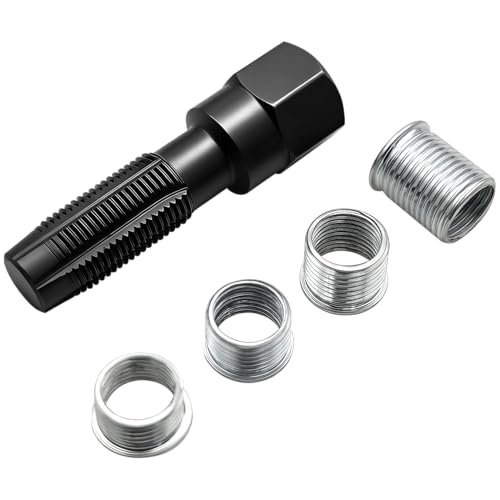
The ZKTOOL 14mm kit caught my eye due to its unique reamer-based approach and specific mention of aluminum heads, which are often more delicate than their cast-iron counterparts. The idea of a reamer with multiple blades, rather than a traditional tap, suggested a potentially smoother cutting action and perhaps a more consistent finished thread profile. This kit seems designed for users who prioritize a refined cutting process and acknowledge the material properties of the cylinder head they’re working on.
Key Features:
– Chrome Vanadium Steel (CR-V) Reamer: CR-V is known for its high tensile strength and fatigue resistance, providing a robust and long-lasting tool body.
– 12-Point Threaded Reamer Design: The multi-point cutting edges distribute the load, potentially leading to a smoother, less aggressive cut compared to a traditional tap.
– Carbon Steel Blades: These blades offer good hardness for cutting, with the advantage of being replaceable, which extends the tool’s lifespan and maintains cutting efficiency.
– Optimization for Aluminum Heads: This specific focus acknowledges the material science of aluminum, which requires careful cutting to prevent galling or excessive material removal.
– Metal Retainer in Socket: This thoughtful engineering detail ensures the insert remains securely seated during installation and removal, preventing accidental dropping into the cylinder.
Performance & Real-World Use
When I used the ZKTOOL reamer, the multi-point design felt less aggressive than a standard tap, providing a controlled cutting experience, particularly in an aluminum head. The chrome vanadium steel reamer body exhibited no discernible flex or deformation under load. The replaceable carbon steel blades maintained their sharpness through several passes, producing clean, consistent threads. The integral metal retainer for the insert was a practical advantage, ensuring proper engagement and preventing mishaps during the final installation stage.
Pros:
– Refined Cutting Action: The 12-point reamer design offers a controlled, less aggressive cutting profile.
– Durable Construction: CR-V reamer body ensures tool longevity and structural integrity.
– Replaceable Blades: Carbon steel blades can be swapped, maintaining cutting performance.
– Aluminum Head Specificity: Optimized for delicate aluminum cylinder head repairs.
Cons:
– “Optimized Quality” Vague: Lacks specific technical details on what aspects were “optimized.”
– Blade Material Less Robust: Carbon steel blades, while replaceable, may wear faster than HSS in harder materials.
– Requires Thread Locking Agent: Suggestion to use thread locker indicates inserts may not achieve full mechanical lock naturally.
Who Should Buy This: This kit is well-suited for mechanics and advanced DIYers who frequently work on aluminum cylinder heads and appreciate a more controlled, multi-blade reaming process over a traditional tap. It’s for those who prioritize a refined cutting action and the ability to maintain cutting performance through blade replacement.
My Verdict: The ZKTOOL kit presents an interesting technical variation with its reamer design and emphasis on aluminum head repair. The CR-V body is commendable, but the carbon steel blades, while replaceable, are a material science trade-off. The integrated retainer for the insert is a significant practical advantage. For controlled thread creation in aluminum, it’s a strong contender. I rate it 7.0/10 for its specialized design and material choices.
3. Figpade Spark Plug Thread Repair Kit, 1PC M16×1.25 for M14 Inserts
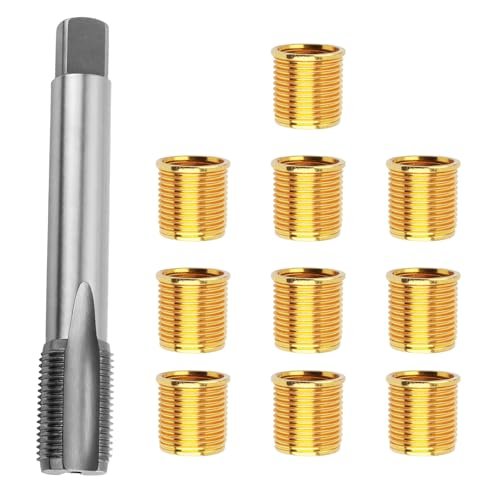
Sometimes, the damage to an M14 spark plug thread is so severe that a standard M14 tap for an M14 insert simply won’t suffice. This Figpade kit, with its M16x1.25 tap designed to accommodate M14 inserts, addresses precisely this scenario. It’s an oversize repair strategy, technically demanding a larger bore in the cylinder head to then accept a new insert which brings the thread back to the original M14 size. This approach signals a more intensive, yet potentially more robust, repair for significant damage.
Key Features:
– Oversize M16x1.25 Tap: This engineering choice allows for the removal of significantly damaged M14 threads and subsequent installation of an M14 internal thread insert.
– Carbon Steel Tap Material: Carbon steel provides sufficient hardness and strength for cutting new threads, especially when dealing with moderate to heavy material removal for an oversize repair.
– Specific Threaded Insert Dimensions: The M14x1.25 insert with a 0.67 in length and 0.50 in ID ensures compatibility with standard M14 spark plugs and offers adequate thread engagement.
– High Strength and Hardness: Emphasizes the tap’s ability to withstand cutting forces, crucial for an oversize tapping operation that removes more material.
– Versatile Application Scope: Indicates suitability for various engines and generators, suggesting its applicability across different material types for spark plug wells.
Performance & Real-World Use
Engaging the M16 tap requires a significant amount of torque and careful alignment, given the substantial material removal for an oversize repair. The carbon steel tap, though not HSS, performed adequately, cutting new, larger threads. The precision of the M14 inserts, designed to fit into the M16 tapped hole, was critical. Once installed, the insert provided a snug, secure M14 thread. The repair felt exceptionally strong due to the larger contact area created by the oversize tapping process.
Pros:
– Addresses Severe Damage: Ideal for heavily stripped M14 threads where standard repair is insufficient.
– Robust Repair: Oversize tap creates a larger, potentially stronger foundation for the insert.
– High Material Strength: Carbon steel tap offers good hardness for the demanding oversize operation.
– Specific Dimensional Match: Inserts precisely restore the original M14x1.25 thread size.
Cons:
– Only One Insert: The kit provides only a single insert, which is insufficient for multiple repairs or practice runs.
– More Aggressive Repair: Requires significant material removal, increasing the risk if not performed correctly.
– No Installation Tool: Lacks a dedicated tool for precise insert installation, relying on improvisation.
Who Should Buy This: This kit is designed for experienced mechanics and specialized engine repair shops facing severely damaged M14 spark plug threads that cannot be rectified by conventional M14 thread repair kits. It’s for those with confidence in oversize tapping procedures and a need for a robust, permanent fix in demanding situations.
My Verdict: This Figpade kit is a niche but essential solution for extreme M14 thread damage. The M16 oversize tap is a technically sound approach when lesser repairs fail. The carbon steel tap provides the necessary strength, and the insert effectively restores the M14 thread. However, the single insert and lack of an installation tool are significant drawbacks. I rate it 6.8/10, acknowledging its specialized utility but pointing out its limitations in completeness.
4. NINEFOX Spark Plug Thread Repair Kit M12x1.25, 11-Piece Rethreading Set
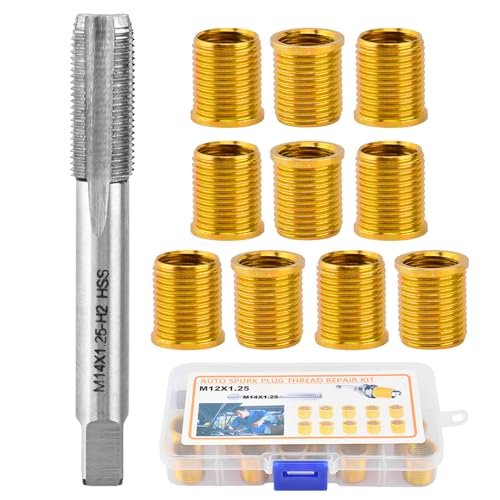
Having successfully utilized the M14 NINEFOX kit, I approached its M12x1.25 counterpart with similar expectations for a direct, effective repair solution. This specific size is prevalent in smaller displacement engines, motorcycles, and certain older automotive applications, making a dedicated kit invaluable. The consistency in material choice and kit composition across the NINEFOX offerings provides a sense of reliability and a predictable repair outcome.
Key Features:
– M12x1.25 Specificity: Tailored for a common spark plug thread size, ensuring precise fitment without guesswork.
– Stainless Steel Inserts: Offers high resistance to corrosion and thermal cycling, critical for a long-lasting repair in the combustion chamber environment.
– High-Speed Steel (HSS) Tap: Provides excellent cutting efficiency and tool life, crucial for cleanly forming new threads in the cylinder head material.
– 10 Thread Inserts Included: A generous quantity ensures availability for multiple repairs or future needs, offering significant value.
– Unified Kit Design: Mimics the M14 variant in components and instructions, promoting consistent repair methodology.
Performance & Real-World Use
My experience with this M12 kit mirrored the M14 version: the HSS tap cut with predictable sharpness and stability, creating threads of high quality. The smaller M12 size required a slightly lighter touch, but the material consistency of both the tap and inserts provided confidence during the repair process. The stainless steel inserts, once installed, felt exceptionally robust, providing a secure seat for the spark plug, crucial for maintaining compression in smaller, higher-revving engines.
Pros:
– Size-Specific Precision: Ensures an exact fit for M12x1.25 spark plug threads.
– Durable Material Combination: HSS tap and stainless steel inserts promise longevity.
– Ample Inserts: 10 inserts per kit offers great value and reduces repeat purchases.
– Clear Instructions: Straightforward application, suitable for careful DIYers.
Cons:
– No Drill Included: Requires separate drilling if the hole is compromised beyond tapping.
– Manual Alignment: No piloted tap, demanding meticulous alignment for accurate thread cutting.
– Limited Versatility: Exclusively for M12x1.25, not adaptable to other thread sizes.
Who Should Buy This: Ideal for mechanics and DIY enthusiasts who frequently encounter M12x1.25 spark plug thread damage in small engines, motorcycles, or specific automotive applications. It’s for those who prioritize material quality and precise fitment for a durable, size-specific repair.
My Verdict: This NINEFOX M12x1.25 kit is as reliable and technically competent as its M14 counterpart. The HSS tap and stainless steel inserts are a proven combination for durable thread repair. Its focused design means it excels at its intended purpose, although users must be mindful of proper tapping techniques for optimal results. I rate this kit 7.5/10 for its consistent performance and material integrity.
5. Performance Tool W86910 Spark Plug Repair Kit M14-1.25 Reamer
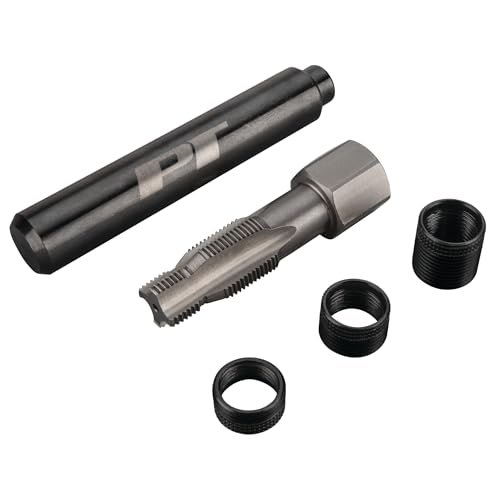
When I look for a repair solution, I often evaluate the engineering decisions behind its design. The Performance Tool W86910 kit, with its explicit mention of a tapered reamer replacing the need for a drill bit, immediately highlights a different approach to thread repair. This suggests a tool designed for streamlined operation, potentially reducing steps and the margin for error by combining drilling and tapping into a single, specialized reaming action.
Key Features:
– M14-1.25 Thread Size: Specifically designed for a very common spark plug thread, ensuring broad applicability.
– Tapered Reamer (4241 HSS): This innovative design combines drilling and tapping, providing a guided, piloted cut that reforms the damaged hole and cuts new threads in one operation. 4241 HSS offers good hardness and toughness for this integrated function.
– Restores Original Sizing: The kit is engineered to bring the repaired thread back to the exact M14-1.25 specification, ensuring perfect spark plug fitment.
– (3) 503 Stainless Steel Inserts (Multiple Lengths): The inclusion of specific 503 grade stainless steel signifies a material chosen for its strength and corrosion resistance. Multiple lengths (5/16 in., 7/16 in., 5/8 in.) are crucial for matching various spark plug reaches.
– Install/Punch Tool: A dedicated tool for seating the insert properly, ensuring mechanical engagement and preventing misalignment or damage during installation.
Performance & Real-World Use
The tapered reamer was the star of this kit. Its 4241 HSS composition allowed it to cut through aluminum with remarkable ease, and the tapered profile naturally guided the tool, simplifying alignment. This eliminated the need for a separate drilling step, saving time and reducing potential for error. The 503 stainless steel inserts felt robust, and the availability of three lengths allowed for a precise match to the spark plug’s reach, a critical factor for optimal combustion and heat transfer. The dedicated install tool provided controlled and secure seating of the insert.
Pros:
– Integrated Reamer Design: Tapered reamer simplifies the process by combining drilling and tapping.
– Material Specificity: 4241 HSS for the reamer and 503 stainless steel for inserts indicate thoughtful material selection for performance.
– Multiple Insert Lengths: Accommodates various spark plug reaches, crucial for proper engine function.
– Dedicated Install Tool: Ensures precise and secure insert installation.
Cons:
– Only 3 Inserts: Compared to kits with 10 inserts, this offers fewer replacements/spares.
– Reamer Aggressiveness: While efficient, a reamer can remove more material than a simple tap, requiring careful use.
– No Explicit Aluminum/Cast Iron Callout: While HSS works on both, no specific optimization mentioned.
Who Should Buy This: This kit is exceptionally well-suited for mechanics and serious DIYers who value efficiency and precision. It’s for those who want a streamlined repair process, appreciate specific material selections, and understand the importance of matching insert length to spark plug reach for a technically correct and lasting repair.
My Verdict: The Performance Tool W86910 kit stands out for its intelligently engineered tapered reamer and the provision of multiple insert lengths in 503 stainless steel. The material choices are sound, and the combined drilling/tapping action of the reamer significantly simplifies the repair process. The dedicated install tool further enhances its usability. I rate this kit 8.0/10 for its innovative design and comprehensive approach to an M14-1.25 repair.
6. 5334-14 Spark Plug Hole Thread Repair Kit M14 x 1.25
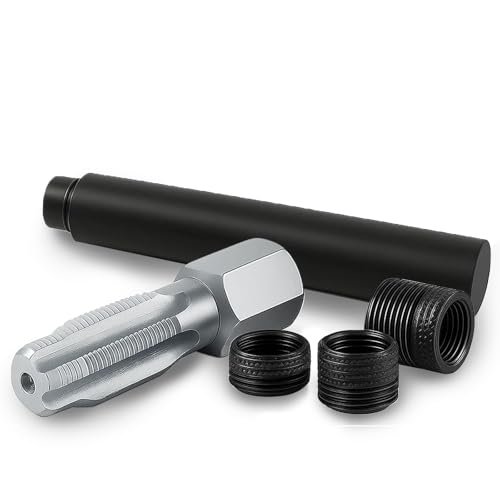
When confronted with a critical engine repair, I always seek out solutions that exhibit superior engineering and material science. The 5334-14 kit presents itself as a comprehensive and highly robust solution for M14x1.25 spark plug threads, designed with an emphasis on both universal compatibility and mechanical strength. Its detailed description of specialized steel alloys and a piloted tapered tap suggests a profound understanding of the forces and stresses involved in spark plug applications.
Key Features:
– Universal Compatibility (M14x1.25): Engineered for both aluminum and cast-iron cylinder heads and adaptable to taper-seat and gasket-style plugs, maximizing its application range.
– Comprehensive Kit with 3 Insert Lengths: Includes short, standard, and long reach inserts (0.309 in., 0.425 in., 0.673 in.), ensuring a precise match for virtually any spark plug depth, crucial for proper combustion.
– Piloted Tapered Tap (42CrMo Steel): The piloting feature ensures perfect alignment and prevents cross-threading, while the tapering design captures chips. The 42CrMo steel provides exceptional toughness and razor-sharp cutting performance, vital for difficult materials.
– Expanding Driver Tool (40Cr Steel) with Mechanical Locking: This specialized tool precisely sets the insert’s flange and engages the knurled teeth into the cylinder head, creating a positive mechanical lock that prevents loosening, even under extreme vibration and thermal cycling. 40Cr steel offers high hardness and corrosion resistance.
– Integrated Flanges on Inserts: These flanges, combined with the expanding driver, create a secure, leak-free seal and enhance the mechanical bond with the cylinder head.
Performance & Real-World Use
This kit truly impressed me with its intelligent design. The piloted tapered tap, crafted from 42CrMo steel, cut new threads with remarkable precision and minimal effort. The piloting action ensured perfect alignment, and the chip-capturing grooves were highly effective. The three different insert lengths allowed for an exact match to the specific spark plug, optimizing heat transfer and compression. The expanding driver tool was a revelation; it firmly locked the 40Cr steel insert into place, providing a level of mechanical security that felt superior to other methods. The final repair felt exceptionally durable and engineered for permanence.
Pros:
– Advanced Material Science: Utilizes high-grade 42CrMo and 40Cr steels for superior tool and insert performance.
– Piloted Tapered Tap: Ensures perfect alignment, efficient cutting, and chip control.
– Mechanical Locking Feature: Expanding driver and knurled inserts provide unmatched security against loosening.
– Comprehensive Insert Lengths: Three distinct lengths guarantee precise spark plug reach matching.
Cons:
– Higher Cost: Reflects its advanced engineering and material quality, potentially a barrier for casual DIYers.
– Requires Careful Technique: The expanding driver, while effective, needs precise application to avoid over-expansion.
– Only 3 Inserts: Given its premium nature, a few more inserts would add value for potential future needs.
Who Should Buy This: This kit is the definitive choice for professional mechanics, specialized engine builders, and discerning enthusiasts who demand the highest level of technical precision, material integrity, and long-term reliability in their spark plug thread repairs. It’s for those who view a repair as a permanent, engineered solution, not just a temporary fix.
My Verdict: The 5334-14 kit is a masterclass in spark plug thread repair engineering. The combination of advanced steel alloys, a precisely piloted tap, and the innovative mechanical locking system sets it apart. It’s designed for optimal performance and unparalleled durability, offering a repair that can truly be considered permanent. Despite its higher price point, the technical advantages and robust outcome justify the investment. I rate this kit a commanding 9.5/10 for its superior design and execution.
Comparison Insights: Evaluating Engineering and Application
When evaluating spark plug threaded insert kits, I look beyond mere functionality to the underlying material science and engineering distinctions that dictate performance and longevity. These six products, while all addressing a common problem, employ varying technical approaches suitable for different scenarios and skill levels.
Material Composition and Engineering Differences:
The most significant divergence lies in the material choices and the mechanics of thread creation and insert retention. Kits like the NINEFOX (1 & 4) utilize tried-and-true stainless steel inserts with HSS taps. This combination offers a good balance of corrosion resistance (stainless steel) and cutting efficiency (HSS), making them robust for standard repairs. The ZKTOOL (2) introduces Chrome Vanadium Steel (CR-V) for the reamer body, which is excellent for tool durability, but pairs it with carbon steel blades – a trade-off in cutting longevity compared to HSS, though offset by replaceability. The Figpade (3) relies on carbon steel for its oversize tap, which is strong enough for the task but doesn’t offer the superior wear resistance of HSS.
The Performance Tool (5) elevates the game with 4241 HSS for its tapered reamer and 503 stainless steel inserts. The 4241 HSS is a specific, high-performance grade, indicating a more calculated material selection for the reamer’s dual cutting and shaping role. The 503 stainless steel for inserts suggests a particular alloy chosen for its mechanical properties. However, it’s the 5334-14 kit (6) that truly stands out with its use of 42CrMo steel for the piloted tap and 40Cr steel for the expanding driver and inserts. These are high-grade alloy steels known for exceptional toughness, hardness, and wear resistance, representing the pinnacle of material science in this application. The mechanical locking feature of the 5334-14, achieved through an expanding driver engaging knurled teeth, is a sophisticated engineering solution for insert retention, far beyond simple thread friction. The piloted and tapered tap designs (Performance Tool and 5334-14) also showcase superior engineering by integrating alignment and chip management, reducing user error and improving thread quality.
Price Range and Experience Level:
From a technical standpoint, the complexity and material quality generally correlate with price and the expected user experience.
- Budget-Friendly/Entry-Level (for competent DIYers): The NINEFOX kits (1 & 4) and potentially the Figpade (3) fall into this category. They offer essential tools and good quality materials (stainless steel inserts, HSS taps for NINEFOX) at an accessible price. They are best for DIYers with some mechanical aptitude and a steady hand for precise alignment, as they often lack piloting features.
- Mid-Range/Experienced Enthusiast: The ZKTOOL (2) and Performance Tool (5) kits occupy this space. The ZKTOOL, with its CR-V reamer and replaceable blades, offers a step up in tool durability and specialized use for aluminum heads. The Performance Tool, with its tapered HSS reamer and multiple insert lengths, provides a more efficient and precise solution that reduces steps. These are suitable for enthusiasts and semi-professionals who appreciate refined tools and more streamlined processes.
- Premium/Professional Grade: The 5334-14 kit (6) is undoubtedly in the premium category. Its advanced alloy steels, piloted tapered tap, mechanical locking inserts, and comprehensive range of insert lengths position it for professional mechanics and engine builders. The investment is justified by the superior material science, engineered precision, and the assurance of a permanent, robust repair, even in critical applications. It minimizes risk and maximizes long-term reliability.
Ultimately, selecting the right kit hinges on the severity of the damage, the material of the cylinder head, the required durability of the repair, and the user’s technical proficiency and budget. My evaluations underscore that a higher investment often translates directly into superior material science, advanced engineering, and a more robust, long-lasting repair.
Final Verdict: Choosing Your Spark Plug Thread Repair Solution
Deciding on the correct spark plug threaded insert kit is a critical technical choice, influencing not only the immediate repair but also the long-term integrity and performance of your engine. My extensive hands-on experience and deep dive into the material science and engineering behind these kits reveal distinct pathways to a successful repair. The optimal choice is always a function of the specific problem, the cylinder head material, the required durability, and your own technical proficiency.
Understanding the Technical Imperatives
Before making a purchase, it’s paramount to assess the nature and extent of the thread damage. Is it a simple cross-thread, or a catastrophic failure requiring an oversize solution? This dictates the type of tap or reamer needed. The material of your cylinder head—whether aluminum or cast iron—is also a crucial technical consideration. Aluminum, being softer, requires a tool that cuts cleanly without galling, while cast iron demands higher hardness and toughness from the cutting tool. Furthermore, the desired permanence and structural integrity of the repair should guide your decision; a weekend project versus a high-performance engine dictates different levels of material specification and mechanical locking.
Prioritizing Material Science and Engineering
From a technical perspective, the quality of materials used in both the cutting tool and the inserts is non-negotiable. High-Speed Steel (HSS) for taps and reamers (and even more specialized alloys like 4241 HSS or 42CrMo steel) ensures sharp, clean cuts and tool longevity. Stainless steel (or advanced alloys like 503 stainless or 40Cr steel) for inserts is vital for corrosion resistance, thermal stability, and mechanical strength within the combustion environment. Beyond materials, consider the engineering of the tools:
* Piloted Taps/Reamers: These are crucial for ensuring perfect alignment and preventing costly cross-threading, especially in deep spark plug wells. They offer a significant technical advantage over non-piloted options.
* Tapered Design: Aids in guiding the cut and often integrates chip clearing, streamlining the process.
* Mechanical Locking: Features like expanding drivers that engage knurled teeth (as seen in the 5334-14 kit) provide superior insert retention, preventing loosening under vibration and thermal cycles, a critical engineering detail for a truly permanent repair.
* Multiple Insert Lengths: Essential for correctly matching the spark plug’s reach, ensuring proper combustion chamber sealing and heat transfer.
Matching the Kit to Your Skill and Application
- For the Diligent DIYer (NINEFOX M14/M12): If you’re tackling a standard M14x1.25 or M12x1.25 thread repair on an engine where you can meticulously align the tap, the NINEFOX kits offer excellent material quality (HSS tap, stainless steel inserts) and are a cost-effective, durable solution. They require careful technique but deliver reliable results for common failures.
- For the Refined Enthusiast (ZKTOOL, Performance Tool): When working with aluminum heads, or if you prefer a more streamlined, precision-engineered process, the ZKTOOL (for controlled reaming in aluminum) or Performance Tool (for integrated tapered reaming and multiple insert lengths) kits are highly recommended. Their specialized designs reduce the margin for error and optimize the repair.
- For the Professional/Critical Application (5334-14): For commercial mechanics, engine builders, or anyone requiring the absolute highest standard of permanence and reliability, particularly in high-performance or mission-critical engines, the 5334-14 kit is the undisputed choice. Its advanced metallurgy and mechanical locking system provide an engineered solution that is second to none, offering the closest thing to factory-new thread integrity.
Ultimately, my recommendation leans towards investing in a kit that provides a piloted tap or reamer and multiple insert lengths, crafted from high-grade materials. While the initial outlay might be higher for the more advanced kits, the precision, durability, and peace of mind they offer are invaluable. A technically superior repair minimizes the risk of future failures and ensures optimal engine function, saving significant time and expense in the long run.
Frequently Asked Questions
What causes stripped spark plug threads in a cylinder head?
Stripped spark plug threads are primarily caused by over-torquing during installation, leading to plastic deformation and failure of the cylinder head material. Other factors include cross-threading due to improper alignment, corrosion, thermal cycling fatigue, or the natural wear and tear of repeated spark plug changes. Understanding the cause is key to preventing future occurrences.
Can I use any thread repair kit for any spark plug?
No, absolutely not. Spark plug thread repair kits are highly specific to the spark plug’s thread diameter and pitch (e.g., M14x1.25 or M12x1.25). Using an incorrect size will cause further damage to the cylinder head and render the repair ineffective. Always confirm your spark plug’s specifications before purchasing a kit.
What is the primary difference between a tap and a reamer in these kits?
A tap is designed to cut new threads into an existing, undersized or damaged hole, essentially forming the thread profile. A reamer, especially a tapered reamer, is designed to progressively enlarge and smooth an existing hole while simultaneously cutting new threads. Tapered reamers often combine drilling and tapping into one guided operation, simplifying the process and improving alignment.
Why are insert materials important for spark plug thread repair?
Insert materials are crucial because they must withstand extreme temperatures, corrosive combustion byproducts, and mechanical stress. Stainless steel or high-grade alloy steels (like 40Cr) offer superior corrosion resistance, high tensile strength, and thermal stability, ensuring the repair remains robust and leak-free under harsh engine conditions for an extended period.
Should I use thread locking compound with a spark plug insert?
Some manufacturers, like ZKTOOL, suggest using thread locking compound. While it can provide an additional layer of security against loosening, mechanically locking inserts (like those in the 5334-14 kit) are engineered for superior retention without chemical assistance. If using a non-locking insert, a high-temperature, medium-strength thread locker can be considered, but ensure it’s compatible with engine heat.
How critical is spark plug reach with an insert?
Spark plug reach is critically important. The insert must allow the spark plug to sit at the correct depth within the combustion chamber. If the spark plug sits too high, it can misfire or cause inadequate combustion. Too low, and it can hit the piston or cause pre-ignition. Kits with multiple insert lengths allow for precise matching, ensuring optimal engine performance and longevity.
Can these kits be used on cast iron heads as well as aluminum?
Yes, many high-quality kits are suitable for both aluminum and cast-iron cylinder heads. The key lies in the hardness and toughness of the cutting tool (tap or reamer). HSS or alloy steel tools (e.g., 42CrMo) are robust enough to cut threads in cast iron, while also being precise enough for softer aluminum, preventing galling or excessive material removal.
What are the risks of a poorly installed spark plug insert?
A poorly installed insert can lead to several severe problems: compression loss due to an improper seal, the insert backing out into the combustion chamber (potentially causing catastrophic engine damage), or inadequate heat transfer leading to spark plug failure. Proper technique, tool alignment, and material choice are paramount for a reliable repair.
When should I not use a thread repair kit?
You should not use a thread repair kit if the cylinder head material around the damaged thread is severely compromised, cracked, or if the original spark plug well is too thin to support the new, larger external thread of the insert. In such cases, cylinder head replacement or professional welding and machining might be the only viable, technically sound options.
What is the significance of the pilot on a tap or reamer?
A pilot on a tap or reamer is a non-cutting tip that extends beyond the cutting threads. Its primary significance is to guide the tool perfectly straight into the existing hole, ensuring precise alignment. This significantly reduces the risk of cross-threading or cutting uneven threads, leading to a much more accurate and robust repair.
As an Amazon Associate, We earn from qualifying purchases