
I used to dread cutting firewood.
It was a crisp Saturday morning last fall. I was in the backyard, trying to buck a fallen oak limb. My saw was roaring, the engine was screaming, but I wasn’t getting anywhere. I was pushing down hard, sweating through my flannel shirt, and creating a cloud of fine dust.
That was my wake-up call. I realized the problem wasn’t the wood. It wasn’t the saw. It was me. I was forcing a dull chain to do a sharp chain’s job.
If you are fighting your saw, stop. I learned the hard way that a sharp chain feeds itself into the wood. You shouldn’t have to push. Here is how I learned to sharpen my chainsaw chain, and how you can do it too.
How to Tell Your Chain is Dull
Before I grab my files, I look at the debris. This is the biggest tell.
- Sharp Chain: It spits out big, chunky wood chips.
- Dull Chain: It makes fine, powdery sawdust.
On that Saturday, I was making powder. I could also smell burning wood. That friction creates heat, which ruins your bar and chain. I knew I had to fix it right then.
My Simple Sharpening Kit
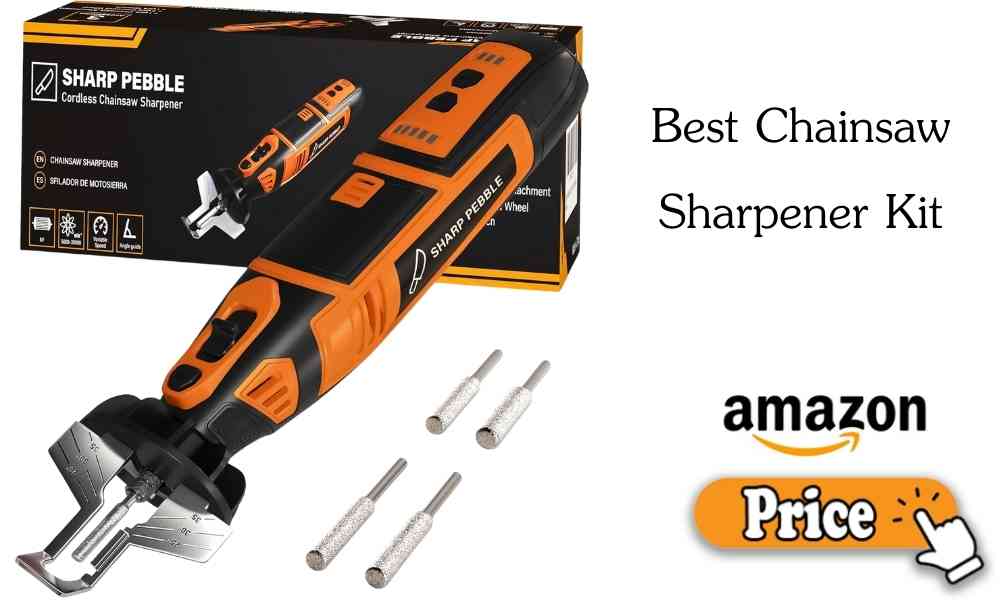
I don’t use fancy electric grinders. I prefer hand filing. It is quiet, cheap, and I can do it right on the tailgate of my truck.
Here is what I keep in my tool pouch:
- Round File with a Guide: The guide is key. It holds the file at the perfect depth.
- Flat File: This is for the depth gauges (I’ll explain those later).
- Stump Vise: Keeps the saw steady.
- A Sharpie Marker: My secret weapon.
Choosing the Right File Size
I made the mistake of buying the wrong file once. It didn’t fit the tooth. I had to look up my chain’s “pitch” to get it right. Here is a quick cheat sheet I made to help you match your saw.
| Chain Pitch | Common File Size | Best For… |
| 3/8″ LP (Low Profile) | 5/32″ (4.0 mm) | Small yard saws & pole saws |
| .325″ | 3/16″ (4.8 mm) | Farm & ranch saws |
| 3/8″ (Standard) | 7/32″ (5.2 mm) | Big pro saws |
Step 1: Lock It Down
You can’t file a moving target. I clamped my saw bar into a vise. If I am in the woods, I cut a slot in a stump and wedge the bar in. I also tighten the chain tension just a bit. This keeps the teeth from wobbling while I work.
Safety Note: I always wear my heavy work gloves. Those teeth can snag your skin even when they are dull.
Step 2: The Sharpie Trick
I used to lose my place. I would sharpen the same tooth twice or miss one entirely.
Now, I take a black Sharpie and mark the top of the first tooth I start on. This gives me a clear start and stop point. It sounds simple, but it saves so much guessing.
Step 3: The Filing Motion
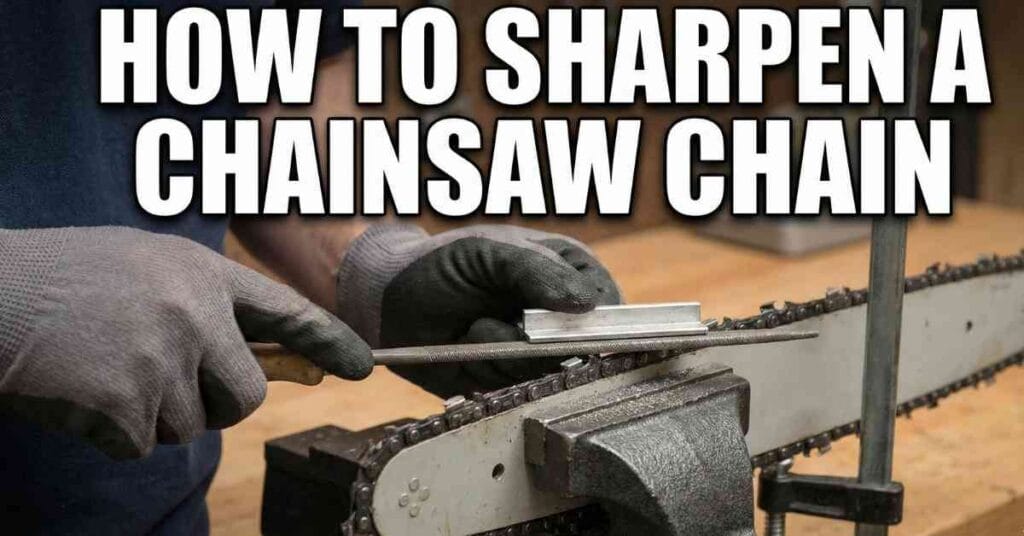
I line up my file guide with the bar. most chains need a 30-degree angle. The guide usually has lines on it to help you aim.
I use two hands. One guides the file, the other pushes.
- I push from the inside of the tooth to the outside.
- I use a smooth, steady stroke.
- I do not drag the file back. I lift it up on the return.
The sound is satisfying. It’s a metallic rasp. If it slides without cutting, my file is clogged or worn out.
I count my strokes. If I do five strokes on the first tooth, I do five on all of them. This keeps the cutter lengths even so the saw cuts straight.
Step 4: Don’t Forget the Rakers
After I sharpened the cutting teeth, I thought I was done. But the saw still didn’t cut deep. I missed the “rakers.”
These are the little metal bumps in front of the sharp tooth. They control how big of a bite the saw takes. If they are too high, the sharp tooth can’t reach the wood.
I use a little metal gauge tool. If the raker pokes through the slot, I file it down with my flat file until it is level. This was the missing piece of the puzzle for me.
The Payoff
After about ten minutes of filing, I went back to that oak log.
I pulled the starter cord. The saw roared to life. I touched the bar to the wood and revved it up. The difference was night and day. I didn’t push down at all. The saw pulled itself into the log, throwing huge chips of oak onto my boots.
It felt safer, smoother, and surprisingly, it was fun.
Taking ten minutes to sharpen your chain saves you hours of work. Plus, there is a real pride in seeing those big chips fly.
FAQs – How to Sharpen a Chainsaw Chain
How often should I sharpen my chainsaw chain?
It depends on how much you cut. If you hit dirt, sharpen it now. For clean wood, try to sharpen when you fill the gas tank. This keeps your cuts safe and fast.
How do I know if my chainsaw chain is dull?
Look at the wood waste. A sharp chain makes big chips. A dull chain makes fine dust. If you must push hard to cut, you need to sharpen the chain right away.
What size file do I need for my saw?
Most small saws need a 5/32 inch file. Big saws use a 3/16 inch file. Check your bar or manual to find the pitch. This helps you pick the right tool size
Should the chain be tight when I sharpen it?
Yes, make it tight. A loose chain moves too much. Tighten it well so the teeth stay still. Loosen it back up to the right spot before you cut wood again.
When should I throw away an old chain?
Look for the small line on the metal tooth. Stop filing when you reach it. If teeth break off or get too small, buy a new chain to stay safe and quick.
As an Amazon Associate, We earn from qualifying purchases