
I still remember the first time I tried to replace a kitchen faucet. I thought it would be a quick Saturday job. I was wrong. I spent an hour lying on my back, jammed inside a dark cabinet, trying to reach a nut I couldn’t even see. My knuckles were scraped, and my neck hurt.
That’s when I finally drove to the store and bought a basin wrench. It looks like a strange, alien tool, but it saved my day. If you are staring at that long metal stick and wondering what to do, don’t worry. I have been there. Here is exactly how to use a basin wrench, based on my own trial and error.

Table of Contents
What Exactly Is This Thing?
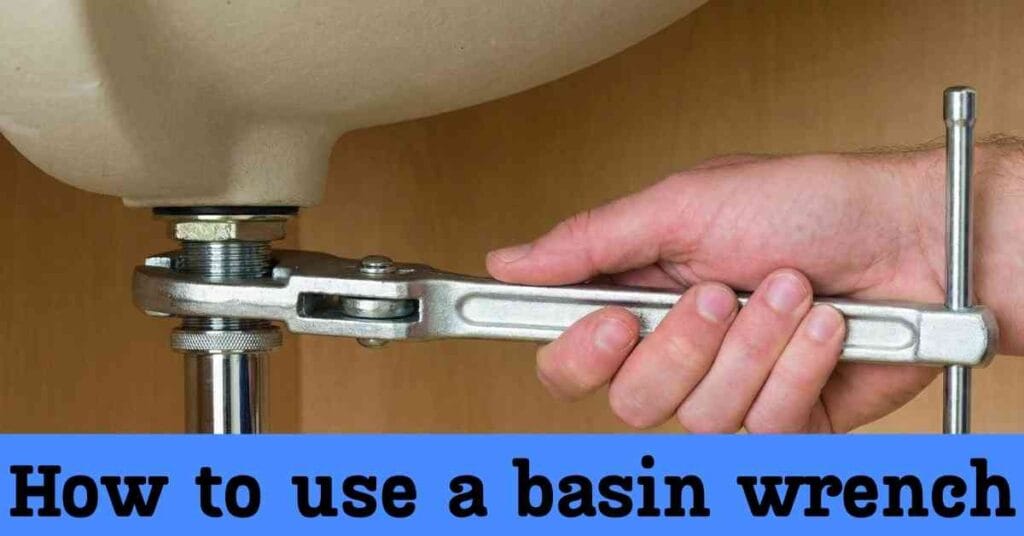
When I first held it, the basin wrench felt awkward. It has a long shaft and a spring-loaded claw at the top that flops around. It doesn’t look like a normal wrench. But that “floppy” head is the secret. It pivots so you can reach up behind the sink bowl where your hands just won’t fit.
The bottom has a T-bar handle. This gives you the leverage you need to turn tight nuts without banging your hands against the pipes. It is designed for one specific job: reaching those impossible mounting nuts that hold your faucet in place.
Step 1: Get Your Angles Right
Before you crawl under the sink, practice this part in the open. The head of the wrench pivots on a hinge. You need to tilt it 90 degrees so it looks perpendicular to the shaft. It should basically look like the letter “T” or an “L.”
This allows the long handle to hang down straight while the jaw grips the nut horizontally. I learned this the hard way by trying to jam it up there straight. Trust me, flip the head first. It makes fitting it into that cramped space much easier.

Step 2: The “Flip” (The Most Important Part)
Here is the trick that confused me at first. The jaw is spring-loaded and has teeth, but it only grips in one direction. You have to flip the head over depending on what you want to do.
If you are loosening a nut (turning left), the opening of the claw needs to face the right. If you are tightening (turning right), you flip it 180 degrees so the opening faces the left.
Test it on your finger or a loose nut before you go under the sink. You want to feel the teeth “bite” when you turn it the way you intend to go. If it slips, flip the head over.
Step 3: The Reach and Grip
Now comes the fun part. Clear out the cleaning supplies from under the sink. Lay down an old towel—it’s going to be dusty down there. Slide the wrench up behind the basin.
You might not be able to see the nut, so you have to use your sense of touch. Feel for the mounting nut on the threaded tailpiece. Open the jaw with your fingers and snap it around the nut.
Let go of the head. The spring should hold it in place. I usually give it a little wiggle to make sure the teeth have a good grip on the corners of the nut.
Step 4: The Twist
Once the jaw is locked on, move your hand down to the T-handle at the bottom. Use both hands if you can. Turn the bar to loosen the nut. You should feel the jaw digging in.
If the nut is stuck (and they usually are), don’t panic. You can slide the T-bar all the way to one side. This creates a longer lever, giving you more torque.
On my first project, the nut was rusted solid. I had to spray some penetrating oil up there and wait ten minutes. After that, the basin wrench broke it loose with a satisfying creak.
READ MORE: How to Use a Socket Wrench
Why I Keep This Tool Around
I don’t use my basin wrench often. In fact, it sits in the bottom of my toolbox for months at a time. But on the rare occasions I need to swap a faucet or tighten a loose handle, it is the only tool that works.
Learning how to use a basin wrench turned a nightmare plumbing job into a twenty-minute fix. It’s not fancy, but it gets the job done. And honestly, saving the cost of a plumber feels pretty good, too.
Quick Tips for Success
- Wear safety glasses: Rust and dust will fall on your face.
- Use a light: A headlamp is a lifesaver in dark cabinets.
- Be patient: It can be tricky to get the jaw seated blindly.
- Righty-Tighty: Remember, looking up from below reverses your perspective.
FAQs – How to Use a Basin Wrench
What is a basin wrench used for?
A basin wrench fits in tight spots under a sink. It grips the mounting nuts that hold a faucet. It is the best tool to reach up high where hands can not fit well.
How do you turn a basin wrench?
Use the T-bar handle at the bottom to turn it. This bar gives a strong grip. If the nut is stuck, slide the bar to the side to get more power to loosen it fast.
Which way do I flip the claw?
Flip the head to change the grip direction. Face the claw opening right to loosen a nut. Face it left to tighten. Test the bite on your hand first to be sure.
Can I use other tools instead?
A basin wrench is best for tight spaces. Regular pliers rarely fit behind a deep sink. This tool reaches the faucet mounting nuts that other tools can not reach.
Why does the wrench head wiggle?
The head pivots to fit odd angles. It bends to reach up high. This lets the claw grip the nut flat while the long handle stays straight down for you to turn.
As an Amazon Associate, We earn from qualifying purchases