
I still remember the smell of burning varnish. It was a rainy Saturday afternoon in my garage. I was trying to fix a drone controller on my dining room table. A tiny blob of hot solder fell off my iron. It rolled right onto the nice oak finish.
My heart sank. That mark is still there today. That was the moment I realized I needed a proper workspace. I couldn’t keep using flattened cardboard boxes. I needed the best soldering mats for electronics to save my furniture and my sanity.
Finding the right gear in the USA can be tricky. There are so many options online. I went through a few different types before I found what actually works. Here is what I learned from my own trial and error.
Table of Contents
Why You Can’t Just Use Cardboard
I used to think a specialized mat was a waste of money. I figured a piece of wood or a magazine was fine. I was wrong. The biggest issue isn’t just the heat; it is organization.
When you take apart a phone or a game console, the screws are tiny. I mean, really tiny. On a flat surface, they roll away. I once spent an hour looking for a screw in my carpet. It was maddening.
A good soldering mat does two things. It protects your table from burns, and it keeps your parts safe. It changes your whole workflow. You stop worrying about the mess and focus on the repair.
My Go-To: The Silicone Organizer Mat
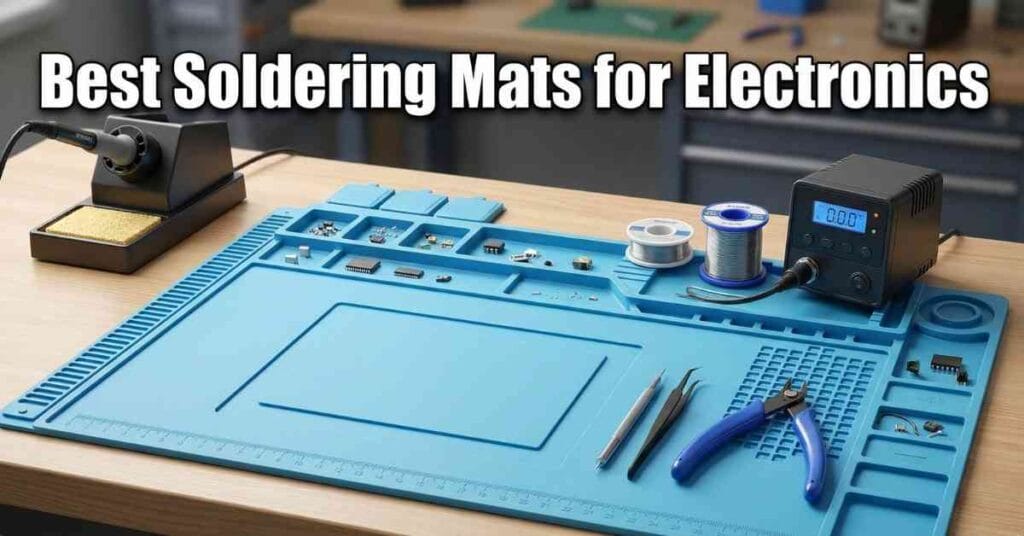
The first real mat I bought was a blue silicone one. You have probably seen them. They are everywhere. Mine is a Kaisi, but the brand matters less than the material.
Why I love it:
- Heat Proof: I can touch my hot iron tip to it, and it won’t melt.
- Pockets: It has little notches for screws. I sort them by step.
- Grip: It sticks to the table. Nothing slides around.
The sensory feel is great. It is soft and rubbery. When you drop a small part, it lands silently and stays put. It doesn’t bounce off into the void.
The downside: It is a dust magnet. If you have pets like I do, cat hair loves this thing. Also, standard silicone isn’t truly anti-static. It is fine for simple stuff, but be careful with sensitive chips.
The Pro Choice: ESD Safety Mats
After a year of hobby work, I tried building a custom keyboard. I was working in the dead of winter here in the Midwest. The air was dry, and static electricity was everywhere.
I reached for a chip and felt a zap. I fried the component before I even soldered it. That is when I bought a Bertech ESD mat. These are different. They aren’t soft or squishy.
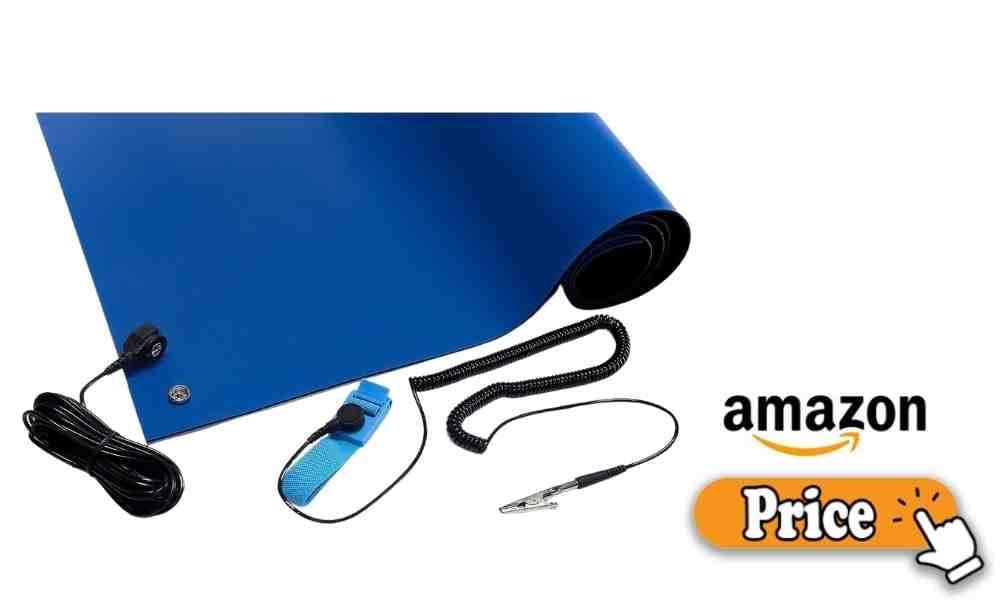
They feel like dense, industrial rubber. They come with a little wrist strap that plugs into the wall ground. In the USA, where our homes have three-prong grounded outlets, this is easy to set up.
Who is this for? If you work on expensive computer parts, get this. It drains the static charge from your body. It doesn’t have pockets for screws, though. It is just a flat, safe surface.
Comparing the Two Experiences: Bertech vs Kaisi Soldering Mat
I actually keep both now. It sounds excessive, but hear me out. For 90% of my jobs, I use the blue silicone mat. It is just so handy for holding screws.
I pull out the ESD mat only for sensitive work. If I am handling a naked motherboard or a GPU, I don’t take risks. I lay the flat ESD mat down first.
Think of it this way. The silicone mat is for mechanical work. It holds things. The ESD mat is for electrical safety. It protects the invisible parts inside the chips.
Final Thoughts
If you are just starting out, grab the blue silicone mat with the pockets. It is cheap and saves you from losing screws. It is the single best upgrade for a messy desk.
If you are setting up a serious lab in your basement, invest in the ESD kit. The peace of mind is worth it. Plus, it looks very professional.
Don’t wait until you burn a hole in your table like I did. A twenty-dollar mat is much cheaper than refinishing an oak table. Trust me on that one.
FAQs – Best Soldering Mats for Electronics
What is the best material for soldering mats?
Silicone is the best choice for most tasks. It is heat resistant and keeps parts safe. It protects your desk from hot tools and accidental burns very well.
Do I really need an ESD safe mat for repairs?
For basic wires, no. For computer chips, yes. An ESD safe mat stops static shock. It keeps sensitive electronics safe from hidden damage while you work.
Can a silicone soldering mat melt?
High quality mats handle heat well. They withstand up to 932°F easily. Your hot iron tip will not melt them. They are tough and protect your work area.
How do I clean my soldering mat?
Use tape to pick up trash. For sticky spots, use soap and water. Isopropyl alcohol cleans flux well. A clean mat helps you see small parts much better.
What size soldering mat should I buy?
Get a large mat if you have space. It gives you room to work. A standard 18-inch mat is great. It holds tools and electronics without feeling tight.
As an Amazon Associate, We earn from qualifying purchases