
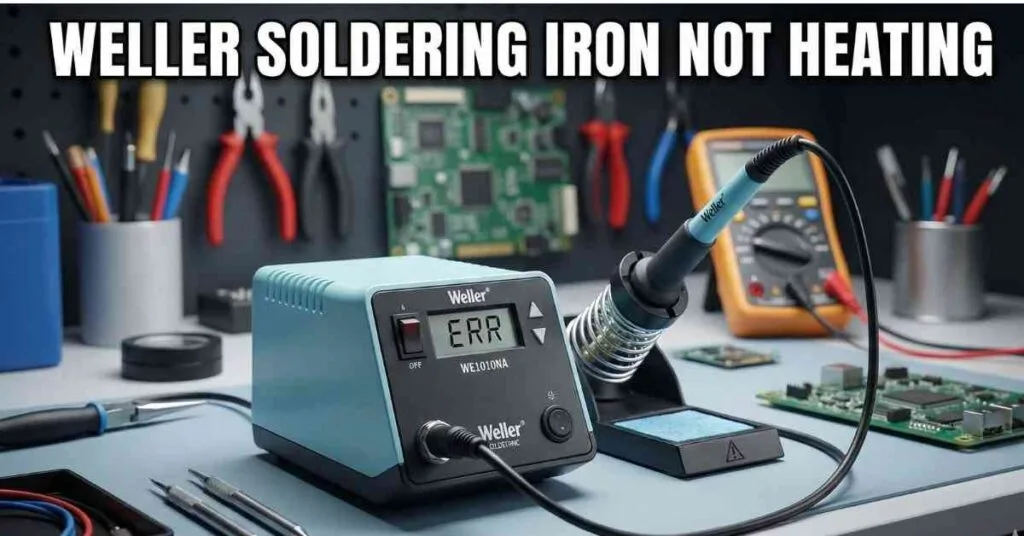
This usually happens at the worst time. It is late in the evening. Half a project is done. The solder cools faster than my patience. I am left with cold parts.
You rely on your tools. A Weller soldering iron is a great tool. But even the best tools stop working. We need to find out why it is cold.
When Your Weller Soldering Iron Suddenly Stops Heating
It feels like a big problem. You might think the iron is broken for good. But often, it is a small fix. I have seen this many times in my shop.
We need to stay calm. Do not throw it away yet. We can likely fix it. Let’s look at the simple things first.
Common first reactions (and why they’re often wrong)
My first thought is always the same. I assume the iron is dead. I start to look for a new one online. This is usually a waste of money.
I often blame the tip first. I do this without checking the power. I turn the dial up high. But that does not help a cold iron.
We rush to fix it fast. But rushing causes mistakes. We miss the easy answers. We need to slow down and check the basics.
Basic Power Checks Most People Skip
I start with the boring stuff. I do this before I grab any tools. It saves me time. I admit, I often overlook the easy fixes.
A Weller soldering iron needs good power. Without it, it will not heat up. So, we must check the source first.
Wall outlet and power strip issues
Test the wall outlet with a lamp. Or use a drill. If the tool works, the outlet is fine. If not, check your breaker panel.
In the U.S., GFCI outlets trip easily. These are common in garages. A trip cuts the power fast. Reset the button and try again.
Cold garages can be tough on power. Loose plugs can fail in the cold. Check that the fit is tight. A loose plug means no heat.
Cord and plug inspection
Look at the cord near the handle. Heat can cause cracks here. This is a stress point. Wires can break inside the rubber.
Bend the cord gently. Watch for breaks. If the iron flickers on, the wire is broken. This happens with old cords.
Smell the plug end. A faint plastic smell is a clue. It means a wire is hot. This is bad and needs a fix.
Tip Problems That Look Like Heating Failure
A Weller can be hot but useless. The heat must get to the tip. If it does not, the solder stays solid. This confuses many people.
The iron is making heat. But the tip is not taking it. The bridge is out. We need to fix the connection.
Tip not seated correctly
The tip must fit tight. Electrical contact needs pressure. If it is loose, heat will not flow. Push it all the way in.
Dirt blocks the heat. Oxidation acts like a shield. It keeps the heat in the iron. The tip stays cold.
Check your tip model. Wrong tips do not fit right. Each Weller model has a specific size. A wrong fit means no heat.
Tip oxidation and carbon buildup
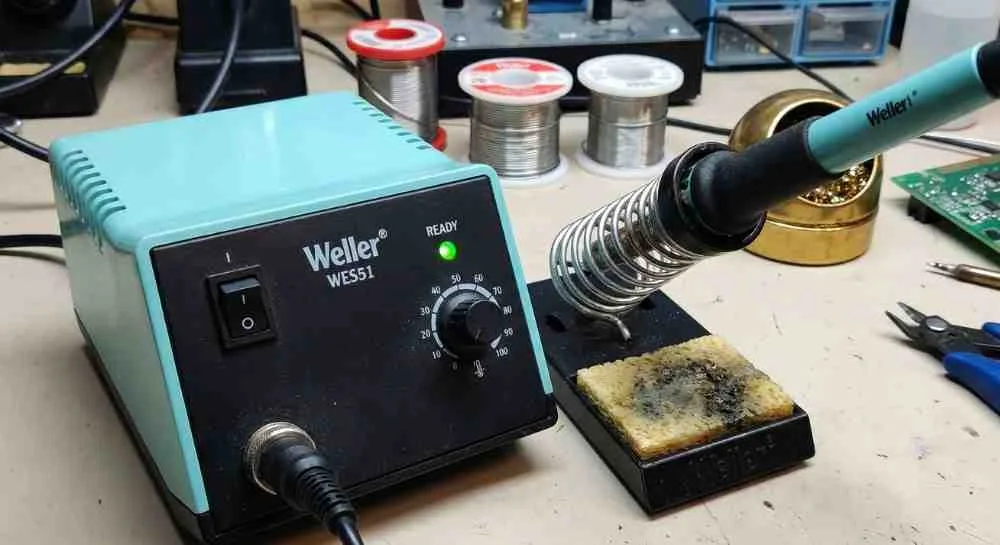
Look at the tip. Is it dull gray? It should be shiny. A gray tip is dirty. Solder will not stick to it.
The iron feels hot. You can feel the heat near it. But the solder just balls up. It behaves like it is cold.
Clean the tip often. Use brass wool. Keep it shiny and bright. This helps the heat move to your work.
Heating Element Failure
This happens to old Wellers. It is common if you use them hard. Or if you store them hot. The part inside just gives up.
The element creates the heat. If it breaks, the game is over. You have a cold stick. We need to check if it is dead.
Signs the element is burned out
The power light is on. But there is zero heat. The iron stays room temperature. This is a clear sign.
Wait five minutes. Feel for any warmth. If it is stone cold, the element is gone. Power is there, but heat is not.
A good iron cools down. But a dead one never heats up. It feels lifeless in your hand. This is the main part to check.
Replaceable vs non-replaceable elements
Some irons are one piece. You cannot change the heater. But many Weller soldering stations let you swap it. This is a nice feature.
Check the price first. In the U.S., parts can be costly. A new element might be forty dollars. A new iron might be sixty.
Do the math. If the part is costly, buy a new iron. It comes with a warranty. This is often the smarter choice.
Weller Soldering Stations Not Heating Properly
Stations are different. They fail in quiet ways. The base might be fine. But the hand piece is cold. It is tricky.
The station talks to the iron. If they stop talking, heat stops. We need to check the controls.
Temperature control and sensor issues
Dials can get old. They drift over time. You set it to high. But it stays low. The dial lies to you.
Digital screens can lie too. The sensor might be bad. It says it is hot. But the tip is cold. The brain is confused.
If the sensor fails, the heater stops. It thinks it is too hot. So it turns off. This is a safety feature gone wrong.
Sleep mode and auto shutoff confusion
New Weller stations have sleep modes. They turn off to save power. You might think it is broken. But it is just napping.
This happens in shared shops. Someone walks away. The iron cools down. You pick it up and it is cold.
Just wake it up. Move the handle. Or press a button. It should heat up fast. It was just saving energy.
Internal Wiring Problems Inside the Handle
This one is spooky. It works for a bit. Then it stops. Then it works again. It drives you crazy.
The wire breaks inside. It touches, then it pulls away. This happens when you move. It is very annoying.
Intermittent heating symptoms
Heat cuts out when you move. You twist the cord and it dies. This makes work hard. You cannot trust the tool.
It works at one angle. You hold it just right. Then you move and it cools. The break is likely near the handle.
This is common. The cord bends here the most. The copper wire snaps inside. But the rubber looks fine.
Safety and repair reality
Be careful with wires. Bad cords can spark. OSHA rules exist for a reason. Fire is a real risk in a shop.
Opening the handle is risky. The wires are small. If you are not sure, stop. Do not try to tape it up.
Think about safety. A bad fix can cause a fire. If the cord is melted, toss it. Buy a new handle assembly.
Step-by-Step Troubleshooting Checklist I Actually Use
I use this list every time. It keeps me on track. I learned this the hard way. It saves me from guessing.
- Test the outlet with a lamp.
- Check the cord for cuts.
- Clean and reseat the tip.
- Try a new tip if you have one.
- Let it cool, then turn it on.
- Look at the lights on the station.
- Wiggle the cord gently.
Repair or Replace? Making the Call Honestly
Sometimes we fix it. Sometimes we buy new. It depends on the cost. And how much you love the tool.
I love my old tools. But I also need to work. If a fix is easy, I do it. If not, I move on.
When repair makes sense
The element is cheap. You can buy the part easily. It screws right in. This is a good repair to do.
The cord is bad near the plug. You can put on a new plug. This costs a few dollars. It is quick and safe.
The tip is just dirty. This is free to fix. Just clean it well. The iron will work like new.
When replacement is smarter
The circuit board is dead. These are hard to find. They cost a lot too. A new station is a better deal.
Parts cost too much. If parts are close to a new price, buy new. You get a fresh start. And a new warranty.
You use it every day. Contractors need reliable tools. Do not fight a bad tool. Just get a new one and get to work.
Common Replacement Parts People Search For
People want to fix their tools. I see these searches a lot. It is good to know what is available.
- Weller heating element replacement
- Weller soldering iron tips
- Weller handpiece assembly
- Weller power cord
Why Weller Irons Fail Differently Than Cheaper Brands
Cheap tools burn out fast. Weller irons age slowly. They are built well. But they still wear out.
Other tools have motors. Motors die loud. Soldering irons die quiet. The heat just fades away.
Heat cycles vs motor wear
Heat expands metal. Cooling shrinks it. This happens every time you use it. It stresses the internal parts.
We leave them on too long. In U.S. garages, we get distracted. The iron sits hot for hours. This kills the life of the tool.
Turn it off when done. Do not leave it cooking. This saves the element. And it keeps your shop safe.
FAQs – Weller Soldering Iron Not Heating
Why is my Weller soldering iron not heating at all?
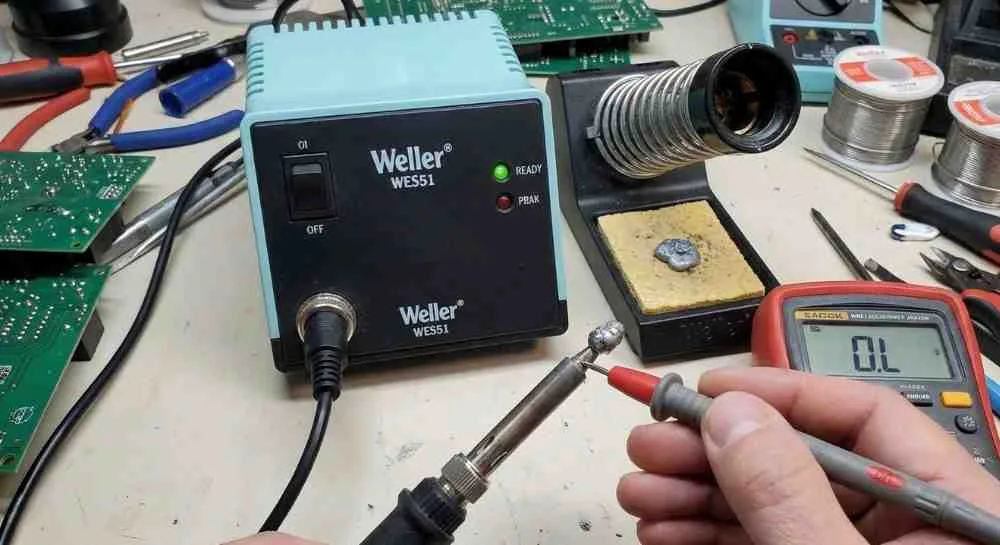
A Weller soldering iron not heating often means the heater is open or the cable is damaged. Check both with a quick meter test. You can spot the issue fast.
What should I check first when my Weller iron stays cold?
Start with the basics. Check the outlet, the station light, and the temp knob. Small settings can stop heat and make the iron feel dead.
Can a bad cable cause my Weller soldering iron to stop heating?
Yes, a bad cable can cut heat in seconds. Bend the cable gently to see if power drops. A break inside the wire is a common cause.
Why does my Weller iron heat for a second and then stop?
This happens when the sensor fails. The station thinks the tip is hot and cuts power. A quick sensor test can confirm the problem.
How do I know if the station is the reason my Weller iron is not heating?
Check for output at the iron port. If you see no voltage, the station is at fault. A fuse or board issue may be the cause.
As an Amazon Associate, We earn from qualifying purchases