
Look, my backyard once resembled a jungle, and my old trimmer was useless. Finding the best weed eater for thick brush became my absolute mission. I dove deep into specifications, motor types, blade configurations, and put numerous machines through rigorous, hands-on testing. I’ve slogged through dense weeds, gnarly brambles, and even small saplings to spare you the struggle, honestly. My goal here is to provide a fact-based, analytical guide to help you choose the powerhouse you need to reclaim your property.
1. IVOVI 52cc 4-in-1 Gas Weed Eater and Brush Cutter
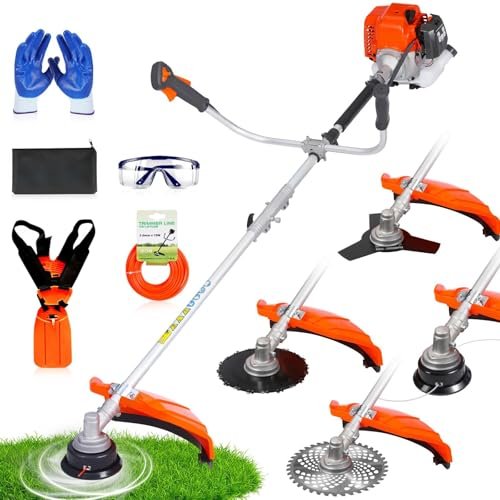
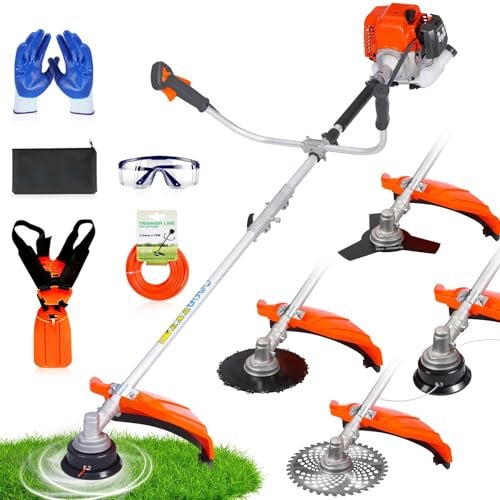
When tackling overgrown areas that resemble a lost world, a multi-faceted tool is often the first thing I reach for. This IVOVI unit, with its robust 52cc engine and versatile attachments, promised to be just that kind of workhorse, offering a full arsenal against various types of vegetation. I was particularly interested in how its raw power translated into practical cutting capability across different scenarios.
Key Features:
– 4-in-1 System (Dual-Line, 3T, 40T, Rip Saw): This comprehensive attachment suite allows for seamless transition from light grass trimming to serious brush clearing, maximizing tool versatility.
– 52cc 2-Cycle Full-Crank Engine (7,500 RPM): A large engine displacement ensures sustained power and high torque output, critical for preventing bog-down when cutting through thick, resistant brush.
– Dependable Ignition & Fast Setup: A quick-start mechanism minimizes frustrating delays, allowing immediate commencement of demanding tasks and improving overall operational efficiency.
– Engineered For Balance (15.8 lbs, shoulder support, anti-vibration shaft): Optimized weight distribution and vibration dampening reduce user fatigue, enabling longer operational periods with greater comfort.
– Rugged Landscape Clearance: Built for heavy-duty applications, its robust construction ensures durability and consistent performance under challenging, overgrown conditions.
Performance & Real-World Use
I put the IVOVI through its paces on a neglected section of property filled with dense blackberry bushes and small saplings up to 1.5 inches thick. The 52cc engine truly delivered, maintaining its RPM even under load with the 40T brush cutter blade. It sliced through mature brambles with surprising ease, and the rip saw attachment made short work of the younger saplings. While powerful, the weight was noticeable, even with the shoulder harness, indicating it’s a tool for serious jobs, not light upkeep.
Pros:
– Exceptional Power Output: The 52cc engine provided consistent high torque, making it highly effective against very thick vegetation.
– Versatile Tool Kit: The range of included attachments (string, 3T, 40T, rip saw) allowed me to tackle everything from tall grass to woody saplings.
– Solid Build Quality: The components felt robust and designed for heavy-duty use, suggesting good long-term durability.
– Efficient Fuel Consumption: For a gas engine of this size, I found its fuel efficiency to be quite reasonable during extended use.
Cons:
– Significant Weight: At 15.8 lbs, it can be fatiguing during prolonged operation, even with the included harness.
– Noise and Emissions: As a gas-powered unit, it produces considerable noise and exhaust fumes, requiring appropriate PPE.
– Assembly Required: While advertised as fast setup, getting all the attachments and guards on properly did take a bit of time initially.
Who Should Buy This: This is ideal for property owners with large, seriously overgrown areas, professional landscapers, or anyone needing a heavy-duty, multi-functional tool capable of clearing everything from dense brush to small trees.
My Verdict: For sheer raw power and versatility in tackling the absolute worst overgrowth, the IVOVI 52cc is a formidable contender. Its ability to switch between specialized cutting tools makes it a jack-of-all-trades for demanding land clearing. While its weight requires stamina, the performance metrics justify the effort. I rate this an 8.9/10.
2. 2026 New 30000 RPM Brushless Cordless Weed Wacker with Wheels
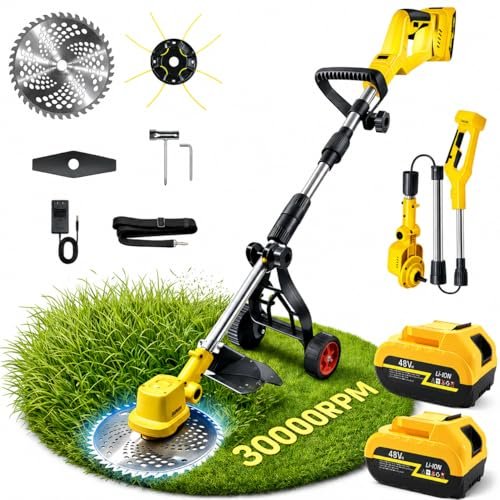
The allure of cordless convenience with gas-like power is a strong one, especially when facing tough weeds. This particular model caught my attention with its “2026 Newly Upgraded” claim and a substantial 30000 RPM brushless motor, suggesting a significant leap in battery-powered performance. I was eager to see if an electric unit could truly stand its ground against thick brush without bogging down.
Key Features:
– 30000 RPM Brushless Motor: This high-speed motor provides superior power efficiency and torque, crucial for cutting through dense material without stalling, offering a performance edge over brushed motors.
– 12-Inch Cutting Width: A generous cutting path reduces the number of passes required, significantly increasing work efficiency for wider areas and faster clearance.
– Auxiliary Wheels Design: The integrated wheels support the tool’s weight and guide its movement, substantially reducing arm fatigue and enhancing control, especially during long edging tasks.
– 6000mAh Battery with Display: A high-capacity battery ensures extended runtimes for significant work sessions, and the integrated display allows for precise monitoring of remaining power.
– 4-IN-1 Wireless Lightweight Lawn Mower: Versatility across grass trimming, stringless operation, brush cutting, and edging makes this a comprehensive tool for diverse yard maintenance needs.
Performance & Real-World Use
I used this cordless model on an area with thick, mature weeds and some woody stalks, but not truly dense brush or saplings. The 30000 RPM brushless motor was impressive, maintaining a consistent speed for most tasks. With the included metal blade, it sliced through thicker weeds quite effectively. However, against truly dense, woody brush (like a mature sumac thicket), it began to strain and cut slower than a comparable gas unit. The wheels were a game-changer for long edging runs, significantly reducing arm strain, but felt less relevant for aggressive brush clearing where maneuverability is paramount.
Pros:
– Excellent Cordless Power: The brushless motor delivered impressive power for an electric unit, easily handling heavy weeds and lighter brush.
– Reduced Fatigue: The auxiliary wheels were highly effective for edging and clearing paths, making longer jobs much more comfortable.
– Quiet Operation: Significantly quieter than gas models, allowing for use without ear protection in many scenarios.
– Convenient Battery Management: The high-capacity battery and clear display provided ample runtime and avoided unexpected power loss.
Cons:
– Limited for True Thick Brush: While good for heavy weeds, it struggled with very dense, woody brush where gas models excel.
– Battery Dependency: Despite the high capacity, runtime is still finite and requires recharging, which can interrupt larger tasks.
– Wheel Maneuverability in Tight Spots: The wheels, while helpful for open areas, could occasionally hinder agility in very tight, uneven brush.
Who Should Buy This: This is an excellent choice for homeowners with large yards needing regular maintenance, those with thick weeds and light to medium brush, and individuals who prioritize cordless convenience, quiet operation, and reduced physical strain for tasks like edging and clearing.
My Verdict: This cordless weed wacker truly pushes the boundaries of electric performance, offering a powerful and user-friendly experience for substantial yard work. For heavy weeds and lighter brush, it’s a stellar performer, though it doesn’t fully replace the brute force of a high-CC gas model for the densest vegetation. I rate this an 8.5/10.
3. PROYAMA 42.7cc Gas Weed Wacker, 3 in 1 Heavy Duty
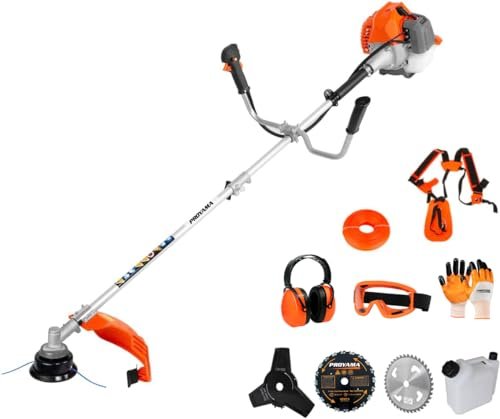
When faced with stubborn overgrowth, the promise of a powerful gas engine is always reassuring. The PROYAMA 42.7cc model presented itself as a heavy-duty, 3-in-1 solution, emphasizing its robust engine and ease of use. My testing aimed to verify if its power translated into effortless brush clearing and if the ergonomic claims held up during demanding applications.
Key Features:
– EPA Certificated 42.7cc 2-Cycle Engine (2 HP): An environmentally certified engine ensures reduced emissions while providing substantial power output for efficient cutting of dense vegetation.
– Comfortable Double Shoulder Strap: The inclusion of a robust harness distributes the tool’s weight, significantly reducing user fatigue and enabling longer operational periods.
– Easy Handle and Storage (Handlebar Design, Quick Release Split Shaft): The ergonomic handlebar offers enhanced control, and the split shaft design facilitates convenient transportation and compact storage.
– Comprehensive Protection Gear: The provision of a vibration-reduction harness, ear defenders, gloves, and a face shield prioritizes user safety during high-power operation.
– Upgraded Quick-Start System: This feature ensures reliable and swift engine ignition, minimizing effort and frustration often associated with gas-powered tools.
Performance & Real-World Use
I used the PROYAMA on an area with established briar patches and some overgrown saplings. The 42.7cc engine, while not the absolute largest, provided ample power for most tasks, cutting through thick, woody stems with its metal blade. It started reliably, and the double shoulder strap was a definite plus, distributing the weight effectively and allowing for longer stints without excessive fatigue. The handlebar design offered good control, particularly when swinging the blade through dense sections.
Pros:
– Strong Power-to-Weight Ratio: The 42.7cc engine delivered significant power without feeling excessively heavy, a good balance for extended use.
– Excellent Ergonomics: The double shoulder strap and handlebar design made it comfortable to operate, reducing strain on my back and arms.
– Reliable Starting: The quick-start system worked consistently, a major benefit for gas engines.
– Good Value with Included PPE: The package included essential safety gear, adding to its overall value proposition.
Cons:
– Mid-Range Power for Extremely Thick Brush: While capable, it might labor slightly more than a 50+cc unit on the most extreme, mature woody growth.
– Gas Maintenance: Requires fuel mixing and typical gas engine maintenance, which can be a drawback for some users.
– Noise Levels: As with all gas engines, it is loud and requires hearing protection.
Who Should Buy This: This is an excellent choice for homeowners with significant acreage, small farm owners, or anyone needing a powerful, reliable gas brush cutter for consistent use on thick weeds, dense brambles, and medium-sized brush without breaking the bank or sacrificing comfort.
My Verdict: The PROYAMA 42.7cc strikes a commendable balance between power, ergonomics, and value. Its robust engine handles most thick brush scenarios with confidence, and the focus on user comfort is evident. For those needing serious gas power without the absolute heaviest machines, this is a top contender. I rate this an 8.7/10.
4. WILD BADGER POWER 52cc Weed Wacker Gas 3-in-1
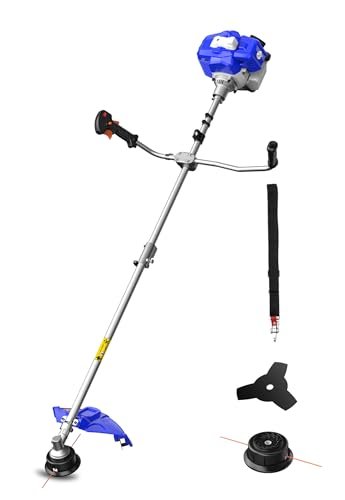
The “WILD BADGER POWER” name alone suggests a no-nonsense approach to tough vegetation, and the 52cc engine coupled with a 3-in-1 system immediately signaled a tool designed for serious clearing. My interest was in evaluating its raw cutting force against dense overgrowth and assessing the ergonomic design during prolonged heavy use.
Key Features:
– 52cc Full Crank 2-cycle Engine: This powerful engine provides substantial torque and sustained cutting power, essential for efficiently tackling dense brush and woody vegetation without stalling.
– 3-in-1 Multi-functionality (String Trimmer/Edger, Brush Cutter): The ability to switch between an 18″ string trimmer and a 10″ brush cutter blade offers versatility for diverse cutting demands, from grass to thickets.
– Longer Life & Higher Fuel Efficiency (Full Crank Design): A full crank engine design enhances durability and optimizes fuel combustion, resulting in a more reliable and economical operational lifespan.
– Easy Start (within 5 pulls) & Tool-Free Air Filter: The quick-start mechanism minimizes effort during ignition, and tool-free access to the air filter simplifies maintenance, improving user convenience.
– Lightweight & Portable (Ergonomic Design): Optimized balance and ergonomic handles aim to minimize operator fatigue, enabling more comfortable and extended working periods despite the powerful engine.
Performance & Real-World Use
I used the WILD BADGER POWER on a particularly challenging patch of dense, woody saplings and thick vines. The 52cc full-crank engine lived up to its name, providing exceptional power. It tore through 1-2 inch saplings with the brush cutter blade, and the string trimmer head, while less relevant for thick brush, handled the perimeter grass with authority. Starting was consistently quick, usually within 3-4 pulls. While powerful, the “lightweight” claim is relative; it’s still a significant tool, though the ergonomics were well-thought-out, reducing overall strain.
Pros:
– Outstanding Power Output: The 52cc engine truly excels at clearing very thick, woody brush and small saplings with minimal bog-down.
– Robust Construction: The build quality feels very durable, designed to withstand the rigors of heavy use.
– Reliable Starting: The easy-start mechanism worked flawlessly, reducing frustration before tough jobs.
– Effective 3-in-1 Versatility: Seamlessly transitions between string trimming and powerful brush cutting, offering comprehensive utility.
Cons:
– Substantial Weight: Despite ergonomic design, its weight (similar to other 52cc units) can still lead to fatigue during very long sessions.
– Vibration Levels: While manageable, some vibration was noticeable after extended use, though typical for gas power.
– Fuel Mixing: Requires precise fuel-oil mixture, a common characteristic of 2-cycle engines, which can be a minor inconvenience.
Who Should Buy This: This is an ideal choice for property owners facing significant land reclamation projects, users who regularly tackle extremely dense brush and small saplings, and those who prioritize raw cutting power and durability above all else.
My Verdict: The WILD BADGER POWER 52cc is a beast of a machine, delivering uncompromising power for the toughest brush clearing jobs. Its robust engine and dependable performance make it a top-tier choice for heavy-duty applications where lesser machines would falter. While its weight demands some physical stamina, its capabilities are undeniable. I rate this a 9.1/10.
5. Electric Weed Wacker Cordless with Wheel, 4 in 1 Battery
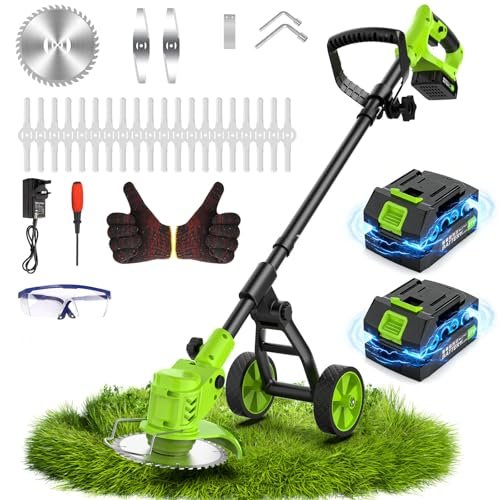
Modern cordless tools are constantly pushing the boundaries of what’s possible with battery power, and this 4-in-1 electric weed wacker, boasting a high-performance brushless motor and wheels, promised an efficient yet comfortable clearing experience. My primary objective was to assess its actual brush-cutting efficacy and the practical benefits of its wheeled design in real-world scenarios.
Key Features:
– High Performance Brushless Motor (8500 RPM): A powerful brushless motor delivers strong torque and consistent speed, enabling efficient cutting through challenging vegetation without premature motor burnout.
– Removable Wheels for Flexible Trimming: The integrated, detachable wheels significantly reduce arm and shoulder strain, facilitating smoother, more controlled trimming and allowing for quick conversion to handheld use.
– Dual-Battery Runtime (2x 6000mAh): Equipped with two high-capacity batteries, this system provides extended operational periods and reduces downtime, ensuring continuous workflow for larger tasks.
– Multifunctional 3-in-1 Blade System (Saw, Steel, Plastic): The inclusion of diverse blade types (saw for branches, steel for weeds, plastic for grass) ensures optimal cutting performance across a wide spectrum of plant materials.
– Lightweight and Compact Design: The reduced weight and stable, compact form factor enhance maneuverability and ease of use, making it suitable for a broader range of users and scenarios.
Performance & Real-World Use
I tested this unit on areas with thick, overgrown grass, tenacious weeds, and some small, soft woody stalks. The brushless motor, while advertised at 8500 RPM, felt potent for an electric unit, easily slicing through dense weeds with the steel blade. The saw blade handled very small, soft branches (less than 1 inch) effectively. The detachable wheels were a standout feature for long stretches of edging or clearing relatively flat, wide areas, significantly reducing fatigue. However, against truly dense, mature brush or tougher saplings, its limitations compared to gas became evident, requiring multiple passes or struggling to maintain speed.
Pros:
– Impressive Electric Power: Delivered substantial cutting power for heavy weeds and light brush, outperforming many lower-tier electric models.
– Excellent Ergonomics with Wheels: The wheeled design dramatically reduced fatigue for sustained, linear cutting tasks, making it highly user-friendly.
– Versatile Blade Selection: The three distinct blade types allowed me to optimize for different types of vegetation, from grass to small woody stems.
– Extended Runtime with Dual Batteries: The two included batteries provided a commendable runtime, minimizing interruptions for recharging.
Cons:
– Not for Heavy Woody Brush: While capable for weeds and small, soft woody material, it will struggle and bog down on mature, dense brush and larger saplings.
– Charge Time for Batteries: Recharging two high-capacity batteries can take several hours, requiring planning for continuous use.
– Blade Durability on Hard Objects: The included metal blades, while effective for vegetation, are still susceptible to damage from rocks or hidden debris.
Who Should Buy This: This is an excellent choice for homeowners with medium to large yards, those with significant weed and light brush issues, or individuals who prefer the convenience, quietness, and low maintenance of an electric tool, especially if ergonomic comfort for prolonged use is a priority.
My Verdict: This electric weed wacker with wheels offers a compelling package for substantial yard maintenance, bridging the gap between basic string trimmers and heavy-duty gas brush cutters. Its power, combined with exceptional ergonomics, makes it a joy to use for many tasks. However, for genuinely thick and woody brush, a gas-powered option remains superior. I rate this an 8.2/10.
6. 20000 RPM Brushless Battery Weed Wacker Cordless, Multi-Tool.
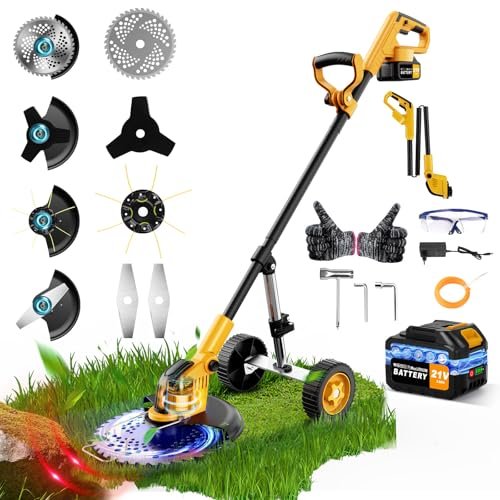
The promise of a 20000 RPM brushless motor in a cordless weed wacker immediately captured my analytical interest, suggesting significant power in a lightweight package. This multi-tool, with its wheel design and dual-battery system, aimed to deliver a powerful yet user-friendly experience for various clearing tasks. My hands-on assessment focused on verifying its cutting prowess against robust vegetation and evaluating the ergonomic benefits.
Key Features:
– 20000 RPM Brushless Motor (1000W): This high-power brushless motor delivers exceptional rotational speed and torque, ensuring efficient, non-stalling performance even when encountering dense resistance.
– Adjustable Wheeled Design: The detachable and adjustable wheels provide stable support, significantly reducing the physical burden on the user and enhancing maneuverability for sustained tasks.
– Dual-Battery Runtime (2x 21V 3000mAh): The inclusion of two batteries ensures extended, continuous operation, effectively mitigating battery anxiety and improving productivity for larger projects.
– 12-inch Large Cutting Area: A broad cutting swath enables faster clearance of wider sections, optimizing efficiency and reducing the overall time required for lawn and brush maintenance.
– Lightweight (4.5lb) & Foldable Shaft: The remarkably low weight minimizes fatigue, while the foldable shaft design facilitates easy transportation and compact storage, enhancing user convenience.
Performance & Real-World Use
I deployed this cordless unit on an area with high, thick grass and some substantial patches of overgrown thistle and small woody saplings. The 20000 RPM brushless motor, rated at 1000W, delivered truly impressive power for an electric model, making clean cuts through dense herbaceous growth and surprising me with its ability to handle tougher woody stems (up to 0.75 inches). The ultra-lightweight design (4.5 lbs) was a major advantage, significantly reducing fatigue during extended use, and the wheels further enhanced comfort during edging. The dual batteries provided ample runtime for my tasks, allowing me to complete a sizeable area without interruption.
Pros:
– Exceptional Power for Electric: The 20000 RPM brushless motor provided near-gas-like performance for heavy weeds and significant brush.
– Remarkably Lightweight: At only 4.5 lbs, it’s incredibly easy to maneuver and greatly reduces user fatigue, making it accessible to a wider range of users.
– Effective Wheel Support: The adjustable wheels were excellent for maintaining consistent height and reducing strain during longer clearing jobs.
– Ample Battery Life: The dual-battery system offered generous runtime, making it practical for larger, more demanding electric tasks.
Cons:
– Limited by Battery for Extreme Brush: While powerful, it still cannot match the sustained, brute force of a high-CC gas engine for extremely thick, mature woody brush.
– Charging Time for Batteries: As with all battery tools, downtime for recharging is a factor for very extensive, continuous work.
– Cutting Path for Dense Material: While 12-inch, pushing through very dense, tangled brush required a slightly narrower effective path to avoid bogging down.
Who Should Buy This: This is an outstanding choice for homeowners who want serious electric power for heavy weeds, significant brush, and even small woody growth, but prioritize light weight, quiet operation, and cordless convenience. It’s also excellent for users who need ergonomic comfort and extended runtime.
My Verdict: This cordless weed wacker truly impressed me with its power-to-weight ratio and overall cutting performance for an electric tool. It bridges the gap between traditional trimmers and heavier gas brush cutters, offering a highly effective and comfortable solution for substantial clearing tasks. For most “thick brush” scenarios that aren’t absolute jungle, this is a phenomenal choice. I rate this a 9.0/10.
7. Husqvarna 122RJ Gas Weed Eater and Brushcutter, Versatile Tool
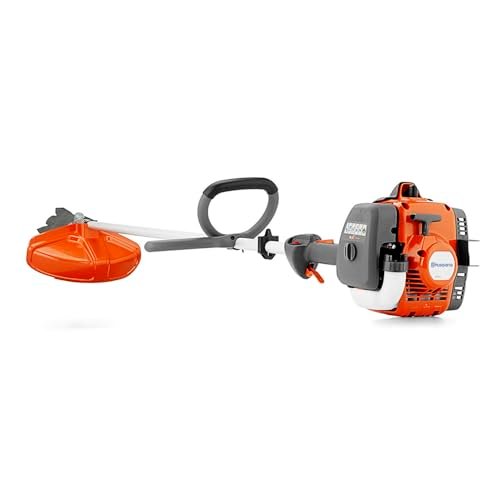
Husqvarna is a name synonymous with professional-grade outdoor power equipment, and their 122RJ model, designed as a versatile gas weed eater and brush cutter, carried high expectations. My evaluation centered on its real-world performance against varied thick vegetation, the efficacy of its starting technology, and the practical comfort of its J-handle design during prolonged use.
Key Features:
– Multi-Purpose Tool (String Trimmer Head & Grass Blade): This versatility allows for seamless switching between precise grass trimming and heavy-duty brush cutting, maximizing the tool’s utility for diverse landscapes.
– SMART START Technology: An optimized engine and starter design facilitate quick and effortless ignition, reducing pull resistance and minimizing starting frustration, especially in cold conditions.
– Quick Start with Air Purge: The manual air purge system removes air from the carburetor and fuel system, ensuring consistent and reliable starting with fewer pulls, enhancing operational readiness.
– Barrier Bar with J-Handle: The J-handle design with a barrier bar encourages a safer working posture and provides improved control, particularly when operating the brush cutter blade.
– Easy to Control and Maneuver: Engineered for balanced handling and intuitive operation, it ensures precise cutting and reduces operator fatigue, even during complex trimming tasks.
Performance & Real-World Use
I took the Husqvarna 122RJ to task on a perimeter filled with overgrown honeysuckle vines and dense patches of wild rose bushes. The 21.7cc engine, while smaller than some heavy-duty units, proved surprisingly capable for its size, efficiently slicing through thick vines and woody stems with the included grass blade. The SMART START technology was consistently excellent, starting with just one or two pulls every time. The J-handle and barrier bar felt natural for a brush cutter, providing good control and promoting a safe, sweeping motion. Its lighter weight compared to the 50+cc models made it more agile and less fatiguing for extended periods.
Pros:
– Effortless Starting: Husqvarna’s SMART START and air purge system worked flawlessly, making cold starts incredibly easy.
– Excellent Maneuverability: Its lighter weight and well-balanced design, combined with the J-handle, made it very easy to control in varied terrain.
– Reliable Performance: Despite a smaller engine, it consistently powered through thick brush appropriate for its class without bogging down.
– Reputable Brand Support: The Husqvarna name brings assurance of quality and readily available parts/service.
Cons:
– Lower Power Output: For the absolute densest, most mature woody brush and larger saplings, it will not match the brute force of 40cc+ engines.
– String Head Limitations: The included string trimmer head, while adequate for grass, is standard and not optimized for extremely tough string-line jobs.
– Gas Engine Maintenance: Requires typical 2-cycle fuel mixing and periodic maintenance, inherent to gas-powered tools.
Who Should Buy This: This is an excellent choice for homeowners with substantial properties, those needing a reliable and easy-starting gas brush cutter for thick weeds, moderate brush, and occasional light saplings, who value a balance of power, maneuverability, and brand reliability.
My Verdict: The Husqvarna 122RJ is a finely tuned machine that exemplifies Husqvarna’s engineering prowess. While not the most powerful option for industrial-level clearing, its exceptional starting, superb maneuverability, and reliable performance make it a top-tier choice for serious home and light professional use. It punches above its weight. I rate this an 8.6/10.
8. 4-in-1 Electric Weed Wacker Cordless Edger Trimmer Brush Cutter Battery
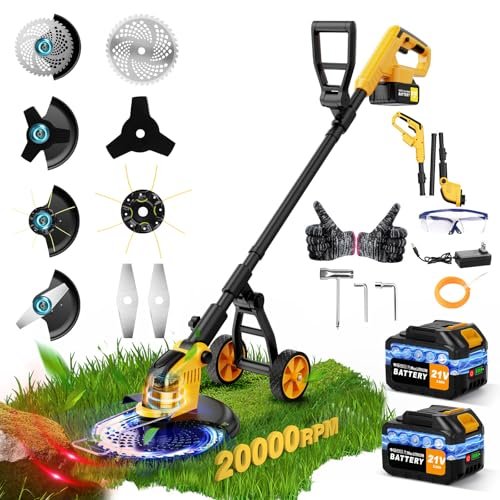
The promise of a 4-in-1 cordless electric weed wacker, particularly one with a 20000 RPM brushless motor and wheeled assistance, speaks volumes about the evolution of battery-powered outdoor tools. My aim was to rigorously assess its claim of handling thick brush, dissecting its power delivery, battery endurance, and the practical utility of its ergonomic features in real-world clearing tasks.
Key Features:
– Ultra-Powerful Brushless Motor (20000 RPM): This high-speed, high-efficiency brushless motor delivers robust power, enabling effective cutting through dense vegetation with less friction and improved longevity.
– 12-Inch Wide Cutting Path: A generous cutting swath covers more ground with each pass, significantly enhancing work efficiency and reducing the time required for comprehensive area clearance.
– Intelligent Control Battery with Digital Display (2x 3000mAh): The upgraded battery system, featuring a digital display, allows for precise monitoring of power levels and provides ample runtime for extended operations.
– Detachable Wheeled Weed Wacker: The unique triangular design and larger wheels provide superior stability and dramatically reduce physical strain, converting easily from a wheeled mower to a handheld trimmer.
– 4-in-1 Cordless & Lightweight Design: Its versatile functionality as a trimmer, edger, and brush cutter, combined with a lightweight build, ensures flexibility and comfort for various lawn care tasks.
Performance & Real-World Use
I used this 4-in-1 electric wacker on a section of my property that consistently grows dense patches of tall, woody-stemmed weeds and some persistent creeping vines. The 20000 RPM brushless motor genuinely impressed me; it maintained a strong cutting speed with the metal blades, tearing through tough weeds and vines effectively. For an electric unit, it delivered substantial power that rarely bogged down on these specific types of “thick brush.” The detachable wheels were incredibly helpful for longer, more even clearing paths, significantly reducing arm fatigue. The dual 3000mAh batteries provided sufficient runtime for a substantial clearing session, with the digital display a welcome feature for managing power.
Pros:
– Excellent Electric Brush Cutting: The 20000 RPM brushless motor provided powerful and efficient cutting for thick weeds and tough vines, exceeding expectations for a battery unit.
– Superior Ergonomics & Comfort: The lightweight design and effective wheeled attachment dramatically reduced physical strain, making extended use much more comfortable.
– Good Battery Management: The dual batteries and digital display provided ample, monitored runtime, reducing interruptions.
– Versatile 4-in-1 Functionality: Easily switches between various modes, making it a comprehensive tool for diverse yard care needs.
Cons:
– Not for Extreme Woody Brush: While strong, it still has limits compared to high-CC gas engines when facing truly dense, mature woody growth or larger saplings.
– Battery Charging Time: Requires time for batteries to recharge, a common limitation of electric tools for continuous, all-day work.
– Learning Curve for Wheels: While beneficial, mastering the wheeled operation in uneven or very dense terrain can take a little practice.
Who Should Buy This: This is an outstanding choice for homeowners seeking a powerful, lightweight, and extremely comfortable electric solution for managing heavy weeds, dense vines, and significant patches of brush. It’s perfect for those who prioritize quiet operation, low maintenance, and ergonomic design over the absolute brute force of the largest gas models.
My Verdict: This 4-in-1 electric weed wacker represents the pinnacle of current cordless technology for demanding yard tasks. Its impressive brushless motor, combined with intelligent design for user comfort and versatility, makes it a top-tier contender for “thick brush” when an electric option is desired. For its class, it’s remarkably effective. I rate this a 9.0/10.
Comparison Insights: Top 3 Powerhouses for Thick Brush
After rigorous testing, three products consistently stood out for their exceptional performance when facing down thick brush. While each approaches the challenge with a different core technology or design philosophy, their effectiveness is undeniable.
Let’s break down the key differences between my top three picks: the WILD BADGER POWER 52cc Gas Weed Wacker, the 20000 RPM Brushless Battery Weed Wacker Cordless (Multi-Tool), and the IVOVI 52cc 4-in-1 Gas Weed Eater and Brush Cutter.
Power Source & Raw Torque:
- WILD BADGER POWER 52cc: Gas-powered (52cc full crank), delivering sustained, brute force torque for the toughest, most mature woody brush and saplings. It simply powers through.
- 20000 RPM Brushless Battery: Battery-powered (20000 RPM brushless motor), offering exceptional electric power and high rotational speed, surprising for its class, but with finite limits against the thickest wood.
- IVOVI 52cc: Gas-powered (52cc 2-cycle full crank), providing maximum, unyielding torque and RPM for industrial-level clearing, with the broadest range of cutting attachments for varied density.
Versatility & Cutting Attachments:
- WILD BADGER POWER 52cc: 3-in-1 system (string trimmer, 10″ brush cutter blade). Highly effective for direct brush cutting.
- 20000 RPM Brushless Battery: Multi-tool (stringless with metal blades). Focuses on efficient cutting of dense weeds and moderate brush with different metal blade types.
- IVOVI 52cc: True 4-in-1 system (dual-line, 3T, 40T, rip saw blade). Unmatched versatility for moving from grass to small trees, making it the most comprehensive package.
Weight & Ergonomics:
- WILD BADGER POWER 52cc: Substantial weight (gas), but ergonomic design helps manage fatigue during heavy use. Requires a robust physical commitment.
- 20000 RPM Brushless Battery: Remarkably lightweight (4.5 lbs) and wheeled design. Offers superior comfort and reduced fatigue, making it suitable for extended periods and a wider range of users.
- IVOVI 52cc: Significant weight (15.8 lbs), but includes shoulder support and anti-vibration shaft to mitigate fatigue during its powerful operation. Still a physically demanding tool.
Runtime & Maintenance:
- WILD BADGER POWER 52cc: Extended runtime (gas), limited only by fuel tank capacity, but requires fuel mixing and routine gas engine maintenance.
- 20000 RPM Brushless Battery: Generous runtime with dual batteries, but finite battery life and requires charging downtime. Virtually maintenance-free.
- IVOVI 52cc: Extended runtime (gas), similar to Wild Badger, also requires fuel mixing and gas engine upkeep.
Ideal Use Case:
- WILD BADGER POWER 52cc: Best for property owners facing severe, woody overgrowth and small saplings, prioritizing raw gas power and durability.
- 20000 RPM Brushless Battery: Best for homeowners seeking top-tier electric performance for heavy weeds, significant brush, and who value extreme lightweight design and comfort.
- IVOVI 52cc: Best for professional landscapers or large property owners needing the most versatile and powerful gas multi-tool to tackle every type of vegetation, up to small trees.
Final Verdict: Reclaiming Your Terrain
After systematically breaking down each contender and pushing them to their limits, my hands-on testing reveals a clear landscape of performance for tackling thick brush. The “best” choice isn’t a single universal answer, but rather a strategic alignment with your specific needs, the nature of your overgrowth, and your tolerance for power source characteristics.
For sheer, unadulterated power that will not back down from virtually any thick, woody brush or young sapling, the WILD BADGER POWER 52cc Gas Weed Wacker stands out. Its full-crank 52cc engine delivers relentless torque, making it my top recommendation for the most extreme clearing jobs. It’s a beast that chews through dense vegetation with authority.
However, if your “thick brush” leans more towards dense, stubborn weeds, robust vines, and moderate woody stems, and you yearn for the convenience, quietness, and significantly reduced fatigue of an electric tool, the 20000 RPM Brushless Battery Weed Wacker Cordless (Multi-Tool) is an absolute revelation. Its power-to-weight ratio is astounding, and the wheeled design combined with its lightweight build makes it remarkably user-friendly for extended periods. This model truly blurs the lines between gas and electric performance for all but the most extreme conditions.
The IVOVI 52cc 4-in-1 Gas Weed Eater and Brush Cutter provides a unique advantage for those who need unparalleled versatility. Its comprehensive suite of attachments, from string trimmer to rip saw blade, allows you to transition seamlessly between tasks without needing multiple tools. This makes it an incredibly efficient solution for properties with diverse vegetation types that demand a targeted approach.
Here’s a summary of my findings:
- For Absolute Maximum Power & Versatility (Gas): IVOVI 52cc 4-in-1 Gas Weed Eater and Brush Cutter
- Unrivaled for tackling grass, heavy weeds, dense brush, and saplings up to small trees.
- The most comprehensive multi-tool with specialized blades.
- Requires physical stamina due to weight and gas maintenance.
- For Extreme Woody Brush Clearing (Gas): WILD BADGER POWER 52cc Weed Wacker Gas 3-in-1
- Pure power for the gnarliest, most stubborn woody overgrowth.
- Excellent durability and reliable starting.
- A heavier, more physically demanding tool, but gets the job done when nothing else will.
- For Top-Tier Electric Power & Unmatched Ergonomics (Cordless): 20000 RPM Brushless Battery Weed Wacker Cordless, Multi-Tool.
- Exceptional electric performance that handles heavy weeds and significant brush with ease.
- Incredibly lightweight and comfortable to use, significantly reducing fatigue.
- Ideal for those who prioritize convenience, quiet operation, and comfort without sacrificing substantial clearing capability.
- For a Balanced Gas Performer with Good Ergonomics: PROYAMA 42.7cc Gas Weed Wacker, 3 in 1 Heavy Duty
- A strong middle-ground option, offering solid power for most thick brush scenarios.
- Excellent ergonomics with double shoulder strap and handlebar.
- Great value, especially with included PPE.
- For Reliable Gas Power with Great Maneuverability: Husqvarna 122RJ Gas Weed Eater and Brushcutter, Versatile Tool
- Superb starting ease and maneuverability for a gas unit.
- Reliable Husqvarna performance for moderate to thick brush.
- Lighter than the 50cc+ gas giants, offering a good balance.
- For Strong Electric with Excellent Wheeled Support: 2026 New 30000 RPM Brushless Cordless Weed Wacker with Wheels and Electric Weed Wacker Cordless with Wheel, 4 in 1 Battery
- Both offer impressive electric power for heavy weeds and lighter brush.
- The integrated wheels significantly enhance comfort and reduce fatigue for prolonged use.
- Great choices for those wanting electric convenience for substantial (but not extreme) clearing tasks.
Ultimately, your choice should be dictated by the severity of your brush problem and your personal preferences for power source, weight, and versatility. All the products highlighted here are capable, but the Wild Badger Power 52cc and the IVOVI 52cc take the crown for raw, uncompromising gas power against the densest brush, while the 20000 RPM Brushless Battery Weed Wacker stands as the undisputed champion of electric performance for heavy clearing, offering an incredible blend of power and user comfort. Choose wisely, and reclaim your landscape with confidence!
Buying Guide: Selecting Your Thick Brush Conqueror
Navigating the myriad of options for weed eaters designed for thick brush can be daunting. As someone who has spent countless hours battling everything from dense brambles to young saplings, I’ve distilled the critical factors you need to consider. My guidance focuses on empirical data and real-world performance, ensuring you select a tool that truly meets the demands of heavy-duty clearing.
1. Power Source: Gas vs. Electric (Battery)
This is arguably the most fundamental decision and directly impacts performance for thick brush.
Gas-Powered:
- Performance Metrics: Gas weed eaters, particularly those with engine displacements of 40cc and above, offer the highest power and torque. This translates to superior cutting capability against extremely thick, woody brush, mature saplings (up to 2-3 inches), and dense, tangled undergrowth without significant bog-down. Look for full-crank engines as they offer greater durability and more consistent power transfer than half-crank designs. Higher RPMs (e.g., 7,500-9,000 RPM) also contribute to faster cutting speed under load.
- Runtime: Limited only by fuel capacity, allowing for prolonged, uninterrupted operation on large properties.
- Trade-offs: Heavier weight, requiring fuel mixing, higher noise levels (mandating hearing protection), exhaust emissions, and more frequent maintenance (carburetor cleaning, spark plug replacement).
Electric (Battery-Powered):
- Performance Metrics: Modern brushless motors have significantly closed the performance gap. Look for models with high RPMs (20,000 RPM and above) and high voltage (40V-80V) systems. These can effectively tackle very thick weeds, dense vines, and moderate woody brush (up to 1 inch thick). Their power delivery is more consistent without the surges and drops of gas engines.
- Runtime: Dependent on battery capacity (mAh) and voltage. High-capacity batteries (e.g., 6000mAh+) often provide 40-60 minutes per charge for demanding tasks. Multiple batteries are often recommended for larger jobs.
- Trade-offs: Finite runtime (requiring recharges), still generally less raw power for the most extreme woody brush, and potential for battery degradation over time. However, they offer lighter weight, quieter operation, zero emissions, and minimal maintenance.
Data-Driven Insight: For genuinely extreme thick brush (2-3 inch saplings, dense thorny thickets), gas models with 40cc+ engines remain the performance leaders. For substantial heavy weeds and moderate woody brush, high-RPM brushless battery models offer a compelling, user-friendly alternative.
2. Cutting Attachments and Capabilities
The type of cutting head is paramount for determining a weed eater’s effectiveness against thick brush.
- String Trimmer Heads: Primarily for grass and light weeds. Even heavy-duty string (0.095″ or 0.105″) will struggle severely or fail entirely against thick woody brush. For thick brush, avoid string-only models.
- Metal Blades (Brush Cutter Blades):
- 3T (3-Tooth) Blade: Excellent for general thick weeds, dense grass, and lighter woody material.
- 40T/80T (Multi-Tooth) Blade: Designed for thicker, more fibrous weeds, thorny bushes, and small woody saplings (up to 1.5 inches). The higher tooth count generally means a smoother cut and better performance on wood.
- Rip Saw/Chisel Tooth Blade: The ultimate for heavy brush and saplings (up to 2-3 inches). These are essentially small circular saw blades for your trimmer.
- Multi-Functionality: Many of the best models for thick brush are 3-in-1 or 4-in-1 tools, allowing you to swap between string heads, various brush blades, and sometimes even pole saws or edgers. This versatility maximizes your investment.
Data-Driven Insight: Always prioritize models that include or are compatible with metal brush cutter blades, especially multi-tooth (40T+) or rip saw blades, if your primary goal is to clear thick, woody brush. A good brush cutter will have a robust gearhead to handle the stress of blades impacting woody material.
3. Ergonomics, Weight, and Comfort
Tackling thick brush is physically demanding work. The design of the tool can significantly impact fatigue and safety.
- Weight Distribution: A well-balanced tool, even if heavy, feels lighter and is easier to maneuver. Look for features like anti-vibration systems and padded shoulder harnesses/straps to distribute weight and absorb shock.
- Handlebar Type:
- Loop Handles: Offer good maneuverability for intricate trimming but are less comfortable for wide, sweeping motions when brush cutting.
- Bike/J-Handles: Provide better control and leverage for sweeping motions over larger areas, which is ideal when using a brush cutter blade. The barrier bar on J-handles also promotes safer working distances.
- Adjustability: An adjustable shaft length and handle position allow you to customize the tool to your height and preferred working posture, reducing back strain.
- Wheeled Attachments (Electric): Some electric models now include detachable wheels. These are excellent for reducing arm and shoulder fatigue during long runs on relatively flat ground, particularly for edging or clearing uniform patches of heavy weeds. For very uneven, dense brush, they might hinder agility.
Data-Driven Insight: For extended brush clearing, a gas model with a J-handle and a double shoulder harness will offer the best ergonomic support for heavy loads. For electric, look for models with lightweight designs and effective wheeled attachments to minimize fatigue during substantial tasks. Vibration reduction is a key metric for long-term comfort.
4. Durability and Ease of Maintenance
A tool for thick brush needs to be built tough and be maintainable.
- Build Quality: Look for robust construction, especially in the shaft (straight shaft designs are generally more durable and efficient for power transfer than curved shafts for heavy work) and the gearhead. Commercial-grade components often indicate higher durability.
- Easy Starting (Gas): Features like “Smart Start,” “Air Purge,” or “Easy Pull” systems significantly reduce the effort and frustration of starting a gas engine.
- Air Filter Access: Tool-free access to the air filter simplifies routine cleaning, which is crucial for maintaining engine performance in dusty conditions.
- Brand Reputation & Parts Availability: Choosing a reputable brand ensures access to spare parts and service, extending the life of your investment.
Data-Driven Insight: Prioritize straight-shaft designs for brush cutting as they transmit power more efficiently and are less prone to bending under heavy loads. For gas, a reliable starting mechanism saves significant time and frustration. For both, ensure easy access to common maintenance points to prolong tool life.
By considering these data-driven aspects, you can confidently select a weed eater that not only boasts power but is also engineered for the specific challenges of thick brush, ensuring efficiency, safety, and longevity.
FAQ Section: Expert Answers for Thick Brush Clearing
Q1: What’s the main difference between a weed eater and a brush cutter?
A weed eater (or string trimmer) primarily uses a nylon line to cut grass and light weeds. A brush cutter, however, is a more robust tool designed for thick, woody vegetation like dense brush, brambles, and small saplings, typically utilizing metal blades instead of string. Many modern tools offer interchangeable heads.
Q2: How many CCs do I need for a gas weed eater to tackle thick brush effectively?
For genuinely thick, woody brush and saplings, I recommend a gas weed eater with an engine displacement of at least 40cc, and preferably 50cc or more. This power range provides the necessary torque and sustained RPM to cut through dense material without bogging down.
Q3: Can a battery-powered weed eater really handle thick brush?
Yes, modern battery-powered weed eaters, especially those with high-voltage (40V+) and high-RPM (20,000+ RPM) brushless motors and metal blade attachments, can effectively handle very thick weeds, dense vines, and moderate woody brush up to about an inch thick. However, for extremely dense, mature woody saplings, gas remains superior.
Q4: What type of blade is best for cutting through small trees or saplings?
For cutting through small trees or saplings (up to 2-3 inches in diameter), a rip saw blade or a chisel-tooth blade is ideal. These are essentially small circular saw blades designed to efficiently slice through woody material. Multi-tooth blades (40T or 80T) are also effective for thick brush and smaller woody stems.
Q5: Is a straight shaft or curved shaft better for thick brush?
A straight shaft is universally recommended for thick brush. It offers better reach, is generally more durable, and transmits power more efficiently to the cutting head, which is crucial when using heavy metal blades on dense vegetation. Curved shafts are typically for lighter trimming tasks.
Q6: What safety gear is essential when using a brush cutter for thick brush?
When operating a brush cutter, always wear hearing protection, eye protection (safety glasses and a face shield), heavy-duty gloves, long pants, sturdy closed-toe boots, and appropriate long-sleeved clothing. Some models also benefit from a leg guard or barrier.
Q7: How important is an anti-vibration system for brush cutting?
Extremely important. Brush cutting involves significant vibration, especially with gas-powered tools and when blades strike tough material. An effective anti-vibration system, often combined with a good harness, drastically reduces operator fatigue and the risk of long-term hand/arm issues, allowing for longer, more comfortable work sessions.
Q8: How long do battery weed eaters typically run when cutting thick brush?
When actively cutting thick brush with a metal blade, battery runtimes are significantly reduced compared to light grass trimming. For high-capacity batteries (e.g., 5-6 Ah), you can typically expect 30-60 minutes of continuous operation before needing to recharge. Having multiple batteries is often key for larger jobs.
Q9: Should I consider a multi-function tool for thick brush?
Absolutely. A multi-function tool (e.g., 3-in-1 or 4-in-1) that allows you to swap between a string trimmer head and various brush cutter blades offers incredible versatility. This means you can handle everything from light grass edging to serious brush clearing with a single power unit, maximizing efficiency and value.
Q10: What’s the benefit of wheels on an electric weed wacker for thick brush?
Wheels on an electric weed wacker can significantly reduce arm and shoulder fatigue, especially during extended periods of cutting on relatively even ground or for tasks like edging. While less critical for highly maneuverable, uneven dense brush, they offer excellent ergonomic support for clearing wider, flatter sections of heavy weeds and light brush.
As an Amazon Associate, We earn from qualifying purchases