
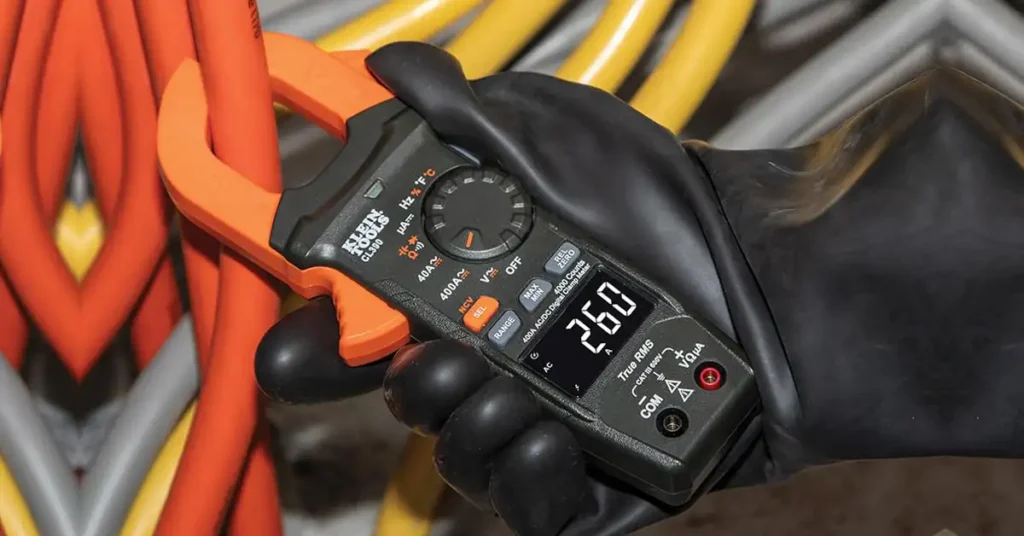
When my Klein CL390 stopped working, it surprised me. It read fine, then froze on a mode I did not even touch. I use this meter in real U.S. garages, so a dead screen can slow down the day. If your Klein CL390 is not working, this short guide can help.
These are the same quick checks I use when the meter locks up, shows odd numbers, or will not turn on. Most problems come from a few simple things, and each one has an easy fix.

Table of Contents
What Are the Most Common Klein CL390 Problems?
When my Klein CL390 acted strange, I saw the same few signs. It would freeze. It would drop power. It would show odd numbers that made no sense. Most of these issues came from weak batteries or loose leads. A few came from faults inside the meter. The key idea is that the CL390 fails in simple, repeat ways, and each one has a clear fix.
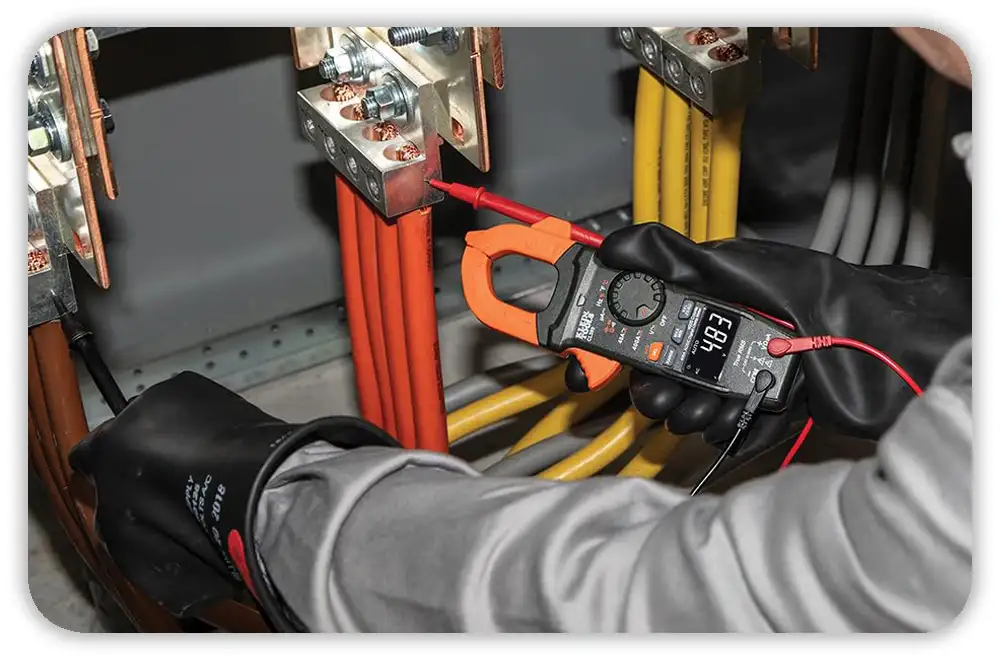
Why does the CL390 get stuck on “Hz/%”?
My CL390 has locked in the Hz/% mode more than once. The dial felt right, but the screen froze. Each time, the cause was the same.
- A small freeze in the code
- The dial state got lost
- Only a full battery pull fixed it
The key point is that mode lockups come from the code, not the user.
Why does the screen stay blank or flicker?
A blank or flicking screen hit me most on cold days in the garage. AAA cells drop fast in cold U.S. mornings.
- Weak AAA cells
- A low-battery sign I did not see
- Loose battery contacts in the door
The key idea is that most screen issues start with the batteries.
Why are voltage readings wrong or not stable?
I see odd voltage readings a lot in older homes. Long wire runs make this worse. High-impedance meters like the CL390 pick up stray volts fast.
- Ghost volts on dead wires
- The 10MΩ input that shows small stray volts
- Leads not pushed in all the way
The key point is that wrong volts often come from the circuit, not the tool.
Why do continuity or ohm tests fail?
Ohm mode has no room for error. One quick slip on a live line can pop the fuse. I learned that the hard way.
- A blown fuse
- Leads in the wrong jacks
- A test on a live part
The key idea is that dead continuity is almost always a fuse or a live-circuit slip.
Why does the clamp not read amps?
Most clamp issues are simple setup slips. I made them too when I first learned.
- Clamping the wrong wire
- Clamping hot and neutral at the same time
- A Hall sensor damaged from a drop
The key point is that zero amps often means the wrong wire, not a dead clamp.
What Should You Check First When the Klein CL390 Stops Working?
When my CL390 stops, I use the same one-minute plan. These fast checks fix most “dead meter” cases. The key idea is that simple steps bring the CL390 back fast.
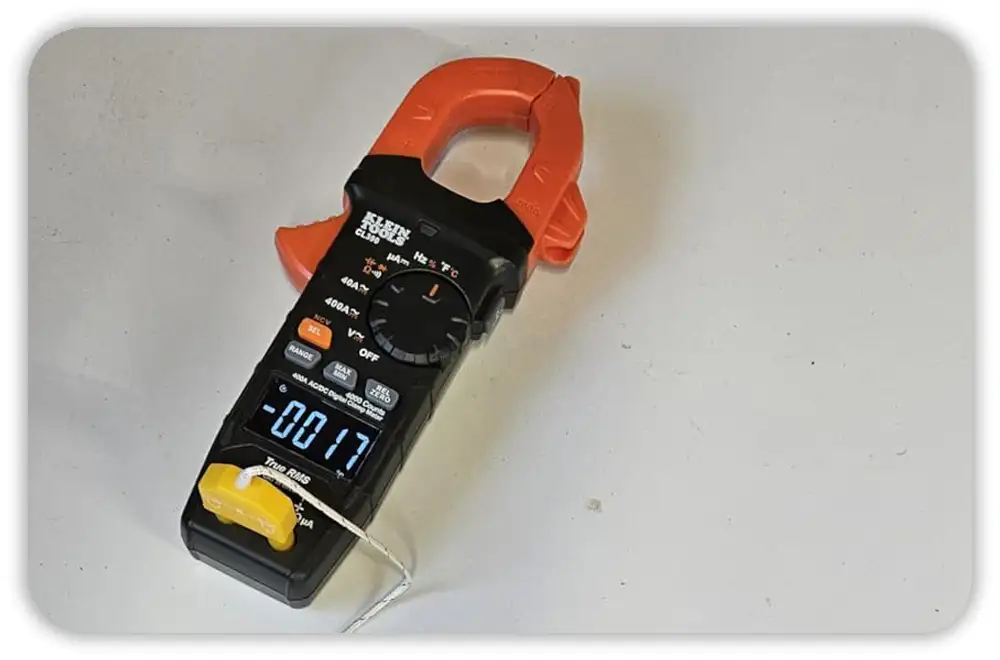
Step 1 — Do a Hard Reset (Battery Pull)
The first thing I do is pull all three cells.
- Remove all three AAA cells
- Wait 15 seconds
- Put them back in
- Clear the small code freeze
The key idea is that a battery pull acts like a hard reset.
Step 2 — Put in Fresh AAA Batteries
Cheap cells fooled me more than once. They sag fast, more so in cold U.S. winters.
- Use a name brand
- Check the polarity
- Keep the door shut when you test
The key point is that new cells fix most power issues.
Step 3 — Check the Leads
Loose leads cause half the “bad read” calls I get.
- Push COM and V all the way in
- Check for cracked caps
- Clean dust from the jacks
The key idea is that tight leads give clean reads.
Step 4 — Confirm Mode and Range
Many CL390 issues come from fast mode flips. AC and DC swaps cause lots of noise.
- AC vs. DC mix-ups
- Amps vs. volts
- Auto vs. manual range
The key point is that the right mode stops bad reads.
Step 5 — Try a Known Good Test Point
When I am not sure, I go to a test point I trust.
- A U.S. 120V wall outlet
- A good AA cell for DC
- A tool cord for a beep test
The key idea is that a known source shows if the meter is fine.
Why Does the Klein CL390 Lock Up or Freeze?
I have seen the CL390 freeze in the middle of work. It happens most when I switch modes too fast. It often locks on the Hz/% mode. The dial moves, but the screen does not. A battery pull clears it each time. The key idea is that freezes come from the code, not the user.
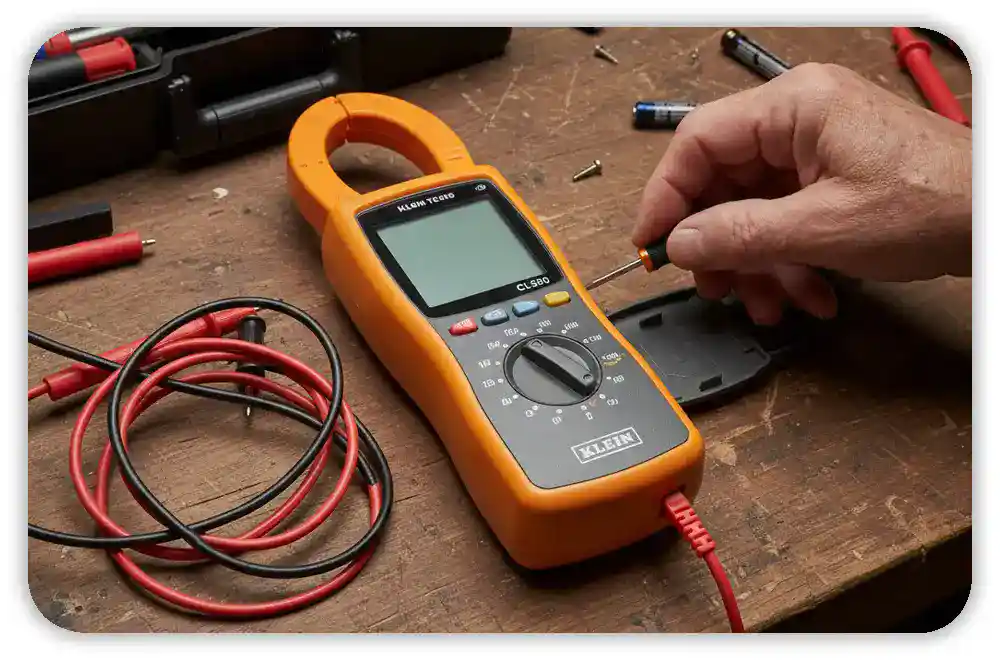
What makes the code freeze?
I saw a few things that make the CL390 freeze more.
- Fast mode flips
- Cold days in the garage
- A small glitch inside the meter
The key point is that small changes in the space can cause a freeze.
How do you clear a frozen screen?
I clear it the same way each time.
- Pull the cells
- Wait a short time
- Put in fresh cells
The key idea is that a full power cycle clears the freeze.
When does a freeze mean the meter is dying?
A freeze now and then is fine. A freeze each day is not.
- Daily freezes
- Numbers that drift
- Slow buttons
The key point is that many freezes mean it may be time for a new meter.
Why Does the Klein CL390 Show Wrong Readings?
The CL390 can show odd numbers when the setup is off or the line has stray volts. I see this a lot in older U.S. homes and long runs in shops. The key idea is that bad reads often come from the wires or the leads, not the meter.
What is ghost voltage on the CL390?
Ghost volts fooled me the first time. The line was dead, but the meter showed 40–100 volts.
- Long cable runs
- Stray coupling
- No load
- Not a bad meter
The key point is that ghost volts are normal on high-impedance meters.
How do you confirm real voltage?
When I am not sure, I do one of three things.
- Use a LoZ tester
- Add a small load
- Check with a second meter
The key idea is that real volts stay steady under load.
What if AC is right but DC is off?
I see this when the jaws are dirty or when I forget to zero the meter.
- Sensor drift
- Dust or metal on the jaws
- No DC zero
The key point is that jaw issues cause DC drift fast.
What if ohms or beep mode stay at OL?
If ohm mode and beep mode fail at the same time, it is almost always the fuse.
- A blown fuse
- A live line hit in ohm mode
- Bad leads
The key idea is that a dead fuse makes ohm mode stop.
Why Does the CL390 Not Turn On?
When my CL390 did not turn on, it made me worry. I thought it was done. But the cause was simple each time. Weak cells. A cold day. Or a loose door. I saw a deep fault only once. The key idea is that most “dead” CL390 meters are not dead at all.
What simple issues kill the display?
Most no-power issues took me one minute to fix. Cold air drops AAA power fast in U.S. shops. Cheap cells also sag fast when the meter wakes. A loose door screw can cut power for a short time.
- Cold weather drops cell output
- Cheap cells sag when you test
- A loose door kills power for a sec
The key point is that small cell issues cause most blank screens.
What deeper issues stop power?
Deep issues are rare. A hard drop can crack the board. A backwards cell can upset the circuit. Moist air can leave rust in the tray.
- A cracked board from a fall
- Reverse cells from a rush job
- Rust or white crust in the tray
The key idea is that deep faults can happen, but not often.
How do you test for an internal fault?
I use three safe checks. I put in new cells. I tap the case to feel for loose parts. Then I use a small light in a dark room. If I see a faint LCD glow, the board still has life.
- Use fresh cells
- Tap the case
- Use a light to check LCD bleed
The key point is that these simple checks show if the board is alive.
Why Don’t Continuity or Ohms Work on the CL390?
When ohms stopped on my CL390, the fuse was gone. I blew one years back by hitting live wires in ohm mode. If your meter shows OL on a good short, the fuse is the first thing to check. The key idea is that ohm issues come from the fuse or the setup.
What kills the fuse?
The fuse is small but key. It blows fast when the meter sees volts in a no-volt mode. I blew one while I checked a car battery in diode mode.
- Live wires in ohm mode
- A car battery hit in diode mode
- Leads in the wrong jacks
The key point is that live hits blow the fuse fast.
How do you check for a blown fuse?
I use one rule. If the leads touch and I still get OL, the fuse is gone. If diode mode is dead too, that seals it. μA mode will be gone as well.
- Leads short → still OL
- Dead diode mode
- Dead μA mode
The key idea is that two dead modes mean a blown fuse.
Should you replace the fuse yourself?
I replace the fuse only when the meter is out of warranty. I use an HRC fuse only. Cheap ones can fail in a bad way, more so on U.S. 120V lines.
- Replace only if out of warranty
- Use an HRC fuse
- Avoid low-grade fuses
The key point is that a good fuse keeps the meter safe.
Why Doesn’t the Clamp Jaw Read Current?
Clamp issues are common. When I saw “0 A,” it was almost always the wrong wire in the jaw. You must clamp one wire only. If hot and neutral sit in the jaw, the fields cancel. The key idea is that setup slips cause most zero-amp reads.
Top mistakes to avoid
These slips are common in U.S. homes. I made each one at some point.
- Clamping a full cord
- Clamping Romex, not one wire
- Using DC mode for an AC load
The key point is that the jaw must see one clean wire.
When is the Hall sensor bad?
A hard drop can shift the sensor. I saw this once when my meter hit the drive. AC still read fine. DC did not.
- A strong drop
- Hit on hard ground
- AC reads but DC does not
The key idea is that impact damage shows up first on DC.
When Should You Stop Using a Broken CL390?
A bad meter can show a false zero. That is not safe on live wires. When I see odd reads, I stop at once. OSHA and NFPA 70E say the same thing. The key idea is that any odd read is a warning.
Warning signs to stop work
I stop when the meter acts in a strange way. These signs saved me many times.
- Live volts flash to 0V
- Reads jump or pulse
- Clamp amps flicker
- DC mode shifts or jumps
The key point is that unstable reads mean stop now.
What are the risks of a bad meter?
A bad meter can trick you into a false “safe” read. That can lead to shock or worse. It can also waste time when you check tools like blowers or pumps.
- A false zero
- Arc-flash risk
- Shock
- Wrong tool checks
The key idea is that meter faults add real danger.
When to replace vs. repair
I fix only simple faults like a fuse. When the jaw fails or freezes show up each day, I replace the meter. That rule saves my time and my nerves.
- Daily freezes → replace
- Jaw faults → replace
- Fuse → repair
The key point is that some faults cost more than the meter is worth.
What Advanced Checks Can You Do Before Replacement?
Before I toss a meter, I run a few deep checks. They take little time. They help me see if the CL390 still has life. The key idea is that a short check can save a meter that looks done.
Inspect the clamp jaws
U.S. job sites are full of dust. Metal dust and sawdust can get in the jaw gap and change the read. I check the jaws when the meter acts off.
- Metal dust
- Rust dust
- Sawdust
The key point is that tiny bits can block clean reads.
Clean the Hall sensor line
I wipe the sensor line with a soft cloth. I do not use alcohol. It can dry the plastic. A tight, closed jaw also helps.
- Use a soft cloth
- Skip alcohol
- Keep jaws shut
The key idea is that a clean sensor keeps the clamp true.
Test with a known load
Before I quit on a meter, I test it on a steady load. I use an old bulb or a small heater. These loads stay smooth and show if the meter still reads right.
- A bulb
- A heater
- A shop fan
The key point is that steady loads show real faults fast.
Should You Send the CL390 to Klein Tools for Warranty?
When my CL390 acted odd in the first year, I called Klein. They helped fast. Their one-year support covers defects, not drops or hard use. If your CL390 fails from a real fault, they fix it. The key idea is that early faults get good help.
What counts as a warranty defect?
From what I saw and what Klein told me, these issues can count:
- A screen that quits
- A mode that locks a lot
- A sensor that reads wrong
- A board crack that was not from a fall
The key point is that real faults are covered when the meter was used right.
What to do before you call
Klein asked for a few things each time. Now I check them first:
- Write the serial number
- Note each symptom
- Try fresh AAA cells
The key idea is that these small steps help them find the fault fast.
Klein U.S. support info
When I called, these were the details:
- Phone: 1-800-553-4676
- Hours: Mon–Fri, Central Time
The key point is that support is easy to reach and quick to help.
FAQs About the Klein CL390 Not Working
These short answers work well for voice search. They match the most common CL390 issues I hear.
Why does my CL390 show volts on a dead wire?
Ghost voltage. The meter has high input. It is not a defect. The key point is that stray volts show up on long runs.
How do I reset a Klein CL390?
Pull all three AAA cells. Put them back in. The key idea is that a cell pull resets the meter.
How do I know the internal fuse is blown?
Ohms and beep mode fail on a good short. The key point is that two dead modes mean the fuse is gone.
Why does my clamp show 0 amps all the time?
You clamped the wrong wire. Clamp one wire only. The key idea is that the jaw must see one lone line.
Final Tips — How to Keep Your Klein CL390 Working Longer
Small habits keep the CL390 strong. These tips match real U.S. shop life. Cold days and dust can hit a meter hard. The key idea is that good care makes the meter last.
- Keep the meter warm in winter
- Use fresh alkaline cells
- Keep the jaws clean
- Do a DC zero often
- Replace the meter when reads drift
The key point is that a clean, warm, well-powered meter gives safe and true reads.
As an Amazon Associate, We earn from qualifying purchases