

If you want the fast answer on DEWALT DWS715 vs DWS716, here’s what I’ve found in real use. The DWS715 is a simpler, lighter single-bevel miter saw, and the DWS716 is a more flexible dual-bevel saw that makes trim and crown work easier.
I’ve used both in real places: tight garages, cold sheds, and open driveways. I’ve cut 2x lumber, baseboard, and crown in typical American homes with them. In this guide, I’m just sharing what actually happened in my hands, not what the box says.
Table of Contents
Basic Function of Each Tool in DEWALT DWS715 vs DWS716
Before getting into fine details, I want to explain what each saw does in simple, real-world terms. Once you see that, the rest of the DEWALT DWS715 vs DWS716 comparison makes a lot more sense.
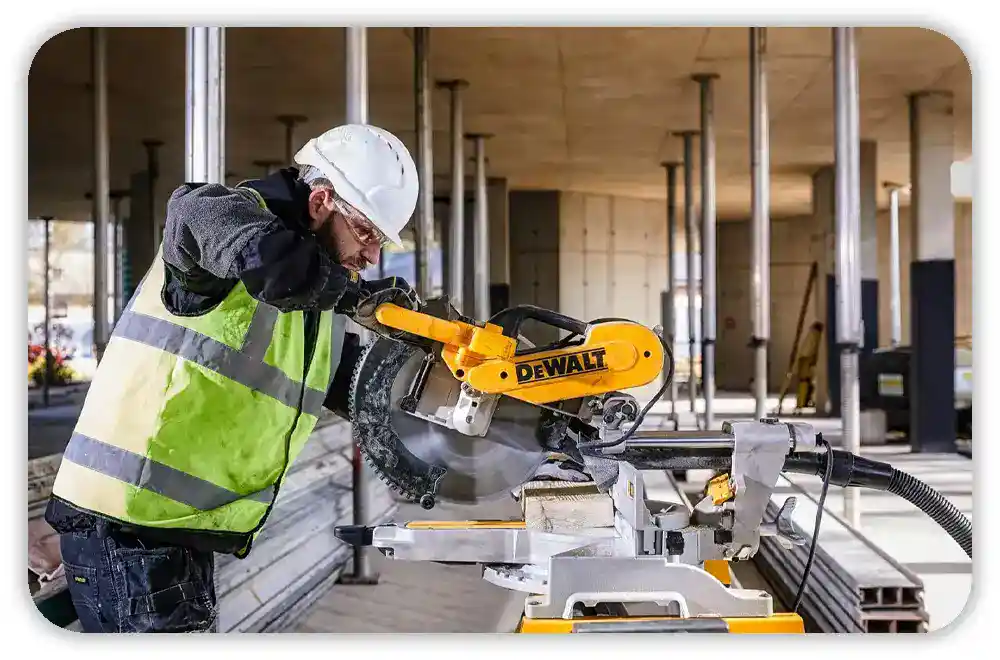
What the DEWALT DWS715 Does for Me
The DWS715 is a single-bevel compound miter saw. In plain words, it:
- Drops straight down for simple crosscuts.
- Spins left and right at the base for miter cuts.
- Tilts to one side only for bevel cuts.
So when I’m trimming a room, I:
- Set my miter angle on the base.
- Tilt the head to the left for bevels.
- Flip the board when I need the bevel going the other way.
I’ve used the DWS715 for:
- Baseboard and casing in older houses.
- Simple crown in bedrooms and hallways.
- Cutting 2×4 and 2×6 for small framing and shop projects.
- Outdoor cuts for small decks and steps.
The big thing I notice is how simple it feels. When I’m tired after work and trying to knock out a few cuts in the garage, fewer controls is a good thing. I lock the angle, line up the blade, and cut.
What the DEWALT DWS716 Does for Me
The DWS716 is a dual-bevel compound miter saw. So it does the same basic jobs, but the head tilts both left and right.
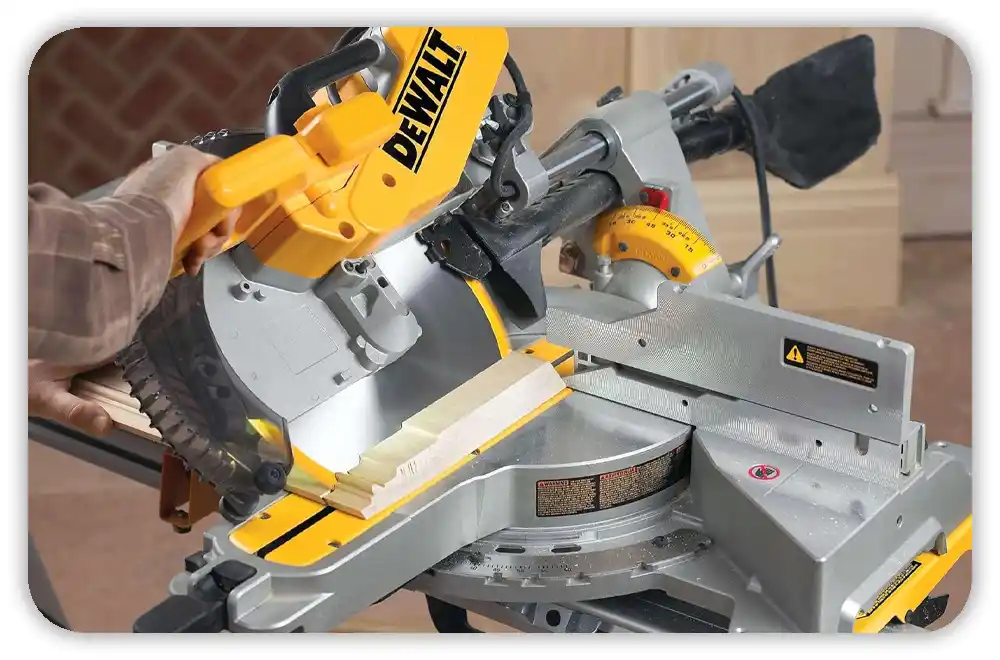
In real use, that means:
- I keep the board in the same position more often.
- I tilt the head left or right instead of flipping the board.
- I can run a whole room of crown with fewer mental gymnastics.
I really felt this when I did crown in a living room with outside and inside corners everywhere. With the DWS716, I did not have to wrestle long boards around as much. I just switched bevel direction and took the next cut.
I reach for the DWS716 when I expect:
- Lots of crown molding.
- Detailed trim and small returns.
- Compound angles all day long.
How DEWALT DWS715 vs DWS716 Fit Into My Workspace
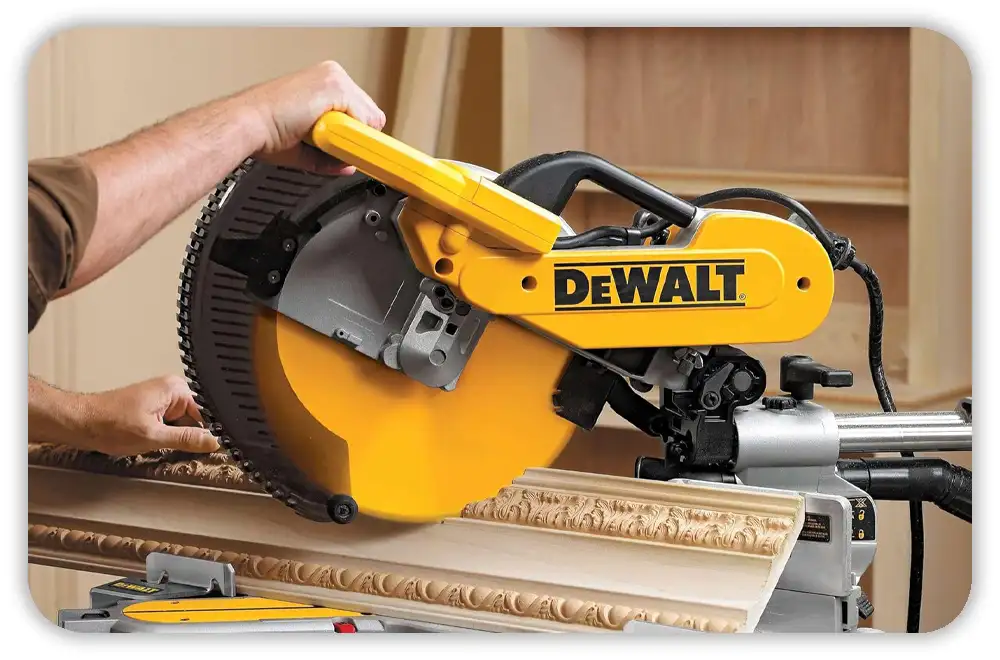
In my setup, I usually have one saw on a stand in a garage or driveway. Here is how DEWALT DWS715 vs DWS716 fit into the kind of work many folks in the States do:
- Both handle common 2x lumber and typical trim sizes you find at Home Depot or Lowe’s.
- Both run on a standard 120V outlet, which is nice in older houses.
- Both use 12″ blades, so I can swap blades between them.
In a one-car garage where the car still needs to park at night, space is tight. The DWS715 is easier to move and store because it is lighter. The DWS716 earns its place when I know I’ll be cutting a lot of trim or crown, especially in older U.S. homes where nothing is square and I need to tweak angles often.
Technical & Practical Differences in DEWALT DWS715 vs DWS716
Both saws use a 15-amp motor. In real cuts, they feel very close in power. I can crosscut 2×8, cut thick pine trim, and even handle hardwood if I use a good blade and don’t force the cut.
Where I notice differences is in how I set up the cut, not how much power I have:
- On the DWS715, I flip boards for some bevel cuts. That means I change my grip and stance more often.
- On the DWS716, I switch bevel direction instead. I keep the board in one position and adjust the saw.
Once I checked and tuned both saws with a square, I could get tight joints with each. Inside corners on baseboard and crown came out clean enough that a light caulk line hid any tiny gap.
In a damp coastal garage, where wood moves more, I notice the material shifting more than the tools. With both saws, I take light passes for final fits. That helps me keep control and avoids burning.
Power and Cutting Capacity in DEWALT DWS715 vs DWS716
On spec sheets, you see small differences in numbers. In actual work with DEWALT DWS715 vs DWS716, here’s what mattered to me:
- Both handle 2×4, 2×6, and 2×8 at common angles just fine.
- Both can cut typical baseboard standing up against the fence.
- Both can handle nested crown within their rated size.
If I’m framing a small wall, building a workbench, or trimming a room, both saws keep up. I noticed more difference from blade choice than from the model. A sharp, good-quality blade makes either saw feel stronger.
The real edge for the DWS716 is range, not raw power. With dual bevel, I hit the same bevel angle from both sides. That saves time when I’m cutting mirrored pieces, such as left and right sides of a door casing or matching crown corners.
Portability and Footprint in DEWALT DWS715 vs DWS716
Moving any 12″ miter saw is never fun, but here’s how these two feel:
- DWS715 – A bit lighter. Easier to carry up steps or in and out of a truck by myself.
- DWS716 – Slightly heavier. I tend to leave it on a miter stand for longer jobs.
On a small driveway or in a narrow side yard, both need about the same working footprint. I need clear space to the left and right for long boards, no matter which saw I use.
In a small U.S. garage where you share space with storage shelves, bikes, and a car, the DWS715 is a little kinder to your back. The DWS716 is worth the extra weight when the job calls for it.
Ease of Setup and Maintenance in DEWALT DWS715 vs DWS716
When I set up either saw, I follow the same routine:
- Check the blade is square to the table.
- Check the fence is square to the blade.
- Check that 45° and other common angles are accurate.
With DEWALT DWS715 vs DWS716, setup feels different because of complexity:
- The DWS715 has one bevel direction. Fewer moving pieces. Easier to keep dialed in.
- The DWS716 has dual bevel stops, extra pivot points, and extra marks to check.
It’s not that the DWS716 is hard. It just has more spots that can drift a hair if the saw takes a hit in the truck or gets dragged around a lot. When I use the DWS716 on busy remodels, I recheck angles more often, especially bevels.
Safety Differences I Notice in DEWALT DWS715 vs DWS716
Both saws come with the same basic safety layout:
- A blade guard that moves out of the way as you lower the handle.
- A main handle that keeps your hand well away from the blade path.
- Solid bases that feel stable when they are bolted to a stand or bench.
The safety difference in DEWALT DWS715 vs DWS716 shows up in the way I handle stock:
- On the DWS715, more board flipping means I change hand positions more. I have to stop and think about where my fingers and thumbs are each time.
- On the DWS716, I can often leave the board where it is and move the saw instead. Once I find a safe grip, I repeat it many times on similar cuts.
In winter, when I’m working in a cold shed and my hands are stiff, I like how simple the DWS715 is. In warmer months, especially in closed garages where dust builds up fast, I use both with a dust mask and good lighting so I can clearly see the cut line and my hands.
Learning Curve and Ergonomics in DEWALT DWS715 vs DWS716
When someone asks which saw is easier to learn, my answer is simple:
- DWS715 – Better for learning the basics.
- DWS716 – Better once the basics feel natural.
With the DWS715, a new user only manages:
- Miter angle.
- One bevel direction.
That’s enough to learn baseboard, casing, and basic crown setups.
With the DWS716, you add:
- Two bevel directions.
- More chance to set the wrong combination of miter and bevel if you’re rushed.
Once I got used to it, the DWS716 felt very natural. But early on, I definitely cut a few pieces “backwards” until I trained my brain.
Ergonomics on both saws are close:
- The handle is easy to reach and squeeze.
- The miter lock and thumb lever are in familiar spots.
- Sight lines to the cut are fine once you learn where to stand.
If you’ve used other common brands like Milwaukee, Ryobi, or Craftsman, you’ll adapt to either DEWALT in a short time.
Comparison Table: DEWALT DWS715 vs DWS716
| Feature | DEWALT DWS715 | DEWALT DWS716 |
| Accuracy | Very accurate once tuned | Very accurate and faster for mirrored angles |
| Power Source | Corded 120V | Corded 120V |
| Portability | Lighter and easier to move | Slightly heavier but still portable |
| Safety | Simple controls; good for learning | More settings; safe with a bit more attention |
| Ideal Use | DIY trim, light framing, small jobs | Regular trim work, crown, finish carpentry |
When I Use Each Saw in DEWALT DWS715 vs DWS716
I tend to use the DWS715 when:
- I’m knocking out a few small projects on a weekend.
- I’m trimming one room, not a whole house.
- I’m cutting boards on a simple stand in the driveway.
- I’m working with someone new to miter saws and want things simple.
For things like cutting baseboard in a bedroom, building a basic workbench, or framing a small wall in a basement, the DWS715 feels like the right level of tool.
When the DEWALT DWS716 Makes More Sense for Me
I reach for the DWS716 when I expect a long day with lots of trim details, such as:
- Crown molding around a whole living room or kitchen.
- Built-ins, bookcases, and more detailed wall trim.
- Repeat compound cuts where I want speed and consistency.
On those jobs, dual bevel on the DWS716 saves time and makes the workflow smoother. I can keep the board in place, flip the bevel, and keep moving. That matters when I’m up and down ladders and want to cut once and install once.
How DEWALT DWS715 vs DWS716 Handle Different Spaces and Jobs
Here’s how I look at DEWALT DWS715 vs DWS716 in common situations:
- Small garage or shed: Both fit, but the DWS715 is easier to move out of the way when you need to park the car.
- Remodel in a typical American house: Either saw handles framing and trim, but the DWS716 feels nicer when the job has lots of corners and detailed trim.
- Outdoor deck or fence work: Both cut pressure-treated lumber and deck boards fine. I lean toward the DWS715 if I’m moving around the yard and setting up in different spots.
Safety and Skill Level in DEWALT DWS715 vs DWS716
The DWS715 is more friendly for people still learning. It has:
- One bevel direction.
- A simpler control layout.
- Fewer chances to mix up settings.
You still need to respect it. It is a fast steel blade, and mistakes can be serious. But when I’ve helped friends who are new to woodworking, the DWS715 is easier to walk them through step by step.
Skill Level I Think Matches the DEWALT DWS716
I feel the DWS716 is best once you’re comfortable with basic miter saw work. It assumes you can:
- Read miter and bevel scales without thinking too hard.
- Picture how a compound cut will look before you pull the trigger.
- Keep track of bevel direction as you move around the room.
If someone jumps straight into dual bevel without a good base, they often cut a few pieces wrong and get frustrated. Once your skill catches up, though, the DWS716 feels like a big upgrade in speed and convenience.
Safety Habits I Use with DEWALT DWS715 vs DWS716
With both saws, I keep the same core habits:
- Safety glasses on, every cut.
- Hearing protection in closed spaces like garages and basements.
- Dust mask or respirator when cutting MDF, PVC, or lots of softwood.
In winter, I use snug gloves only if I really need warmth. I avoid bulky gloves that can get close to the blade. In summer, I keep my hands dry, especially when I’m cutting outside in the sun or in a hot garage.
In older American homes, I also watch the electrical side. I use a proper heavy-gauge extension cord and avoid running space heaters or big shop vacs on the same circuit as the saw. Tripping breakers mid-cut is no fun.
Maintenance and Durability of DEWALT DWS715 vs DWS716
To keep the DWS715 cutting well, I do a simple routine:
- Clean pitch and resin off the blade.
- Vacuum or blow out dust around the fence and motor vents.
- Check the power cord for cuts and nicks.
- Recheck fence and blade alignment once in a while.
In more humid areas, I wipe the table and fence with a bit of paste wax or light oil. That slows rust and makes boards slide smoother, which helps with accuracy.
How I Maintain My DEWALT DWS716
The DWS716 gets the same basic care, plus a few extra checks:
- Make sure the dual-bevel hinges move smoothly.
- Confirm that both left and right bevel stops land where they should.
- Keep dust out of the extra bevel hardware and pivot points.
On dusty jobs, I take a moment at the end of the day to blow out the nooks and crannies. Dust packed into the bevel mechanism can make it feel stiff or throw off angles.
Storing DEWALT DWS715 vs DWS716 in Different Conditions
Here are the storage habits that have helped both saws last:
- In damp garages: keep the saw off bare concrete and cover it loosely to allow air flow.
- In cold sheds: try to reduce big temperature swings and wipe off any moisture you see on metal surfaces.
- In dry, dusty spaces: cover the saw when not in use and vacuum dust regularly.
These little steps matter over time. Even in a basic home garage, regular cleaning and a simple cover make a big difference in how DEWALT DWS715 vs DWS716 hold up.
How Durable DEWALT DWS715 vs DWS716 Have Been for Me
Both saws have seen real use from me. They’ve been bounced in the back of trucks, dragged through doorways, and set up on job-site stands on rough ground.
Over time, I watch for:
- Play in the miter and bevel pivots.
- Drift in fence alignment after the saw gets knocked.
- Any slop in the locks that hold angles in place.
The DWS715 has fewer moving parts in the bevel system, so there is a bit less that can loosen up. The DWS716 has more going on in the bevel area, so I just keep an eye on it and tune it when needed. With normal care, both have held up well for the kind of work many serious DIYers and small contractors do.
Conclusion
After using both saws on real projects, the DEWALT DWS715 vs DWS716 difference is very clear to me.
The DWS715 is the more straightforward, lighter, single-bevel saw. It’s great for learning the basics, doing weekend projects, and handling trim and framing without a lot of fuss.
The DWS716 is the more flexible dual-bevel saw. It shines when you work with crown, detailed trim, and lots of compound angles and want to move faster with fewer board flips.
Both are capable, both can be very accurate, and both fit common American workspaces. The best choice depends less on which saw is “better” and more on how often you build, what you cut, and how complex your angles tend to be.
FAQ on DEWALT DWS715 vs DWS716
DEWALT dws715 vs dws716: which is better for basic home projects?
For simple trim and 2x lumber, DWS715 is enough for many homes. DWS716 adds dual bevel for faster angle work. In DEWALT dws715 vs dws716, choose by how often you cut complex trim.
Is the DEWALT DWS716 worth the upgrade over the DWS715 for crown molding?
Yes if you cut crown often. Dual bevel on DWS716 lets you keep boards in place and swap sides fast. That saves time and cuts errors compared with flipping stock on the DWS715.
For beginners, which is easier to use, DEWALT dws715 vs dws716?
DWS715 is easier to learn. Fewer bevel options mean less to track when you start. In DEWALT dws715 vs dws716, DWS716 feels quicker once you know angles and cut trim often.
Do DEWALT dws715 vs dws716 need different 12 inch blades?
No. Both use 12 inch blades. A good fine-tooth blade helps trim and crown look clean on either saw. Swap blades based on material and finish needs, not which model you own.
Are DEWALT dws715 vs dws716 good choices for small U.S. garages and shops?
Yes, both fit common miter stands in small garages. DWS715 is lighter to move and store between jobs. DWS716 takes similar space but suits frequent trim or full-room remodel work.
As an Amazon Associate, We earn from qualifying purchases