
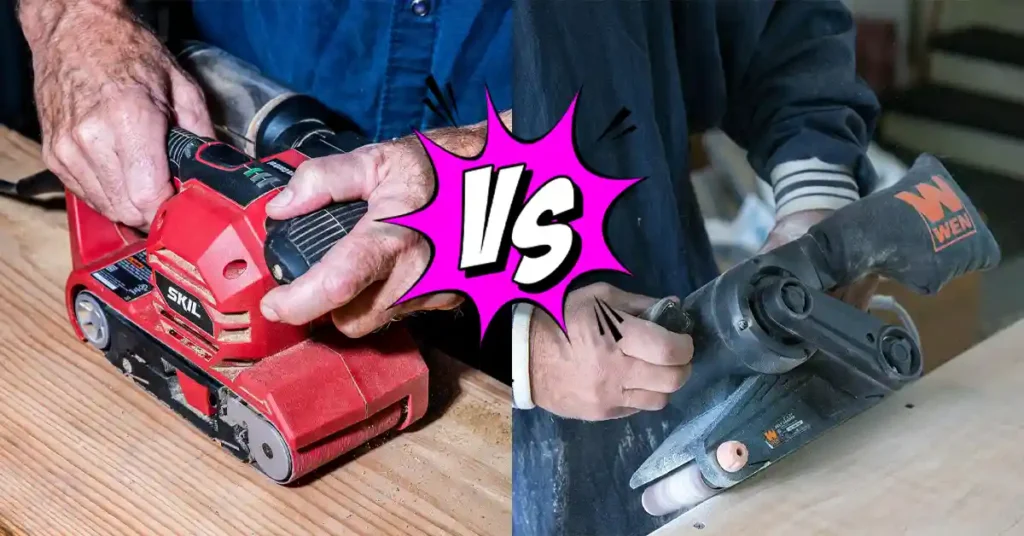
People ask me about these two tools a lot. I get it. When you look at a WEN vs Bauer belt sander, they seem close at first glance. But they feel different when you actually use them on a real job or in a real shop.
I’m not here to hype brands. I want to explain how they acted for me on long days, cold mornings, and hot afternoons in places around the U.S.
Table of Contents
Basic Function of Each Tool
Let me set the stage fast. Before we compare anything, it helps to know what these sanders do at a basic level.
A belt sander uses a loop of sandpaper that spins fast around two rollers. It eats wood fast. It smooths rough spots. It can strip old paint or shape an edge. When the belt runs, it feels like a small track under your hand.
Both tools work the same way. You place the flat plate on the wood. You guide the nose where you want to go. The belt takes off a thin layer each pass. It’s simple. A bit loud. But very useful.
Most folks use a belt sander for decks, doors, shelves, and boards that need fast cleanup. I’ve used them to fix old trim I found in a shed and to flatten a board on a warm Saturday afternoon when I needed a quick fix.
Technical & Practical Differences Between WEN and Bauer
I used both tools in real spots—cold Ohio mornings, dusty Arizona shops, and damp garages on the Gulf Coast.
Performance & Precision
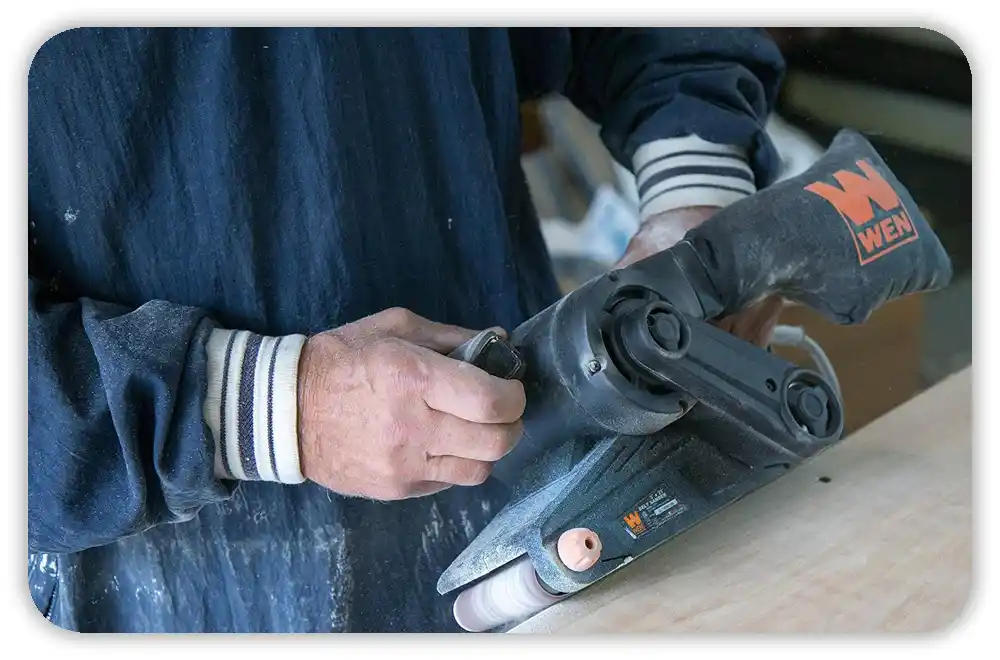
A WEN belt sander feels calm. It glides over the wood in a soft way. When I need a slower touch, WEN gives me that easy feel.
A Bauer belt sander grabs harder. It cuts fast and bites deep. If I want to clean a rough edge or flatten a stubborn board, Bauer does it with less fuss.
Power and Cutting Capacity
WEN has a smooth motor. But when I lean in, it slows a bit. I notice it most on hardwood or when the belt starts to clog. Not a deal breaker. Just slower.
Bauer feels strong the moment it starts. On a cold day in the Midwest, I used it on an oak plank, and the motor held speed the whole time. Even when I pushed too much. It feels built for heavier hands.
Portability
WEN is light. I can carry it with one hand while I move a board with the other. In a small U.S. apartment shop, that light feel helps a lot.
Bauer is heavier. I feel it in my shoulder when I lift it. But that weight keeps it flat when I sand a big tabletop or a long pine board. The weight does some of the work for me.
Ease of Setup & Maintenance
WEN makes belt tracking simple. I twist the knob a bit, and the belt stays in line. The dust bag clips on fast and never fights me.
Bauer has a stiff lever. Sometimes I use two fingers to snap it open. But the dust port fits my shop vac hose better. In dry places like Arizona, that hook-up saves me from breathing clouds of dust.
Safety Considerations
WEN feels friendly. Light pull. Easy to hold. I can sand small edges without feeling rushed.
Bauer feels stronger. I brace my wrist a bit more. The power is great, but I stay alert when I use it on hardwood. It’s not unsafe—just lively.
Learning Curve
WEN is easy to learn. The soft glide helps new hands feel calm. I’ve handed it to friends who never used a sander, and they picked it up fast.
Bauer takes a bit more feel. It pulls forward more. Once you learn its rhythm, it feels steady and sure.
Comparison Table: WEN vs Bauer Belt Sander
| Feature / Factor | WEN Belt Sander | Bauer Belt Sander |
| Accuracy | Smooth for light work | Strong for fast removal |
| Power Source | Corded electric | Corded electric |
| Portability | Light and easy to lift | Heavier but firm |
| Safety | Soft pull and easy control | More torque, needs steady grip |
| Ideal Use | Small boards and soft woods | Rough boards and heavy sanding |
When to Use Each
I use WEN when I want a calm tool. It feels right on shelves, trim, and soft wood. It stays steady in tight rooms or small shops where space is tight.
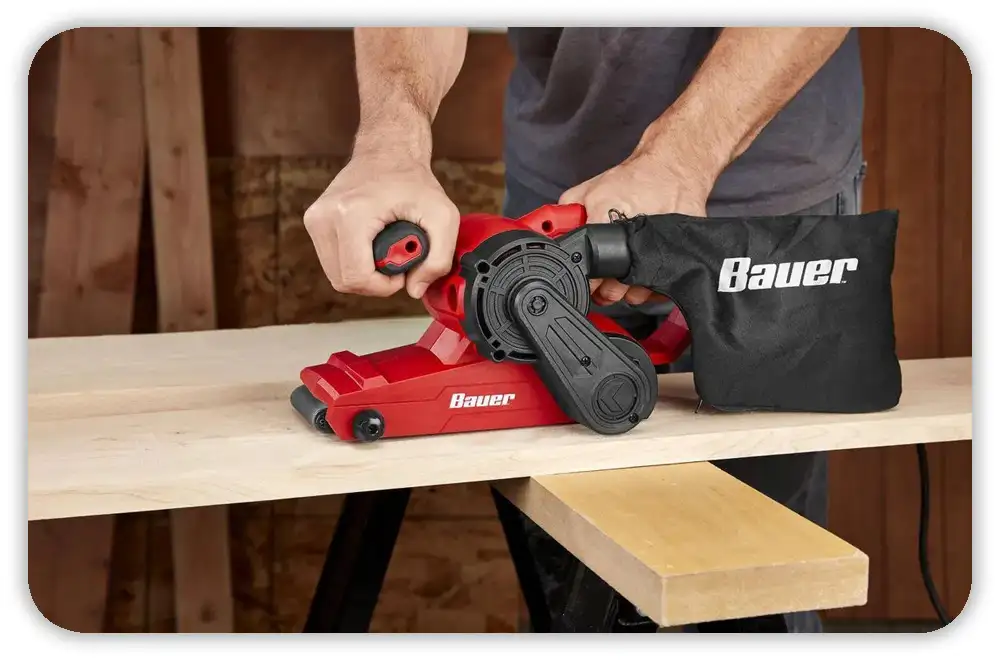
I use Bauer when the job feels heavy. Deck boards. Old paint. Rough hardwood. When I need to move fast, Bauer cuts time off the job. It handles tough runs without slowing down.
Sometimes I switch between them on the same day. It depends on the wood, the weather, and how tired my arms feel.
Safety and Skill Level
WEN works well for newer hands. The light weight helps you stay relaxed. You can guide it slow and not feel pushed.
Bauer needs more grip. I keep my stance firm and hold steady. Good gloves help, especially in winter when the shop is cold and my hands get stiff.
Both tools need clean space. Dust builds fast and makes sanding feel jumpy. I sweep or vacuum between passes so the belt stays flat.
Maintenance and Durability
I clean the belt after each job. A few taps knock off dust. It keeps the belt cool and stops burn marks. I check the rollers too, because dust loves to hide there.
I check the cords often. Cold weather makes some cords stiff, and I’ve had old ones crack before. I hang them loose on a hook so the bends stay soft.
In humid states like Florida, I keep both sanders on a shelf with space around them. In dry states like Nevada, I cover them to keep dust off the rollers and switches. A little care keeps them going longer.
Conclusion
Both tools have a place. A WEN belt sander feels light, calm, and easy to guide on small work. A Bauer belt sander feels strong, fast, and steady on big jobs and rough boards. Knowing how they differ helps you pick the one that fits your work, your space, and your hands.
FAQs: WEN vs Bauer Belt Sander
Which belt sander lasts longer, WEN or Bauer?
Bauer feels more tough on long jobs. WEN holds up well in light work. Both last if you clean the belt and store them right.
Is a Bauer belt sander stronger than a WEN sander?
Yes, Bauer has more power and holds speed under load. WEN sands smooth but slows when you push hard on rough boards.
Can a WEN belt sander handle hardwood?
Yes, it can. But it may slow a bit on oak or hickory. Bauer stays strong on hardwood and keeps the belt at speed.
As an Amazon Associate, We earn from qualifying purchases